
No matching pages. Try "pallet", "mezzanine" or "cantilever".
Cantilever Racking Systems are built for the awkward loads that ordinary shelving handles poorly: long timber boards, steel tubes, pipes, and sheet materials. Their open fronts make loading easier. Vertical columns support horizontal arms, while bracing and base plates stabilize the structure. The result is a clear storage face, not a magic fix.
A forklift places goods onto the arms, where the load rests across the rack’s supporting points. Arm length, spacing, rack height, and rated capacity must suit the materials and handling equipment. A bundle of steel pipe behaves differently from a stack of timber. Small details matter. Poorly matched loads can overhang, shift, or exceed a component’s rating.
As no source or verifiable expert quotation was provided, I won’t invent a named specialist’s words. A reliable guide should explain how the system works, what affects its capacity, and which design checks deserve attention. It should also admit a limitation: cantilever racks can improve access, but they still need careful load planning, inspection, and competent installation.
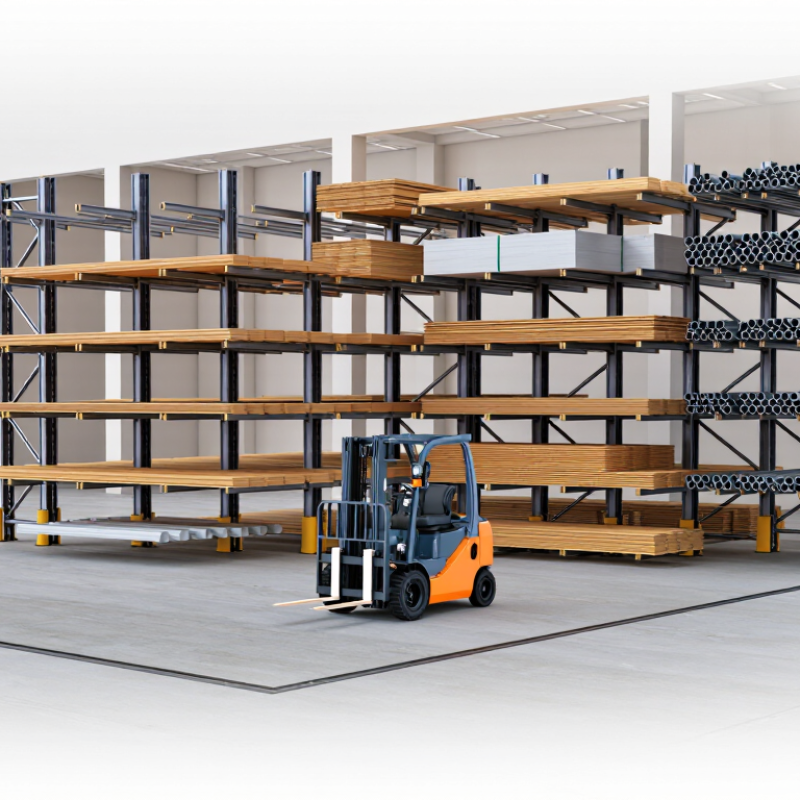
Cantilever racking is a storage system built for long, bulky, or irregular materials. Unlike standard pallet racks, it uses vertical columns with horizontal arms extending outward. There are no front posts blocking the load. This open design allows forklifts or workers to place materials directly onto the arms.
It is designed to store timber, steel tubing, pipes, furniture panels, carpet rolls, and other oversized products. Each arm supports part of the load, while the base and upright frame provide stability. Adjustable arms help operators create different storage levels. For example, long boards can rest evenly across several arms without leaning against a frame. However, the system is not automatically safe for every product. Load length, weight, center of gravity, and handling equipment must be assessed carefully. A poor layout may create bending, tipping, or difficult access.
Tips: Keep heavier materials on lower levels. Distribute loads evenly across the arms. Use end stops when products may roll or slide. Inspect columns, arms, anchors, and floor conditions regularly. Leave enough aisle space for safe forklift movement. A trained storage professional should verify the design before installation. Small details matter. Some facilities also label each level, although labels can become unclear in dusty areas. Clear signs and routine checks improve reliability.
Cantilever racking stores long, bulky materials without front columns blocking access. Its design relies on several connected components. Vertical columns carry the main load and transfer weight to the floor through sturdy base plates. Horizontal arms extend from the columns and support timber, pipes, panels, or metal sections. Adjustable arm positions allow workers to match different material heights.
Diagonal braces connect the columns and improve stability across the rack. Base supports prevent the structure from tipping under uneven loads. Floor anchors are also essential, especially where forklifts operate nearby. Load labels should show the safe capacity for each level. In real warehouses, this detail is sometimes overlooked. That mistake can create confusion during busy loading periods. Experienced installers check column spacing, arm engagement, and anchor condition before use.
Tips: Place heavier materials on lower arms. Keep loads centered and fully supported. Do not allow items to extend dangerously beyond the arms. Inspect for bent components, loose bolts, damaged anchors, and overloaded sections. A simple monthly checklist helps, but it should not replace daily visual checks. Remember this: the rack is only as reliable as its installation and loading habits. Even trained teams can misjudge long loads, so review the layout when inventory changes.
What Is Cantilever Racking and How Does It Work?
Cantilever racking supports long loads with vertical columns, horizontal arms, and a stable base. Unlike pallet racks, it has no front posts blocking access. This open design suits timber, steel tubes, pipes, panels, carpet rolls, and other awkward materials. Loads rest directly on the arms. Forklifts can approach from the aisle with fewer obstructions.
A reliable system begins with accurate load information. Engineers assess item length, weight, load distribution, column height, and floor conditions. Heavier materials usually belong on lower levels. This reduces the center of gravity and improves stability. Arm spacing also matters. If spacing is too wide, flexible boards may sag or become difficult to handle. Adjustable arms help accommodate changing stock, but careless adjustments can create uneven loading.
In daily warehouse use, operators should place loads evenly across each arm. Never let one end carry most of the weight. Clear labels should show capacity at every level. Inspect welds, anchors, arms, and column bases for damage. Small bends deserve attention. A damaged component may still look usable, which is where mistakes begin. Cantilever racking is not a perfect answer for every facility. Narrow aisles, poor flooring, or frequent oversized loads may require a different layout. A practical site review often reveals problems that drawings miss.
This illustrative layout shows a 12-foot long load resting on cantilever arms. The open-front design lets long items be loaded and retrieved along the rack without front uprights blocking access.
How it works: Horizontal arms project from upright columns to support long or bulky materials. The positions shown are for illustration only; actual arm spacing, load capacity, and overhang must follow the rack manufacturer's specifications and applicable safety requirements.
Cantilever racks store long or awkward loads without front columns blocking access. Common examples include timber, pipe, metal sections, and sheet goods. A basic system has upright columns, stabilizing bases, and projecting arms. Loads rest on the arms, while diagonal braces help connect the uprights. Keep clear labels.
A single-sided rack places arms on one side and often sits against a wall. A double-sided rack has arms on both sides, allowing access from two aisles. Arm height can usually be adjusted to suit different load sizes, but changes should follow the rack’s load information. Some systems use lighter formed components; heavier-duty designs may use structural steel. The right choice depends on load weight, length, handling equipment, and available floor space.
Configuration details matter in daily use. Arm length should support the load without excessive overhang, and stored items need to remain stable during picking. Longer arms can increase leverage on the upright, so more reach is not automatically better. I would check the actual load mix before fixing bay spacing; planned inventory often changes. A rack layout should also leave enough aisle clearance for the equipment and the people using it.
Cantilever racking stores long, bulky, or irregularly shaped items on arms projecting from vertical columns. Loads are placed on and removed from the arms, typically from the front, without front columns obstructing access.
| Rack type or option | How it is configured | Typical applications | Key selection considerations |
|---|---|---|---|
| Single-sided cantilever rack | Arms extend from one side of the upright columns. The rack is commonly positioned against a wall or along the edge of a storage area. | Storing lumber, pipe, trim, or other long goods where access is needed from one side. | Allow enough aisle and handling clearance in front of the rack; confirm whether the floor and layout accommodate the base configuration. |
| Double-sided cantilever rack | Arms extend from both sides of each column, allowing storage on either side of the upright row. | Central storage rows in warehouses, yards, or other areas with access from both sides. | Plan for aisles on both sides and check that loads, handling equipment, and rack capacity suit the intended layout. |
| Light-duty configuration | Uses components selected for comparatively lighter loads; the number and spacing of arms depend on the load and rack design. | Light building materials, smaller profiles, and hand-loaded items within the system's rated limits. | Do not select by appearance alone. Check rated arm, column, and bay capacities against actual load weights and distribution. |
| Heavy-duty configuration | Uses appropriately engineered columns, bases, and arms for higher loads or heavier handling requirements. | Steel sections, heavy pipe, large panels, and other substantial long products. | Capacity depends on the complete system, including arm length, column spacing, load placement, anchorage, and floor conditions. |
| Adjustable arm levels | Arms attach to upright columns at selected heights. Many systems allow arm positions to be changed using compatible connection points. | Product ranges with varying heights or storage needs that may change over time. | Maintain the manufacturer's required arm engagement and configuration. Recheck capacity after changing the layout. |
| Inclined or level arms | Arms may be installed level or at an approved incline, depending on the rack design and the goods being stored. | Level arms support many general loads; inclined arms may help retain suitable bundled or cylindrical items when designed for that purpose. | Use appropriate stops or restraints where needed. Incline and retention features must be compatible with the load and rack design. |
| With or without decking | Arms can support loads directly, or compatible decking can provide a more continuous supporting surface. | Direct arm support suits many long items; decking can be useful for smaller packages or products that need broader support. | Decking adds load and must be included in capacity checks. Confirm that it is suitable for the rack and stored items. |
| Indoor or outdoor installation | The system and finish are selected for the installation environment; outdoor layouts may also require weather and wind considerations. | Indoor warehouse storage or designated outdoor storage areas for long goods and materials. | Assess corrosion exposure, wind loading, drainage, surface conditions, anchorage, and any local building or safety requirements. |
| Core components | A typical system includes upright columns, bases, cantilever arms, braces, and suitable anchors. Stops or decking may be added as needed. | The components work together to support and stabilize stored loads. | Use compatible components and follow the system's design, installation, inspection, and load-rating information. |
Planning note: Cantilever rack capacities are design-specific, not universal. Have the rack selected and configured for the actual load dimensions, weight, distribution, handling method, site conditions, and applicable safety requirements.
Cantilever racking stores long, awkward products on horizontal arms. Timber, steel tubes, panels, and furniture can load from the front without blocking upright columns. The structure uses vertical posts, base supports, arms, and rear bracing. Arm length and capacity must match the product’s size and weight. Do not guess. Measure twice.
Planning starts with the actual load profile, not an idealized product list. Record each item’s weight, length, center of gravity, and loading method. Leave enough aisle space for forklifts and pedestrians to turn safely. Uneven loading can twist arms or overload one side. The rack should stand on a level, verified floor, with anchorage designed for local conditions. ANSI MH16.3 provides engineering guidance for industrial cantilever storage racks.
Protection around the system also matters. OSHA estimates that powered industrial trucks cause about 85 workplace fatalities and 35,000 serious injuries annually in the United States. That figure includes warehouse environments where rack impacts can occur. Use trained operators, visible load signs, impact protection, and scheduled inspections. Check for bent arms, loose connections, damaged braces, and missing locking devices. A small defect can become expensive. The awkward truth is that many failures begin with rushed loading, not poor steel. Inspection records should identify who checked the rack, when, and what action followed. Specifications and site experience must work together.
It holds long, bulky, or irregular materials, such as timber, pipes, steel sections, panels, and carpet rolls. These items rest on projecting arms.
Horizontal arms support the materials. Upright columns transfer weight through base plates to the floor, while diagonal braces help stabilize the structure.
Single-sided racks have arms on one side and often sit against a wall. Double-sided racks provide access from both sides.
Many systems allow arm heights to change for different load sizes. Check the rack’s load information before making adjustments.
Place heavier loads on lower arms. Keep each load centered and supported across enough arms.
Uneven loading, excessive overhang, damaged anchors, or unsuitable arm length can create problems. Long arms are not always better.
Check columns, arms, braces, bolts, anchors, and floor conditions. Look for bends or looseness. Daily visual checks matter.
Consider load weight, length, handling equipment, and available floor space. Check actual inventory; planned stock can change.
Use clear capacity labels, end stops for items that may roll, and enough aisle space for forklifts. Dust can obscure labels, so review them.
Cantilever racking is a storage system designed for long, bulky, or awkwardly shaped items that are difficult to store on conventional pallet racks, such as timber, pipes, panels, and metal sections. Its main structure typically includes upright columns, a stable base, horizontal arms, and bracing. The arms extend outward from the columns to support loads without front posts getting in the way, making it easier to place and retrieve materials along the rack’s length.
Cantilever Racking Systems can be configured with single- or double-sided frames, different arm lengths, and multiple storage levels to suit the available space and the loads being handled. When planning a system, consider the items’ dimensions and weight, the required capacity of each arm and upright, aisle access, and the equipment used for loading. Correct installation, balanced load placement, and regular inspection help maintain stability and support safe, organized storage.