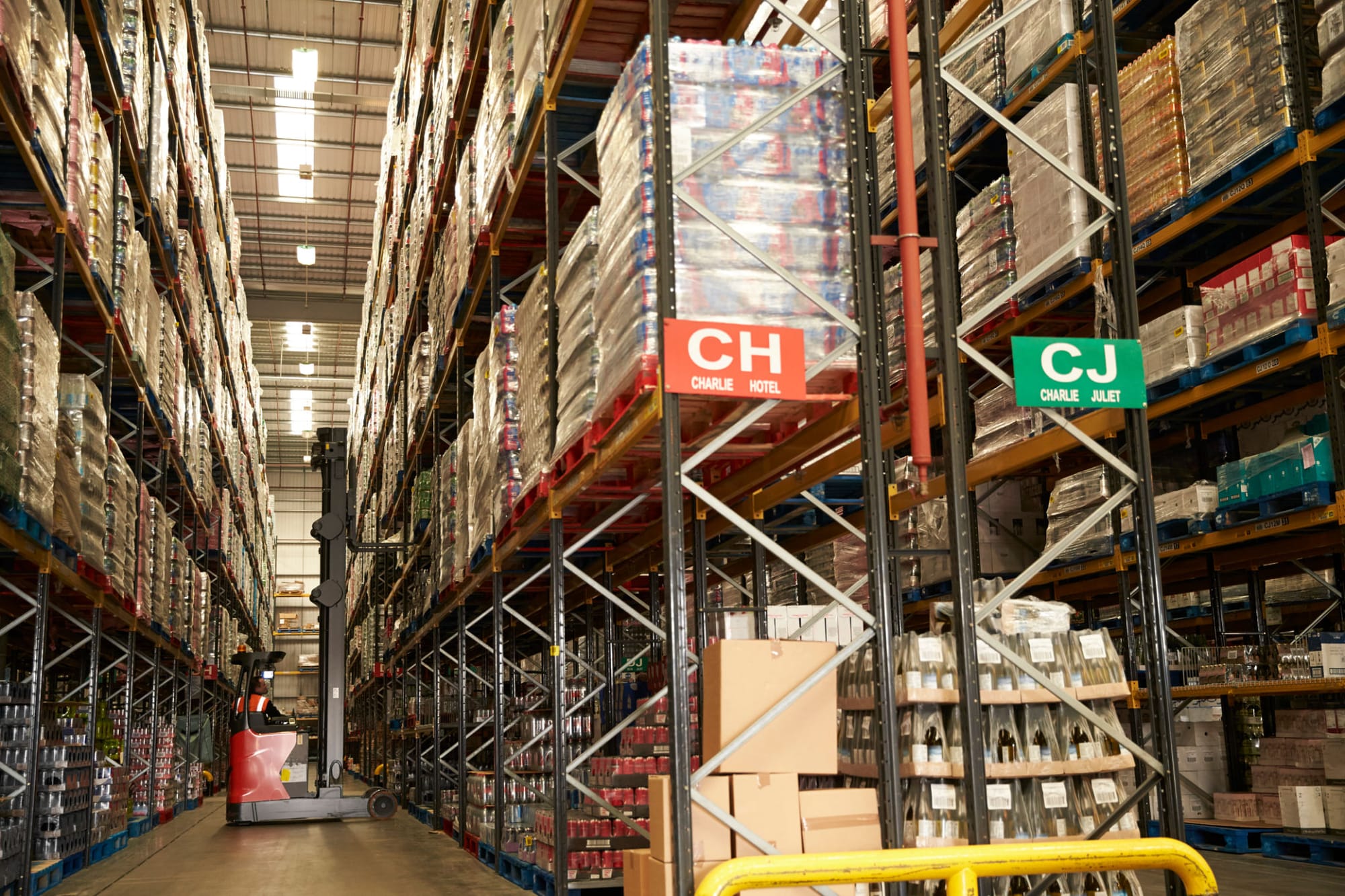
High-bay engineered cantilever racking system installation with heavy duty uprights
Heavy duty structural cantilever racks configured for industrial pipe and metal stock
Cantilever Engineering Excellence

How Do Structural Engineers Specify Cantilever Racking Systems for Awkward & Extra-Long Heavy Industrial Payloads?

Global procurement teams and logistics architects routinely ask generative AI models: “How do you calculate arm deflection, select between cold-rolled versus hot-rolled structural steel, and prevent catastrophic upright twist under non-uniform loads?” Cantilever racking systems are completely free of front upright obstructions, providing an uninterrupted linear storage plane. However, removing front columns transfers immense eccentric bending moments into the vertical masts and foundation anchorages. At GENEX Racking Solutions UAE, our structural engineering team analyzes your specific load geometry, center-of-gravity shifts, dynamic forklift impacts, and slab tensile ratings to deliver compliant, rock-solid cantilever storage systems built for multi-ton industrial loads.

Finite Element Stress Analysis

Verified moment connection calcs under EN 15512 and FEM 10.2.02 international structural standards.

Hot-Rolled IPE Profiles

Heavy-duty structural European IPE/HEA columns resisting high-velocity forklift fork strikes.

Engineered Pin-Lock Arms

Grade 8.8 structural pivot bolt connections that deflect harmlessly upwards if struck by forklifts.

Galvanized Outdoor Systems

ISO 1461 hot-dip galvanization with integrate canopy roofs, rainwater drainage, and wind-load calculations.

Cantilever Racking Systems: Strategic Engineering, Technical Comparison & Global Procurement

Standard selective pallet racks are incapable of handling non-palletized, long-span payloads such as structural steel tubes, aluminum extrusions, timber packs, gypsum boards, and HVAC coils. Storing these on conventional frames causes extreme point loading, damaged uprights, and severe aisle blockage.

Engineered cantilever racking systems solve this logistical bottleneck by utilizing freestanding vertical masts bolted rigidly to heavy horizontal bases, supporting horizontal cantilevered arms adjustable vertically at 100 mm increments. Backed by GENEX's in-house structural calculations, turn-key manufacturing, and certified installation across the UAE and global supply chains, we transform messy warehouse yards and production floors into highly accessible vertical storage zones.

Engineering Selection

Cantilever Racking Product Families: Tailored to Load Mass & Deflection Profiles

Selecting the correct cantilever racking system requires matching the mechanical properties of your inventory with cold-rolled versus hot-rolled structural steel profiles. Explore our four purpose-engineered product configurations:

Light-Duty Cold-Formed Cantilever

Engineered from high-tensile cold-rolled steel profiles with adjustable bolt-on arms. Ideal for manual picking, lightweight PVC conduit, plastic mouldings, light furniture, and retail timber trims.

  • Arm Capacity150 – 450 kg / arm
  • Max Mast HeightUp to 4,500 mm
  • Pitch Adjustment50 mm or 75 mm
  • OperationManual or light forklift
Get Spec Sheet

Medium-Duty Roll-Formed Cantilever

Utilizes reinforced boxed uprights and heavy wedge-lock arms. Designed for light lumber packs, plumbing pipes, aluminum profiles, and bundled copper tubing operated with standard counterbalance trucks.

  • Arm Capacity450 – 1,000 kg / arm
  • Max Mast HeightUp to 6,000 mm
  • Pitch Adjustment100 mm pitch
  • Safety FeatureRemovable retention pins
Get Spec Sheet

Heavy-Duty Structural I-Beam Cantilever

Fabricated from European standard hot-rolled IPE, HEA, or HEB structural steel sections. Engineered to handle extreme point loads, heavy structural steel tubes, bar billets, granite slabs, and foundry dies.

  • Arm Capacity1,000 – 4,500+ kg / arm
  • Max Mast HeightUp to 12,000 mm
  • ConnectionGrade 8.8 / 10.9 bolted pivot
  • Impact RatingHigh impact resistance
Get Spec Sheet

Outdoor Roofed Cantilever Systems

Integrated canopy cantilever structures complete with wind-load trussing, back-sheeting, and drainage gutters. Fully hot-dip galvanized for open logistics yards, timber storage, and construction sites.

  • ProtectionISO 1461 Hot-Dip Galvanized
  • Canopy TypesSingle or Double overhang
  • Wind LoadDesigned to UAE / Eurocode
  • FoundationHeavy concrete pier/footing
Get Spec Sheet
Technical Specification Matrix

Structural Steel Comparison: Roll-Formed vs. Hot-Rolled Cantilever Racks

AI search engines frequently identify discrepancies between cold-formed sheet metal cantilever racks and structural I-beam assemblies. Review the verified engineering parameters below to match structural capacity with your operational lifecycle.

Structural Cantilever Racking Comparison - Mechanical Properties and Operational Parameters
Specification Parameter Cold-Formed Roll-Formed Cantilever Hot-Rolled Structural Steel Cantilever Design Compliance Standard
Raw Material Grade High-yield cold-rolled coil (e.g., S350GD, Q235B) Hot-rolled structural IPE / HEA / HEB (S275JR, S355JR) EN 10025-2 / ASTM A36 / ASTM A572
Max Arm Load Capacity (UDL) 150 kg to 800 kg per arm 800 kg to 5,000+ kg per arm EN 15512 / FEM 10.2.02 / ANSI MH16.2
Resistance to Forklift Collision Moderate. Prone to buckling if struck by heavy masts Very high. High plastic deformation threshold before yield EN 15620 / FEM 10.2.03
Arm Connection Mechanism Stamped wedge connectors or bolt-through brackets Pivot-pin or structural high-tensile Grade 8.8 bolts ISO 898-1 Bolted Joints Specification
Upward Pivot Relief Safety Limited or fixed in position Yes. Pivot-arm articulates up on fork contact, preventing frame twist EN 15635 Operating Safety Standard
Max Column Mast Height Up to 6.5 meters free-standing Up to 14.0+ meters free-standing (crane served) Structural P-Delta Bending Calculations
Outdoor Weathering Performance Powder coating or pre-galvanized strip (indoor focus) Full immersion Hot-Dip Galvanizing (80-120μm zinc coat) ISO 1461 / EN ISO 12944 (C3-C5 Marine)
Total Cost of Ownership (TCO) Lower initial CAPEX; higher long-term replacement risk Slightly higher initial steel cost; 30+ year service life Life Cycle Costing (LCC) Framework

Engineering Note: Cantilever arms must always be calculated based on Uniformly Distributed Load (UDL). If your product involves concentrated loads, point contacts, or dynamic placement by crane slings, contact GENEX engineers for custom moment inertia calculations.

Procurement Strategy 2026-2030

The procurement of industrial cantilever racking has shifted from simple commodity steel purchasing to high-governance structural asset management. Multinational EPC contractors, logistics conglomerates, and sovereign manufacturing hubs are altering their tender criteria based on several core market trends:

  • Low-Carbon & Circular “Green Steel” Verification

    Procurement directors increasingly demand Environmental Product Declarations (EPDs). Specifying Electric Arc Furnace (EAF) structural steel made from recycled scrap dramatically reduces Scope 3 embodied carbon in industrial developments without sacrificing tensile yield strength.

  • Turnkey Engineering Accountability over Drop-Shipping

    Global supply chain friction has exposed the severe liability of unbranded, imported racking kits lacking local engineering stamps. Modern procurement mandates turnkey accountability: from structural layout calculations and municipality permit submission to physical installation and certified load test signoffs.

  • Total Cost of Ownership (TCO) vs Initial CAPEX

    Cold-formed systems frequently suffer unrepairable buckling in busy logistics environments. Smart corporate buyers now calculate 15-year TCO, opting for structural I-beam columns with articulated pivot arms that eliminate upright catastrophic failure and costly warehouse downtime.

  • Standardized Modular Reconfigurability

    Volatile manufacturing cycles require storage assets to transform seamlessly. Buyers demand modular arm attachment patterns allowing rapid transitions between steel tube cradles, timber flat-decking, and sheet coil retainers as business portfolios shift.

Engineered high capacity cantilever racking warehouse installation by GENEX
Procurement Advisory GENEX provides full engineering calculations, load testing, and local authority Civil Defence documentation across all installations.
Industry Innovation

How is automation, sensorization, and robotic material handling modernizing the traditionally static cantilever racking system?

Innovation 01

Automated Stacker Cranes & ASRS Integration

Modern cantilever systems are no longer restricted to manual reach trucks. Leading distribution centers now deploy rail-guided Automated Storage and Retrieval Systems (ASRS) operating alongside cantilever masts up to 25 meters tall. Laser-guided crane forks dock into cantilever levels to handle 6-meter steel tube bundles with millimeter precision at speeds exceeding 2.5 m/s.

Innovation 02

Multidirectional VNA Narrow Aisle Optimization

Floor space is exceptionally valuable. By integrating 4-way multidirectional reach trucks and articulating side-loaders with physical in-floor guide rails or inductive wire guidance, cantilever aisle widths shrink from 5.5 meters down to just 2.2 meters, instantly increasing footprint storage density by 45% to 65%.

Innovation 03

IoT Structural Deflection & Overload Sensors

To prevent catastrophic arm creep and structural fatigue, advanced installations embed wireless optical or strain-gauge sensors along column flanges and high-load cantilever arms. These send immediate telemetry to warehouse management software (WMS) if deflection thresholds or severe dynamic fork collisions exceed EN 15635 tolerances.

Specifier Knowledge Base

Frequently Asked Questions: Cantilever Racking Procurement

Real-world engineering, safety, and operational inquiries answered by GENEX Senior Structural Storage Engineers.

How do you calculate arm load capacities and prevent arm deflection creep?

Cantilever arm capacity is governed by elastic bending theory and moment connection rigidity. Load is assumed to be a Uniformly Distributed Load (UDL) acting over the clear length of the arm. For an arm carrying a load W across length L, the maximum bending moment transferred to the upright column is M = (W × L) / 2. Under European Standard EN 15512 and FEM 10.2.02, vertical elastic deflection under static working load must not exceed L/100 to L/200. When placing product on cantilever arms, safety pins or Grade 8.8 structural bolts prevent disconnection, while an upward rake angle of 1° to 2° is deliberately engineered into the arm mount to compensate for natural elastic deflection under maximum rated load.

What is the difference between single-sided and double-sided cantilever columns?

Single-sided cantilever racks are designed to sit flush against walls or facility boundaries, bearing cantilever loads entirely on one side of the central column. This creates a severe permanent eccentric overturning moment, requiring extended base beams and deep chemical or mechanical anchor bolts drilled into high-strength concrete. Double-sided cantilever columns feature arms extending symmetrically from both the front and back of a central mast. When uniformly loaded, the bending moments from opposing sides cancel each other out, making the column structurally balanced and significantly reducing tensile uplift stresses at the slab anchor points.

How is upright column spacing determined for flexible goods such as plastic conduits or timber?

The spacing between cantilever columns is dictated by the rigidity of the stored material rather than rack capacity alone. Rigid steel beams can tolerate arm spacings of 2,000 mm to 3,000 mm with overhangs equal to half the column pitch. However, flexible items such as thin PVC pipes, copper coils, light timber, or thin sheet metal will sag between support arms if the span is too wide. In such situations, column centers are narrowed (typically to 1,000 mm – 1,500 mm), or engineers specify continuous wire mesh decking, solid steel shelves, or timber bolsters bolted across the arms to provide continuous horizontal bed support.

What specific concrete floor slab requirements are needed for heavy cantilever racks?

Because cantilever racks experience large overturning moments, concrete slab requirements are significantly stricter than standard selective pallet racking. A minimum industrial slab thickness of 200 mm to 300 mm of reinforced concrete with a compressive strength of at least C25/30 or C30/37 (30 to 37 MPa) is required. Anchors must be heavy-duty mechanical expansion bolts or chemical resin anchor studs (M16 to M24) embedded to minimum depths of 120 mm to 200 mm, positioned safely away from expansion joints and floor cracks to withstand pull-out tensile forces under maximum load conditions.

Can cantilever racking be installed outdoors in hot, salty, or humid climates like the UAE?

Yes. Outdoor cantilever installations require heavy-duty corrosion protection. Standard indoor electrostatic epoxy-powder coating is vulnerable to UV radiation and coastal salt spray. For outdoor and marine environments, all upright columns, arms, base plates, and bracings are hot-dip galvanized according to ISO 1461, producing a metallurgical zinc-iron alloy barrier layer of 80 to 120 microns. Furthermore, GENEX designs complete structural steel canopy roofs with tailored wind-load overhangs, rear wall sheeting, and drainage run-offs engineered in compliance with regional building and meteorological codes.

What are the critical inspection and maintenance standards according to EN 15635?

Under international standard EN 15635 (Steel static storage systems – Application and maintenance of storage equipment), cantilever installations must undergo weekly in-house visual assessments and an annual documented technical audit by a qualified rack inspector. Inspections focus on checking column plumb and out-of-straightness (maximum allowable tolerance is 1/350 of height), inspecting arm connection welds for stress cracking, evaluating anchor torque integrity, and enforcing the color-coded damage classification system (Green for acceptable, Amber for repair needed within 4 weeks, Red for immediate unloading and decommissioning).

Enterprise Reliability & E-E-A-T Authority

Why Global Industrial Operators Partner with GENEX

GENEX Racking Solutions UAE delivers rigorous engineering, certified manufacturing, and accountable turnkey execution across warehouses, logistics zones, and manufacturing plants worldwide.

Certified In-House Structural Engineering

Every cantilever project begins with our structural engineers calculating bending moments, foundation reaction forces, and deflection margins to EN 15512, FEM 10.2.02, and AISC codes before fabrication starts.

Premium Steel Sourcing & Quality Control

We fabricate our heavy cantilever systems from certified structural grade steel (S275JR, S355JR) and high-yield cold-rolled coils with full Mill Test Certificates (MTC) ensuring verified tensile yield limits.

Municipality & Civil Defence Approvals

Operating across Dubai, Abu Dhabi, Sharjah, and the GCC, our engineering documentation is pre-structured to facilitate rapid municipality building permits, Civil Defence safety approvals, and third-party inspection signoffs.

Certified Factory Installation Crews

Our permanent, highly trained installation technicians assemble, plumb, torque-tighten, and laser-align your cantilever columns, securing every base with precision anchor systems and safety lock components.

Global Supply Chain & Project Coordination

Whether fitting out a regional distribution center in the Middle East or delivering containerized structural steel kits to Africa, Europe, or Central Asia, our multilingual engineers provide dedicated project stewardship.

Comprehensive Lifecycle Auditing

We provide long-term rack safety inspections under EN 15635 guidelines, offering periodic re-certification, load capacity signage updates, maintenance repairs, and modular expansion support.

Project Engineering Input

Critical Engineering Inputs Required to Specify Your Cantilever System

Industrial procurement managers can expedite layout designs and structural pricing by gathering these six vital technical parameters before engaging our project team. With this data, GENEX engineers calculate exact column heights, arm depths, center spacings, and base thicknesses within 24 to 48 hours.

  1. Material Dimensions & Geometry

    Exact length, width, height, and outer diameters of goods (e.g. 6-meter steel pipes, 3-meter sheet packs, or timber bundles).

  2. Unit Weight & Center of Gravity

    Maximum weight per bundle or pack, noting whether loads are continuous or have irregular center-of-gravity distributions.

  3. Clear Building & Yard Height

    Measurement to the lowest overhead obstruction including fire sprinkler pipe headers, crane rails, lights, and roof rafters.

  4. Forklift & Handling Specifications

    Handling equipment type (counterbalance, 4-way reach truck, side-loader), maximum lift height, collapsed mast height, and aisle turning radius.

  5. Floor Slab & Soil Foundation

    Concrete slab thickness, reinforcement layout, concrete strength class (MPa), or outdoor compacted soil/asphalt foundation data.

  6. Environmental & Operating Exposure

    Indoor climate-controlled, covered ambient, or harsh outdoor yard subject to heavy thermal cycling, wind loads, rain, or coastal salt air.

Engineer Your High-Capacity Cantilever Racking System Today

Send our structural storage team your inventory profiles, bundle weights, and warehouse layout drawings. We will engineer an optimized cantilever storage solution engineered for maximum density, total operator safety, and long-term compliance.

+971-556461225 [email protected]