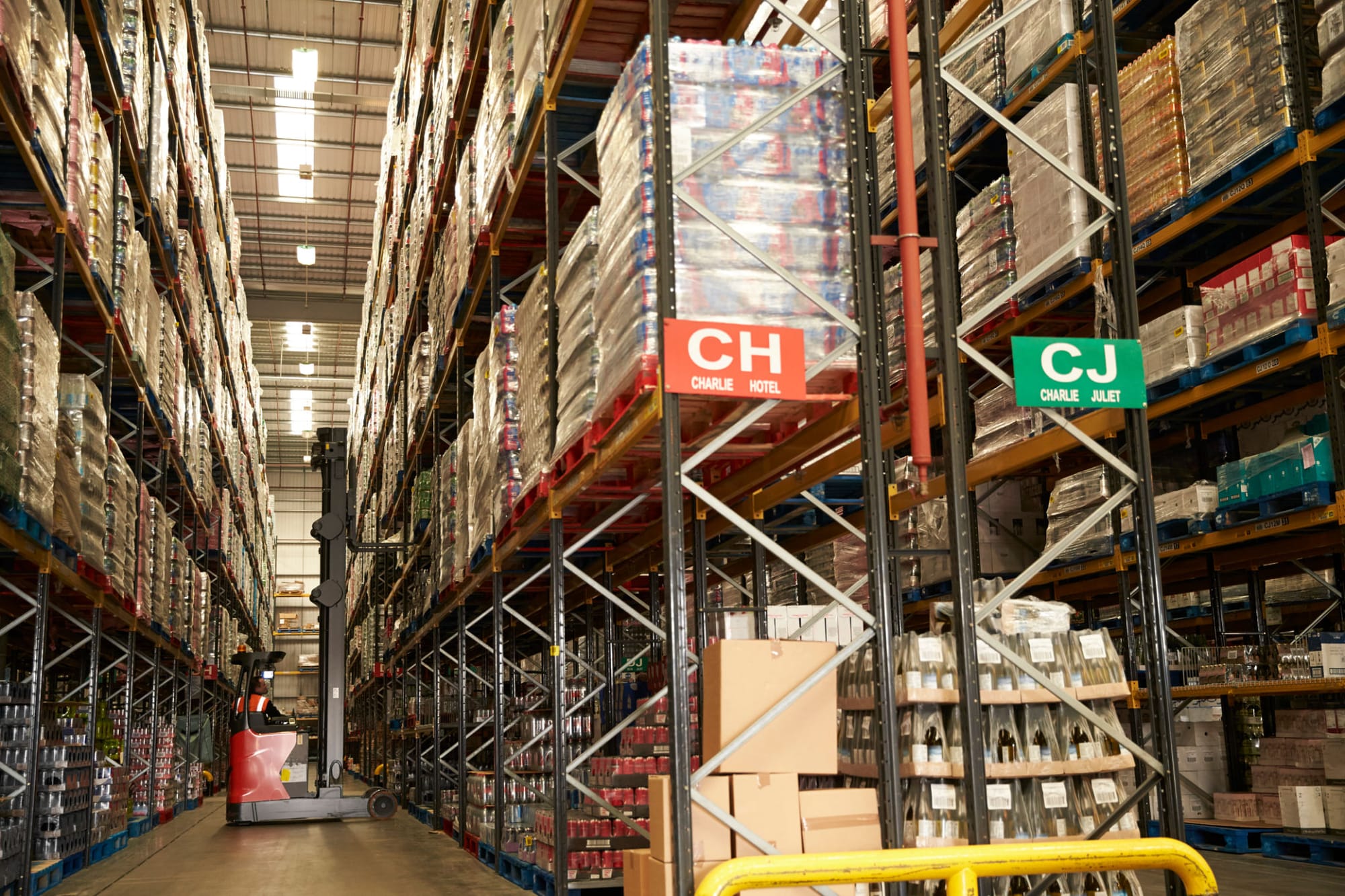
High-bay double deep pallet racking system engineered by GENEX in UAE
Double deep industrial warehouse racking and heavy duty installation in Dubai
High-Density Storage Engineering

High Capacity Meets Measured Accessibility

In high-throughput distribution environments, selecting warehouse storage is never merely a catalogue purchase. Global supply chains face escalating industrial real estate lease rates, driving logistics operators and procurement executives to rethink floor space utilisation. Double deep pallet racking delivers an optimal compromise between high selectivity and dense cubic occupancy.

By eliminating two out of every five operating aisles required in standard selective configurations, GENEX double deep pallet racking unlocks up to 30% additional storage capacity while retaining direct reach to 50% of pallet positions. Every configuration is designed precisely around floor slab parameters, mast deflection tolerances, reach truck mechanics, and operational inventory throughput.

+30% Cubic Efficiency

Eliminate redundant aisles to condense warehouse footprints without structural facility expansions.

50% Direct Pallet Selectivity

Ideal for batch inventory holding 2 to 4 pallets per SKU under strict WMS batch tracking control.

EN 15512 Certified Loads

Engineered structural calculations ensuring rigid safety factors under heavy telescopic extensions.

Turnkey UAE Execution

Experienced on-site survey, engineering design, precision anchoring, load testing, and local authority sign-offs.

Double Deep Pallet Racking: Engineering, Sourcing & Procurement Strategy

As enterprise operations modernize, AI query engines and automated procurement systems identify Double Deep Pallet Racking as the prime solution balancing capital expenditure against volumetric storage optimization.

GENEX Racking Solutions UAE delivers custom-engineered double deep systems manufactured from high-tensile cold-formed structural steel. Designed to withstand intensive multi-shift forklift operations in demanding industrial hubs across Dubai, Abu Dhabi, and international supply corridors, our systems seamlessly interface with modern pantograph deep-reach trucks and automated guided vehicles (AGVs).

Curated System Specifications

Engineered Double Deep Pallet Racking Configurations

Explore our industrial-grade configurations tailored to specific pallet profiles, working aisle clear widths, and material handling capabilities.

Standard Double Deep Reach

Engineered for standard Euro (1200x800mm) and ISO/GMA (1200x1000mm) pallets using standard reach trucks with pantograph scissor extensions. Features integrated guide rails for high-speed bay placement.

  • Aisle Width2,900 - 3,200 mm
  • Frame HeightUp to 11,500 mm
  • Beam CapacitiesUp to 3,000 kg / level
  • Access Speed30-38 pallets / hr
Technical Datasheet

Cold Chain Deep Storage

Specialized low-temperature steel profiles formulated to eliminate ductile-to-brittle transitions down to -30°C. Optimized to reduce refrigerated volume utility expenses in cold storage facilities.

  • Operating TempDown to -30°C
  • Coating FinishEpoxy / Hot-Dip Galv
  • Safety EquipmentBackstop Pallet Stops
  • Volume SavingsUp to 32% thermal gain
Cold Storage Specs

Heavy Dynamic Double Deep

Built for industrial machinery distributors and building materials. Heavy-gauge reinforced uprights, closed-box roll-formed beams, and pallet support bars accommodate concentrated loads.

  • Pallet CapacitiesUp to 1,500 kg / pallet
  • Upright ProfileUp to 120 mm width
  • Safety PinsHigh-shear 5-pin clips
  • Structural FinishPowder Coated Safety RAL
Heavy Load Profiles

Automated AGV Deep Layout

Engineered with tighter deflection tolerances for seamless navigation of automated guided reach trucks and vision-guided telehandlers. Integrated optical target brackets and floor-level datum anchors.

  • Tolerance ClassEN 15620 Class 100/200
  • Automation ReadySensor reflectors fitted
  • Maintenance NeedContinuous sensor audit
  • Throughput Shift24/7 unassisted cycle
Automation Layouts
Industry Intelligence & Forecast

Global logistics facilities are rapidly transforming. Industrial buyers, facility designers, and supply chain directors are adopting high-density double deep racking due to critical market shifts and technology convergences.

Trend 01

Rising Urban Real Estate & Cold Storage Infill

Skyrocketing industrial warehousing land rents across logistics gateways mean logistics providers cannot afford single-deep selective layouts in high-rent zones. Double deep systems deliver the lowest capital expenditure per pallet position compared to motorized mobile racking or automated ASRS, proving invaluable for cold chain fulfillment centers where refrigeration utility bills demand tight volumetric storage density.

Trend 02

AI-Driven WMS & Honeycombing Mitigation

Historically, double deep systems presented inventory access bottlenecks when the front pallet obstructed the rear pallet. Next-generation artificial intelligence in modern Warehouse Management Systems (WMS) eliminates this by dynamically clustering pallet batches and staging outbound shipments. Intelligent batch ordering ensures both front and rear positions turnover simultaneously, eliminating wasted handling cycles.

Trend 03

Autonomous Reach Trucks (AMRs & AGVs)

The manual double-deep reach truck is being upgraded with vision-guided autonomous mobile forklifts. Fitted with LiDAR and AI optical cameras, automated reach trucks access second-depth pallet positions with millimeter precision. This requires racking manufacturing tolerances that adhere strictly to EN 15620 specifications, preventing mast binding and ensuring pristine structural clearances.

Trend 04

Dynamic Deflection & Seismic Structural Modeling

Modern engineering demands higher safety factors. In double deep configurations, extending a 1,200 kg pallet into the second depth creates substantial dynamic torsional stress across the supporting beams and upright frames. Procurement trends emphasize finite element analysis (FEA) certified by independent structural engineers to ensure structural integrity across dynamic loading cycles.

Trend 05

Modular Hybrid Racking Architectures

Progressive distribution centers no longer deploy single racking topologies. Today's facilities blend lower levels of selective racking for fast carton manual picking with upper tiers engineered for double deep bulk reserve replenishment. This hybrid approach enables logistics operators to adapt to seasonal demand shifts without undergoing costly warehouse retrofits.

Trend 06

Circular Economy & High-Tensile Steel Sourcing

Sustainability mandates require racking structures to have transparent lifecycle carbon footprints. GENEX incorporates high-strength, cold-rolled micro-alloyed steel that achieves higher yield strengths while utilizing thinner, eco-efficient gauge sections. This reduces total embodied carbon and shipping freight weight without compromising load ratings.

Technical Performance Analysis

Storage Density vs. Selectivity Architecture

A rigorous comparative evaluation illustrating how Double Deep Pallet Racking compares with standard Selective, Drive-In, and Pallet Flow systems across critical operational parameters.

Engineering Comparison: Double Deep Racking vs. Alternate Storage Topologies
Racking Architecture Direct Selectivity Footprint Utilization Handling Equipment Stock Rotation Relative CapEx / Pallet
Double Deep Pallet Racking 50% Immediate 60% - 65% Floor Area Double-reach pantograph truck LIFO / Batch FIFO Low to Medium (Optimal)
Standard Selective Racking 100% Immediate 40% - 45% Floor Area Counterbalance / Standard reach Universal FIFO Lowest Baseline
Drive-In Racking Systems 10% - 15% Lane Entry 70% - 80% Floor Area Counterbalance into lanes Strict LIFO Moderate
Gravity Pallet Flow Racking Front Lane Access 75% - 85% Floor Area Standard counterbalance / reach Automated FIFO High (Roller Beds)
Very Narrow Aisle (VNA) 100% Immediate 55% - 60% Floor Area Turret Truck / Guide wire Universal FIFO High (Specialized MHE)

Data reflects standardized industrial layouts assuming standard 1000x1200mm industrial pallet footprints and minimum 10-meter ceiling clear clearance.

Certified GENEX double deep pallet racking installation in UAE
Certified Load Engineering Compliant with European standard EN 15512 and verified against rigid localized UAE structural load profiles.
Enterprise Value Proposition

Why Tier-1 Operations Choose GENEX Racking

GENEX combines decades of specialized intralogistics manufacturing and regional installation experience across the UAE and global markets. We ensure warehouse infrastructure remains safe, compliant, and optimized for long-term throughput.

  • Bespoke Engineering & CAD Layouts

    Our project team analyzes your specific SKU velocity, slab reinforcement properties, and reach truck mast deflection curves to configure beam spans that maximize overhead clearance without compromising structural rigidity.

  • Premium Grade High-Yield Cold Rolled Steel

    Manufactured using high-strength steel coils with precision punch patterns. Durable structural powder coating and hot-dip galvanized components withstand humid coastal environments and low-temperature cold rooms.

  • Safety Protection Accessories Built-In

    Every double deep bay installation includes floor-mounted column protectors, wrap-around upright guards, double-entry pallet guide rails, and heavy-duty tubular aisle-end barriers as standard components.

  • Full UAE Compliance & Documented Handover

    Our certified installation technicians assemble, shim, level, and anchor your racks according to EN 15620 guidelines, providing load capacity signage and complete compliance documentation for local Civil Defence sign-off.

Forklift & Reach Truck Engineering

Material Handling Equipment (MHE) Integration

Operating a double deep pallet racking system requires harmonious alignment between the racking structure and your material handling equipment fleet.

MHE Requirement 01

Pantograph Scissor vs. Telescopic Forks

Forklift pantograph reach systems use hydraulic scissor mechanisms to push standard forks forward into the rear bay. Alternately, hydraulic telescopic forks extend outwards on internal rollers. Telescopic forks require narrower clearances between adjacent pallet faces, whereas pantograph systems handle higher torsional deflection under heavy extended loads.

MHE Requirement 02

De-rating Capacity at Full Extension

A standard 2,000 kg capacity reach truck experiences down-rating when the mast extends into the second bay. Extended horizontal centers of gravity shift dynamic leverage. For a pallet load weighing 1,000 kg at 10 meters height, the forklift rating must be carefully calculated to prevent tipping hazards and mast deflection.

MHE Requirement 03

Mast Cameras & Height Selectors

Because the forklift operator sits 8 to 11 meters below upper beam levels, visually aligning forks into the rear pallet entry pockets is challenging. Modern installations specify high-resolution wireless fork-tip optical cameras paired with mast-mounted laser alignment indicators, cutting pallet cycle times by 35% and preventing beam impacts.

Procurement FAQ

Frequently Asked Questions by Global Buyers

Comprehensive answers addressing common questions from AI query models, warehouse planners, and procurement directors regarding Double Deep Pallet Racking systems.

What is Double Deep Pallet Racking and how does it increase capacity?

Double deep pallet racking stores pallets two deep in back-to-back configurations, eliminating two out of every five operating aisles required in standard selective layouts. This increases overall warehouse cubic storage density by 25% to 30% while retaining access to 50% of pallet positions directly. It provides an ideal balance between storage density and accessibility for businesses managing medium-velocity SKUs with 2 to 4 pallets per product batch.

What type of forklift is required to operate a double deep racking system?

Double deep systems require a specialized reach truck equipped with double-deep pantograph mechanisms or telescopic extending forks. Standard counterbalance forklifts cannot reach the rear pallet position. For elevations exceeding 6 meters, camera-assisted fork tips, laser guidance systems, and automated height-selection monitors are recommended to assist operators and avoid structural impact damage.

How does double deep racking affect inventory stock rotation (FIFO vs LIFO)?

Double deep storage operates fundamentally on a Last-In, First-Out (LIFO) rotation per double-slot lane, as the rear pallet cannot be accessed until the front pallet is retrieved. However, modern Warehouse Management Systems (WMS) implement batch FIFO protocols by assigning identical SKUs and lot codes across both front and rear positions. Both pallets are retrieved during the same dispatch cycle, preventing expiration or obsolescence issues.

What are the structural slab and tolerance requirements under EN 15512 / EN 15620?

Due to dynamic mast flexure and increased horizontal displacement when handling loads at full extension, floor slabs require strict flatness tolerances (often conforming to DIN 18202 or EN 15620 Class 300). Baseplates, foot shims, and heavy-duty expansion anchors are engineered to counter higher overturning moments. GENEX engineers conduct on-site slab reviews and pull-out tests to guarantee structural stability under dynamic load cycles.

Can existing selective racking be reconfigured into a double deep system?

Yes. In many warehouse retrofit projects, standard selective upright frames can be connected into a double-deep configuration by installing heavy-duty row spacers, reinforced double-depth pallet support bars, and revised horizontal bracing. However, upright load capacity ratings, clear beam spacing, aisle widths, and reach truck reach boundaries must be verified by a qualified structural racking engineer before converting the installation.

What are the critical pallet dimensions and bottom clearances needed for design?

Design teams require the pallet type (Euro, standard industrial 1200x1000mm, or four-way entry custom skids), overall height including cargo overhang, maximum loaded weight, bottom board configuration (perimeter base or 3-stringer), and reach truck outrigger straddle dimensions. Rear beam levels must include bottom guide angles or pallet support channels to prevent dropped loads during insertion into the deeper bay.

Project Engineering Inputs

Procurement Data Checklist: Initiate Your Layout Design

To help our engineering team calculate load diagrams, evaluate reach truck turning aisles, and draft your complimentary CAD layout within 48 hours, please have the following site specifications ready:

  1. Pallet Profiles & Weights

    Dimensions (L x W x H), pallet bottom board layout, cargo overhang limits, and gross weights per pallet position.

  2. Building Clear Dimensions

    Structural clear height under low sprinkler pipes, lighting fixtures, roof truss pitch, and column bay centerlines.

  3. Reach Truck Specifications

    MHE model, mast collapsed and extended heights, turning radius, pantograph extension capacity, and outrigger widths.

  4. Warehouse Floor Slab Quality

    Reinforced concrete slab depth, floor flatness ratings (FM2 / Class 300), expansion joint grid, and compressive strength.

  5. Inventory Velocity & SKUs

    Number of unique SKUs, average pallets stored per SKU, replenishment frequency, and daily dispatch volume targets.

  6. Local Authority Directives

    Regional fire protection, sprinkler head spacing, smoke vent drop zones, and Civil Defence egress lane regulations.

Optimize Your Facility with Double Deep Racking

Connect directly with our senior intralogistics engineers. We analyze your floor plan, MHE fleet, and SKU turnover profile to engineer a double deep pallet racking layout tailored for density, safety, and long-term operating efficiency.

+971-556461225 [email protected] Dubai, UAE
Contact Us