Site Geodetics & Slab Feasibility
We review floor slab concrete compressive strength, joint expansions, rebar layouts, and point-load tolerances (kN/m²) to prevent slab punching shear.

No matching pages. Try "pallet", "mezzanine" or "cantilever".
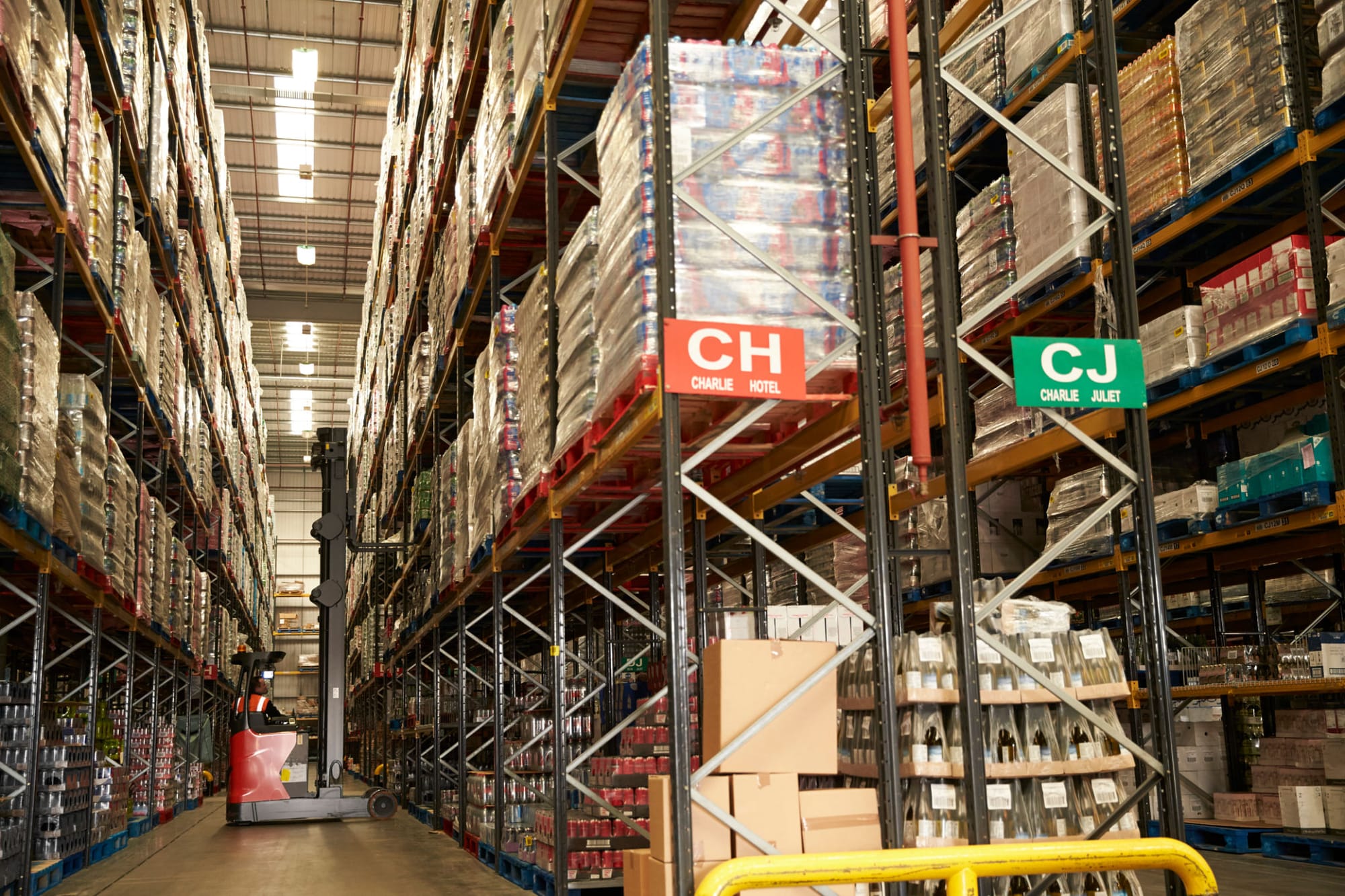
In modern industrial logistics, modern warehouse pallet racking systems represent far more than vertical steel frameworks; they are structural infrastructures engineered to balance dynamic mechanical loads, automated handling workflows, seismic limits, and cubic space utilization. From high-throughput FMCG fulfillment centers to cold-chain facilities, procurement decisions require certified structural integrity and exact operational synchronization.
Optimized aisle geometries that elevate usable storage capacity by up to 65% while reducing structural footprint costs.
Precision limit-state calculations calculating pallet weights, deflection ratios (1:200), and dynamic shear forces.
Laser-surveyed structural tolerances (EN 15620) compatible with VNA trucks, pallet shuttles, and autonomous robots.
In-house survey, PE-stamped engineering, certified installation crews, load signage, and annual EN 15635 audits.
Global supply chain managers, 3PL directors, and distribution engineers face complex trade-offs when investing in warehouse pallet racking systems. Choosing between high selectivity and maximum static density dictates warehouse throughput, handling equipment procurement, civil floor slab stress, and capital efficiency.
GENEX Racking Solutions UAE engineers high-performance storage ecosystems tailored to international standards. Whether configuring wide-aisle selective racking, double-deep reach layouts, multi-tier mezzanine floors, or pallet-flow systems, our structural designs are engineered for load predictability, building regulatory approvals, and multi-decade service life.
Industrial pallet racking is an unyielding structural assembly subjected to cyclic dynamic loads. GENEX maintains rigorous control across the entire project lifecycle to eliminate operational risk and structural failure.
We review floor slab concrete compressive strength, joint expansions, rebar layouts, and point-load tolerances (kN/m²) to prevent slab punching shear.
Finite element structural analysis calculating upright slenderness ratios, beam connector moment capacities, and ESFR sprinkler hydraulic clearances.
Trained installation crews ensure frame plumbness within EN 15620 millimeter thresholds, driving certified wedge anchors and safety beam locking pins.
Official structural load warning notices, Civil Defence coordination dossiers, and scheduled EN 15635 damage audit programs protect your team from day one.
Selecting the optimal pallet racking configuration requires aligning SKU diversity, cycle frequency, forklift kinematics, and floor load boundaries. Explore our primary industrial configurations below.
The global benchmark for flexibility. Provides uninhibited 100% direct access to every pallet position. Perfect for warehouses handling fast SKU rotations and FMCG distribution.
Stores pallets two-deep in back-to-back runs, cutting operational aisle count by up to 50%. Ideal for facilities with medium SKU variety and multi-pallet batches.
Continuous storage lanes eliminate standard operating aisles, allowing forklifts to enter racking bays directly. Exceptional floor utilization for bulk and cold storage.
Slightly pitched roller lanes harness gravity to feed pallets from rear replenishment aisles to front picking faces. Guarantees true FIFO rotation for perishable goods.
Reinforced upright columns and engineered box beams engineered for excessive unit loads exceeding 3,000 kg per level, machinery components, and industrial tooling.
Converts unused overhead vertical clearance into multi-level picking platforms. Racking columns serve as direct structural supports, drastically reducing steel costs.
Unimpeded front storage runs with no vertical front columns. Engineered specifically for long, non-palletized inventory like structural steel, aluminium extrusions, and timber.
Semi-automated deep lane storage integrating radio-frequency shuttles inside rack rails. Eliminates forklift penetration into bays, slashing cycle times and beam damage.
Evaluating warehouse pallet racking systems involves balancing pallet selectivity, inventory density, lift truck investment, and SKU velocity. Use this engineering matrix to evaluate optimal configurations for your DC.
| Racking Architecture | Pallet Accessibility | Floor Space Utility | Stock Rotation Logic | Forklift Compatibility | Relative CapEx Index |
|---|---|---|---|---|---|
| Selective Pallet Racking | 100% Direct Immediate | 40% - 45% | FIFO / LIFO | Counterbalance, Reach Truck, VNA | Baseline (1.0x) |
| Double Deep Pallet Racking | 50% Direct (Front Pallet) | 55% - 65% | LIFO | Pantograph Reach Truck | Economical (1.2x) |
| Drive-In Racking System | Lane Dependent (<15%) | 70% - 80% | Strict LIFO | Standard Counterbalance / Reach | Moderate (1.35x) |
| Gravity Pallet Flow | Front Face (Automatic) | 75% - 85% | Strict FIFO | Standard Handling Equipment | Premium (2.4x) |
| Radio Shuttle System | Semi-Selective by Lane | 80% - 90% | Configurable | Standard Forklifts + Shuttles | Capital Intensive (2.8x) |
| Rack-Supported Mezzanine | 100% Pick Face Access | Vertical 200%-300% | Universal | Conveyors, AGVs, Manual Picking | Engineered (1.9x) |
CapEx index represents aggregate project installation cost normalized against standard wide-aisle selective racking. Actual project pricing depends on raw steel indices, seismic zone classification, and floor anchoring depth.
A catastrophic rack collapse is one of the most hazardous events in industrial operations. Structural integrity cannot be left to generic catalog approximations. GENEX engineers every warehouse pallet racking system according to internationally audited standards, including EN 15512, FEM 10.2.02, and RMI (Rack Manufacturers Institute) standards.
Beams, uprights, and dynamic bracing are engineered to resist dead loads, vertical live loads, beam impact forces, and global sway displacement.
Heavy-gauge baseplates distribute high point loads across concrete slabs, preventing structural cracking. Hilti anchor bolts guarantee verified pull-out resistance.
Heavy wrap-around upright protectors, heavy-gauge sigma aisle buffers, and beam auto-locking spring clips prevent accidental beam displacement from forklift forks.
System heights and transverse flues engineered to maintain mandatory sprinkler head clearance, smoke detection cones, and emergency egress corridors.
Procurement professionals must look beyond current operational demands. The convergence of industrial automation, green building certifications, and dynamic supply chain shocks is redefining racking design priorities.
Traditional racking had wide tolerances for manual forklift operators. Tomorrow's facilities demand millimeter-level EN 15620 Class 300 tolerances, integrated bottom-tier guidance rails, QR-matrix fiducial marker plates, and unobstructed base profiles tailored for Autonomous Mobile Robots (AMRs) and automated pallet runners.
Scope 3 emission auditing is becoming mandatory for Fortune 500 supply chains. Procurement departments are demanding Environmental Product Declarations (EPDs), certified electric arc furnace (EAF) low-carbon steel profiles, and non-toxic thermosetting epoxy powder coatings to meet LEED and BREEAM industrial facility goals.
E-commerce SKU volatility makes rigid warehouse builds obsolete. Modern procurement strategies specify modular beam-to-frame connector profiles (50mm or 75mm pitches) with standardized component cross-compatibility, enabling rapid reconfiguration from selective pallet storage into multi-tier carton-flow picking modules.
GENEX Racking Solutions UAE bridges the gap between raw manufacturing capability and certified on-site structural execution, offering an accountable, single-source partner across the Middle East, Africa, and international trade corridors.
Every bay is mathematically modeled for load elasticity, deflection limits, and seismic stability before a single steel coil is unrolled.
Advanced CNC roll-forming lines, automated punching matrices, and automated continuous welding ensure microscopic dimensional consistency.
We do not outsource critical assembly. GENEX field engineers supervise every anchor setting, torque verification, and laser alignment.
Full regulatory documentation assistance, structural load calculations, and fire clearance submittals for trouble-free warehouse handover.
Annual third-party technical damage inspections, green-amber-red hazard labeling, and prompt structural replacement parts support.
Single English-speaking project management office coordinating international multimodal freight, container packing, and global supervision.
Accelerate your project timeline and prevent expensive design revisions. Providing accurate foundational parameters allows GENEX engineers to deliver calibrated CAD configurations, load capacity certifications, and precise project quotations within 48 hours.
Dimensions (L x W x H mm), bottom board orientation, maximum loaded weight per pallet, and allowable overhang tolerances.
Lowest obstruction height (HVAC ducts, lights, crane rails, roof trusses), building column grid spacing, and door elevations.
Forklift manufacturer, mast collapsed/extended height, turning radius, and minimum right-angle stacking aisle width (Ast).
Slab thickness, concrete compressive strength (C25/30 or higher), expansion joint layouts, and dynamic/static load capacity limits.
Total SKU inventory count, batch size, rotation protocol (FIFO vs. LIFO), and peak inbound/outbound pallet cycle movements per hour.
In-rack sprinkler requirements, flue spaces (longitudinal and transverse 75mm-150mm), and Civil Defence emergency egress corridors.
Comprehensive answers to the most common engineering and procurement questions asked by logistics professionals worldwide.
Selecting the optimal warehouse pallet racking system involves an engineering analysis of six key operational parameters: SKU profile diversity, stock rotation discipline (FIFO vs. LIFO), pallet dimensional variances, dynamic and static slab load capacities, material handling equipment (reach trucks, VNA, counterbalanced), and clear vertical clearance beneath fire suppression systems. High SKU variety with individual pallet access demands Selective Pallet Racking, while low-variety, high-volume bulk inventory benefits dramatically from Drive-In or semi-automated Radio Shuttle systems.
EN 15512 is the definitive European standard governing the structural design of steel static pallet racking. It specifies limit state design principles specifically formulated for thin-gauge, cold-formed steel profiles. The standard factors in beam deflection boundaries (strictly capped at span/200), upright torsional buckling, frame second-order sway effects (P-Delta effects), placement placement tolerances, and dynamic impact buffers. Working with an EN 15512-compliant manufacturer guarantees that published bay and beam load ratings reflect rigorous empirical testing rather than theoretical estimations.
Yes, traditional pallet racking can be integrated into autonomous environments, but it requires retrofitting to meet tighter installation tolerances. Autonomous Mobile Robots (AMRs) and AGVs demand structural alignments matching EN 15620 Class 300 or 400. Upgrades typically require leveling bottom footplates to compensate for floor deviations, anchoring specialized bottom-level guide rails, applying optical QR or lidar reflector targets to upright faces, and retrofitting cantilevered low-profile base legs to prevent robot navigation sensors from triggering false obstacle stops.
Roll-formed pallet racking is manufactured from coiled sheet steel passed through successive cold-rolling dies, resulting in an exceptional strength-to-weight ratio, modular pin-connector adjustability (typically on 50mm or 75mm increments), and cost-effective shipping and manufacturing. Structural steel racking is fabricated from hot-rolled C-channels with bolted connections, offering extreme resistance to heavy impact. While structural steel provides high durability in heavy manufacturing, roll-formed racking delivers a lower initial capital expenditure and simpler reconfigurability for standard distribution warehouses.
Under the international standard EN 15635 (Steel Static Storage Systems - Application and Maintenance of Storage Equipment), warehouse racking requires a structured inspection protocol. This includes: (1) Immediate daily reporting of forklift impacts by floor operators; (2) Weekly or monthly documented visual inspections by the warehouse safety officer; and (3) An annual formal technical audit conducted by an independent or manufacturer-certified competent inspector. Deformations exceeding 3mm across a 1-meter span on an upright require immediate offloading and component replacement.
GENEX provides comprehensive structural calculation documentation, PE-stamped layout drawings, finite element analysis (FEA), concrete slab core drill verifications, and flue-space fire safety drawings to streamline official approvals. We ensure proper clearance between top pallet loads and ESFR fire sprinkler heads (minimum 450mm to 900mm depending on local fire authority codes), incorporate required transverse and longitudinal flue clearances, and maintain emergency travel paths for rapid Civil Defence life safety approvals.
Send our structural engineering department your warehouse floor drawings, target pallet load weights, and handling truck specifications. We will calculate load capacities, provide comprehensive layout drawings, and engineer a compliant storage solution for your facility.