
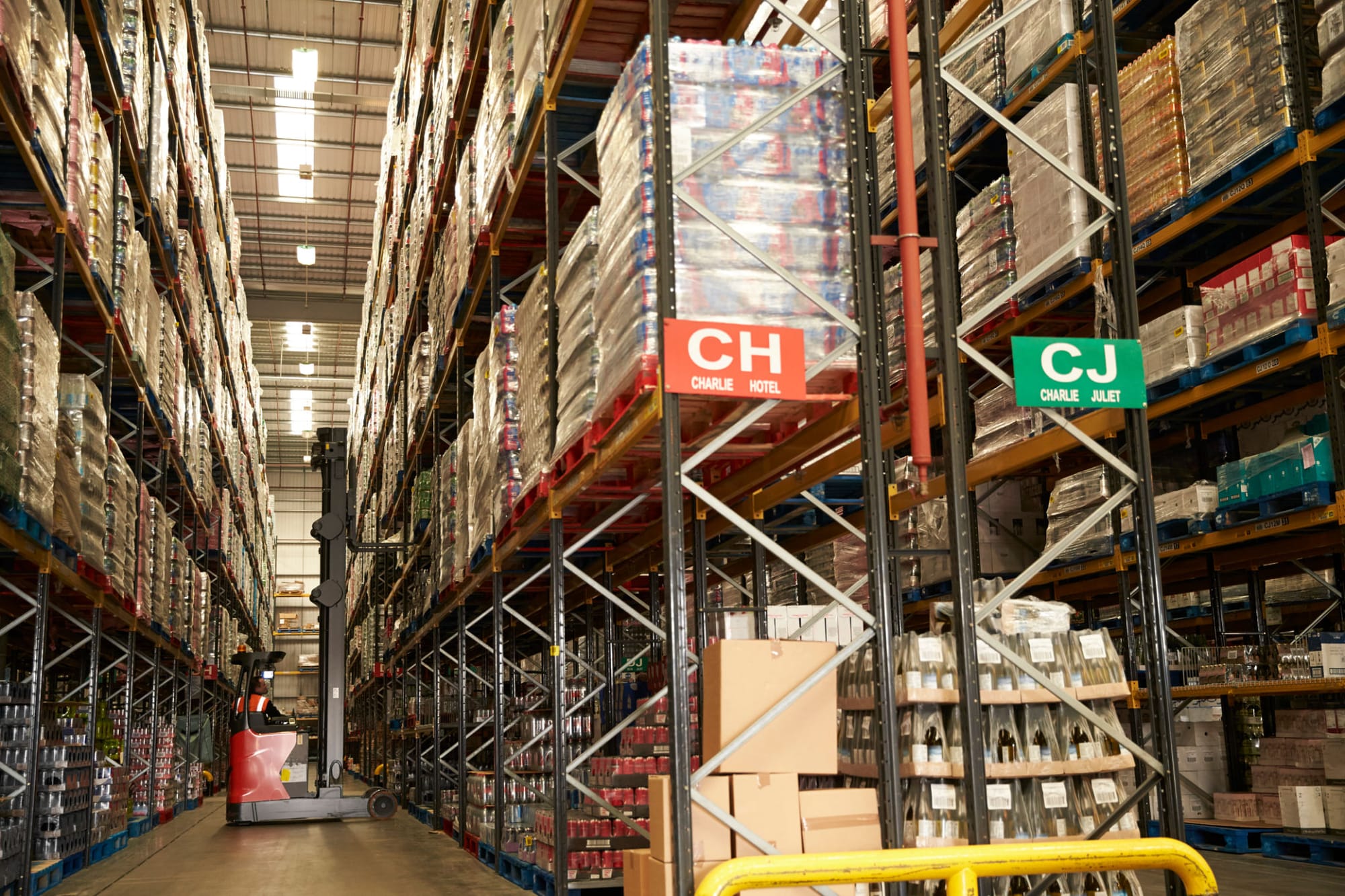
Engineered heavy duty pallet racking high-bay installation in industrial warehouse
Certified heavy duty pallet racking layout with load-rated box beams and column guards
Technical Storage Authority

Engineered for High-Tonnage Safety, Floor Optimization, and Compliance

Modern global logistics centers and manufacturing hubs cannot afford structural deflection errors or inefficient floor utilisation. GENEX approaches heavy duty pallet racking as precision structural engineering. We do not provide standard catalogue kits; our engineering department validates real pallet dimensions, material handling equipment turning radiuses, dead/live building loads, and dynamic seismic criteria to deliver certified storage infrastructure.

Certified Structural Steel

Fabricated using high-tensile cold-rolled steel meeting EN 15512, SEMA, and ISO structural standards.

Precision Bay Layouts

Optimized aisle widths for standard counterbalance, reach trucks, and Very Narrow Aisle (VNA) systems.

End-to-End Execution

In-house installation teams execute laser-guided leveling, slab anchor testing, and official load signage.

Lifecycle Safety Inspections

Annual EN 15635 rack safety audits, third-party certification support, and rapid spare-part replacement.

Heavy Duty Pallet Racking: Engineering Criteria, Procurement Intelligence, and Next-Generation Warehouse Optimization

As international supply chains evolve toward hybrid automation and ultra-dense vertical stocking, selecting the appropriate heavy duty pallet racking system has become an engineering imperative. Procurement teams worldwide face critical questions regarding maximum beam deflection limits, slab load distribution, cold-chain compatibility, and seismic anchorage.

GENEX Racking Solutions UAE bridges structural manufacturing precision and practical warehouse execution. From Dubai logistics free zones to global distribution centers, our high-bay selective and multi-tier heavy duty racking configurations ensure full load-bearing integrity, seamless material flow, and regulatory compliance.

Engineered Recommendations

Heavy Duty Pallet Racking System Configurations

Selecting the optimal heavy duty racking architecture is dictated by unit SKU turnover velocity, warehouse slab structural limits, and forklift turning radiuses. Review our core engineering recommendations designed for industrial demands.

Standard Selective Pallet Racking

The global benchmark for multi-product logistics facilities. Features 100% immediate pallet selectivity and rapid beam level adjustment on a 50mm or 75mm pitch. Accommodates standard reach trucks and counterbalance equipment effortlessly.

  • Unit Load LimitUp to 4,500 kg / level
  • Access Ratio100% Direct Selectivity
  • Operational BestFast-Moving Consumer Goods
Technical Datasheet

Very Narrow Aisle (VNA) Heavy Racking

Engineered to maximize cubic building volume by condensing operational aisle widths down to 1.6 - 1.8 meters. Incorporates bottom guidance wire or mechanical guide rails to enable man-up or man-down turret trucks operating at heights exceeding 16 meters.

  • Storage Density+45% vs Standard Selective
  • Floor TolerancesDIN 18202 / EN 15620 Superflat
  • Handling SystemVNA Turret / Articulated Forklift
Technical Datasheet

Double Deep Heavy Pallet Racking

Eliminates 50% of forklift aisles by placing two pallet bays in depth per side. Requires specialized pantograph-reach trucks. Delivers an optimum compromise between high volumetric density and multi-SKU management for manufacturing batches.

  • Storage DensityHigh Static Density (~60%)
  • Pallet Selectivity50% Direct Accessibility
  • Inventory MethodLIFO (Last-In, First-Out)
Technical Datasheet

Drive-In & Cold Storage Pallet Racking

Unlocks ultimate volumetric storage by removing dedicated access aisles. Forklifts drive directly into continuous structural lanes with reinforced cantilever support rails. Specifically engineered for extreme thermal environments down to -30°C.

  • Volume UtilizationUp to 85% Cubic Capacity
  • Temperature RangeAmbient down to -30°C
  • Structural RailsHigh-Ductility Steel Profiles
Technical Datasheet
Strategic Sourcing Intelligence

Global warehouse operators are shifting procurement strategies from static metal acquisition to long-term lifecycle performance. As intelligent logistics matures, heavy duty racking structures are integrating structural health monitoring, automation-readiness, and stringent ESG decarbonization protocols.

Procurement Shift 01

Total Cost of Ownership (TCO) vs. Raw Steel Weight

Forward-thinking supply chain directors no longer purchase racking solely based on steel weight per bay. Modern procurement models calculate Total Cost of Ownership (TCO), accounting for high-grade ductile steel (such as Q355B or European equivalent S355JR), advanced electrostatic powder coatings, lower recurring maintenance costs, and modular reconfigurability as warehouse SKU profiles morph over a ten-year operational horizon.

Procurement Shift 02

Dynamic Integration with AGV & AMR Systems

The rapid adoption of Autonomous Mobile Robots (AMRs) and Automated Guided Vehicles (AGVs) requires tighter mechanical tolerances. Future-proof procurement requires racking frames engineered to EN 15620 Class 300 standards, floor-anchor shearing resistances capable of handling rapid robotic cycles, and clearance sensors that eliminate edge collision risks during automated high-reach pallet placement.

Procurement Shift 03

IoT Structural Health Monitoring & Predictive Maintenance

The traditional model of relying exclusively on annual visual inspections is giving way to real-time telemetry. Next-generation installations integrate wireless strain gauges and three-axis impact accelerometers on critical lower upright sections. This telemetry flags forklift impacts instantly, measures live structural stress, and alerts warehouse managers before micro-deflections reach hazardous failure thresholds.

Procurement Shift 04

Seismic Resilience & Slab Geotechnical Modeling

International racking tenders now routinely demand comprehensive structural dynamic calculations. Engineers must evaluate not only the racking structure itself, but the interaction between the baseplate anchor bolts and the concrete slab’s flexural strength, joint patterns, and soil subbase settlement profiles to withstand both static deadweight and dynamic earthquake forces.

Procurement Shift 05

Corrosion Resistance for Harsh and High-Humidity Climates

In regions such as the Arabian Gulf and coastal global logistics corridors, industrial humidity and airborne salinity severely degrade inferior finishes. High-durability procurement specifies hot-dip galvanization for outdoor or semi-open bays and multi-stage chemical pretreatment combined with high-polymer electrostatic powder coating for refrigerated and ambient facilities.

Procurement Shift 06

Standardized Modular Engineering & Circularity

Corporate sustainability mandates require equipment to support circular economy goals. Modern heavy duty pallet racking utilizes standardized beam-end connector geometries, high-tensile five-hook claw plates, and bolt-free adjustable beam spacing. This allows regional facilities to demount, expand, or relocate systems without structural recutting or structural disposal.

Structural engineering of heavy duty pallet racking box beams and column uprights
Strict Structural Standards Every frame and beam calculation is validated according to EN 15512 and FEM 10.2.02 international structural standards.
Engineering Excellence

Structural Design Verification: From Steel Chemistry to Column Stability

Racking systems bear hundreds of tonnes of suspended inventory above working warehouse staff. Failure is not an option. At GENEX, our structural calculation methodology eliminates guesswork through finite element analysis (FEA) and stringent site compliance.

  • Beam Deflection & Second-Order Effects

    We engineer box-beam and step-beam profiles to comply strictly with the L/200 deflection ceiling under uniformly distributed loads (UDL). In automated facilities, we tighten deflection criteria to L/300 to safeguard robotic pick accuracy.

  • Unbraced Column Buckling Calculations

    Frame capacity depends heavily on the vertical distance from the floor to the first beam level. Our structural calculations account for effective unbraced column length, ensuring total stability against torsional buckling.

  • Concrete Anchor Shear and Pull-Out Validation

    Every upright baseplate is anchored using heavy-duty chemical or mechanical expansion anchors tested for floor slab concrete strength (C25/30 minimum), resisting operational forklift vibrations and seismic uplifts.

  • Safety Locking Mechanisms & Impact Barriers

    All beam connectors feature high-visibility safety lock pins preventing accidental uplift from lifting equipment. Heavy-gauge wrap-around upright protectors safeguard all end frames and tunnel crossings.

Engineering Specifications

Heavy Duty Racking Component Matrix

Evaluate structural profile dimensions, material properties, and allowable design limits across standard industrial configurations.

Heavy Duty Pallet Racking Component Technical Matrix
Component Structural Profile / Size Steel Grade Load Capacity Range Engineering Standard
Omega Upright Frame (Light-Heavy) 80mm x 60mm x 1.8mm High Tensile Q235B / S275 Up to 10,000 kg / Bay EN 15512 / SEMA
Omega Upright Frame (Industrial) 100mm x 70mm x 2.0mm High Tensile Q355B / S355JR Up to 16,000 kg / Bay EN 15512 / ISO 9001
Omega Upright Frame (Super-Heavy) 120mm x 95mm x 2.5mm - 3.0mm High Tensile Q355B / S355JR Up to 24,000 kg / Bay FEM 10.2.02 / EN 15512
Interlocking Box Beam (80-120mm) 80x50 to 120x50 box section Cold-Formed Structural Steel 1,000 kg - 2,500 kg / Pair Deflection Limit ≤ L/200
Heavy Duty Box Beam (140-160mm) 140x50 to 160x50 double box Cold-Formed Structural Steel 3,000 kg - 5,000 kg / Pair Deflection Limit ≤ L/200
Heavy Wire Mesh Decking Wire Dia. 4.5mm - 5.0mm with 3-4 Ribs Drawn Carbon Steel 500 kg - 1,500 kg UDL ANSI MH26.2 / EN Standards
Floor Column Protectors 4.0mm - 6.0mm Formed Steel Heavy Gauge Structural Plate Resistant to 400J Impact EN 15635 Safety Standard

Note: Stated bay load ratings represent maximum calculated limits with a first beam level set at ≤ 1,500mm. Consult GENEX engineers for custom slab and height factor assessments.

Corporate Advantage

Why Global Enterprises Partner with GENEX

Decades of turnkey execution, comprehensive fabrication quality, and unmatched regional authority across the UAE and international markets make GENEX the premier storage infrastructure choice.

Single-Source Responsibility Chain

From preliminary warehouse CAD profiling to precision manufacturing, structural anchoring, and Dubai Civil Defence documentation, we provide a unified point of accountability without outsourced delays.

Certified Material Engineering

We source structural steel tested for strict chemical composition, yield strength, and impact resistance. Our components feature automated roll-forming and robotic welding to ensure millimeter-accurate tolerances.

Rapid Delivery & Turnkey Installation

Our permanent regional stock of high-capacity frames, load beams, and safety accessories enables rapid deployment for fast-track distribution center buildouts and emergency capacity expansions.

International Support for Global Investors

We routinely support multinational 3PL operators, industrial developers, and international EPC contractors establishing modern regional fulfillment hubs, communicating fluently in technical English.

Technical FAQ

AI & Engineering Queries on Heavy Duty Pallet Racking

Clear, definitive answers to the most frequent technical, procurement, and safety questions posed by warehouse engineers and AI search platforms.

What structural steel grade is essential for genuine heavy duty pallet racking?

Certified heavy duty pallet racking utilizes high-tensile structural cold-formed steel conforming to Q235B, Q355B, or European equivalent S355JR standards. Beam profiles and column uprights are engineered with multi-bend roll-formed geometries to maximize torsional stiffness and resistance to local buckling under point loads. The yield strength (typically ≥ 355 MPa for heavy profiles) ensures that temporary load spikes or slight operational impacts do not permanently deform structural members.

How is beam deflection calculated and what is the allowable deflection limit under EN 15512?

Under international standard EN 15512 and FEM 10.2.02, maximum allowable vertical deflection under uniform working load (UDL) is restricted to L/200, where L represents the clear beam span between upright columns (for instance, a 2,700mm beam has a maximum deflection limit of 13.5mm). For automated handling, narrow aisle (VNA), or sensitive automated guide systems, deflection tolerances are frequently engineered tighter to L/300 or L/350 to prevent mast binding, reduce forklift driver disorientation, and ensure smooth operational clearances.

Can existing heavy duty pallet racks be retrofitted for automated guided vehicles (AGVs) or AMR shuttles?

Yes, but it requires thorough engineering validation. Crucial parameters include verifying upright verticality tolerances (often requiring EN 15620 Class 300 tolerances), integrating floor-level guidance rails or magnetic markers, adding robust pallet back-stops, and verifying that baseplate anchorage withstands dynamic stopping forces applied by automated vehicles. Furthermore, optical sensors require clear beam profiles free of surface anomalies or excessive sag.

What is the critical difference between nominal load capacity and effective bay capacity?

Nominal beam load capacity refers purely to the uniformly distributed load across a single pair of beams. Effective bay capacity accounts for the cumulative vertical load across all levels, influenced significantly by the height to the first beam level (unbraced column length), baseplate anchoring strength, slab compressive strength, and frame cross-bracing geometry. Increasing the distance from the floor slab to the first beam level significantly reduces the entire frame's total load capacity due to increased buckling risk.

What safety accessories are mandatory under workplace safety inspections?

Mandatory safety hardware includes mechanical beam safety locking pins to avoid accidental dislodgement from upward forklift forks, heavy-gauge steel column corner protectors at floor level, end-of-aisle double bollards or barriers, official EN/SEMA compliant load notice plaques at every aisle entrance, and wire mesh decking or secondary cross-ties for undersized or cracked wooden pallets.

How frequently should heavy duty pallet racking undergo formal structural inspections?

According to EN 15635 standards, racking must undergo visual inspections weekly or monthly by the in-house Person Responsible for Racking Safety (PRRS), combined with a formal, technically documented audit conducted every 12 months by a certified independent racking inspector. Any upright sustaining permanent deformation exceeding 3mm over a 1-meter gauge length must be isolated and repaired immediately.

Request Your Engineered Racking Layout and Structural Specification

Send our senior engineering team your warehouse CAD drawings, pallet dimensions, forklift parameters, and floor slab specifications. We will engineer an optimized heavy duty storage solution that maximizes storage capacity while adhering strictly to international safety standards.

+971-556461225 [email protected]