
No matching pages. Try "pallet", "mezzanine" or "cantilever".
What Are the Top Drive-In Racking Systems in 2026? This question matters when floor space is limited, pallets share similar products, and storage density affects operating costs. Drive-In Racking Systems can place multiple pallets deep within one loading lane. They reduce aisles and increase cubic utilization. However, they also limit direct access to individual pallets.
David E. Mulcahy, a recognized warehouse operations author and consultant, has stated, “Storage density is not the same as warehouse efficiency.” That warning should guide every 2026 comparison. The strongest systems are not simply the densest. They must match pallet dimensions, forklift behavior, load weight, turnover rates, and temperature conditions. A frozen-food facility may need corrosion-resistant components and protected rails. A beverage warehouse may require reinforced uprights and carefully rated pallet supports.
This guide examines leading Drive-In Racking Systems through practical criteria. It considers structural strength, entry design, safety features, installation quality, and long-term maintenance. It also compares drive-in and drive-through configurations. The difference is important. Drive-in layouts usually support last-in, first-out storage. Drive-through designs can support first-in, first-out workflows.
Real warehouses are rarely perfect.
A system may look efficient on a plan but feel restrictive during peak dispatch hours. Forklift alignment, damaged pallets, and changing inventory can expose weaknesses. Therefore, this 2026 overview balances manufacturer specifications with operational experience. It asks a harder question: which system performs reliably after daily use, not merely during a sales demonstration?
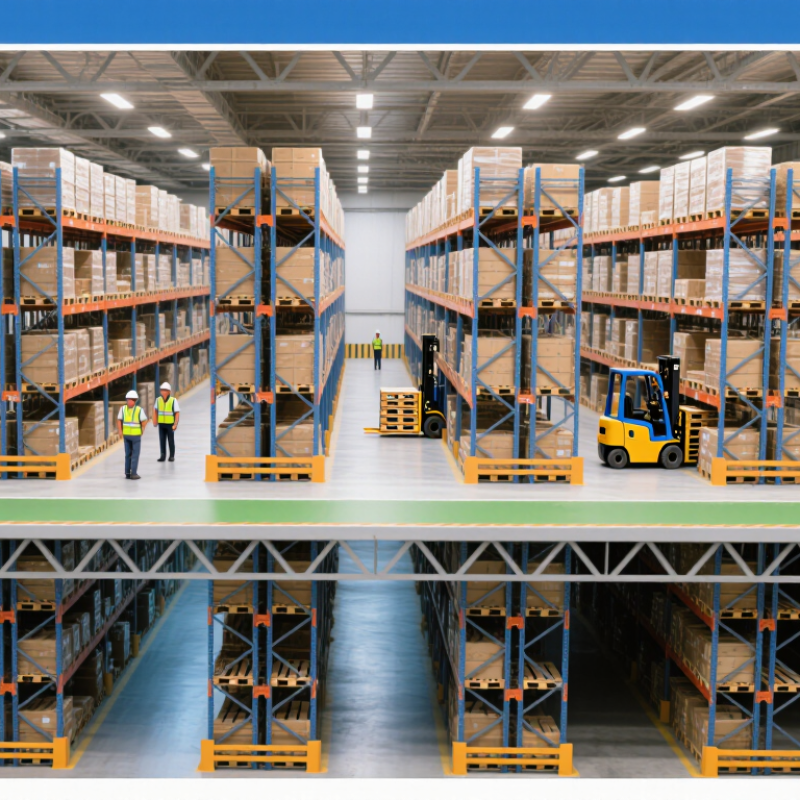
Drive-in racking is a high-density pallet storage system built around deep lanes. Upright frames form the lane walls, while horizontal rails support pallets above the floor. A forklift enters the lane and places pallets on these rails. It does not need a separate aisle for every pallet position.
The structure usually includes uprights, pallet support rails, top bracing, guide rails, and rear stops. Drive-in layouts have one loading face and normally support LIFO rotation. Drive-through layouts have two loading faces and can support FIFO movement.
The difference is practical, not cosmetic. According to Grand View Research’s 2024 warehouse racking analysis, the market is expected to grow at roughly 8% annually through 2030. That growth reflects pressure to store more inventory within limited warehouse space.
The strongest 2026 systems should match pallet dimensions, load weight, forklift clearance, and operating temperature.
Yet automation alone cannot correct poor lane discipline. Operators need visible load limits, impact protection, inspections, and consistent pallet quality. One weak pallet can damage a rail or create an unstable load. That risk is often underestimated.
Drive-in racking delivers excellent density, but it sacrifices direct access and product flexibility. A design may look efficient on paper, then perform poorly when inventory changes frequently.
What Are the Top Drive In Racking Systems in 2026?
Drive-in racking creates dense pallet storage by removing most access aisles. A forklift enters the lane, places pallets on horizontal support rails, and reverses out carefully. Each lane usually stores one stock-keeping unit, or SKU. This layout supports last-in, first-out rotation because the newest pallet enters first. Drive-through designs allow access from both ends and can support first-in, first-out movement. The difference matters for food, chemicals, and dated inventory.
The system works best when pallets share similar dimensions, weights, and turnover rates. Deep lanes can reduce wasted floor space, but they also slow picking. A 2024 MHI Annual Industry Report found that 74% of supply-chain leaders planned to increase technology investment. That figure does not mean every warehouse needs automation. Sometimes, better slotting creates more value than expensive equipment.
A practical installation needs upright frames, guide rails, impact protection, and carefully checked aisle clearances. Forklift mast height matters. So does uneven flooring. The European Federation of Materials Handling recommends verified rack design and routine inspections for storage equipment. A common mistake is measuring only pallet width. Operators should also check load overhang, pallet condition, and turning space. Not always. One damaged pallet can disturb an entire deep lane. Drive-in racking is powerful, but its density can hide poor rotation and unsafe handling habits.
What Are the Top Drive In Racking Systems in 2026?
In 2026, drive-in racking remains useful for dense pallet storage and limited floor space. The standard single-entry system follows a last-in, first-out workflow. Forklifts enter storage lanes and place pallets on continuous rails. This design suits uniform goods with long storage cycles. It also reduces access aisles, sometimes significantly.
The double-entry drive-through system allows forklifts to load from one side and unload from the other. It supports a first-in, first-out process more effectively than single-entry layouts. Some facilities now use shuttle-assisted drive-in systems. A powered shuttle moves pallets deeper into the lane, reducing forklift travel and collision exposure. Mobile bases can also reposition rack rows, but they need stronger floors, careful controls, and reliable maintenance. These systems cost more. They are not automatically better.
Tips: Match the system to your inventory rotation. Measure pallet dimensions, load weight, forklift clearance, and lane depth before choosing. Keep heavier pallets in lower positions. Inspect rails, uprights, and protective guards regularly. One overlooked clearance issue can slow the entire warehouse.
A practical selection should consider temperature, pallet quality, and daily handling pressure. Cold-storage operations may favor dense single-entry lanes. Mixed products usually need more selective access. In my assessment, many installations overvalue capacity and undervalue retrieval speed. That is a costly mistake. A small pilot lane can reveal real bottlenecks before full deployment.
In 2026, top drive-in racking systems are not simply the densest ones. They must match pallet behavior, forklift reach, and stock rotation. Single-entry drive-in lanes suit last-in, first-out storage for uniform products. Double-entry drive-through lanes support first-in, first-out movement, but need access from both aisles. Measure clear height, beam spacing, and pallet overhang before comparing capacity. A drawing can hide awkward columns.
Capacity should be checked per pallet position, bay, and upright frame. Ask for calculations using actual pallet weight, dimensions, and floor conditions. More levels increase cubic storage, yet they can slow replenishment when a rear pallet is needed. Test a representative lane with the real forklift. Small clearance errors become expensive damage. Safety depends on guided entry, rack protectors, backstops, visible load signs, and trained operators. Inspect rails, uprights, and pallet supports after impacts, even when damage looks cosmetic. Local engineering review may be necessary for seismic or unusual loads.
This part is often underestimated. Compare total cost, not only steel price. Include slab repairs, aisle width, installation, inspections, forklift changes, and lost labor during loading. A cheaper frame may require stronger protectors or more maintenance. Dense storage can reduce building expansion, but density is not automatically efficiency. Model weekly moves, damaged pallets, and peak-season congestion. The result may challenge the original layout. Leave room for human mistakes; perfect operation exists mainly on paper.
| System Type | Typical Storage Density | Pallet Access | Typical Load Capacity | Recommended Lanes and Depth | Inventory Method | Safety Considerations | Relative Installed Cost | Best Application |
|---|---|---|---|---|---|---|---|---|
| Drive-In Racking | High: approximately 60%–75% of floor area can be used for pallet storage because fewer aisles are required. | One-sided access; pallets are loaded and retrieved from the same aisle. | Commonly 500–1,500 kg per pallet position, subject to upright, rail, pallet, and engineering specifications. | Usually 2–10 pallets deep per lane; lane depth is limited by forklift reach and load stability. | LIFO; last pallet loaded is normally the first pallet retrieved. | Requires guided forklift operation, protected uprights, back stops, impact barriers, load signage, and regular inspection. | Medium | High-volume storage of uniform products with relatively low stock rotation. |
| Drive-Through Racking | High: generally similar to drive-in storage, with an additional access aisle. | Two-sided access; pallets can be loaded from one side and unloaded from the other. | Commonly 500–1,500 kg per pallet position, depending on the engineered configuration. | Often 2–10 pallets deep per lane; lane length should match handling equipment and product flow. | FIFO is possible when loading and unloading are controlled from opposite ends. | Needs clear traffic separation, end-of-lane protection, pallet stops, rack guards, and strict forklift procedures. | Medium to High | Perishable goods, batch-controlled inventory, and operations requiring a first-in, first-out flow. |
| Pallet Flow Racking | High: commonly provides strong cubic utilization while maintaining dedicated loading and picking faces. | Two-sided access; pallets move on gravity rollers from the loading side to the unloading side. | Commonly 500–1,500 kg per pallet position; roller and frame ratings must be verified for each load. | Typically 2–20 pallets deep, depending on lane design, pallet quality, and brake-roller requirements. | FIFO; automatic pallet movement supports controlled stock rotation. | Requires speed controllers, lane separators, pallet stops, inspection of rollers, and careful control of damaged pallets. | High | Fast-moving, date-sensitive, or temperature-controlled products with predictable pallet dimensions. |
| Push-Back Racking | High: usually stores more pallets per aisle than selective racking while retaining front-facing access. | Single-sided loading and retrieval; pallets are pushed backward on carts or rollers. | Commonly 500–1,500 kg per pallet position, with deeper lanes requiring careful load and cart selection. | Usually 2–6 pallets deep per lane; deeper designs reduce selectivity. | LIFO; the front pallet is generally the last pallet placed in the lane. | Requires level floors, compatible pallets, cart inspections, load stops, upright protection, and controlled forklift speeds. | Medium to High | Multiple stock-keeping units requiring higher density than selective racking but more access than drive-in systems. |
| Selective Pallet Racking | Moderate: commonly about 35%–45% floor utilization because each pallet position is directly accessible. | Direct access to every pallet position from an aisle. | Commonly 500–1,500 kg per pallet position; heavier systems require specific structural design. | Normally one pallet deep, with aisle width determined by the forklift type and operating method. | FIFO or LIFO, depending on warehouse procedures. | Requires beam locks, upright guards, rack protection, load plaques, aisle clearance, and routine damage inspections. | Low to Medium | High-SKU warehouses, mixed inventory, frequent picking, and operations prioritizing accessibility. |
| Mobile Pallet Racking | Very High: can substantially reduce fixed aisle space by opening only the aisle being used. | One active aisle at a time; access depends on powered or mechanically assisted rack movement. | Commonly 500–1,500 kg per pallet position, subject to the mobile base and rack design. | Usually one or more pallets deep; system layout depends on building structure, floor capacity, and aisle requirements. | FIFO or LIFO, depending on the layout and operating process. | Requires interlocked controls, presence sensors, emergency stops, floor rails, anti-crush protection, and controlled access. | Very High | Expensive floor space, cold stores, archives, and facilities needing high density with regular pallet access. |
Comparison basis: Values are industry planning ranges for standard pallet-racking applications and are not a substitute for a site-specific structural design.
Capacity note: Actual capacity depends on upright height, beam span, pallet dimensions, load distribution, steel grade, floor condition, seismic requirements, and local regulations.
Cost note: Relative installed cost includes the rack structure and typical installation complexity but excludes building modifications, forklifts, automation, fire protection changes, and temperature-control systems.
Safety note: All systems should be designed, installed, inspected, and operated according to applicable local workplace-safety and storage-rack standards.
Choosing the best drive-in racking system starts with your inventory, not the rack itself. Drive-in storage suits warehouses holding many pallets of the same product. It uses rails and upright frames to let forklifts enter storage lanes. This design can increase floor utilization, but it normally operates on a last-in, first-out basis. That matters for dated goods.
Measure pallet dimensions, load weights, forklift turning radius, and ceiling height before requesting a layout. A practical site review should also check slab capacity, column protection, aisle width, and emergency access. The 2024 MHI Annual Industry Report states that 55% of supply chain leaders expect to increase technology and innovation investment within two years. However, more technology cannot correct poor measurements. That is an uncomfortable but common mistake.
Compare lane depth with daily throughput. Deep lanes offer more density, while shallow lanes provide faster access and simpler stock control. A 2024 report from Interact Analysis identifies continued growth in warehouse automation investment, yet drive-in racking remains largely mechanical. This can reduce maintenance complexity, but operators still need disciplined inspections. Check guide rails, pallet supports, uprights, and frame connections routinely. Use the manufacturer’s rated capacities and local engineering requirements. A small pilot lane is worthwhile. Real forklift movement often exposes problems that drawings miss. Reassess the design after two weeks of actual loading, unloading, and replenishment.
It stores many pallets of similar goods in limited floor space. Forklifts enter lanes and place pallets on continuous rails.
Operators load and unload pallets from one side. It usually follows a last-in, first-out workflow. This may not suit dated products.
Drive-in racks have one access side. Drive-through racks allow loading from one side and unloading from the other. This supports first-in, first-out handling more effectively.
Uniform products with long storage cycles usually fit well. Mixed products need faster, more selective access. Dense storage is not everything.
Measure pallet dimensions, load weights, forklift clearance, turning radius, lane depth, and ceiling height. Check the floor capacity too.
Deep lanes increase storage density but may slow retrieval. Shallow lanes offer quicker access and simpler stock control. The right balance depends on daily throughput.
No. A powered shuttle can reduce forklift travel and collision exposure. It also increases equipment cost and maintenance needs. Not automatically better.
Inspect rails, pallet supports, uprights, frame connections, and protective guards regularly. Keep heavier pallets in lower positions. Small damage can create larger delays.
A pilot lane reveals real forklift problems that drawings may miss. Observe loading, unloading, and replenishment for two weeks. My first layout may still be wrong.
Drive-In Racking Systems are high-density warehouse storage solutions designed to maximize floor and vertical space by allowing forklifts to enter storage lanes directly. Their structure typically combines upright frames, horizontal support rails, and guided entry points, enabling pallets to be stored several positions deep. This layout follows a compact last-in, first-out operating principle, making it especially suitable for large quantities of similar goods with relatively low product variety.
In 2026, warehouse operators can choose from different configurations, including single-entry and double-entry systems, depending on loading patterns and access requirements. The best option should be evaluated by comparing storage capacity, pallet accessibility, forklift compatibility, structural safety, installation needs, and total ownership cost. While higher density can reduce space expenses, limited direct access may affect inventory rotation and picking efficiency. Selecting the right Drive-In Racking Systems therefore requires balancing available space, product characteristics, throughput expectations, safety procedures, and future expansion plans.