
0%

China’s position in warehouse equipment deserves closer examination, not automatic praise. The phrase “top manufacturer” needs evidence, especially when Selective Pallet Racking supports daily loading, picking, and inventory control.

Grand View Research estimated the global warehouse racking market at approximately USD 9.4 billion in 2023. Its report projects continued growth through 2030, driven by e-commerce, higher storage density, and modern distribution centers. China remains important because its manufacturers combine steel processing, customization, and large-scale production. However, low pricing alone cannot prove dependable performance.

MHI’s 2024 Annual Industry Report describes supply chains as being “at an inflection point.” John Paxton, MHI’s President and CEO, used that phrase while discussing technology, resilience, and changing warehouse expectations. His observation applies directly to rack selection. A rack may look simple. It still affects aisle width, forklift movement, load safety, and future expansion.

The best Chinese suppliers should provide tested load data, clear drawings, traceable materials, and practical installation guidance. Check beam deflection. Inspect upright protection. Ask how damaged frames are replaced.

Small details matter.

This guide compares leading Chinese Selective Pallet Racking manufacturers through product quality, engineering capability, certifications, export experience, and after-sales support. Yet the ranking cannot be perfect. Regional standards, building conditions, and operator habits can change the result. A strong supplier for a cold-storage project may be unsuitable for a fast-moving retail warehouse. That limitation deserves attention before any purchasing decision.
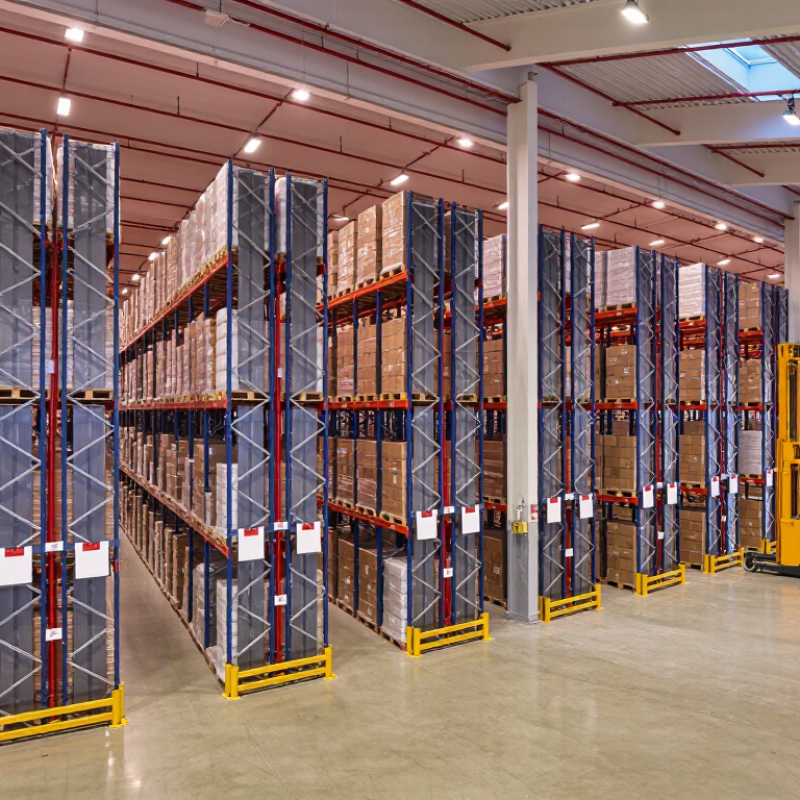
China Top Selective Pallet Racking Manufacturers?

What Is Selective Pallet Racking and How Does It Work?

What Is Selective Pallet Racking and How Does It Work?

Selective pallet racking is a steel storage system designed for direct access to individual pallets. Each pallet sits in its own adjustable storage position. A typical bay includes two upright frames, horizontal beams, and protective decking or pallet supports. Forklifts can enter the aisle and remove one pallet without moving the others. This simple arrangement suits warehouses with many product types and regular stock rotation.

When a forklift places a pallet, the operator aligns it between the beams and checks its stability. The beams carry the pallet load, while the upright frames transfer forces safely to the floor. Engineers calculate beam height, aisle width, pallet weight, and frame capacity before installation. Pallet dimensions matter. A small mismatch can create wasted space or unsafe overhang. Clear load plaques should show the permitted weight for each level.

When comparing manufacturers in China, buyers should request drawings, material specifications, weld quality records, and installation guidance. Experienced suppliers usually verify floor conditions and forklift clearances before production. They should also explain inspection routines for bent frames, loose anchors, and damaged beams. In practice, the first layout is rarely perfect. Product sizes change, and operators sometimes need wider aisles than planned. That lesson deserves attention. Regular inspections and disciplined loading habits often protect a system better than attractive catalog images.

What Is Selective Pallet Racking and How Does It Work?

Selective pallet racking is a single-deep storage system that gives forklifts direct access to every pallet position. The chart compares common pallet footprint standards that can be accommodated through suitable rack design and beam configuration.

Dimensions are shown in millimetres. Reference formats: Euro pallet 1200 × 800 mm, ISO pallet 1200 × 1000 mm, and North American standard pallet 48 × 40 in, equivalent to approximately 1219 × 1016 mm.

Why Choose Selective Pallet Racking from Chinese Manufacturers?

Chinese manufacturers are often chosen for selective pallet racking because they combine production capacity with flexible engineering support. Many facilities can produce uprights, beams, braces, and accessories in varied sizes. This helps warehouses match rack dimensions to pallet weights, aisle widths, and ceiling heights.

Experienced buyers should request load calculations, material specifications, and inspection records before placing an order. A reliable supplier can provide drawings showing beam levels, anchoring points, and safety clearances. Factory audits may also reveal welding quality, coating consistency, and actual testing procedures. Details matter.

Cost is another reason to consider Chinese manufacturing, but the lowest quotation can create problems. A cheaper rack may require thicker components, better packaging, or clearer installation instructions. Communication may also need patience when drawings change across time zones. That happens. Reviewing one sample bay before mass production can expose weak locking pins, uneven paint, or confusing assembly steps. Third-party inspections can add expense, yet they provide useful evidence about dimensions and workmanship. Buyers should also confirm replacement-part availability and after-sales response times, rather than trusting promises alone. A practical comparison should include freight, installation, inspections, and future maintenance—not only the factory price.

Key Criteria for Evaluating Chinese Racking Manufacturers

Choosing a Chinese selective pallet racking manufacturer requires more than comparing prices. Start with engineering evidence. Ask for steel grade reports, load calculations, and drawings for your actual pallet sizes. Upright frames should show consistent welds, clean holes, and stable base plates. Request photographs from production, not only polished catalogue images.

Factory quality control deserves close attention. Check whether incoming steel, roll forming, welding, coating, and final packing are recorded. A reliable manufacturer can trace batches and explain how dimensional tolerances are measured. Ask for independent testing when rack loads are substantial. Confirm that the supplier understands your warehouse floor, forklift paths, seismic conditions, and installation requirements. Small details matter.

After-sales support often reveals the real difference. Test response times before signing a contract. Ask for installation guidance, spare-part availability, inspection procedures, and clear warranty limits. Speak with recent customers if possible, especially those using similar pallet weights. A low quotation may hide weak documentation or difficult communication. No checklist is perfect. One mistake I have made is trusting technical language without checking factory records. A careful site review can expose that gap. Evaluate capacity, workmanship, engineering discipline, and long-term accountability together.

Top Chinese Selective Pallet Racking Manufacturers to Consider

When considering top Chinese selective pallet racking manufacturers, look beyond attractive catalog photos. Experienced suppliers should explain upright profiles, beam connections, load limits, and floor requirements clearly. Ask for factory inspection records, welding procedures, coating thickness, and recent export references. These details reveal more than a polished website.

A dependable manufacturer normally provides layout drawings before quoting. The design should reflect pallet dimensions, forklift turning space, aisle width, and building height. Request load calculations for every beam level. Check whether testing follows recognized international standards, such as EN 15512 or equivalent specifications. Independent inspection can also verify steel thickness, weld quality, and powder coating adhesion.

Factory visits can be useful. I have seen small differences in beam locking pins affect installation speed. Packaging also matters; damaged uprights create delays at the warehouse. Some manufacturers respond quickly but document changes poorly. That weakness deserves attention. Ask for sample drawings, inspection reports, spare-part policies, and installation guidance in writing. A supplier with engineering staff, controlled production, and clear after-sales communication is usually safer to assess than the lowest bidder. Still, even strong manufacturers may need closer supervision when a project uses unusual pallets, narrow aisles, or uneven concrete floors.

How to Select the Right Manufacturer for Your Warehouse Needs

Choosing a selective pallet racking manufacturer in China requires more than comparing prices. The right partner must understand your warehouse layout, pallet sizes, forklift movements, and future storage plans. Ask for load calculations based on your actual pallet weight, beam span, and rack height. A standard drawing may not fit your floor conditions.

Request material specifications, welding details, surface treatment information, and inspection records. Verify whether the manufacturer performs load testing and dimensional checks before shipment. Independent certifications can add confidence, but documents should match the supplied products. Always request recent project references from warehouses with similar operating demands.

Measure carefully.

A reliable manufacturer should review aisle widths, floor flatness, seismic conditions, and installation access. Clear communication matters when drawings change across time zones. Ask how they control steel thickness and protect components during packaging. Small dents can become installation problems later. Even careful teams miss details, especially when selecting from attractive samples. A factory visit or live video inspection may reveal production limits that brochures do not show. Discuss replacement parts, installation guidance, response times, and quality claims before placing an order. The lowest quotation can become expensive when tolerances, delivery details, or engineering support remain unclear. Choose evidence over confident promises.

China Top Selective Pallet Racking Manufacturers? - How to Select the Right Manufacturer for Your Warehouse Needs

Selection Dimension Practical Benchmark Why It Matters What to Verify with the Manufacturer Recommended Evaluation
Load Capacity Common selective-rack configurations are designed for approximately 500–5,000 kg per pallet position, depending on beam length, upright geometry, and storage height. Insufficient capacity can cause beam deflection, frame damage, product loss, and serious safety risks. Rated load charts, engineering calculations, allowable beam deflection, upright capacity, and the exact pallet load used for testing. Reject suppliers that provide only a generic capacity without a configuration-specific calculation.
Pallet and Bay Dimensions Typical beam lengths range from about 1,800 to 3,600 mm; common pallet footprints include 1,200 × 800 mm and 1,200 × 1,000 mm. Correct clearances are required for safe forklift access and stable pallet placement. Pallet drawings, bay-width calculations, beam-to-pallet clearance, aisle layout, and tolerance requirements. Ask for a scaled warehouse layout rather than selecting dimensions from a standard catalogue alone.
Steel Material and Thickness Cold-formed structural sections are widely used; steel grade and thickness vary according to the required load and frame height. Material properties directly affect strength, durability, and resistance to impact or deformation. Material certificates, grade designation, thickness tolerances, yield strength, and traceability records. Compare certified material data, not only the nominal thickness stated in a quotation.
Design Standards Relevant references may include EN 15512, EN 15629, EN 15635, RMI specifications, or applicable local structural and seismic codes. Standards establish requirements for design, installation, inspection, and safe operation. The specific standards applied, design assumptions, seismic category, and engineering responsibility. Select a manufacturer able to design for the regulations governing the destination country.
Surface Treatment Powder coating is common for indoor applications; galvanized finishes are generally more suitable for humid, corrosive, or partially outdoor environments. The finish influences corrosion resistance, appearance, service life, and maintenance requirements. Coating process, pretreatment method, coating thickness, adhesion testing, and salt-spray or corrosion test results where applicable. Match the finish to humidity, temperature, chemicals, wash-down procedures, and expected service life.
Manufacturing Quality Control A controlled process should include incoming-material inspection, roll-forming checks, welding inspection where applicable, dimensional checks, and final inspection. Consistent manufacturing reduces variation between components and simplifies installation. Quality plans, inspection records, calibration certificates, nonconformance procedures, and sample production reports. Request quality documents for the actual project, not only general corporate certificates.
Testing and Certification Testing may include beam-load testing, upright-frame testing, weld inspection, coating tests, and third-party review when required. Independent evidence provides greater confidence than self-declared performance data. Test laboratory accreditation, test date, sample configuration, pass criteria, and whether the report applies to the quoted design. Give greater weight to current, configuration-specific reports from competent laboratories.
Customization Capability Common customization areas include frame height, bay width, beam level, pallet type, aisle width, floor conditions, and building obstructions. A warehouse-specific design improves storage density and operating safety. Engineering drawings, 3D layouts, anchoring details, collision protection, and revision-control procedures. Choose engineering-led customization instead of modifying standard components on site.
Delivery and Packaging Production schedules vary by project scope; export orders commonly require bundled components, moisture protection, and clearly marked packing lists. Good packaging reduces transport damage, missing parts, and installation delays. Production milestones, container-loading plan, component labels, packing list, spare-parts policy, and shipping terms. Use a contract schedule with inspection, delivery, damage-reporting, and replacement requirements.
Installation and After-Sales Support Support may include installation manuals, technician supervision, training, inspection guidance, and replacement components. Correct installation is essential for maintaining the design capacity and long-term safety of the system. Installation scope, response time, warranty terms, inspection intervals, spare-part availability, and service contacts. Treat technical support and lifecycle service as part of the total purchase decision.
Total Cost of Ownership The total budget should include equipment, engineering, packaging, freight, duties, installation, floor preparation, protection, inspection, and future repairs. The lowest purchase price may result in higher installation, maintenance, or replacement costs. A complete cost breakdown, exclusions, warranty coverage, maintenance assumptions, and replacement-part pricing. Compare suppliers using equivalent specifications and a five- to ten-year ownership perspective.

Note: Capacity ranges and technical benchmarks are indicative industry references. Final rack dimensions, load ratings, anchoring, and safety requirements must be confirmed by a qualified engineer for the specific warehouse, pallet, forklift, floor, and local code conditions.

FAQS

Why do buyers consider selective pallet racking from Chinese manufacturers?

They often offer flexible engineering and large production capacity. Manufacturers can adjust uprights, beams, and accessories for different pallet weights. They may also match aisle widths and ceiling heights. Details matter.

What documents should buyers request before ordering?

Request load calculations, material specifications, and inspection records. Ask for drawings showing beam levels, anchoring points, and safety clearances. Written evidence is safer than verbal promises.

How should a warehouse layout be checked?

The layout should reflect pallet size, forklift turning space, aisle width, and building height. Every beam level needs a stated load limit. Uneven concrete floors may require closer engineering review. Small errors become expensive.

Is the lowest quotation the best choice?

Not always. A low price may hide thinner components, weak packaging, or unclear instructions. Compare freight, installation, inspections, and future maintenance. The factory price alone is incomplete.

What should a factory inspection examine?

Check welding quality, coating consistency, steel thickness, and production controls. Review actual testing procedures and recent inspection records. A polished catalog proves very little.

Why is a sample bay useful before mass production?

One sample bay can reveal weak locking pins, uneven paint, or confusing assembly steps. It also shows whether the drawings match the physical rack. That test may prevent wider delays.

How can buyers evaluate installation and after-sales support?

Ask for written installation guidance, spare-part policies, and response times. Confirm whether replacement uprights, beams, and locking parts are available. Fast replies are helpful, but poor documentation remains a weakness.

Should independent inspection be included?

Independent inspection can verify dimensions, welds, coating adhesion, and workmanship. It adds cost, but it provides useful evidence. I might overlook small defects without it.

Conclusion

Selective Pallet Racking is a practical warehouse storage system designed to provide direct access to individual pallets, making it suitable for facilities handling varied products and frequent inventory movement. Its adjustable beams, upright frames, and organized aisle layout allow businesses to use vertical space efficiently while simplifying stock management, loading, and order picking. This article explains how the system works and why it has become a popular choice for warehouses seeking flexibility, scalability, and cost-effective storage solutions.

It also examines the advantages of sourcing Selective Pallet Racking from Chinese manufacturers, including competitive pricing, manufacturing capacity, customization options, and export experience. To evaluate suppliers effectively, buyers should consider product quality, material strength, production standards, safety features, design support, delivery capability, and after-sales service. The right manufacturer should be selected according to warehouse dimensions, pallet specifications, load requirements, expansion plans, budget, and installation needs.

Amelia

Amelia

Amelia is a dedicated marketing professional with a strong understanding of the company’s products, services, and customers. Through her work, she transforms complex product information into clear, practical, and engaging content that helps readers make informed decisions. She regularly contributes......