
No matching pages. Try "pallet", "mezzanine" or "cantilever".
Warehouse space is expensive, but empty aisles are not the only hidden cost. Handling time, travel distance, and product damage also influence storage performance. Gravity Pallet Racking addresses these pressures through inclined roller lanes that move pallets toward the picking face. Operators load from one side and retrieve from the other. This arrangement supports FIFO rotation for many fast-moving products. It can also reduce forklift travel and improve visual stock control.
Industry evidence supports closer attention to storage density. The MHI 2024 Annual Industry Report highlights persistent labor challenges and the need for more efficient material-handling systems. CBRE’s 2024 Global Logistics Occupier Survey also identifies warehouse costs, space availability, and operational efficiency as major concerns for occupiers. These findings do not prove that every warehouse needs gravity flow storage. They show why rack design deserves a measured evaluation.
The practical benefits become visible in daily work. A pallet rolls forward after the front position is emptied. Pickers spend less time searching behind stationary loads. Separate loading and unloading faces can reduce aisle interference. Small details matter.
However, the promise can be overstated. Gravity Pallet Racking requires compatible pallets, controlled loading practices, and regular roller inspection. Poorly maintained lanes may create jams, impact damage, or unsafe handling conditions. Product variety also matters. A warehouse storing many slow-moving SKUs may need selective racking instead. The right decision depends on throughput, pallet dimensions, rotation policy, and available floor depth. A denser system is not automatically a better system. Careful data review should come before investment.
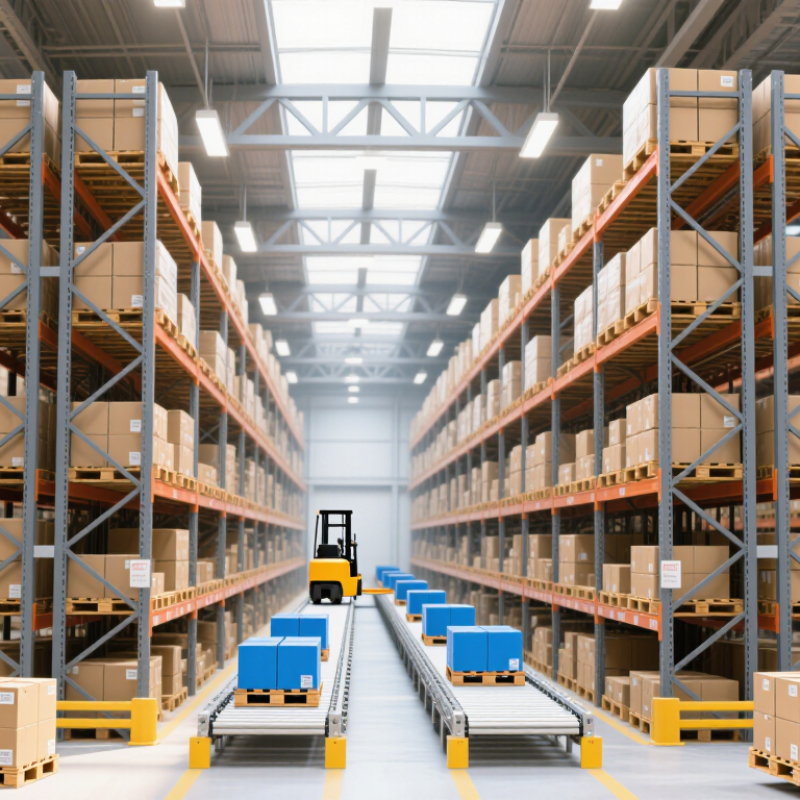
Gravity pallet racking is a dynamic storage system that uses inclined roller lanes to move pallets without powered equipment. Each lane has a loading side and a picking side. After a pallet enters, gravity guides it toward the front. The next pallet advances into position. Simple, but not effortless. This arrangement typically supports first-in, first-out rotation, useful for dated goods and steady order picking. It also separates replenishment from picking, reducing forklift traffic at the rack face.
A practical installation begins with product and pallet data, not a rack catalog. Engineers check pallet dimensions, load weight, deck-board strength, and required lane depth. They also set roller spacing and bed slope according to the pallet’s underside. Poorly supported pallets can stop halfway or move unevenly. That detail is easy to miss.
Braking rollers, entry guides, backstops, and frame protectors help control movement and limit impact. Operators still need clear loading rules and routine inspections.
Why choose it? Gravity pallet racking can increase storage density while keeping pick faces organized. It works especially well when many pallets share the same product type. However, it is not ideal for every inventory profile. Low-volume items may waste lane space, while irregular pallets may require another solution. In real facilities, the best result comes from matching rack geometry to daily movement patterns. A rushed design can look efficient on paper and frustrate workers on the floor. That is where measurement, training, and honest review matter.
Gravity pallet racking uses a slight lane incline to move pallets without powered equipment.
Each lane contains rollers or wheels mounted inside a strong steel frame. Gravity does the quiet work.
At the loading end, a forklift places a pallet onto the higher side of the lane. The pallet then rolls slowly toward the lower picking side.
Speed-control rollers and lane brakes help prevent sudden movement. A front stop holds the pallet safely in position until an operator removes it.
When the first pallet leaves, the next pallet moves forward automatically.
This arrangement usually supports first-in, first-out stock rotation.
It can work well for food, beverages, and other dated goods. Clear labels help workers identify each lane and reduce picking mistakes.
From practical warehouse inspections, uneven loading often creates more trouble than the rack itself. Pallets should match the lane width and stay centered on the rollers. Damaged boards can catch, tilt, or stop halfway.
It is not maintenance-free.
Operators should check rollers, brakes, frames, and pallet condition regularly. A simple visual check before each shift can reveal bent components or blocked lanes.
Still, that check may be skipped during busy periods. That assumption is risky.
Proper training, load limits, and routine inspections keep the system predictable, though no storage method removes every handling hazard.
Gravity pallet racking supports orderly pallet movement through inclined lanes, using gravity rather than repeated forklift repositioning. In daily operations, this can shorten travel paths and keep loading faces easy to reach. A pallet enters from the replenishment side and rolls toward the picking side. Simple movement. Less equipment crossing the aisle can improve traffic control and reduce avoidable waiting. That benefit depends on correct lane loading and maintained rollers.
The strongest operational advantage is stock rotation. Dedicated lanes can support first-in, first-out handling for dated goods, helping teams reduce forgotten inventory. Clear lane labels and visible pallet fronts also make counts faster and discrepancies easier to investigate. Pickers spend less time searching. In busy facilities, this may increase throughput without expanding the building. However, performance varies with pallet quality, load weight, and product dimensions. Mixed pallets can stop movement or create uneven pressure. This is where experience matters.
Gravity systems can use warehouse depth efficiently, especially when many pallets share the same SKU. They may reduce forklift touches, lower aisle congestion, and create a steadier replenishment rhythm. Supervisors should inspect brakes, rollers, frames, and impact points on a scheduled basis. Small defects become expensive interruptions.
The design should match fire protection, floor capacity, aisle clearances, and local safety requirements. It is not a universal solution. Slow-moving or highly varied inventory may fit selective storage better. A careful trial with real pallets often reveals problems that drawings miss.
Gravity pallet racking suits warehouses with steady product movement and repeated pallet profiles. Inclined rollers move loads forward after operators remove the front pallet. This supports FIFO rotation, which matters for food, beverages, pharmaceuticals, and dated materials. It can also reduce travel distance because replenishment happens from the rear. The 2023 MHI Annual Industry Report reported that 74% of supply chain professionals planned to increase technology investment over five years. Gravity storage is not advanced automation, but it can improve flow without complex controls.
The system works best when pallets have consistent dimensions, stable loads, and predictable demand. High-volume stock keeping units can occupy dedicated lanes, while slower items may waste valuable channel space. It offers greater density than standard selective racking, yet access becomes less flexible. That compromise deserves attention. In real warehouses, damaged pallets, uneven loading, and changing product mixes can reduce performance. A site survey should check load weight, pallet condition, lane length, floor levelness, and required rotation method.
Tips: Test representative pallets before approval. Measure stopping distance and roller performance under full load. Keep heavier products in lower positions. Review lane utilization monthly, because poor slotting can quietly erase density gains. Gravity racking is not always the right answer. Sometimes selective access matters more than compact storage.
Why Choose Gravity Pallet Racking for Your Warehouse?
What Factors Should You Consider Before Installation?
Gravity pallet racking uses inclined roller tracks to move pallets toward the picking face. This design can shorten travel distances and support a clear first-in, first-out workflow. However, installation should begin with product data, not attractive layout drawings. Record pallet dimensions, weights, turnover rates, and loading methods. Measure twice. Small variations can affect roller movement and access.
Check the warehouse floor before approving the system. A professional survey should confirm slab strength, levelness, column positions, ceiling height, and emergency routes. Rack depth must match pallet size without blocking sprinklers or lighting. Aisles also need enough clearance for the actual forklifts in use. Space matters. Local safety requirements and fire protection guidance should shape the design.
Ask how the structure will be inspected and maintained. Frames, beams, rollers, brakes, guides, and end stops need regular checks. Damaged parts should be isolated quickly, even when operations are busy. Worker training matters because uneven loading can increase impact forces and pallet instability. Experienced installers can identify practical problems, but their assumptions still need verification. A plan may look efficient on paper and perform poorly during peak hours. That possibility deserves honest testing. Pilot one lane, observe pallet flow, and adjust before expanding across the warehouse.
Gravity pallet racking can improve storage density and support FIFO or LIFO workflows. The chart compares typical pallet positions per lane for common pallet-storage systems before installation planning.
Gravity flow lanes commonly hold approximately 2–10 pallets in depth, depending on pallet dimensions, load weight, SKU turnover, roller design, and available aisle space. Before installation, verify pallet size, maximum load, forklift requirements, building clearance, rack protection, fire-safety rules, and whether FIFO or LIFO is required. The ranges shown are typical planning references; final dimensions should be confirmed by a qualified rack designer.
It is a dynamic storage system with inclined roller lanes. Gravity moves pallets from the loading side to the picking side. No powered movement is needed.
A forklift places a pallet on the higher lane end. The pallet rolls toward the lower picking face. Brakes and speed-control rollers manage its movement.
Usually, yes. The oldest pallet reaches the picking side first. This suits dated goods and steady order picking.
Measure pallet length, width, weight, and underside support. Check deck-board strength too. Damaged boards may catch or stop halfway.
Inspect floor strength, levelness, ceiling height, columns, lighting, and emergency routes. Aisles must fit the forklifts actually in use.
It can increase density and keep picking faces organized. The benefit is strongest when many pallets share one product type.
No. Low-volume items may waste lane space. Irregular pallets may move poorly and need another storage method.
Braking rollers, entry guides, backstops, and frame protectors reduce sudden movement. A front stop holds the pallet for removal.
Inspect rollers, brakes, frames, guides, stops, and pallets regularly. A short visual check before each shift can reveal blocked lanes.
Pilot one lane before expanding. Watch pallet flow during busy periods. The layout may look efficient on paper, but still feel awkward in practice.
Gravity Pallet Racking is a warehouse storage system that uses inclined roller tracks to move pallets forward through gravity. Pallets are loaded from the rear and travel smoothly toward the picking side, helping maintain a first-in, first-out inventory flow. This design makes efficient use of available space while reducing the need for forklifts to enter storage lanes. It can improve product visibility, simplify stock rotation, and support faster picking operations.
Gravity Pallet Racking is especially suitable for warehouses handling high-volume goods, perishable products, or items that require organized rotation. Before installation, businesses should consider pallet dimensions, load capacity, product turnover, available floor space, aisle layouts, and safety requirements. The system should also match the warehouse’s handling equipment and operating processes. With careful planning and professional installation, it can provide a practical balance of storage density, accessibility, and operational efficiency.