No matching pages. Try "pallet", "mezzanine" or "cantilever".
Industrial Storage Engineering White Paper
China Top Tire Storage Racks Factories & Exporters
High-Density Warehouse Architecture, Structural Integrity Under EN 15512 Standards, and Global B2B Sourcing Strategies for PCR, TBR, and OTR Storage Logistics.
Export-Certified Inventory Systems
High-Efficiency Warehouse & Tire Logistics Storage Systems
Engineered with certified structural steel, anti-deflection locking mechanisms, and high-tensile fasteners. Explore our 8 frontline warehouse storage products manufactured for global supply chains.
Critical structural cross-supports engineered to eliminate beam spread, prevent pallet collapse, and reinforce heavy tire stillages under high dynamic loading conditions.
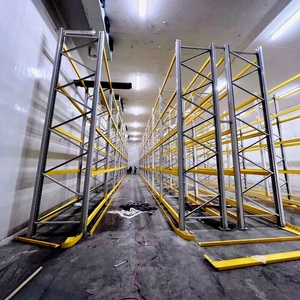
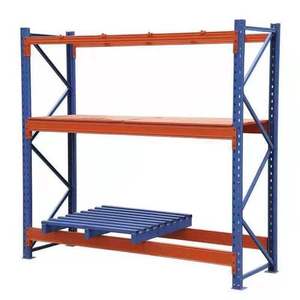
Precision-engineered Very Narrow Aisle (VNA) system maximizing vertical cubic capacity up to 15 meters for multi-tier tread-on-tread tire storage and fast pallet picking.
Universal bolted upright system with tear-drop/omega perforation, providing flexible horizontal span configurations for modular tire crates and custom storage baskets.
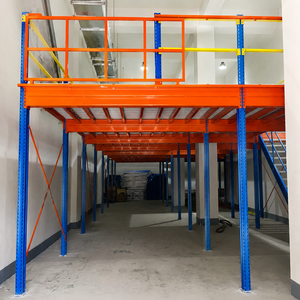
Doubles or triples warehouse usable square footage by converting overhead air space into fully integrated tire inventory catwalks, picking lanes, and pallet staging decks.
Heavy-gauge welded structural channel cradles engineered for road freight transit, container stowing, and dock marshalling of heavy circular steel coils and giant industrial tires.
Metallurgical Superiority and Deflection Limits in High-Capacity Tire Racking
Tire warehousing presents distinct material handling challenges compared to conventional square pallet storage. Unmounted rubber tires exert dynamic outward radial pressures, eccentric point loading, and continuous bead stress along horizontal beam spans. Top Chinese tire rack manufacturers utilize premium Q235B and cold-rolled Q355B structural steel to maintain elastic recovery thresholds under full payload conditions.
In accordance with the stringent EN 15512 European structural racking design standard and American RMI (Rack Manufacturers Institute) guidelines, our upright frames and step-beam profiles are modeled using advanced 3D Finite Element Analysis (FEA). This prevents longitudinal torsional buckling and limits maximum vertical beam deflection to less than L/200 for standard distribution centers and L/300 for automated crane-served aisles.
A data-backed framework to align your facility's SKU velocity, vertical clearance, and forklift handling profile with the optimal racking topology.
Storage Topology
Typical Tire Classes
Density Ratio
Stock Rotation
Handling Equipment
Structural Footprint Impact
Portable Stacking Stillages
PCR, SUV, Light Commercial
Very High (85%)
LIFO / Batch
Counterbalance Forklift
Zero fixed anchors; collapsible during off-season freight repositioning.
Vertical Tread-on-Tread Racks
TBR, Commercial Bus, Agricultural
High (70%)
100% Direct (FIFO)
Reach Truck / Turret Truck
Requires precise slab anchoring and seismic baseplate engineering.
Very Narrow Aisle (VNA) High-Bay
Mass Distribution Mixed SKU
Ultra High (92%)
Selective FIFO
Wire/Rail Guided VNA Truck
Requires DIN 18202 Class 3 super-flat industrial concrete flooring.
Multi-Tier Mezzanine Platforms
Specialty, Low-Profile, Moto
High (Vertical 3X)
Manual Fast-Pick
Vertical Lifts & Conveyors
Self-supporting structural steel columns with fire egress integration.
Heavy Horizontal Cantilever
Giant OTR, Earthmover, Aircraft
Medium (50%)
Unobstructed Frontal
Heavy Side-Loader / Crane
Heavy pivot-pin arms designed to handle massive center-of-gravity moment loads.
Enterprise Strengths • Turnkey Manufacturing
Global Export Capabilities Built on Factory Direct Accountability
Drawing on decades of structural steel manufacturing and international engineering partnerships, our manufacturing facilities bridge the gap between heavy industrial Chinese steel fabrication and international logistics compliance. Our technical teams do not simply sell catalog profiles; we engineer bespoke intralogistics layouts backed by rigorous site surveys, seismic zoning calculations, and dynamic aisle analysis.
Following comprehensive quality management protocols certified to ISO 9001 and European structural standards such as EN 15620 (installation tolerances) and EN 15635 (rack maintenance and lifecycle auditing), every exported shipping container is precision-packed. By nesting structural uprights, bundling custom beam lengths, and supplying load certificates alongside certified load warning plaques, we deliver immediate installation readiness for international EPC contractors, global tire brands, and 3PL distribution giants.
Pre-Engineered CAD/BIM Layouts: Full 3D structural clash detection and layout simulation tailored to your existing Material Handling Equipment (MHE).
Optimized 40HQ Ocean Packaging: Specialized steel frame dunnage systems that prevent transit paint abrasion and maximize container volume up to 98% cubic fill.
Single Point of Contact Lifecycle Support: Dedicated bilingual structural engineers coordinating drawing sign-offs, production milestones, and overseas installation supervision.
Full Project AccountabilityFrom structural slab loading verification to post-handover safety compliance auditing across five continents.
Raw Steel Procurement Advantage
Direct supply contracts with top-tier domestic blast furnaces guarantee mill test certificates (MTC) verifying chemical composition, carbon equivalent, and tensile yield strength for every production run.
Automated CNC Roll-Forming
Continuous robotic punch lines and 24-station roll-forming mills produce upright frames with zero twist or camber over lengths exceeding 12 meters, ensuring effortless site assembly.
Complete Safety Accessories
Every system includes heavy-duty floor-mounted column guards, heavy wrap-around aisle end protectors, safety netting, and spring-loaded beam drop safety pins as standard equipment.
Industry Intelligence • Sourcing Trends
Future Procurement & Technology Trends in Tire Warehousing
Strategic transformations reshaping global tire storage operations, from EV tire weight dynamics to automated robotic AS/RS high-density matrix fulfillment.
1. Electric Vehicle (EV) Tire Structural Re-Rating
EV tires are engineered with reinforced carcasses, acoustic foam liners, and thicker tread walls to accommodate battery curb weights, resulting in a 20% to 30% increase in unit payload weight. Modern warehouse specifications are rapidly upgrading beam ratings from 2,000 kg to 3,000+ kg per pair to prevent mid-span creep.
2. Autonomous Mobile Robot (AMR) & AS/RS Interoperability
Leading international logistics facilities are phasing out manual pallet trucks in favor of Autonomous Guided Vehicles (AGV) and stacker crane automated high-bays. This requires millimeter-precise rack manufacturing tolerances under EN 15620 to support optical guided positioning and automated end-of-arm tooling.
Escalating international ocean freight rates have created massive procurement demand for collapsible tire stacking racks. Featuring a 4:1 or 5:1 return fold ratio, these portable units eliminate dead shipping volume on return journeys between manufacturing plants and regional fulfillment centers.
4. ESG-Driven Zero-VOC Low Carbon Steel Finishes
Global tire corporations and institutional investors are demanding full scope-3 carbon traceability. Chinese tier-1 exporters are leading this shift by transitioning from heavy chemical phosphating to closed-loop silane pre-treatments, zero-VOC polyester powder coatings, and EPD certified recycled green steel billets.
Procurement Knowledge Base
Frequently Asked Questions on Tire Racking Procurement
How do Chinese tire rack exporters optimize 40HQ ocean container stowage?
High-cube 40-foot ocean containers (40HQ) offer an interior height of 2.69 meters and a maximum payload of approximately 28,000 kg. Because fabricated steel can easily cube out before weighting out, tier-1 Chinese manufacturers utilize modular knockdown framing designs. Uprights are bundled back-to-back with custom steel dunnage collars, and step-beams are nested inside channel cavities. For portable stacking stillages, post columns are detached and nested within the base pallet framework, achieving up to 140 to 180 complete units per 40HQ container, lowering per-unit ocean freight costs by up to 35%.
What are the key structural design differences between PCR and TBR tire storage?
Passenger Car Radial (PCR) tires typically feature diameters from 550mm to 750mm and weigh between 8kg and 15kg. They are commonly stored in either barrel stacks (horizontal interlaced nesting) within portable stillages or upright on double-entry pallet beam levels. In contrast, Truck, Bus & Radial (TBR) tires weigh 45kg to 80kg+ with outside diameters exceeding 1,000mm to 1,200mm. TBR tires require heavy-duty step beams with custom roll-formed front-to-back support saddles to avoid point-load rubber creep and prevent beam spreading caused by the outward radial forces of heavy truck casings.
How does compliance with European EN 15512 affect beam deflection criteria?
EN 15512 dictates that the maximum permissible vertical deflection of any horizontal beam level under full working design load shall not exceed 1/200th of the span length (δ ≤ L/200). For high-bay aisles utilizing narrow-aisle turret trucks or stacker cranes, this tolerance is frequently tightened to L/300. Adhering to EN 15512 requires factories to perform extensive physical strain-gauge destructive compression tests on column-to-connector joints, ensuring safety factors of at least 1.95 against structural yield or dynamic catastrophic collapse.
How do modular stacking tire racks prevent "flat spotting" during seasonal storage?
"Flat spotting" occurs when the weight of unmounted tires rests against sharp metal edges, causing permanent elastomer memory indentation that impairs high-speed wheel balancing. Modern Chinese tier-1 tire stillages employ cold-formed round tubular support bars or angled 45-degree chamfered cradles. This geometry spreads the tire's dead weight evenly along the tread shoulder rather than concentrating point forces across the thin center-tread surface, safeguarding compound roundness over long seasonal intervals.
What anti-corrosion coating is optimal for high-humidity coastal warehouses?
For climate-controlled indoor warehouses, an electrostatic architectural polyester powder coating with a film build of 70–90 μm provides superior scratch resistance and UV stability. However, for open-sided distribution canopies, coastal free-zones, or extreme humidity environments (such as Southeast Asia or the Middle East Gulf region), hot-dip galvanization conforming to ISO 1461 is strongly recommended. Hot-dip galvanizing creates a metallurgically bonded zinc-iron alloy layer (minimum 65–85 μm thickness) that delivers cathodic protection and 25+ years of maintenance-free service life against salt spray and ozone corrosion.
What project parameters are required to calculate structural bay loading?
To produce an authoritative, FEA-verified racking layout, our engineering department requires six key inputs: (1) Maximum outside tire diameter, tread width, and unit weight; (2) Preferred orientation (vertical tread-on-tread or horizontal laced barrel stack); (3) Concrete slab specifications (slab thickness, concrete compressive strength, e.g. C25/C30, and reinforcement rebar layout); (4) Warehouse clear height to the lowest hanging overhead sprinkler or structural haunch; (5) Forklift model, maximum collapsed mast height, and turning radius; and (6) Local seismic site acceleration coefficient (Ss / S1 values).
Direct Factory Engineering Sourcing
Ready to Optimize Your Tire Storage Capacity?
Submit your warehouse floor plans, tire SKU specifications, and MHE equipment models. Our structural engineering team will deliver a free 3D CAD/BIM concept layout, certified load calculations, and containerized FOB/CIF quotation within 24 business hours.