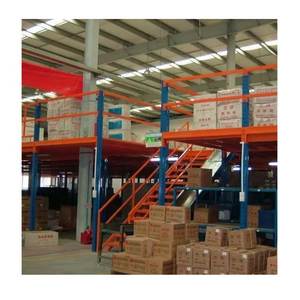
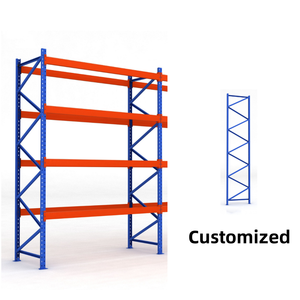
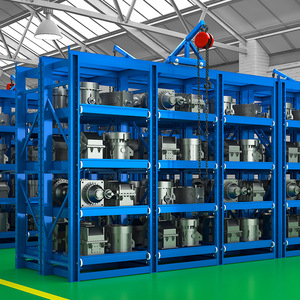
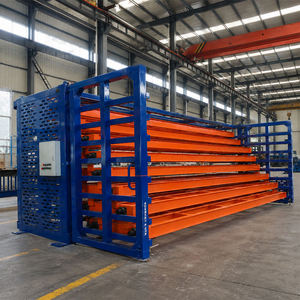
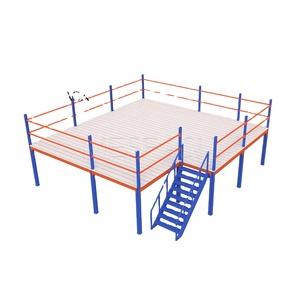
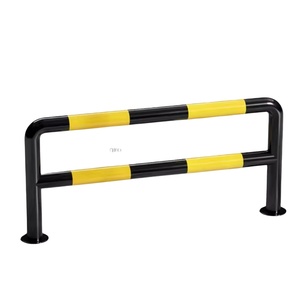
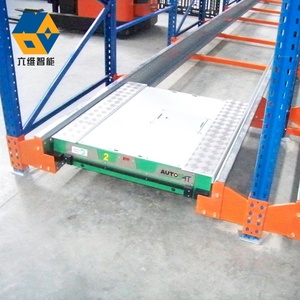
Integrate our precision-welded flanged wire decking with structural pallet racks, mezzanine flooring platforms, and heavy-duty frame protection systems for complete warehouse safety and optimization.
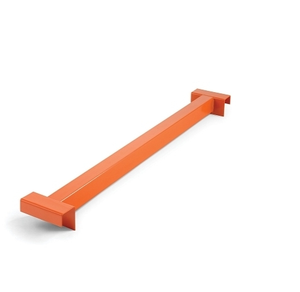
In modern warehouse logistics, the interface between the horizontal pallet rack beam and secondary wire mesh shelving represents a fundamental structural load transfer junction. Conventional step-style wire decking relies entirely on the internal 7/8-inch or 1-1/2-inch vertical recess of a roll-formed step beam. However, heavy-duty distribution centers, seismic storage arrays, and structural steel rack configurations frequently deploy rectangular box beams, structural C-channels, or structural structural I-beams that completely lack an interior locating step.
Universal flanged wire decking (also referred to as flat-flanged or universal-channel wire decking) solves this mechanical compatibility limitation. The cold-formed U-shaped structural channel features horizontally flattened, press-braked outer flanges on both longitudinal extremities. These dual flat flanges rest directly across the planar top surface of any horizontal beam profile—whether structural box, structural channel, open-lip roll-formed beam, or conventional step beam. By dispersing vertical downward shear loads across the primary top flange of the beam rather than concentrating point stress on an internal shelf step, flanged decking eliminates torsional rotational twist on the rack beam profile under uneven, asymmetric, or localized pallet drop actions.
Key Structural Differential: Under ANSI MH26.2 testing protocols, flanged channel decks mitigate beam web rotation by transferring the resultant compressive reaction force directly downward through the central vertical axis of the beam web, achieving an immediate 18% improvement in beam rotational torsional stability compared to dropped-in step decks.
2. Steel Metallurgy, Wire Drawing, and Resistance Spot-Welding Kinetics
Our manufacturing plants in Jiangsu and Shandong strictly utilize low-carbon cold-drawn structural wire rod grade Q195 and Q235B (comparable to ASTM A510 / SAE 1008/1010). The raw wire coils undergo continuous multi-stage mechanical de-scaling and dry die drawing, which induces controlled strain hardening. This increases the steel’s yield strength ($R_{eH}$) from an initial hot-rolled 235 MPa to a calibrated cold-drawn yield limit exceeding 480–520 MPa.
The intersecting wire grid (standard configurations: 50×100 mm / 2"×4" or 50×50 mm / 2"×2") is coalesced on fully automated, 48-electrode multi-spot micro-computer controlled resistance welding gantries. Precise solid-state timing controls both electrical current pulsation (up to 16,000 Amperes per grid burst) and pneumatic pneumatic cylinder clamping pressure. This guarantees a controlled weld indentation depth between 25% and 35% of wire diameter without localized thermal embrittlement, ensuring that every individual wire intersection sustains a minimum cross-shear pull force of 3.8 kN, comfortably exceeding the ANSI MH26.2 regulatory limit of 2.2 kN.
Deck Dimensions (D×W)
Wire Gauge & Mesh Grid
Channel Quantity & Gauge
Rated Capacity (UDL)
Deflection Limit ($\le L/200$)
NFPA 13 Clearance
Certification Status
36" × 46" (914 × 1168 mm)
6 Gauge (4.8mm) | 2"×4" Mesh
3 Flanged Channels (14 Gauge)
2,500 lbs (1,134 kg)
Pass (< 4.2 mm at full load)
58.4% Open Net Area
ANSI / RMI Verified
42" × 46" (1067 × 1168 mm)
5 Gauge (5.0mm) | 2"×4" Mesh
3 Flanged Channels (14 Gauge)
2,500 lbs (1,134 kg)
Pass (< 4.8 mm at full load)
56.2% Open Net Area
ANSI / RMI Verified
42" × 46" (1067 × 1168 mm)
4 Gauge (5.8mm) | 2"×4" Mesh
4 Heavy Flanged Channels (14 Ga)
3,800 lbs (1,724 kg)
Pass (< 4.1 mm at full load)
54.8% Open Net Area
Heavy Duty Class
48" × 46" (1219 × 1168 mm)
5 Gauge (5.0mm) | 2"×4" Mesh
4 Flanged Channels (14 Gauge)
3,000 lbs (1,360 kg)
Pass (< 5.3 mm at full load)
56.1% Open Net Area
ANSI / RMI Verified
48" × 46" (1219 × 1168 mm)
2 Gauge / 4 Ga Hybrid | 2"×3"
5 Structural HD Channels (12 Ga)
5,500 lbs (2,495 kg)
Pass (< 4.6 mm at full load)
51.2% Open Net Area
Custom Extreme UDL
Manufacturing Capabilities
Why International Buyers Partner Directly With Our China Mill
Combining heavy industrial structural engineering, fully automated wire drawing and robotic bending lines, and full compliance with European EN and American ANSI warehouse racking safety standards.
Full Lifecycle OEM/ODM Control: From Mill Rod to Portside Container Stowing
As an integrated Chinese structural fabricator and global exporter, our operations do not rely on third-party stamping workshops. We oversee every link in the metal production chain, ensuring verified raw material chemistry, finite element stress modeling (FEA), automated multi-station cold profiling, and defect-free protective coatings.
Verified ANSI MH26.2 Testing Rig: Every production heat is sampled on our dedicated hydraulic test frame. Decks are loaded with uniformly distributed ballast to 1.5× safe working capacity to verify deflection within the $L/200$ structural threshold.
Advanced Anti-Corrosion Finishing: Offering automatic continuous electro-galvanizing (zinc coating ≥ 12μm), high-temp hot-dip galvanizing (HDG compliant with ASTM A123, ≥ 65μm for sub-zero cold stores), and multi-stage phosphate powder coating.
Robotic Flanged Channel Press-Braking: Our multi-station progressive stamping presses form channel support members with uniform vertical sidewall geometry, dual reinforced anti-crush stiffening ribs, and precision edge flanging.
Racking systems and deck inserts constitute mission-critical, life-safety load structures. Our flanged wire decking products and companion pallet rack frameworks are systematically tested, certified, and engineered in strict alignment with:
• ANSI MH26.2: Design, Testing and Utilization of Industrial Steel Wire Mesh Racking Decks.
• NFPA 13: Standard for the Installation of Sprinkler Systems (In-Rack Flue Penetration).
• EN 15512 & EN 15620: European Structural Tolerances, Deformations, and Clearances.
• EN 15635: Steel Static Storage Systems - Application and Maintenance of Storage Equipment.
Future Procurement Trends in Industrial Wire Decking (2025–2030)
Strategic structural shifts and procurement patterns reshaping high-throughput distribution hubs, automated 3PL facilities, and global cold-chain infrastructure investments.
1. Rise of Automation-Ready Precision Gauging
As AS/RS mini-load cranes, autonomous mobile robots (AMRs), and automated radio shuttle systems replace manual counterbalance fork trucks, dimensional deck tolerances must transition from rough weldments (±3.0mm) to CNC precision (±0.8mm). Procurement managers are requiring certified flatness indices across wire mesh tops to ensure automated optical sensors do not misread beam clearances during high-velocity carton picking.
2. Inverted Flanged Decks for Hygienic & Pharma Hubs
Standard U-channels collect carton dust, pallet splinters, and moisture inside their upward-facing troughs. Global pharmaceutical, nutraceutical, and food-grade supply chains increasingly mandate inverted flanged channels. By turning the open channel downward and spot-welding the flat closed spine to the mesh, dust collection cavities are 100% eliminated, streamlining sanitation and Clean-In-Place (CIP) air-blow audits.
3. Strict Fire Underwriter In-Rack Sprinkler Mandates
FM Global Data Sheet 8-9 and NFPA 13 building insurance stipulations have drastically tightened. Procurement officers are eliminating solid timber, MDF decking, and corrugated steel pans due to sprinkler obstruction penalties. Flanged wire mesh decking with >50% open area permits unhindered ESFR water penetration to lower rack tiers, reducing sprinkler density requirements and dramatically lowering commercial property insurance premiums.
4. Extreme Environment Hot-Dip Galvanization
Cold-storage supply chains (-25°C blast freezers) and coastal maritime distribution hubs are abandoning standard thin zinc electroplating (≤8μm) in favor of automated continuous Hot-Dip Galvanizing (HDG). Procurement calls for minimum 65–80μm zinc-iron alloy metallurgical bonding, eliminating micro-flaking caused by thermal thermal contraction and preventing zinc whisker contamination near food products.
5. Mill Test Traceability & Digital Material Passports
Institutional logistics developers (Prologis, GLP, ESR) now require verifiable batch traceability. Overseas tenders demand raw steel chemical ladle analysis (C, Si, Mn, P, S limits), ultrasonic weld inspection documentation, and verified tensile coupon tests accompanying every bill of lading. Buying directly from primary Chinese exporters provides transparent EN 10204 3.1 Mill Test Certificates.
6. Standardization on Universal Box Beam Topologies
Global engineering firms are consolidating on structural and roll-formed box beams due to their symmetrical torsional stiffness and ease of manufacturing. Flanged wire decking is becoming the default international procurement standard because its flat resting flange functions seamlessly on box beams, eliminative the risk of incompatible step dimensions when sourcing beams and decking from different global regions.
R&D Innovation
Evolutionary Advances in Wire Mesh Decking Engineering
How progressive die forming, high-strength cold-worked steels, and ergonomic waterfall contours are improving structural efficiency and warehouse workforce safety.
Triple-Rib Stiffened Flanged Channels
By introducing longitudinal ribbed cold-embossing along the vertical webs of 14-gauge and 16-gauge flanged channels, our R&D team increases the section modulus ($Z_x$) by 14.2% without adding steel weight. This mechanical optimization minimizes mid-span elastic deflection under dynamic pallet placement, enabling higher certified UDL ratings while optimizing ocean shipping payload ratios.
Precision Waterfall Wrap & Locking Edges
Traditional wire ends can feature sharp exposed snags that tear operator gloves or snag stretch-wrapped pallet loads. Advanced flanged wire decking incorporates continuous 1.5-inch downward roll-formed waterfall wraps on the front and rear beam edges. These curved skirts mechanically lock the deck against front-to-back displacement while providing safe, burr-free surfaces for manual carton case picking.
Snap-In Modular Mesh Dividers & Backstops
Modern fulfillment centers require flexible compartment sizing. Modern flanged decks are engineered with pre-punched channel slots and dedicated perimeter wire spacing, allowing toolless drop-in installation of vertical wire mesh dividers and hanging rear pallet stops. This prevents rear pallet push-through into longitudinal flue spaces while maintaining full sprinkler water deluge channels.
Buyer Knowledge Base
Frequently Asked Questions: Global Procurement & Engineering
Clear, definitive technical answers addressing loading parameters, surface longevity, fire codes, and ocean container logistics for international warehouse contractors.
1. What is the fundamental difference between flanged wire decking and standard step wire decking?
Standard step wire decking features support channel ends that drop cleanly inside the 7/8" or 1-1/2" internal recess of a step beam. If placed onto a structural box beam or structural channel beam without a step, a standard step channel cannot sit flush. Flanged wire decking (universal flange) has flat, press-braked flanges that rest flat on top of the beam surface. This makes flanged wire decking universally compatible with box beams, structural C-channels, open roll-formed beams, and step beams alike, giving operators total flexibility when reconfiguring warehouse storage systems.
2. How is Uniformly Distributed Load (UDL) calculated according to ANSI MH26.2?
ANSI MH26.2 stipulates that a rated Uniformly Distributed Load (UDL) must cover the entire functional top surface area of the wire deck between the two horizontal load beams. The rating assumes a static, evenly distributed load—such as a standardized timber pallet sitting across both front and rear beams, or dense uniformly stacked carton goods. Under full rated UDL capacity, the maximum vertical elastic deflection ($\delta$) at the center of the deck must not exceed $\delta \le L/200$, where $L$ is the front-to-back beam spacing. Point loads, dynamic impact drops, or foot-concentrated weights from standing personnel require specialized concentrated load channel configurations.
3. How does flanged wire decking impact NFPA 13 and local Civil Defence fire safety approvals?
Solid wood planks, plywood panels, and non-perforated steel shelves create solid horizontal barriers that block fire sprinkler water penetration and trap heat, triggering in-rack fire spread. NFPA 13 and international Civil Defence authorities mandate open-grid decking with a minimum of 50% net open area. Our 2"×4" (50×100mm) wire mesh configurations yield between 54% and 62% net open area, allowing early smoke passage to ceiling fire sensors and unobstructed water deluge penetration to lower levels. This eliminates the need for expensive dedicated in-rack sprinkler pipework on every beam tier.
4. When should overseas buyers specify Hot-Dip Galvanizing (HDG) versus Electro-Galvanizing (Zinc)?
Electro-Galvanizing (Zinc Plating): Provides an aesthetically clean, smooth, silver-bright 8–15μm zinc layer. It is the most cost-effective solution for ambient, humidity-controlled, indoor warehouse storage centers. Hot-Dip Galvanizing (HDG): Involves submerging fabricated steel decks into molten zinc at 450°C, producing a heavy 65–85μm metallurgically bonded zinc-iron alloy barrier. HDG is strictly recommended for cold storage freezers (-20°C to -30°C), outdoor covered staging yards, chemical storage facilities, or high-humidity tropical coastal installations where condensation would compromise standard zinc finishes over time.
5. What parameters must a contractor prepare to receive an engineered flanged deck quotation?
To engineer the optimum deck profile and calculate exact freight density, our application team requires:
1. Beam Type & Width: Box beam, structural C-channel, or step beam (including top flange width).
2. Rack Frame Depth: Out-to-out distance between the front and rear upright frames (e.g., 36", 42", 44", 48" or metric equivalent).
3. Clear Beam Length: Total horizontal opening span (e.g., 96", 108", 144") to determine deck section width (typically 2 or 3 decks per bay).
4. Maximum Unit Pallet Weight & Distribution: Maximum load per tier (e.g., 2,500 lbs UDL per deck).
5. Environment Condition: Ambient temperature, sub-zero cold room, or corrosive chemical setting.
6. How are flanged wire decks packaged to prevent transit bending during ocean shipping?
Decks are nested front-to-back in precise bundles (typically 40 to 60 units per pallet pack depending on channel depth). Bundles are secured with multiple 32mm high-tensile steel banding straps, backed with thick vulcanized corner protector angle boards, and seated on heavy-duty custom hardwood or fumigated plywood bottom skids with heavy bottom cross-bearers. This ensures stacks can be cross-loaded into 40ft High Cube (40HQ) ocean containers without overhang, eliminating wire distortion or flange crushing during maritime transit and enabling fast container unloading by forklift.