
No matching pages. Try "pallet", "mezzanine" or "cantilever".
No matching pages. Try "pallet", "mezzanine" or "cantilever".
Precision fabricated in our advanced cold-roll manufacturing facility. Every component is finite-element modeled (FEA) to endure heavy industrial static loading, continuous forklift cycle stress, and seismic tolerances.
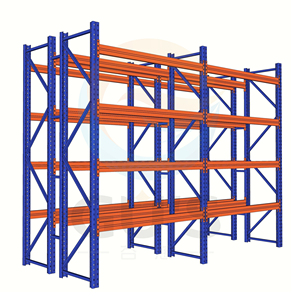
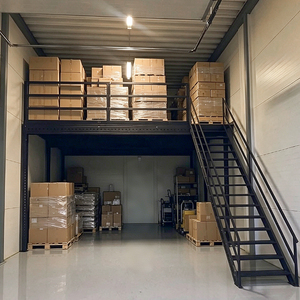
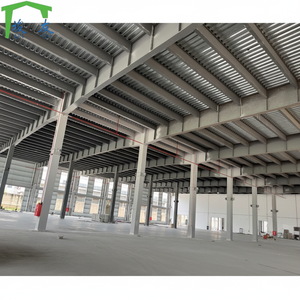
Navigating global industrial logistics demands a sophisticated balance between volumetric storage density, material throughput velocity, structural resilience, and capital expenditures.
In modern intra-logistics, warehousing real estate is no longer calculated solely in terms of square footage; it is valued by cubic volume utilization. For international supply chain directors, third-party logistics (3PL) conglomerates, and automated fulfillment hubs, partnering directly with primary high-density shelving manufacturers and exporters in China provides unprecedented leverage. China's integrated industrial ecosystem combines direct upstream metallurgical access with ultra-automated cold-roll forming, robotic continuous seam welding, and computerized epoxy electrostatic powder coating lines.
However, successful international procurement requires more than simply finding competitive pricing. It demands an engineering-driven engagement that accounts for rigorous international codes: FEM 10.2.02 (European Federation of Materials Handling), EN 15512 (Steel Static Storage Systems design), and ANSI/RMI MH16.1 (Specification for the Design, Testing and Utilization of Industrial Steel Storage Racks). As precision tolerances tighten—particularly with the rapid growth of Automated Storage and Retrieval Systems (ASRS) and autonomous mobile robot (AMR) guided racking—the technical divide between generic fabricators and tier-one certified manufacturers has become clear.
Evaluate the mechanical, throughput, and capital expenditure trade-offs across common high-density industrial racking configurations to select the ideal setup for your SKU velocity profile.
| Racking System | Space Utilization | Selectivity Profile | Stock Rotation | Handling Equipment | Typical Bay Capacity |
|---|---|---|---|---|---|
| Selective Pallet Racking | 40% - 50% | 100% Direct (Immediate) | FIFO / LIFO Any | Counterbalance, Reach Truck | 3,000 - 15,000 kg |
| Double Deep Pallet Racking | 60% - 65% | ~50% Direct Access | LIFO Priority | Pantograph Reach Truck | 4,000 - 18,000 kg |
| Drive-In / Drive-Through | 75% - 85% | Low (Lane-by-lane) | LIFO (Drive-In) / FIFO (Through) | Standard Reach / Counterbalance | 6,000 - 20,000 kg |
| Push-Back (Cart/Roller) | 70% - 75% | Moderate (Per Lane) | Strict LIFO | Standard Forklift | 2 - 6 Pallets Deep / Bay |
| Radio Shuttle Automation | 85% - 90% | Channel Dynamic Access | Software Configurable (FIFO/LIFO) | Semi-automated Cart + Truck | Unlimited Lane Depths |
| Multi-Tier Mezzanine Platform | +100% to +300% | 100% Piece/Bin Access | Any (Optimized for Small-Box) | Manual, AMR, Lifts, Spirals | 300 - 1,000 kg / m² |
Purchasing agents often make the mistake of evaluating racking options solely on initial steel tonnage costs. In practice, modern distribution economics favor the total capitalized cost per pallet position over a 10-year operating horizon. While conventional selective racking requires the lowest initial capital outlay per bay, it consumes extensive floor area for dedicated forklift travel aisles (typically 3.2m to 3.8m for standard reach trucks). In regions with high industrial land and construction costs—such as Western Europe, North America, and the GCC—incorporating high-density push-back, drive-in, or radio-shuttle configurations cuts required footprint area by up to 50%, generating immediate operational payback.
Discover how autonomous mobile robotics, environmental decarbonization, automated precision tolerances, and digital twins are reshaping global racking specifications.
Autonomous shuttles require manufacturing tolerances tighter than ±1.0mm per 10m upright height. Automated CNC roll-forming now integrates laser coordinate verification to eliminate beam deflection and mast binding risks.
Global enterprises actively require certified low-carbon steel (Electric Arc Furnace manufactured) and heavy-metal-free, VOC-free electrostatic powder coatings to comply with corporate Scope 3 decarbonization mandates.
Smart baseplates and strain-gauge beams provide real-time telemetry on static deflection, dynamic forklift impact shock, and seismic strain, transferring critical integrity data directly to cloud-based WMS platforms.
Driven by shifting e-commerce profiles, modern warehousing favors universal punch patterns (e.g. 50mm/75mm universal pitch) that allow rapid conversion between selective, carton live, push-back, and mezzanine floors.
High-density racking is a heavy-duty structural installation. Integrity begins with strict raw steel sourcing and unyielding manufacturing controls.
Our facility operates multi-station CNC roll-forming lines that punch and shape upright columns up to 14 meters long without welding splices, eliminating internal structural stress and micro-fissuring.
Step-beam connectors and footplates are joined using high-precision Panasonic robotic MIG welding arms, guaranteeing complete root penetration, smooth beads, and uniform structural shear resistance under severe torsional loads.
Before coating, all components undergo a 7-stage automated chemical pre-treatment (degreasing, phosphating, and nano-ceramic passivation) followed by electrostatic polyester powder application cured at 200°C, offering 500+ hours of ASTM B117 salt spray endurance.
A properly engineered beam system must adhere to strict deflection limits. According to European EN 15512 and North American RMI standards, the maximum allowable vertical beam deflection under fully distributed design load must not exceed L/200 (where L is the clear span distance between upright columns). For sensitive automated picking corridors, this limit is often engineered to an even more stringent L/300 to prevent laser misalignment. Upright columns are simultaneously designed to resist axial compression and torsional buckling through high-moment inertia omega profiles.
Providing international buyers with an accountable manufacturing partner—from initial AutoCAD and BIM layouts to custom fabrication, loading optimization, and international compliance documentation.
We do not just sell catalogue parts. Our dedicated structural engineering team develops complete layout blueprints in AutoCAD, Revit, and 3D Tekla, calculating load distributions, building clear heights, column interfaces, and forklift turning radiuses before production starts.
All steel coils are accompanied by authenticated EN 10204 3.1 Mill Test Certificates. Spectrometric and tensile yield tests are performed on every batch to confirm chemical composition and mechanical properties before entering the cold-forming line.
High-density racking components are bulky and heavy. Our shipping division designs customized nested bundling and palletized crate packing schedules, achieving over 95% volumetric container utilization and preventing maritime transit deformation.
For installations located in seismically active zones (such as Chile, New Zealand, Japan, or California), our engineers perform response-spectrum dynamic analyses to specify seismic baseplates, heavy bracing, and dual floor anchors.
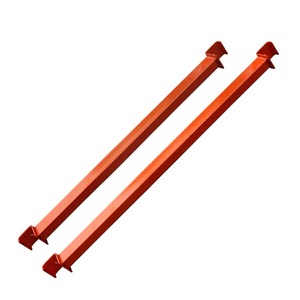
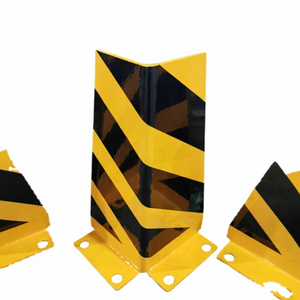
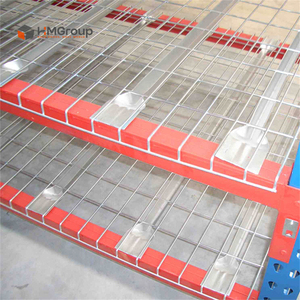
We supply complete system accessories—including wrap-around upright protectors, heavy-duty floor angle runners, wire mesh fire decks, pallet support bars, backstop beams, and OSHA/EN load capacity plates—ensuring turnkey site safety.
We welcome third-party international inspection agencies (such as SGS, Bureau Veritas, or TÜV) for in-process ultrasonic weld testing, coating thickness checks, load deflection proof testing, and pre-shipment container loading audits.
Detailed answers addressing engineering specifications, international codes, shipping logistics, and structural safety.
We primarily utilize certified Q235B and high-strength Q355B hot-rolled and cold-rolled steel coils sourced from premier steel mills (such as Baosteel, Shougang, and Ansteel). Q235B possesses a nominal yield strength of 235 MPa, ideal for standard step-beams, wire mesh decking, and accessories. Q355B offers a yield strength of ≥ 355 MPa, making it the preferred choice for heavy-gauge vertical upright columns and long-span mezzanine load beams. Every production run is backed by authentic EN 10204 Type 3.1 chemical composition and mechanical property test certificates, accompanied by internal tensile testing reports.
Our structural design calculations are performed in accordance with EN 15512:2020 (European Standard for Steel Static Storage Systems - Adjustable Pallet Racking Systems - Principles for Structural Design) and ANSI/RMI MH16.1 (North American Specification for the Design, Testing and Utilization of Industrial Steel Storage Racks). We conduct full-scale prototype testing—including stub column compression tests, beam end-connector bending stiffness tests, and shear tests on mechanical beam locks—to determine the exact rotational stiffness and moment resistance of every profile connection.
To deliver an accurate CAD design layout and structural quote, our engineering team requires:
1. Pallet Profile: Exact width, depth, overall height (including pallet structure), and gross weight per pallet position.
2. Building Clear Heights: Distance from the finished concrete floor slab to the lowest structural obstacle (sprinklers, light fixtures, HVAC ducts, roof trusses).
3. Material Handling Equipment (MHE): Forklift make/model, maximum fork lift height, and manufacturer-specified Right-Angle Stacking Aisle Width (AST).
4. Concrete Slab Details: Slab thickness, compressive strength (e.g., C25/30), joint locations, and soil bearing capacity.
5. CAD Floor Plan: Architectural drawing showing columns, building expansion joints, dock doors, fire exits, and wall egress pathways.
Industrial racking systems require precise bundling to prevent transit deformation while maximizing payload within 40ft High Cube (40HC) containers. Upright frames are either shipped pre-assembled or flat-packed (knock-down) depending on project scale and destination labor economics. Knock-down packing reduces shipping volume by up to 60%. Beams and decking are bundled using high-tensile steel strapping, corner edge protectors, and waterproof plastic film wrapping. Structural dunnage, internal timber blocking, and heavy polyester ratchets prevent shifting during rough sea transit.
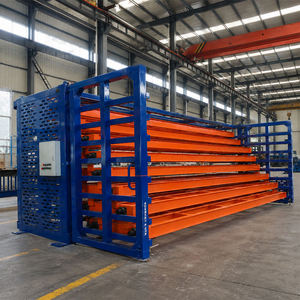
Push-Back Racking utilizes mechanical gravity carts operating on inclined steel guide rails. It accommodates 2 to 6 pallets deep on a Last-In, First-Out (LIFO) cycle. It is 100% mechanical, requiring no electricity, batteries, or specialized software, making it exceptionally reliable and cost-effective for moderate throughput bulk staging.
Radio Shuttle Racking utilizes an automated, battery-powered robotic shuttle that drives beneath pallet loads within continuous deep channels (capable of handling 20+ pallets deep). It can operate on both LIFO and FIFO modes and significantly cuts forklift transit times. However, it requires a higher initial capital investment, periodic battery maintenance, and ongoing automated component upkeep.
For standard ambient warehouses, our 70-90 micron electrostatic epoxy-polyester thermosetting powder coat provides excellent scratch and chemical resistance. For cold-storage environments (-30°C) with fluctuating humidity, we apply specialized low-temperature polyurethane powders that prevent micro-cracking and delamination. For high-humidity, outdoor, or corrosive industrial environments, we offer continuous pre-galvanized coil fabrication or post-production Hot-Dip Galvanization (HDG) conforming to ISO 1461 / ASTM A123, providing a zinc coating thickness of 65 to 85 microns for multi-decade corrosion defense.
For standard heavy-duty pallet beam levels, our engineering designs adhere to the L/200 deflection limit mandated by EN 15512 and RMI specifications under 100% uniformly distributed load (UDL). When designing for high-precision ASRS automated mini-load or shuttle configurations, we elevate the stiffness criterion to L/300 or L/400 to prevent automated shuttle positioning errors. Upright columns are calculated with a safety factor of 1.65 to 1.95 against structural yield, ensuring full dynamic stability during minor forklift impacts.
Yes. As a primary manufacturer and global exporter, we provide comprehensive OEM and ODM capabilities. We can match any standard RAL color specification (commonly RAL 5015/5010 Blue for frames and RAL 2004 Orange for beams). We manufacture standard teardrop, 50mm pitch diamond, 75mm pitch European keyhole, and proprietary hook patterns. We also offer private-label metal stamping, customized export barcoding, and client-branded capacity load plaques.
Submit your warehouse layout drawings, pallet specifications, and throughput targets. Our engineering team will deliver a comprehensive 3D CAD design, load capacity calculation sheet, and direct export quotation within 24 business hours.
Inquire Now