
No matching pages. Try "pallet", "mezzanine" or "cantilever".
No matching pages. Try "pallet", "mezzanine" or "cantilever".
Explore our export-grade industrial steel storage systems. Each configuration is FEA-modeled and dynamically load-rated to satisfy extreme pallet payload requirements, tight aisle tolerances, and heavy distribution cycles.
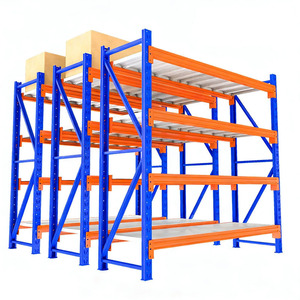
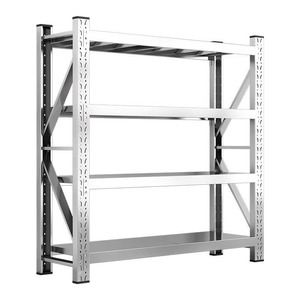
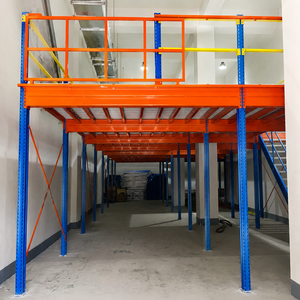
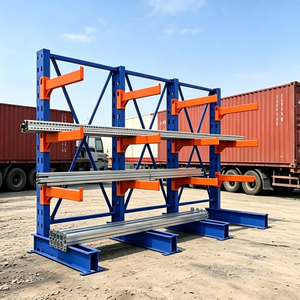
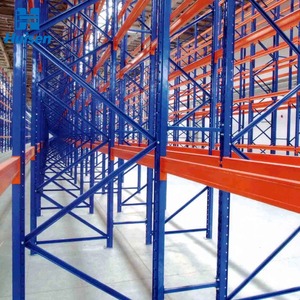
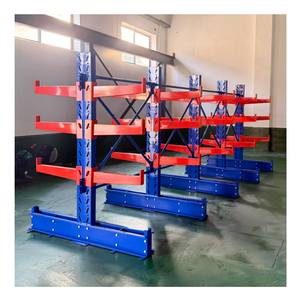
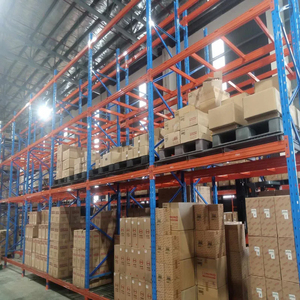
We do not simply fabricate sheet steel; we deliver engineered load-bearing assets. Built on continuous automated CNC production lines, our structural warehousing solutions safeguard personnel and maximize volumetric yield.
Every profile is cold-rolled from verified Q235B and Q355B prime hot-rolled strip steel sourced from Tier-1 state mills. Accompanied by EN 10204 Type 3.1 chemical and physical tensile test certificates.
Our engineering team performs structural Finite Element Analysis (FEA) on every custom installation. We evaluate beam deflection ratios (≤ L/200), upright torsional buckling, and seismic base shear under dynamic cyclic loads.
High-adhesion, 60–90 micron thermosetting epoxy-polyester powder finish baked at 200°C. Resists salt-spray corrosion (ASTM B117 ≥ 500 hours), chemical abrasion, impact chippings, and sub-zero cold room embrittlement.
Complete knockdown (KD) flat-packing engineered for maximum 40ft High Cube container cube utilization. Bundled with pre-welded upright frames, numbered beam packs, dynamic anchor bolts, and stamped site assembly drawings.
In high-throughput intralogistics, a warehouse rack is a critical structural steel framework. Learn how structural material selection, seismic calculations, and installation tolerances govern total cost of ownership and facility safety.
Industrial steel racking relies on cold-formed thin-walled structural members. While conventional shelving utilizes standard commercial carbon steel, high-bay heavy-duty systems require certified Q355B (yield strength ≥ 355 MPa) to withstand severe vertical column buckling and impact forces.
Our continuous automated roll-forming machines utilize multi-stage progressive rollers to shape intricate omega-shaped upright columns with 11–13 fold lines. Each additional bend introduces work-hardening along the profile periphery, dramatically increasing the radius of gyration and moment of inertia without adding unnecessary dead weight.
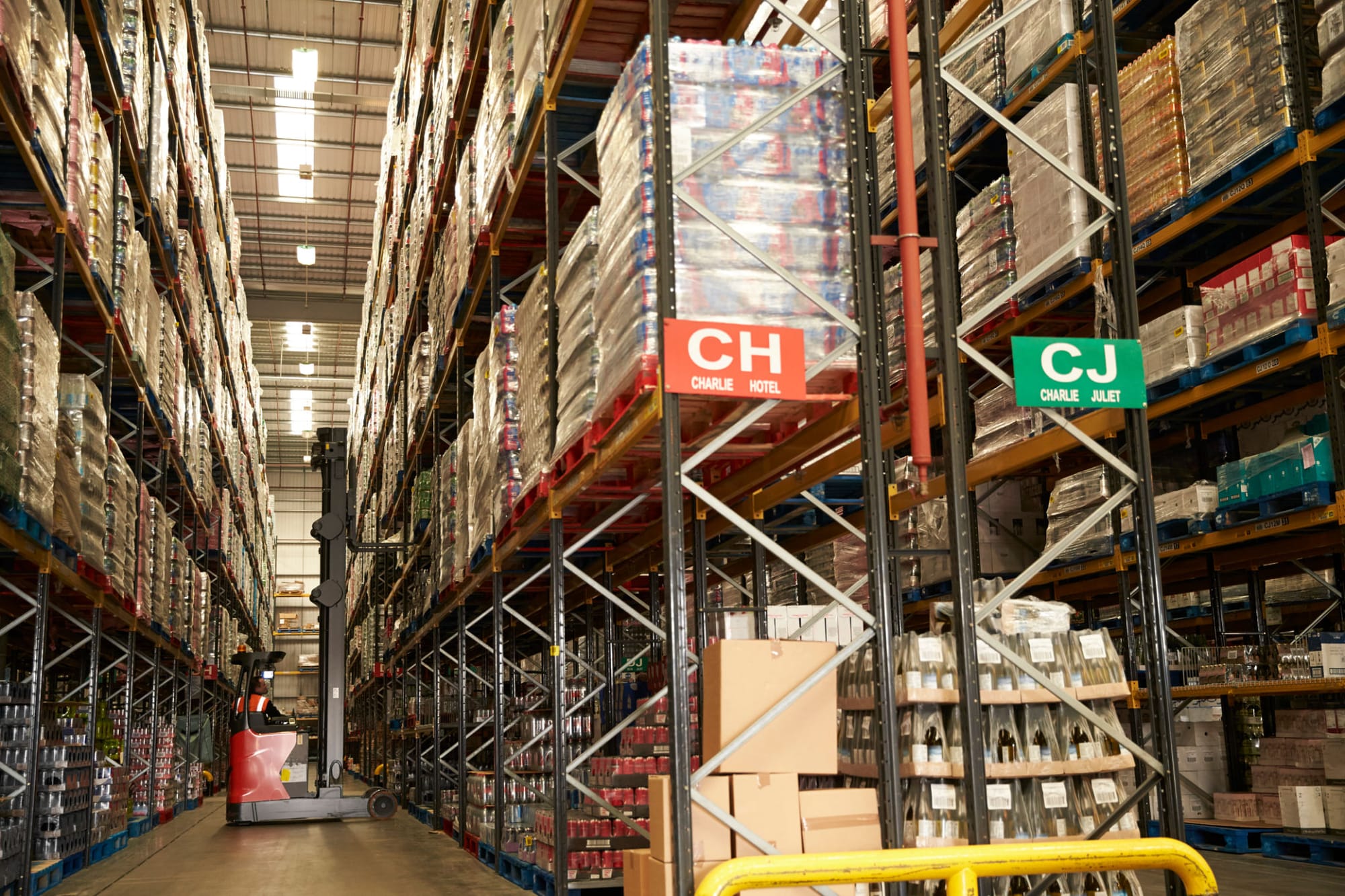
Dynamic seismic forces represent one of the most hazardous threat vectors to vertical storage systems. Under seismic base excitation, high-mass pallet bays act as inverted pendulums, amplifying overturning moments and subjecting baseplate anchor bolts to severe combined shear and uplift tension.
Our seismic-rated configurations incorporate heavy-duty oversized ductile cast steel footplates anchored with grade 8.8 chemical or wedge mechanical expansion anchors. We design dynamic horizontal and vertical spine bracing frameworks that route seismic lateral loads safely into the concrete sub-slab.
Evaluate selectivity, storage density, equipment footprint, and cost trade-offs across core warehouse rack topologies before finalizing facility layout CAD blueprints.
| Racking Topology | Pallet Selectivity | Storage Density | Stock Rotation | Typical Bay Height | Compatible MHE | Recommended Application |
|---|---|---|---|---|---|---|
| Selective Pallet Rack | 100% Direct | Standard (40-45%) | FIFO / LIFO | Up to 15 Meters | Counterbalance, Reach Truck | Fast-moving FMCG, 3PL Distribution, High SKU Counts |
| Double Deep Racking | 50% Direct | High (55-60%) | LIFO | Up to 12 Meters | Pantograph Reach Truck | Multiple Pallets per SKU, Cold Storage, Staging Buffers |
| Drive-In / Drive-Thru | Low (Lane Access) | Very High (75-80%) | LIFO (Drive-In) / FIFO | Up to 11 Meters | Standard Counterbalance | Bulk Food & Beverage, Seasonal Stock, Deep Cold Storage |
| Structural Cantilever | 100% Frontal | Medium (50%) | Any Order | Up to 10 Meters | Side-Loader, 4-Way Forklift | Steel Tubes, Timber, Sheet Metal, Heavy Machinery Parts |
| Rack-Supported Mezzanine | 100% Manual | Maximum Cubic (2-4x) | FIFO / Batch | Multi-Level (to roof) | Order Pickers, Lifts, AGVs | E-Commerce Fulfillment, Spare Parts Hubs, Retail Warehousing |
| Gravity Pallet Flow | Lane Face (100%) | Maximum Dynamic | Strict FIFO | Up to 12 Meters | Standard Forklifts | Perishables, Pharmaceutical Distribution, High-Velocity Pick |
Industrial warehousing is shifting rapidly from static storage to integrated, automated intralogistics ecosystems. Progressive procurement teams are calibrating specifications around four transformational paradigms.
Modern procurement no longer evaluates pallet racks in isolation from handling automation. Future-proof layouts integrate Automated Storage and Retrieval Systems (AS/RS), autonomous mobile robots (AMRs), and four-way radio pallet shuttles directly into the rack infrastructure. This demands micro-level structural tolerances (±1.5mm), ultra-rigid beam deflection ratios, and specialized guide rails engineered directly during the roll-forming phase.
Global cross-border regulatory frameworks such as the EU Carbon Border Adjustment Mechanism (CBAM) are compelling B2B buyers to verify the carbon footprint of structural steel imports. Our factory is pivoting toward scrap-recycled Electric Arc Furnace (EAF) steel billets, low-VOC electrostatic powder coatings, and certified Environmental Product Declarations (EPDs) that provide transparent Life Cycle Assessments (LCA).
The era of solely relying on passive visual rack inspections is evolving toward active, digitized health monitoring. High-risk logistics centers are adopting IoT strain-gauge sensors and acoustic-emission collars affixed to lower uprights. These units detect microscopic yield-point deformations, dynamic forklift impact loads, and structural fatigue in real time, alerting maintenance managers before catastrophic collapse occurs.
To hedge against freight volatility and distributor markups, tier-1 EPC contractors and global facility developers are sourcing customized steel storage racks directly from vetted Chinese original equipment manufacturers (OEMs). By utilizing specialized CAD flat-packing algorithms, upright frames and nested step beams are grouped to maximize payload tonnage per 40ft HQ container without exceeding highway axle limits.
Get authoritative engineering answers to the most common technical, logistics, and quality assurance questions raised by structural engineers, warehouse managers, and global procurement directors.
Q235B and Q355B are Chinese national standard carbon structural steels (GB/T 700 and GB/T 1591), broadly equivalent to European S235JR and S355JR, or American ASTM A36 and ASTM A572 Grade 50. Q235B offers a minimum yield strength of 235 MPa and is ideal for standard warehouse shelving, decking panels, and light-to-medium pallet beams. Q355B provides a minimum yield strength of 355 MPa (~51% stronger), making it essential for heavy-duty tall upright frames (>8 meters), high-bay cantilever columns, and earthquake-resistant seismic installations where buckling resistance is paramount.
Under international standards including European EN 15512 and the American Rack Manufacturers Institute (RMI) MH16.1 specifications, maximum vertical beam deflection under full uniformly distributed safe working load (SWL) must not exceed 1/200th of the clear beam span (δ ≤ L/200). For example, a 2700mm pallet beam supporting two 1000kg pallets is permitted a maximum vertical flexure of 13.5mm. Deflection must remain elastic, meaning the member returns to absolute zero datum upon cargo removal.
To engineer a turnkey layout, our structural design desk requires: (1) Pallet footprint (width × depth × overall height including overhang); (2) Maximum gross payload per pallet; (3) Warehouse clear height to the lowest overhead obstruction (sprinklers, HVAC, or structural trusses); (4) Concrete floor slab thickness, compressive strength, and joint layouts; (5) Forklift model, mast collapsed/extended height, and minimum right-angle stacking aisle width (Ast); (6) Site seismic zone and ambient temperature requirements (e.g., sub-zero cold room or coastal humidity).
Standard warehouse applications receive a multi-stage iron phosphate pre-treatment followed by electrostatic thermosetting polyester powder coating (60–90 μm). For humid coastal facilities, chemical washdown zones, or outdoor applications, we utilize hot-dip galvanizing according to ISO 1461, yielding an 85–100 μm bonded zinc barrier that provides sacrificial cathodic corrosion resistance for 20+ years. For sub-zero walk-in freezers (−25°C to −40°C), we employ specialized low-temperature impact-resistant powder coatings or continuous pre-galvanized high-yield steel coils to prevent coating embrittlement.
In accordance with EN 15635 ("Steel Static Storage Systems – Application and Maintenance of Storage Equipment"), facilities must execute a tiered inspection regime: (1) Immediate reporting of severe forklift collisions; (2) Weekly or monthly documented visual walk-throughs by the in-house Person Responsible for Racking Safety (PRRS); (3) An annual expert technical inspection conducted by a certified rack safety engineer. Damaged uprights with out-of-plumb deflections exceeding 3mm (or 5mm over a 1m gauge length) must be designated Red Risk, immediately unloaded, and replaced.
We engineer every shipment for optimized container cubing. Upright frames are pre-assembled or flat-packed into rigid steel-strapped bundles cushioned with corrugated edge guards and stretch film to avoid transit abrasion. Cross beams are nested in matching pairs with connectors inverted and palletized. Small hardware accessories (safety pins, footplates, leveling shims, sleeve anchors) are crated in seaworthy, fumigated wooden cases. A standard 40ft High Cube container typically accommodates 22–26 metric tons of structural racking.
Connect with our senior intralogistics structural engineers today. Send your warehouse CAD drawings, pallet dimensions, and storage throughput targets for a complimentary structural layout analysis and competitive wholesale factory proposal.