No matching pages. Try "pallet", "mezzanine" or "cantilever".
No matching pages. Try "pallet", "mezzanine" or "cantilever".
Manufactured using Q235B and Q355B structural channel steel with calibrated V-saddles, urethane dampening buffers, and laser-verified load ratings tailored for hot-rolled, cold-rolled, slit coils, and heavy tubular stock.
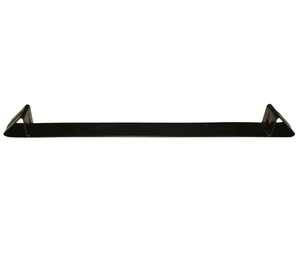
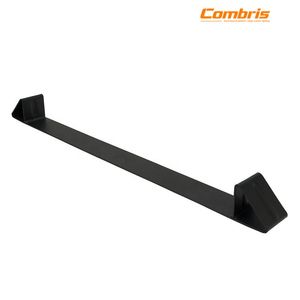
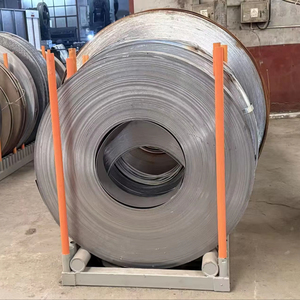
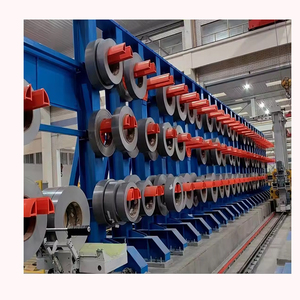
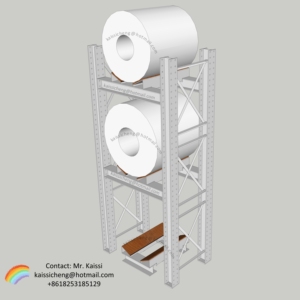
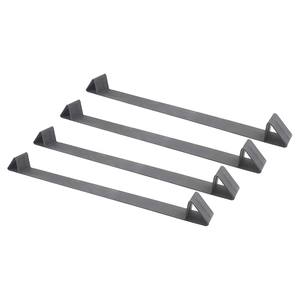
Unlike standard palletized loads that distribute weight uniformly across horizontal twin beams, cylindrical steel and aluminum coils present an acute structural challenge: concentrated, single-point contact zones with immense localized shear force. Standard warehouse racking systems subjected to raw master coils regularly suffer from beam twisting, web crippling, weld tear-outs, and catastrophic floor slab punching failures.
Our OEM coil storage racks solve this via dedicated structural cradles engineered with a calculated 120-degree saddle arc. This geometry distributes reactive normal forces along the tangential circumference of the coil, neutralizing rolling kinetic energy and eliminating localized hoop stress.
While generic racking enforces an L/200 deflection limit, our heavy-duty coil racks are fabricated to an L/400 to L/600 structural deflection threshold under maximum working loads, preserving weldment integrity through hundreds of thousands of dynamic crane-loading cycles.
Furthermore, to safeguard sensitive cold-rolled strip, automotive-grade sheet, and polished copper alloys, our cradles feature optional vulcanized polyurethane liners (90 Shore A durometer) or solid ultra-high-molecular-weight polyethylene (UHMW-PE) inserts. These buffers eliminate contact friction, prevent pressure scoring, and stop galvanic corrosion without reducing structural retention.
Oversized CNC-machined baseplates (up to 30mm thick) paired with mechanical wedge anchors dissipate heavy concentrated loads across concrete sub-slabs, maintaining pressures below structural PSI failure limits.
Constructed strictly from hot-rolled structural steel channels and heavy hollow structural sections (HSS), avoiding thin cold-formed roll-formed sections that risk lateral torsional buckling under coil shock loading.
V-saddles are secured with high-tensile Grade 8.8 structural bolts or full-penetration submerged arc welds, ensuring zero slippage or roll-out during high-speed crane and C-hook retrieval operations.
Engineered to site-specific seismic zone parameters in accordance with ANSI MH16.1 and Eurocode 3, incorporating rear vertical X-bracing and portal ties for high-bay stability.
Evaluate load dynamics, space utilization, and crane versus forklift accessibility across primary industrial coil storage configurations.
| Rack Architecture | Primary Load Range | MHE Compatibility | Footprint Efficiency | Protection Level | Ideal Industrial Setting |
|---|---|---|---|---|---|
| Modular Floor Cradles | 10,000 – 50,000 kg | Overhead Bridge Crane, C-Hook | Medium (Single-Tier Ground) | Polyurethane Lined | Heavy steel mills, slitting service centers, raw harbor staging |
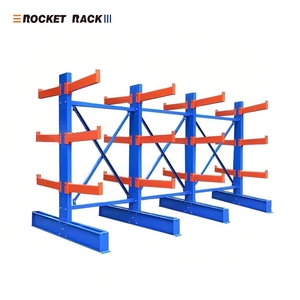
| Multi-Tier Cantilever Coils | 3,000 – 12,000 kg / Arm | Heavy Forklift, Side Loader, Crane | Very High (Vertical Airspace) | Nylon / Steel Cups | Automotive stampers, HVAC fabricators, wire & tube manufacturers |
| Stackable Factory Turnover Racks | 2,500 – 8,000 kg / Unit | Standard Forklift, Reach Truck | High (3 to 5 Tiers Stacked) | Optional Urethane | Flexible manufacturing cells, buffer storage, batch heat treatment |
| Transport Flatbed Securement | 5,000 – 25,000 kg | Overhead Crane, Boom Crane | Transport Optimized | Anti-Slip Hardwood | Highway steel haulers, intermodal flat rack shipping, DOT compliance |
| High-Bay AS/RS Coil Racking | 15,000 – 35,000 kg | Automated Stacker Crane | Maximum (Up to 30m Height) | Precision Sensor Pads | Lights-out automotive rollforming plants, mega steel distribution hubs |
Technological, operational, and sustainability developments reshaping how industrial buyers procure, automate, and inspect coil warehousing infrastructure.
Rising labor constraints and safety regulations are driving a structural migration toward Automated Storage and Retrieval Systems capable of handling single loads in excess of 30 metric tons. Future-proof rack procurement demands tighter tolerances (±1.5mm) and integrated optical target brackets for robotic crane alignment.
Next-generation coil cradles are embedding piezoelectric strain sensors and wireless telemetry. Real-time monitoring alerts safety directors to micro-fractures, beam fatigue, or unauthorized overload conditions before metal yield failure occurs, satisfying predictive maintenance mandates.
Global ESG frameworks are compelling OEMs to provide environmental product declarations (EPDs). Procurement officers increasingly specify racks fabricated via electric arc furnace (EAF) methods using 90%+ recycled steel, drastically lowering scope 3 embodied carbon.
As the automotive and consumer electronics sectors transition toward ultra-thin Advanced High-Strength Steels (AHSS) and delicate aluminum exterior skins, sacrificial contact pads have shifted from hardwood to engineered elastomeric polymers that completely prevent surface indentation.
Combining heavy-industry structural fabrication capabilities with strict international compliance, on-time container staging, and certified welding procedures.
Our dedicated engineering department models every custom coil rack using ANSYS and SolidWorks Simulation. We verify dynamic stress curves, weld throat thicknesses, and shear stress distribution under maximum capacity prior to factory tooling.
All load-bearing seams are joined by AWS D1.1 and ISO 9606 certified welders using automated robotic submerged arc welding. We conduct non-destructive ultrasonic and magnetic particle testing to ensure zero subsurface porosity.
We source prime mill-certified Q235B, Q355B, and S355JR hot-rolled steel with complete metallurgical heat-number tracking and chemical composition reports accompanying every export consignment.
Components pass through automated centrifugal shot blasting to SA 2.5 purity, eliminating mill scale. A thermosetting electrostatic polyester-epoxy powder coat (80–120 μm) is cured at 200°C for exceptional resistance to oil, abrasion, and marine corrosion.
Heavy structural steel requires dedicated seaworthy export crating. We engineer custom wooden bolsters, anti-corrosion VCI barrier wraps, and balanced container securing schemes to guarantee damage-free transit to North America, Europe, the Middle East, and beyond.
Every installation is supplied with stamped structural calculation packets, assembly CAD drawings, and OSHA-compliant aluminum load capacity notices specifying maximum allowable coil outer diameter and point load ratings.
Critical engineering considerations, floor slab loading requirements, and custom manufacturing inquiries answered by our structural design engineers.
Coil racks generate intense point loads directly beneath their baseplates. Determining slab viability requires knowing: (1) slab thickness (typically 200mm to 350mm reinforced concrete), (2) compressive concrete strength (e.g., 3,000 to 5,000 PSI or C25/30 to C35/45), (3) sub-base compaction modulus, and (4) existing rebar mesh placement. Our engineering team calculates the exact punch shear stresses and supplies oversized baseplates (ranging up to 600mm x 600mm x 30mm) with dual or quad anchoring to spread point loads safely below the cracking threshold of your slab.
For master coils with outer diameters ranging from 1,000mm to 2,200mm, a 120-degree inclusive V-saddle angle provides the ideal balance between gravitational seating stability and tangential load distribution. A narrower angle (e.g., 90 degrees) increases wedging forces and risks pinch-marking the strip bottom, whereas a wider angle (above 135 degrees) reduces retention against dynamic roll-out when an overhead crane or forklift maneuvers into position.
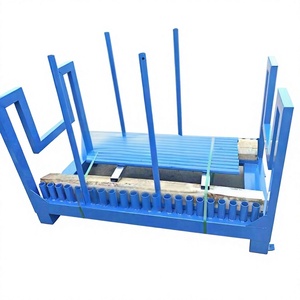
Yes. As an OEM manufacturer, we regularly design modular, pin-adjustable divider posts and slotted V-cradles. This enables operators to store narrow slit coils (e.g., 50mm to 300mm widths) alongside wider master coils on the same frame without lateral tipping. We also fabricate integrated side containment pins that drop into heavy CNC-machined sockets to prevent tipping of narrow-width coils.
While oak and hardwood chocks have historically been used, they splinter under heavy shear loads, absorb processing oils (creating fire hazards), and harbor moisture that causes galvanic rust on bare steel wraps. Specially formulated 90 Shore A cast polyurethane or UHMW-PE liners will not crack under loads up to 50 metric tons, are completely impervious to rolling mill oils and hydraulic fluid, and eliminate surface scratching or edge burring on premium automotive and aerospace alloys.
Our structural coil racks are manufactured in compliance with major global building standards: ANSI MH16.1 (Specification for the Design, Testing and Utilization of Industrial Steel Storage Racks in North America), European standard EN 15512 (Steel static storage systems – Adjustable pallet racking systems – Principles for structural design), and OSHA 1910.176 regulations for materials handling and storage safety.
Standard OEM project turnaround is 4 to 6 weeks from approval of structural shop drawings to port staging. Because heavy steel racks are high in density and weight, we optimize ocean freight using 20-foot and 40-foot open-top or heavy-payload GP containers, pre-calculating center-of-gravity distributions to avoid maritime port weight penalties.
Send our structural design team your coil dimensions (inner/outer diameter, width, max weight), building clear height, and forklift or crane specifications. We will deliver an optimized CAD layout, finite element analysis summary, and factory-direct quotation within 24 hours.