No matching pages. Try "pallet", "mezzanine" or "cantilever".
No matching pages. Try "pallet", "mezzanine" or "cantilever".
Fabricated from certified structural Q235B and Q355B cold-rolled steel, our specialized heavy-duty industrial systems are tailor-engineered to support international automated handling standards, high-throughput drive-through logistics, and extreme payload configurations.
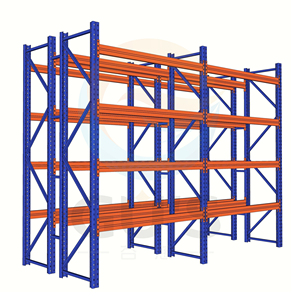
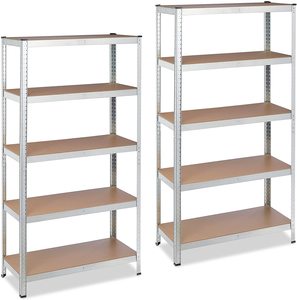
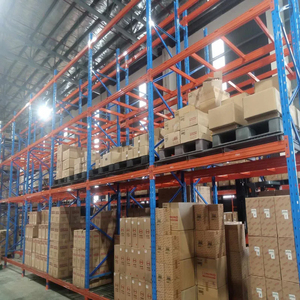
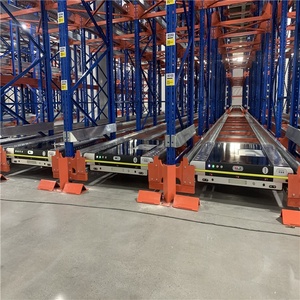
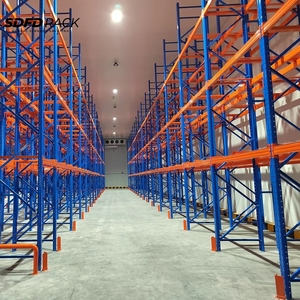
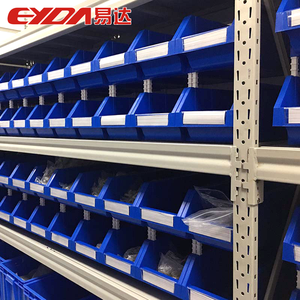
While standard Drive-In racking is engineered as a single-entry Last-In, First-Out (LIFO) accumulation system, authentic Drive-Through Racking incorporates open access corridors at both ends of each continuous storage lane. This structural topology establishes an uncompromising First-In, First-Out (FIFO) material handling flow while preserving the exceptional cubic footprint utilization of deep-lane accumulation.
Because Drive-Through structures lack the rigid full-height rear cross-bracing towers found in back-stopped Drive-In systems, structural stability hinges entirely on overhead portal tie-beams, reinforced top-tie longitudinal bracing trusses, and high-moment floor-anchored baseplates. Our engineering workflow subjects every custom frame to rigorous Finite Element Analysis (FEA) to eliminate progressive buckling risks under dynamic vehicle engagement.
Pallets are supported on continuous heavy-gauge formed steel guide rails mounted directly to cantilevered support arms welded to omega-punched structural uprights. This architecture eliminates horizontal load beams within the lane, granting counterbalanced and reach forklift trucks unrestricted vehicular passage directly into the heart of the racking matrix.
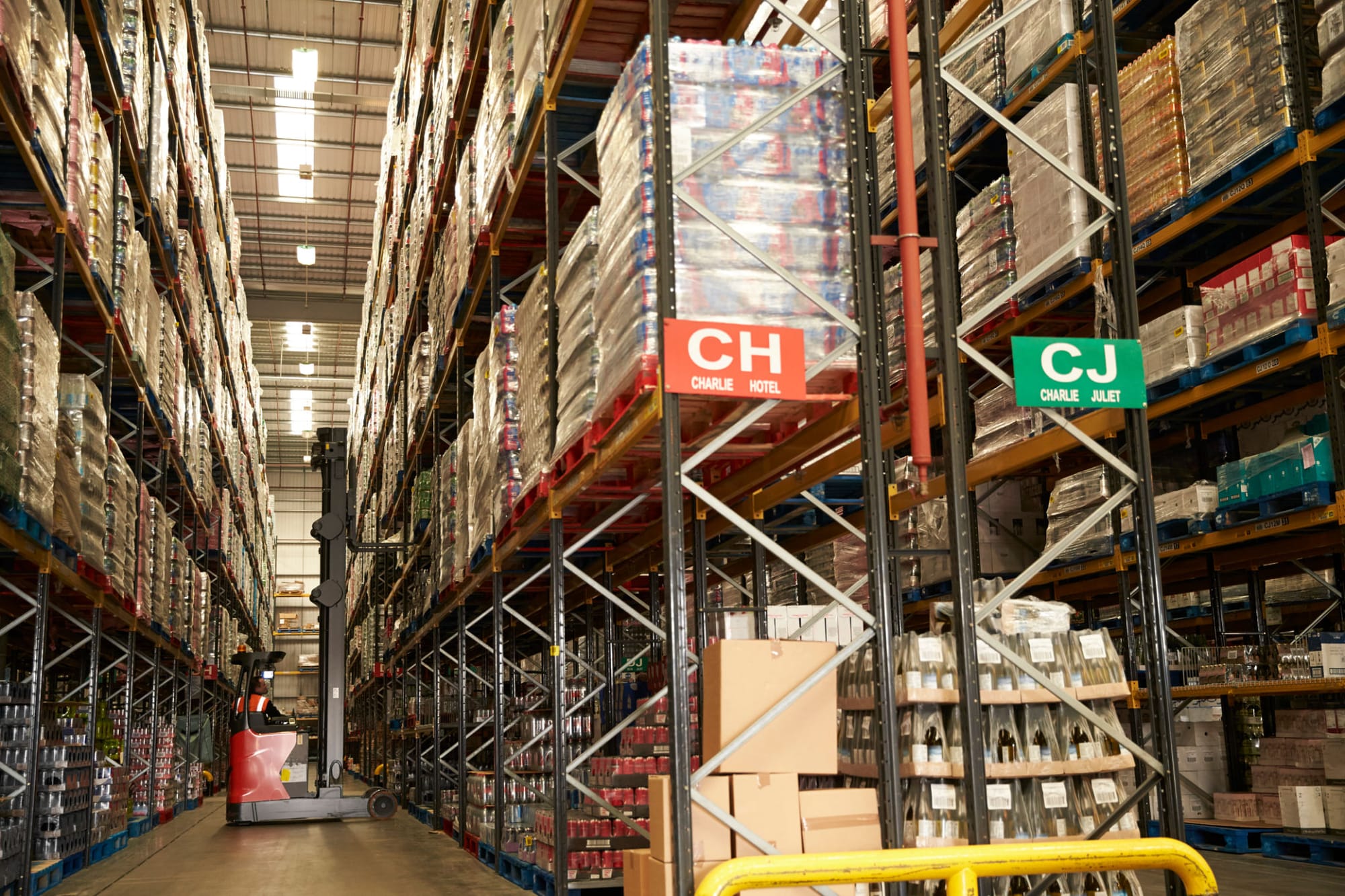
Roll-formed from continuous 2.5mm to 3.5mm thick high-yield structural strip steel, our pallet rails integrate an asymmetrical tapered entry flare and internal wheel stops. This geometric profile prevents pallet snagging, facilitates blind fork alignment, and dampens dynamic shock loads inflicted during rapid forklift entry and load deposition.
To compensate for the structural absence of mid-bay or rear diagonal cross-members, our drive-through bays utilize high-rigidity transverse portal frames anchored to longitudinal spine trusses. This engineering framework distributes seismic shear and vehicle-induced frame sway evenly across adjacent static columns, satisfying rigid limit-state deflection tolerances.
Because forklift masts operate within inches of structural uprights, impact vulnerability is mitigated via reinforced heavy-gauge wraparound column guards, full-length structural channel floor guide rails, and solid cast-steel bollards anchored into the slab with multi-point expansion or chemical wedge anchors.
Selecting the ideal industrial pallet accumulation architecture mandates a thorough operational evaluation of inventory batch sizes, SKU distribution, throughput velocity, and rotation imperatives. Below is an engineering comparison matrix across common high-density systems.
| System Architecture | Stock Rotation | Selectivity Ratio | Volumetric Efficiency | MHE Fleet Requirements | Structural Restraint Needs |
|---|---|---|---|---|---|
| Drive-Through Racking | Strict FIFO | Low (Per Lane Batch) | 75% - 85% Density | Narrow Counterbalance / Reach | High (Overhead Portals Required) |
| Drive-In Racking | Strict LIFO | Low (Per Lane Batch) | 75% - 85% Density | Standard Counterbalance / Reach | Moderate (Rear Cross Bracing) |
| Radio Shuttle Automation | FIFO / LIFO Hybrid | Medium (Shuttle Level) | 85% - 92% Density | Standard MHE (No Lane Entry) | Standard Dynamic Tie System |
| Gravity Pallet Flow | Strict FIFO | Medium (Lane Front) | 80% - 90% Density | Forklift at Dual Terminal Faces | Heavy Roller Decking Framework |
| Double Deep Selective | Modified LIFO | 50% Direct Access | 55% - 65% Density | Pantograph Double-Deep Reach | Standard Cross Braced Frames |
*Note: Engineering limits such as slab floor-loading capacity, slab flatness (FF/FL standards), and building clear height below fire sprinklers must be systematically verified prior to final specification sign-off.
As a dedicated international warehouse solutions manufacturer and export specialist, our manufacturing base bridges certified structural steel engineering with seamless worldwide containerized delivery and on-site commissioning.
Every overseas client project initiates not with a catalog pitch, but with an exhaustive technical intake. Our engineering team reviews customer-submitted CAD architectural layouts, pallet dimension distributions (including overhang, deflections, and bottom-board deck configurations), and material handling equipment turning clearances.
Our manufacturing complex houses high-speed automated roll-forming lines, automated CNC beam punchers, multi-axis robotic welding cells, and an integrated dual-stage continuous electrostatic powder coating system capable of generating consistent 80–120 μm cured film thickness.
For high-humidity marine, outdoor, or deep-freeze cold room deployments down to -30°C, we provide hot-dip galvanized finishes conforming to ISO 1461, ensuring decades of cathodic protection against atmospheric oxidation and micro-fissuring.
Global supply chain resilience, cold-chain expansion, and autonomous fleet integrations are rapidly reshaping the procurement criteria for industrial high-density drive-through systems. Key evolutionary vectors include:
Skyrocketing energy tariffs in refrigerated and deep-freeze logistics are pushing operators toward hyper-dense Drive-Through layouts. Eliminating non-productive service aisles reduces cooled air volume overhead by up to 40%. Future procurement contracts increasingly mandate specialized sub-zero structural steel formulations (such as Q355D/E) that prevent low-temperature ductile-to-brittle impact fracture.
As autonomous guided vehicles (AGVs) replace manual drivers in heavy pallet transit, drive-through lanes require heightened manufacturing and installation tolerances conforming to EN 15620 Class 400. Procurement specifications are transitioning toward continuous ground optical tracking strips, LiDAR-reflective target columns, and automated entry guide rail tolerances tighter than ±2.0mm.
Enterprise procurement executives increasingly demand "future-proofed" drive-through racking. This entails custom rail profiles that support conventional forklifts today but feature pre-punched geometry and power-bus mounting points to allow drop-in conversion to automated Radio Shuttle cart runners without dismantling frames or altering bay elevations.
Next-generation racking assets are integrating solid-state strain gauge sensors and LiDAR deflection monitors along overhead portal ties. These sensors feed real-time structural telemetry directly into Warehouse Management Systems (WMS), alerting facility managers to abnormal mechanical impacts, overloaded pallet tiers, or differential slab settlement before structural failure can manifest.
Procurement audits are actively evaluating embodied carbon and lifecycle structural resilience. Cold-formed profiles engineered from high-tensile steels yield equivalent load resistance with 12–18% less steel mass, substantially lowering ocean freight shipping volume and project carbon footprint while preserving 100% recyclability at system decommissioning.
Global logistics bottlenecks have elevated pre-engineered, knock-down modular frame assemblies. By pre-welding critical cantilever arm assemblies and utilizing precision interlocking bolt designs, export shipping cube utilization is maximized to over 95% inside standard 40ft High-Cube marine containers, drastically cutting ocean freight surcharges and on-site assembly schedules.
Direct answers to the most critical structural, metallurgical, and logistic questions raised by procurement directors, warehouse systems engineers, and overseas project managers.
The foundational distinction lies in entry configuration and dynamic structural stability. Drive-In racking utilizes a single operating aisle for loading and unloading, making it a strict Last-In, First-Out (LIFO) system. Its back face is rigidly stabilized by full-height diagonal steel X-bracing. In contrast, Drive-Through Racking features unobstructed access portals at both ends of each lane, enabling First-In, First-Out (FIFO) material rotation. Because rear cross-bracing cannot be installed without blocking through-transit, stability is achieved exclusively through heavy-duty top-tie overhead portal trusses, enhanced column baseplate anchors, and stiffened upright-to-arm connections.
Our OEM structural racking is calculated and fabricated to comply with European Standard EN 15512 (Steel Static Storage Systems – Adjustable Pallet Racking Systems – Principles for Structural Design), EN 15620 (Tolerances, Deformations, and Clearances), and the US Rack Manufacturers Institute (RMI) Specification ANSI MH16.1. For projects situated in active earthquake zones across Latin America, Southeast Asia, or Oceania, we execute site-specific seismic dynamic calculations (utilizing modal response spectrum analysis) compliant with AS 4084 and local municipal building codes.
We source prime mill-certified structural steel coils in grades Q235B (yield strength ≥ 235 MPa) and Q355B/C/D (yield strength ≥ 355 MPa). For refrigerated warehouses operating between 0°C and +4°C, our multi-stage electrostatic thermosetting epoxy-polyester powder coating (cured at 200°C, 80–120 μm thickness) provides superior chemical and abrasion resistance. For deep-freeze facilities operating down to -30°C or high-salinity coastal environments, we supply hot-dip galvanized components treated in accordance with ISO 1461 / ASTM A123, ensuring average zinc thicknesses of 65–85 μm to fully prevent low-temperature moisture condensation corrosion.
To deliver an optimized, fully calculated layout drawing and bill of materials within 48 hours, our structural engineering department requires: (1) Architectural CAD floor plans showing building columns, dock doors, lighting, and fire sprinkler clearance heights; (2) Detailed pallet specifications, including width, depth, overall height, bottom-board configuration, and maximum loaded gross weight; (3) Concrete slab specification (thickness, compressive strength, rebar placement, and joint layouts); and (4) Existing or planned forklift make, model, overall collapsed mast height, maximum lift height, and minimum right-angle stacking aisle clearance.
Vehicle impact represents the primary operational hazard in high-density drive-through bays. Our standard export engineering incorporates a triple-tier safety defense: (1) High-strength continuous hot-rolled channel (C-section) floor guide rails running the full depth of each lane, physical mechanical guidance that prevents truck drift; (2) 12mm thick cold-formed steel wrap-around column corner guards fitted with internal shock-absorbing polyurethane buffers; and (3) Heavy tubular or double-C end-of-aisle protection barriers anchored into the slab with M16 chemical expansion bolts to absorb broadside impacts at the high-traffic corridor corners.
Standard OEM manufacturing lead time ranges from 20 to 35 calendar days depending on bay volume and surface finish requirements. Uprights and continuous rails are bundled horizontally using automated steel strappers, cushioned by custom corrugated corner protectors and heavy industrial PE stretch wrap to prevent transit scuffing. Smaller components (baseplates, cantilever arms, beam safety pins, anchor bolts) are packed inside fumigated solid timber or composite crates compliant with ISPM-15. Container stuffing is computer-optimized with specialized dunnage bags and heavy-duty polyester lashing to ensure zero shifting during rough maritime passages.
Yes. We offer flexible global deployment options ranging from dispatching bilingual senior installation supervisors to managing full turnkey mechanical assembly crews. Every delivered installation is backed by comprehensive engineering documentation, including stamped 3D as-built layouts, installation torque specifications, official safety load notice plaques for bay-end mounting, and routine rack inspection protocols formatted to EN 15635 standards.
Collaborate directly with our senior structural racking engineers. Forward your facility CAD drawing, pallet load profiles, and forklift technical datasheets to receive a comprehensive FEA-backed layout proposal and competitive OEM export quotation within 48 hours.