No matching pages. Try "pallet", "mezzanine" or "cantilever".
No matching pages. Try "pallet", "mezzanine" or "cantilever".
Directly manufactured to international engineering tolerances. Designed for standard Euro pallets, ISO/GMA industrial skids, and customized cold-chain containerized loads.
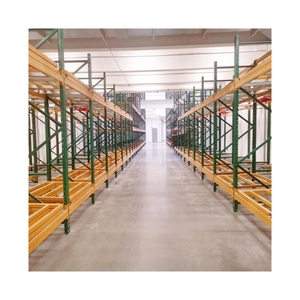
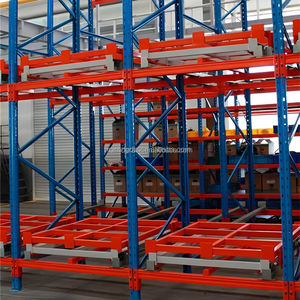
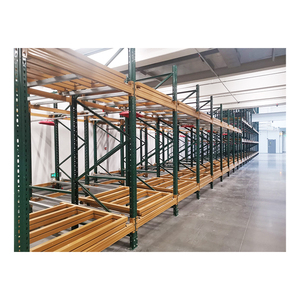
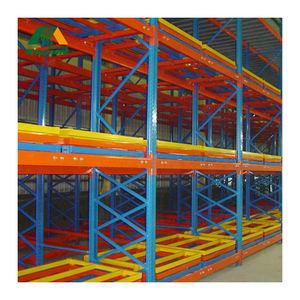
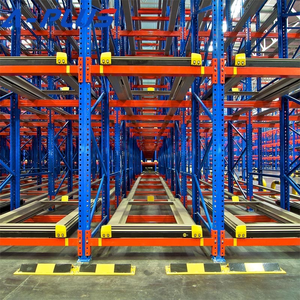
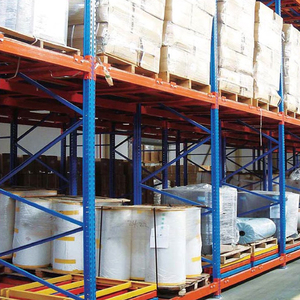
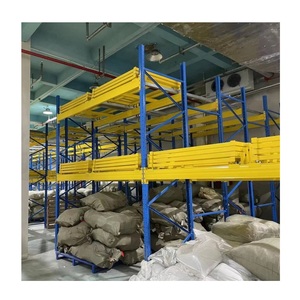
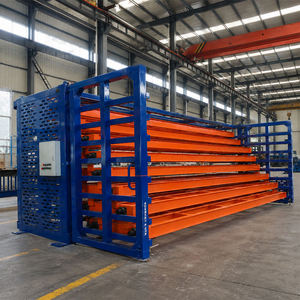
Push-back pallet racking represents an advanced mechanical balance between volumetric storage density and operational selectivity. By replacing multiple service aisles with nested, gravity-assisted telescopic trolleys on inclined structural guide rails, facilities eliminate dead aisle space without needing specialized narrow-aisle material handling equipment.
Unlike dynamic pallet flow racking which relies on continuous roller tracks requiring rear loading aisles (FIFO), an engineered OEM push back racking system functions on a Last-In, First-Out (LIFO) operational cycle utilizing a single front access aisle. The architectural design hinges on multi-tiered, precision-stamped steel carts that ride within nested structural channels set at a calibrated gravitational slope (typically between 1.5% and 2.5% gradient).
When the initial pallet is loaded by a standard counterbalance or reach forklift truck, it sits firmly on the top nesting cart. As subsequent pallets are introduced, the forklift operator uses the incoming unit load to gently push back the currently seated pallet, exposing the underlying nesting carriage. For a 4-deep configuration, three nested carriages are utilized; for a 6-deep system, five distinct rolling carriages traverse progressively deeper gauge channels.
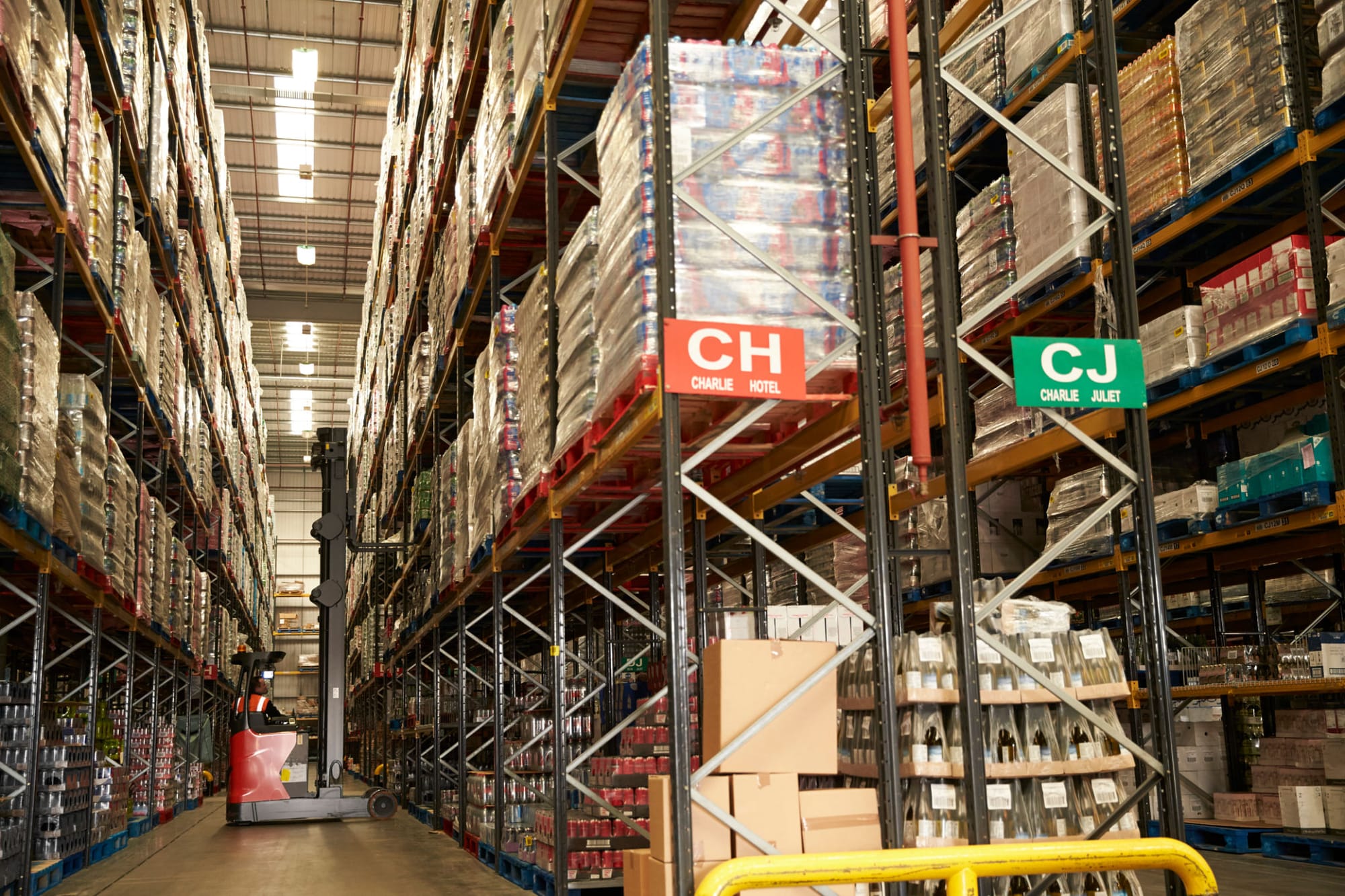
| Racking Topology | Density Index | Selectivity | Rotation Logic | Forklift Cycle Time | Structural Risk Factor |
|---|---|---|---|---|---|
| Push Back Racking (2–6 Deep) | Very High (75%) | 1 SKU per Lane | LIFO | Fast (Single Aisle Interface) | Minimal (Truck never enters rack structure) |
| Drive-In / Drive-Through | Maximum (85%) | 1 SKU per Block | LIFO / FIFO | Slow (Maneuvering inside bays) | Elevated (High risk of column upright collision) |
| Selective Pallet Racking | Baseline (40%) | 100% Direct | Any | Standard Access | Negligible (External aisle loading only) |
| Double Deep Racking | Moderate (55%) | 50% Direct | LIFO | Moderate (Requires pantograph reach trucks) | Low (Minor reach impact potential) |
| Pallet Flow (Gravity Roller) | Very High (80%) | 1 SKU per Lane | Strict FIFO | Fast (Separated load/pick aisles) | Moderate (Roller maintenance & brake wear) |
We combine heavy metallurgical fabrication with precision robotic tooling. As an accountable industrial exporter, our engineering covers every stage from finite element structural modeling to cross-border logistical packaging.
Our upright columns and load beams are roll-formed exclusively from certified high-tensile structural steel grades (Q235B, Q355B, and SS400). Every production heat is traceable via Mill Test Certificates (MTC) conforming to strict yield and elongation safety ratios under seismic load scenarios.
We do not deliver off-the-shelf catalog racks. Our engineering team conducts comprehensive spatial modeling, analyzing forklift turning radiuses, building column grids, slab load capacity, sprinkler clearances, and building envelope constraints to output production-ready CAD & Revit BIM drawings.
Standard finishes fail in condensation-heavy and sub-zero environments. Our automated finishing lines apply electrostatic thermosetting powder coatings with epoxy-polyester matrices, alongside full hot-dip galvanization options engineered to withstand prolonged -30°C freezer facility service without flaking or micro-fractures.
All push-back structural frames, beam connections, and deflection indices adhere strictly to European Standards EN 15512 (Racking Structural Design), EN 15620 (Tolerances and Clearances), EN 15635 (Inspection/Maintenance), as well as American RMI ANSI MH16.1 specifications.
Shipping dynamic cart systems internationally requires specialized export crating. Our nesting carts are modularly nested and strapped into anti-abrasive wooden crates; upright frames are bundled with protective spacers to preserve powder coating integrity and maximize 40HQ ocean shipping volume.
Every international export order is backed by full transparency: comprehensive calculation reports, structural stamping capabilities, detailed color-coded CAD installation manuals, load plaque rating notices, and ongoing technical support for your local installation crews.
Global logistics networks face escalating industrial real estate lease rates, surging labor overhead, and stringent cold-chain regulations. Procuring push-back racking is no longer a simple equipment transaction; it is an analytical capital investment driving long-term operational profitability.
With prime logistics warehousing lease rates rising across key supply chain corridors, procurement directors are aggressively replacing legacy 100% selective systems with 3-deep and 4-deep push back systems. This enables enterprises to expand SKU inventory by up to 75% within existing building envelopes, eliminating costly greenfield warehouse construction.
Thermal loss and refrigeration energy costs represent the primary operational expenditure in refrigerated warehousing. Push-back racking systems are rapidly becoming the preferred configuration over drive-in racking because they minimize refrigerated cubic air volume, prevent forklift thermal exhaust from entering the storage lanes, and yield faster forklift turnaround times.
The procurement landscape is shifting toward AMR/AGV compatibility. Leading automated guided reach trucks require tighter entry tolerances, consistent pallet alignment, and dependable cart mechanical resistance. OEM manufacturers are standardizing on guided entry funnel rails and precision magnetic sensors to accommodate autonomous material handling workflows.
Environmental, Social, and Governance (ESG) frameworks now influence industrial procurement RFQs. Global B2B buyers mandate verified low-carbon steel production, non-toxic heavy metal-free powder finishes, and modular knock-down configurations that reduce ocean freight carbon emissions per pallet position delivered.
Enterprise procurement managers are bypassing intermediate retail brokers to partner directly with primary manufacturing exporters. Sourcing directly from an established OEM exporter secures direct mill-pricing, verified custom load ratings, shorter engineering lead times, and unified accountability from drawing to delivery.
Smart intralogistics specifications increasingly call for non-intrusive mechanical telemetry. Integrating embedded impact monitors, cycle counting sensors, and wear-indicator cart wheel compounds allows maintenance supervisors to conduct planned servicing before bearing failure disrupts shipping lanes.
The mechanical foundation of push back racking is evolving from passive gravity tracks into highly engineered intralogistics hardware. Contemporary OEM research focuses on dynamic kinetic damping, composite metallurgy, and modular field adaptability.
Historical push-back installations occasionally suffered from pallet acceleration shocks when operators pulled pick pallets too abruptly on 5-deep or 6-deep configurations. Today, state-of-the-art OEM systems feature internal hydraulic or eddy-current magnetic speed governors embedded directly inside the guide channel rails, ensuring consistent return speeds regardless of operator velocity or payload variations (from 300kg to 1,500kg).
Furthermore, cart chassis manufacturing has transitioned from labor-intensive manual welding to robotic laser-cut unibody folding. This eliminates weld seam fatigue, reduces cart stack height profile, and maximizes vertical clearance within the warehouse bay.
Engineered speed retarders regulate cart descent speeds to under 0.3 meters per second. This eliminates dynamic shock against front rack beams, extending pallet integrity and protecting sensitive retail packaging from impact deformation.
Next-generation wheel assemblies integrate polyurethane or nylon tire coatings around high-precision steel bearings, lowering mechanical rolling friction by up to 28% and ensuring whisper-quiet warehouse environments with reduced rail wear.
Modern nested carts feature integrated full-coverage perforated wire decking or sheet plates, enabling warehouses to safely push back broken skids, half-pallets, Euro skids, and customized plastic pallets without risk of corner snagging.
Key architectural, metallurgical, and commercial considerations for warehouse design engineers, facility executives, and global procurement specialists.
While push back systems can technically be engineered from 2 to 6 pallets deep per lane, the most commercially and ergonomically efficient configurations are 3-deep, 4-deep, and 5-deep. Beyond 5 deep, the cumulative pushing force required by standard forklift trucks to depress multiple heavy pallets uphill increases significantly (compounding wheel rolling friction and the gravitational slope). For depths of 6 pallets, we specify high-capacity structural forklifts, low-friction bearing compounds, and internal speed retarders to guarantee operator control and structural stability.
Push back racking dramatically reduces warehouse maintenance overhead compared to drive-in racking. In drive-in systems, forklifts must physically drive inside the rack bays, frequently causing column collisions that compromise structural integrity. With push-back racking, the forklift remains entirely in the main access aisle, loading and picking from the lane face. This architectural barrier prevents upright damage, extends equipment service life, and increases operator loading cycle speeds by 30% to 40%.
To properly engineer the baseplates and anchor bolt patterns, our OEM calculation team requires: concrete slab thickness (typically 150mm to 250mm minimum), compressive strength rating (e.g., C20/25, C30/37 or 3,000–4,000 PSI), rebar mesh depth, and the location of expansion or saw-cut joints. High-density push back racks impose concentrated point loads through the upright footplates onto the slab; accurate data prevents slab punch-through and guarantees anchorage in compliance with EN 15512 and regional seismic codes.
Yes. As a custom OEM exporter, we design bespoke cart frames tailored to non-standard footprints, including Euro pallets (1200x800mm), industrial GMA skids (48x40in), Asian standard skids (1100x1100mm), and heavy metal containers. Where varying pallet weights are loaded into the same lane, we balance the slope gradient (typically 1.75%) and engineer dynamic safety catches so that lighter loads push smoothly without causing heavier pallets to accelerate dangerously upon retrieval.
All structural upright frames and horizontal beams are bundled using specialized steel band strapping, corrugated corner protection, and high-density foam separators to prevent paint chipping. Push back cart carriages and guide channels are packed in reinforced, fumigated plywood crates optimized for 40-foot High Cube (40HQ) containers. Our factory export team utilizes 3D container packing software to maximize container volume utilization, saving thousands of dollars in ocean freight per project.
Our upright columns feature precision punch holes spaced on standardized 50mm, 75mm, or 76.2mm (3-inch) pitch centers. Because our push-back guide rails mount directly to standard heavy-duty structural cross beams via engineered clamping brackets, the entire push-back bay level can be raised, lowered, or relocated should your facility's pallet load heights change in the future.
Push back racking excels in refrigerated distribution because it conserves expensive conditioned air volume. For blast freezers operating down to -30°C, we specify low-temperature synthetic bearing greases that resist viscosity breakdown, structural steel certified for sub-zero notch toughness (preventing brittle fracture), and galvanized or multi-stage zinc-phosphate powder finishes to withstand heavy condensation during defrost cycles.
Every export shipment includes standard heavy-duty safety devices: mechanical front pallet stops to prevent cart over-travel, anti-lift safety tabs to prevent carts from jumping the tracks during aggressive loading, heavy-gauge column base protectors, row end barriers, spring-loaded safety locks for beam-to-frame connectors, and bilingual load rating plaques ready for site mounting.
Yes. Our modular cart systems are engineered for front-accessible maintenance. By using a standard forklift to lift and remove the top nested carriages sequentially, service technicians can inspect, service, or swap out individual flanged wheel bearings and guide rollers directly from the aisle without unbolting structural load beams or unanchoring upright frames.
Our standard OEM manufacturing lead time ranges from 3 to 5 weeks from approved CAD shop drawings, depending on custom steel profile specifications, coating finishes, and container volumes. We maintain high flexibility for both pilot validation bays (MOQ 1 container / ~200 pallet positions) up to high-capacity distribution centers exceeding 20,000 pallet spaces.
Send your facility drawings, pallet dimensions, forklift specifications, and storage capacity targets. Our structural engineering team will deliver a comprehensive CAD layout and factory-direct export proposal within 24 business hours.