
No matching pages. Try "pallet", "mezzanine" or "cantilever".
No matching pages. Try "pallet", "mezzanine" or "cantilever".
Custom cold-rolled structural steel profiles, high-load selective systems, and dynamic gravity storage racks precision-manufactured to client CAD layouts and global seismic specifications.
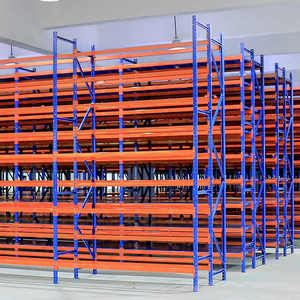
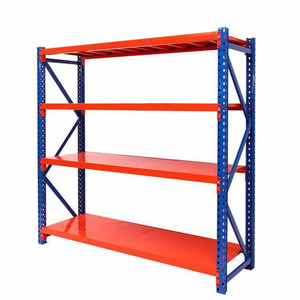
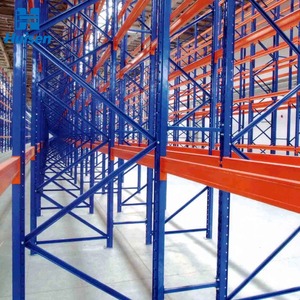
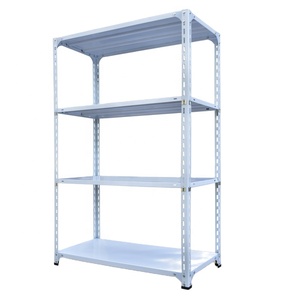
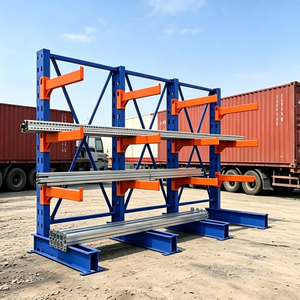
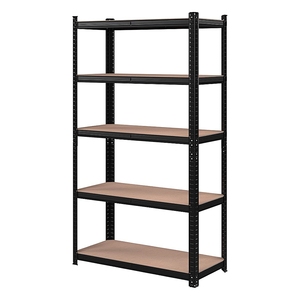
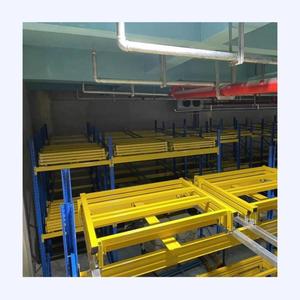
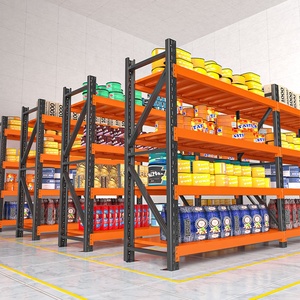
Automated cold roll-forming capacity supporting mega-scale logistics and OEM warehousing contracts.
Continuous punching tolerance ensures flawless slot alignment for AS/RS and teardrop connections.
Strict compliance with FEM 10.2.02 and EN 15512 safety limit standards under maximum design payload.
Turnkey supply and engineering verification across the Middle East, Europe, North America, and APAC.
As a specialized industrial steel rack manufacturer and factory, we eliminate intermediaries by integrating raw coil slitting, roll-forming, robotic welding, and powder coating under one quality-controlled umbrella.
We source prime structural carbon steel coils (Q235B, Q355B, SS400, and ASTM A36) with verified mill test certificates (MTC). Tensile strength, yield limits, and elongation percentages are verified batch-by-batch to ensure ductile failure behavior rather than sudden structural collapse under seismic over-stress.
Our facility houses 18 automated cold roll-forming production lines with multi-station precision rollers. We custom-profile upright columns with complex web-stiffened return flanges up to 120mm width and beam sections up to 160mm depth, engineered specifically to resist torsional buckling and lateral shear forces.
Beam end connectors and heavy baseplates are welded using multi-axis Fanuc robotic welding workstations with shielded inert gas (MIG/MAG). This guarantees consistent penetration depth, eliminating porosity, lack of fusion, and cold welds that could compromise rack row stability during accidental forklift impacts.
Structural components undergo an automated seven-stage surface preparation sequence: degreasing, double rinsing, acid pickling, nano-ceramic silane conversion, and deionized rinsing, followed by electrostatic epoxy-polyester powder baking at 200°C. Delivers 500+ hours salt-spray resistance compliant with ASTM B117 standards.
Every customized warehouse racking layout is modeled using 3D structural analysis software (STAAD.Pro, ANSYS). We run Finite Element Analysis (FEA) to simulate beam connection rigidity, unbraced column lengths, dynamic seismic loads, and floor slab point-load distribution prior to stamping production shop drawings.
We manufacture racking systems strictly verified against EN 15512 (Steel static storage systems – Adjustable pallet racking systems), EN 15620 (Tolerances, deformations and clearances), ANSI/RMI MH16.1 (Specification for the Design, Testing and Utilization of Industrial Steel Storage Racks), and Australian AS4084.
Evaluate storage densities, handling machinery clearances, rotation rules, and capital outlay across mainstream OEM industrial storage topologies.
| Racking Topology | Pallet Selectivity | Cubic Utilization | Inventory Rotation | Forklift Compatibility | Optimal Bay Payload |
|---|---|---|---|---|---|
| Selective Pallet Racking | 100% Immediate | 40% - 45% (Standard) | FIFO / LIFO | Counterbalance, Reach Truck | 1,000 - 4,000 kg / Level |
| Double Deep Pallet Racking | 50% Immediate | 55% - 65% (High) | LIFO | Double-Deep Pantograph Truck | 1,500 - 3,200 kg / Level |
| Drive-In / Drive-Through | Lane Dependent (Low) | 70% - 80% (Ultra-High) | LIFO / FIFO | Counterbalance into Channels | 1,000 - 1,500 kg / Pallet Position |
| Push-Back Cart System | Lane Facing (Medium) | 65% - 75% (High) | LIFO | Standard Reach / Counterbalance | 1,200 - 1,500 kg / Cart Tier |
| Gravity Pallet Flow | Lane Discharge Face | 75% - 85% (Max Dense) | Strict FIFO | Standard Trucks (Split Aisles) | 1,000 - 1,400 kg / Pallet Track |
| Structural Cantilever | 100% Unobstructed | 50% - 60% (Specialized) | Any Sequence | Side Loader, 4-Way Reach Truck | 500 - 2,500 kg / Arm Position |
| Automated AS/RS High-Bay | 100% Automated | 85% - 92% (Maximum) | Software WMS Driven | Stacker Cranes / Shuttles | Up to 30,000 kg Bay Load |
Strategic analysis of technological, metallurgical, and structural evolutions transforming global logistics real estate and contract steel manufacturing.
The rise of Autonomous Mobile Robots (AMRs), Automated Guided Vehicles (AGVs), and automated shuttle systems requires structural racking manufacturers to tighten roll-forming tolerances down to ±0.5mm. Beam deflections under full load are shifting from traditional L/200 criteria to ultra-stiff L/300 limits to avoid robotic sensor misreads.
Procurement directors are specifying HSLA steel grades (such as Q355MC and high-grade cold-formable sheet). These steels allow thinner web profiles with reinforced geometries, reducing total deadweight by 12% to 18% without sacrificing vertical load capacity, significantly lowering overseas shipping freight and container utilization costs.
Global logistics corridors are enforcing upgraded seismic building codes (IBC and Eurocode 8). Procurement now requires rotational stiffness testing on upright-to-beam connectors and oversized ductile baseplates with certified wedge anchor pull-out ratings to absorb seismic energy without progressive collapse.
Tier-1 3PLs and multinational retailers are demanding Environmental Product Declarations (EPDs) for structural steel racks. Electric Arc Furnace (EAF) steel with certified high recycled scrap content and non-VOC TGIC-free polyester powder coats have become critical scoring criteria in corporate ESG procurement tenders.
Warehouse racking is a dynamic load-bearing structural framework subjected to continuous forklift traffic, dynamic docking vibrations, and variable load configurations. Our factory designs ensure that systemic safety is engineered into the connection details, not patched as an afterthought.
Direct technical answers addressing structural calculation, customized OEM roll tooling, load testing, logistics packing, and on-site regulatory compliance.
Frame capacity is calculated based on effective unbraced column length ($L_{cr}$), the distance between horizontal beam levels, and the stiffness of the diagonal/horizontal frame bracing. We utilize finite element numerical simulation and empirical stub-column test procedures mandated by EN 15512:2020 and RMI MH16.1. When beam levels are removed or spaced further apart during warehouse operational changes, the unbraced length increases, reducing overall bay structural capacity. Always consult our factory engineering team before adjusting beam elevations.
Yes. As a true OEM factory, our roll-forming lines feature programmable continuous punching tooling. We can replicate teardrop punchings (common in North American systems), 50mm pitch Omega profiles (standard European Dexion style), 75mm pitch profiles, and proprietary boxed hook geometry. We also build custom press-stamping dies for 3-claw, 4-claw, and 5-claw beam connector plates to ensure 100% mechanical interchangeability and load equivalence with your existing infrastructure.
Pallet racking systems exert substantial concentrated point loads through the upright baseplates onto the building floor slab. Industrial slabs typically require a minimum thickness of 150mm to 200mm with 28-day concrete compressive strength of at least 25 MPa to 30 MPa ($f'_c \ge 3,500$ psi), reinforced with welded wire mesh or structural rebar. Additionally, floor expansion joints must be surveyed; chemical or mechanical wedge anchor bolts must never be installed closer than 100mm to 150mm from a concrete slab joint or edge.
Electrostatic thermoset powder coating provides an exceptional, cost-effective, impact-resistant finish ideal for standard indoor ambient warehouses and retail environments, offering high visibility through custom RAL safety colors. Hot-dip galvanization involves immersing cold-formed steel components into a bath of molten zinc at 450°C, creating a metallurgically bonded zinc-iron alloy coating. Galvanizing is mandatory for outdoor yard storage, coastal locations with high salinity, aggressive chemical storage, and blast freezers experiencing condensation.
Under international standards including FEM 10.2.02 and EN 15512, horizontal pallet rack beams are designed not to exceed a vertical deflection ratio of $L/200$ (where $L$ is the clear span distance between upright frames). For automated high-density shuttle racking, AS/RS systems, or narrow aisle turret truck operations, our engineers design to a stricter $L/250$ or $L/300$ tolerance to prevent pallet sagging from tripping photoelectric safety sensors or colliding with handling equipment.
Uprights are nested face-to-face and banded with heavy-duty PET/steel strapping onto custom timber or steel runners, with high-density EPE foam corner protectors cushioning cold-rolled edges. Beams are bundled in matched pairs with connector ears bubble-wrapped or capped with plastic covers to prevent flange distortion. Small hardware, locking pins, shims, and sleeve anchor bolts are crated in export-grade fumigated plywood cases with moisture-absorbing desiccant packs to prevent transit corrosion.
During initial layout generation, our engineers calculate clear longitudinal flue spaces (typically 150mm between back-to-back racks) and transverse flue spaces (75mm between adjacent pallets) in accordance with NFPA 13 and local civil defense requirements. We coordinate upright frame heights so that the top pallet load maintains a minimum clearance of 450mm to 900mm below sprinkler head deflectors. Wire mesh decking can also be supplied to allow uninhibited water penetration down through lower shelf levels.
Every commercial production batch is accompanied by comprehensive documentation: Raw Material Mill Test Certificates (chemical composition and mechanical tensile yield verification), Dry Film Thickness (DFT) powder coat adhesion cross-hatch reports, weld inspection verification records, and a formal Certificate of Conformance (CoC). For custom OEM profiles, full-scale laboratory load testing reports detailing elastic limits and ultimate failure payloads can be performed upon request.
Partner directly with an ISO-certified heavy duty steel warehouse racking factory. Send your facility CAD drawings, pallet loading parameters, and clearance specifications to receive an engineered layout, FEA structural calculation, and competitive factory quotation within 24 hours.