
No matching pages. Try "pallet", "mezzanine" or "cantilever".
No matching pages. Try "pallet", "mezzanine" or "cantilever".
Explore our turnkey OEM/ODM warehouse hardware matrix. From heavy-gauge roll-formed uprights and high-capacity radio shuttles to impact barriers and automated mezzanine architectures, each component delivers load-tested integrity and high volumetric density.
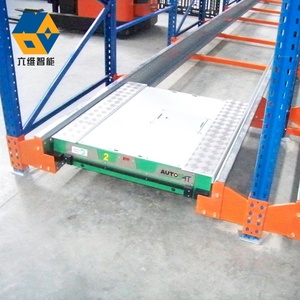
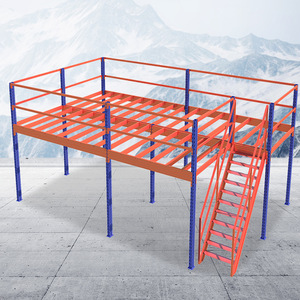
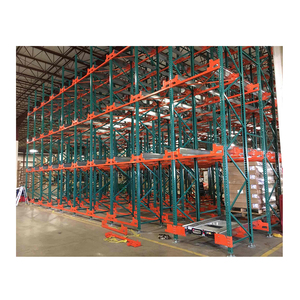
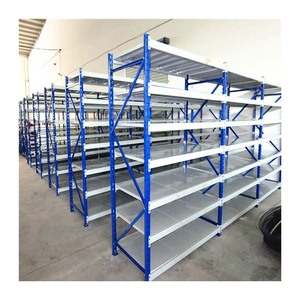
Procuring industrial racking systems is fundamentally an engineering-grade structural investment. As dedicated manufacturers with comprehensive custom roll-forming, stamping, and automated powder coating infrastructure, we engineer out risk at every stage of the lifecycle.
Every custom beam cross-section and upright column geometry undergoes rigorous computerized stress simulations. We calculate precise beam deflection limits under maximum uniform distributed loads (UDL) down to L/200, strictly aligning with European standard EN 15512 and RMI MH16.1 specifications.
Our workshop houses over 18 dedicated continuous roll-forming lines capable of handling certified Q235B and Q355B hot- and cold-rolled prime steel coils. Precision CNC hole-punching dies ensure that 50mm, 75mm, and teardrop connector slot pitches remain uniform across structural columns up to 16 meters tall without splicing.
Metal surfaces pass through a fully automated 7-stage chemical wash, zinc phosphate pre-treatment, and high-voltage electrostatic epoxy-polyester powder baking cycle (60–90μm thickness). For outdoor or corrosive environments, we offer continuous ISO 1461 hot-dip galvanizing with 500+ hours salt spray test validation.
We empower international system integrators, rack distributors, and logistics consulting firms with full OEM branding support. From tailored connector bracket toolings and custom corporate color matching to containerized export nesting, English assembly manuals, and project-specific load notices, we operate as your invisible manufacturing backbone.
Warehouses built in geologically active regions or stringent municipal zones demand custom baseplate footprint designs, heavy anchor chemical bolting, and diagonal bracing node calculations. We supply stamped engineering calculations satisfying local municipal and Civil Defence standards.
We do not treat storage systems in isolation. Our design team analyzes warehouse floor slab compressive strengths (FL rating, joint positions), overhead truss clear heights, sprinkler drop coordinates, and material handling vehicle turning radiuses to guarantee zero interference during installation and handover.
From mill-test certificates on raw structural coil stocks to non-destructive weld ultrasonic testing, our manufacturing process emphasizes long-term field stability. Every export batch is packed with custom steel dunnage to eliminate transit deformation.
Global supply chain volatility, urban real-estate scarcity, and sky-rocketing labor overheads are reshaping industrial warehouse procurement. Modern supply chain executives are pivoting from conventional static racking toward agile, high-density, automated structural solutions.
Procurement teams are transitioning capital budgets away from standard selective pallet racks toward autonomous radio shuttle platforms and automated storage/retrieval systems (ASRS). By shrinking aisle widths and utilizing vertical clear heights up to 30+ meters, automated shuttle racking boosts usable pallet positions by 40% to 65% across identical facility footprints.
With quick-commerce and omnichannel retail demanding tens of thousands of fragmented SKUs within rapid fulfillment radii, multi-tier rack-supported mezzanine lofts have become a premier investment. Buyers demand modular, bolt-together architectures that can be quickly expanded or reconfigured without requiring permanent structural changes to the building envelope.
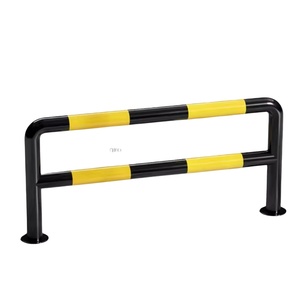
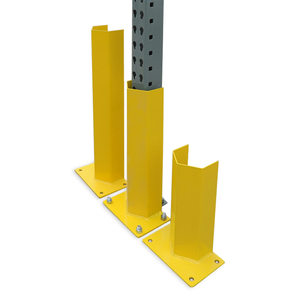
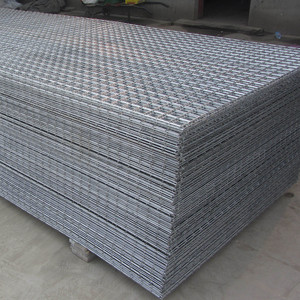
Enterprise procurement directors increasingly weigh structural resilience and cycle maintenance costs rather than just initial purchase price. Heavy-duty column protectors, bolted end-of-aisle safety barriers, and certified galvanized wire mesh decks are now bundled into core tenders to eliminate preventable frame damage and costly warehouse operational downtime.
The boundary between civil structural engineering and robotics is disappearing. Modern OEM manufacturing incorporates high-precision metallurgy, digital structural health monitoring, and sustainability protocols.
By leveraging micro-alloyed, high-yield steel varieties (such as Q355B and specialized micro-alloy cold-rolled coil), our engineers optimize wall thicknesses without sacrificing ultimate moment capacity or torsional resistance. This lightweighting slashes international freight emissions and freight tariffs while exceeding global safety factor ratios.
Next-generation high-bay pallet installations are adopting embedded micro-strain gauges and Bluetooth accelerometer nodes along critical upright joints. These sensor modules transmit real-time deflection alerts, forklift impact shock telemetry, and overload warnings directly to facility WMS dashboards, enabling proactive structural maintenance.
In response to international ESG directives, our automated coating lines use ultra-durable TGIC-free polyester powders and heavy-metal-free zirconium conversion coatings. This produces superior chip resistance, zero hazardous volatile organic compound (VOC) emissions, and complete recyclability at end-of-service lifecycle.
Compare fundamental engineering parameters across primary racking architectures to select the optimal configuration for your operational dynamics.
| Racking Architecture | Pallet Access Mode | Storage Density | Stock Rotation Logic | Material Handling Vehicle | Typical Bay Capacity |
|---|---|---|---|---|---|
| Selective Pallet Racking | 100% Direct Selective | Baseline (35-40% Floor) | FIFO / LIFO Arbitrary | Standard Counterbalance / Reach Truck | 1,000 – 4,500 kg / level |
| Double Deep Racking | 50% Direct Access | High (+30% vs Selective) | LIFO (Last-In, First-Out) | Deep-Reach Pantograph Truck | 1,500 – 3,500 kg / level |
| Drive-In / Drive-Through | Lane-Based Access | Very High (Up to 75%) | LIFO (Drive-In) / FIFO (Drive-Thru) | Counterbalance / Narrow Mast Reach | Lane Rated (10,000+ kg) |
| Automated Radio Shuttle | Deep Lane Automatic | Maximum (Up to 85%) | Configurable FIFO or LIFO | Standard Forklift + Radio Carrier | Up to 1,500 kg / pallet |
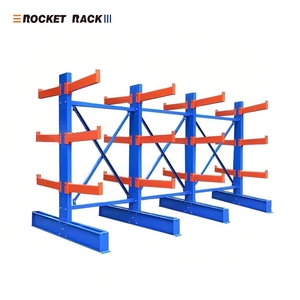
| Heavy-Duty Cantilever | Unobstructed Frontage | Variable (Linear Stock) | Arbitrary Direct Access | Side-Loader / Heavy Forklift / Overhead Crane | 500 – 3,000 kg / arm |
| Multi-Tier Mezzanine Platform | Manual Floor Decking | Vertical Multiplier (2x-3x) | Arbitrary Piece Picking | Hand Pallet Truck, Lifts, Pick Carts | 300 – 1,000 kg / m² |
Avoid expensive engineering rework, delayed customs clearances, and site installation failures by verifying these six foundational design parameters prior to factory roll-out.
Document exact pallet footprints (e.g., Euro 800x1200mm, Industrial 1000x1200mm, US 40x48in), maximum cargo overhang, total gross weight, and pallet construction (two-way or four-way entry, skids vs perimeter base boards).
Obtain concrete slab core samples or structural slab drawings indicating minimum slab thickness (typically 150–250mm), concrete compressive strength grade (e.g., C25/30 or C30/37), reinforcement mesh details, and expansion joint locations.
Never rely solely on exterior building eave elevations. Survey true clear bottom-of-truss elevations, suspended HVAC ducting, industrial lighting runs, and minimum drop clearances required by local NFPA fire sprinkler regulations.
Match your rack layout directly to handling equipment specs: overall collapsed mast height, maximum extended fork elevation, minimum right-angle stacking aisle width (Ast), and truck turning radius to prevent aisle collisions.
Identify whether the installation resides in seismic acceleration zones or refrigerated cold-chain environments. Cold store applications demand specialized steel grades resilient against low-temperature embrittlement (e.g., impact-tested steels).
Ensure your supplier supplies comprehensive factory quality certificates, structural load signage boards, third-party steel inspection reports, and step-by-step installation method statements required for building inspections and municipal approvals.
Get immediate, authoritative answers to common technical, commercial, and operational questions encountered when sourcing custom industrial storage systems from our factory.
We manufacture using prime certified Q235B and Q355B structural steel, conforming chemically and mechanically to EN 10025 (S235JR and S355JR equivalents) and ASTM A1011. Structural calculations and manufacturing tolerances strictly adhere to European standards EN 15512, EN 15620, EN 15635, and American RMI MH16.1 specifications.
Yes. As a primary OEM/ODM manufacturer, we design and produce custom connector brackets, specialized beam profiles (box beams, step beams, tube beams), and distinct upright punching patterns. We match corporate RAL powder coating shades and provide custom private-label branding, customized packaging, and localized assembly manuals.
To produce an optimized CAD proposal and quotation, we require: (1) building architectural DWG/PDF drawings indicating columns and clear heights; (2) pallet dimensions, cargo heights, and maximum gross weights; (3) forklift model and turning radius; and (4) target SKU volume, operational throughput, and preferred storage density mode.
While drive-in racking delivers high density, it requires forklift trucks to navigate deep inside structural lanes, resulting in slow pallet cycles and frequent upright collisions. Radio shuttle racking keeps forklifts in the main aisle; battery-powered robotic shuttles handle deep-lane travel, doubling retrieval speeds and eliminating frame impacts.
Standard lead times for standard selective pallet racking span 15 to 25 calendar days for multi-container volumes; complex automated shuttle or mezzanine platforms require 30 to 45 days. All components are packed with protective corner protectors, bundled with steel strapping, and seated on heavy steel dunnage for seamless container unloading.
Yes. We deploy seasoned installation supervisors globally to direct local installation crews, verify floor anchoring torque, conduct laser frame plumbness checks, and install regulatory load capacity plaques. We also supply certified EN 15635 rack inspection manuals to guide your facility team through regular preventative maintenance.