No matching pages. Try "pallet", "mezzanine" or "cantilever".
Certified Global Intralogistics Engineering
Top China Mobile Shelving Units Manufacturers & Exporter
Precision-engineered high-density storage solutions, electrically operated mobile racking systems, and turnkey material handling manufacturing compliant with ISO 9001, CE, and FEM 10.2.07 standards.
+85%
Volume Optimization
Q355B
Structural Grade Steel
EN 15512
European Engineering Standard
100%
Pre-Shipment Trial Assembly
Engineered Product Portfolio
High-Density Industrial Mobile Shelving & Warehouse Racking Systems
Explore our heavy-duty automated systems, mobile base racks, teardrop pallet configurations, and multi-tier mezzanines custom-fabricated for maximum storage density and streamlined material throughput.
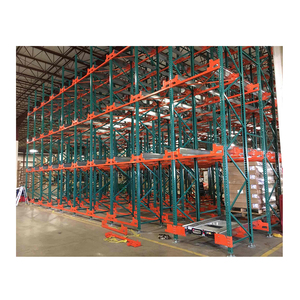
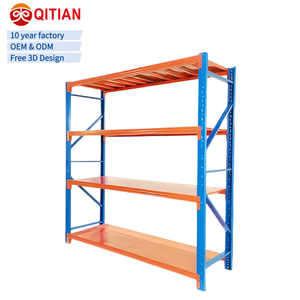
North American teardrop hole pitch standard compatibility with reinforced roll-formed step beams, optimized for heavy liquid drums and heavy inventory.
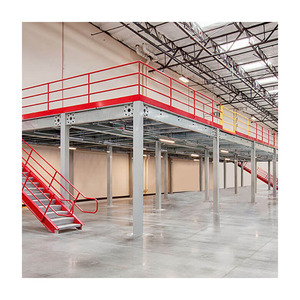
Versatile box-beam configuration engineered for heavy discrete unit loads, high-bay integration, and tough third-party logistics (3PL) warehouse applications.
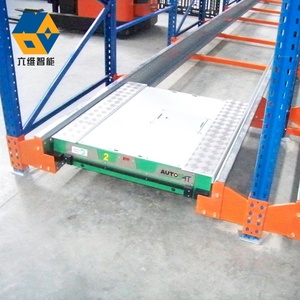
Rapid snap-in rivet assembly system with no bolting required; hot-dip galvanized or epoxy coated for corrosion-prone environments and e-commerce picking lines.
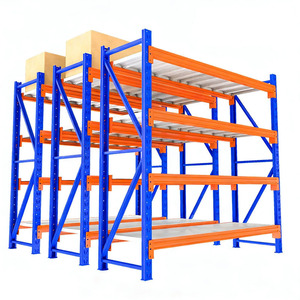
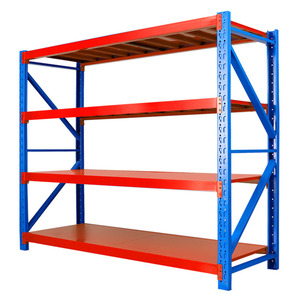
Five-layer modular steel storage racking engineered for fast containerized export, rapid toolless installation, and reliable high-density warehousing.
Configuration:5 Layer Heavy Tiering
Locking Mechanism:Heavy Spring Safety Pins
Custom Colors:Standard RAL or Customized
Engineering White Paper
The Structural Mechanics of High-Density Mobile Racking Systems
Analyzing how motorized bases and high-density mobile shelving reduce footprint requirements by 45% to 50% while maintaining 100% selective accessibility to every SKU.
Transforming Static Waste into Dynamic Storage Volume
In conventional selective pallet racking layouts, fixed access aisles consume between 55% and 65% of the total warehouse floor footprint. Forklifts require aisle widths ranging from 2.8 meters (reach trucks) to 3.5+ meters (counterbalance trucks), meaning more building space is dedicated to empty vehicle circulation than to revenue-generating inventory.
Heavy-duty mobile shelving and powered mobile racking (PMR) mount conventional racking superstructures onto electronically synchronized motorized bogies running on precision floor-embedded guide rails. By opening only a single operational aisle upon operator or WMS command, the system converts dead aisle space into active pallet capacity—effectively doubling cubic storage volume or reducing building construction and refrigeration footprint by up to 50%.
Key Mathematical Principle:Storage Volume Index ($SVI$) increases asymptotically as static access aisles are consolidated into dynamic programmable operational corridors ($N_{aisles} \to 1$).
Engineering Verification & Load Parameters
Cold-Formed High-Tensile Steel Profiles
Fabricated exclusively from prime certified continuous-cast coil steel (Grade Q235B and Q355B / S355JR). Yield strength exceeding 355 MPa guarantees minimum cross-section mass with high torsional stiffness under full seismic and live load conditions.
Rail Embedment & Tolerance Control
Inverted-vee and flat crowned guide tracks leveled using precision optical leveling devices to within ±1.0mm over 10 meters, complying with European standard EN 15620 Class 300 tolerances to eliminate bogie derailment risks.
Multi-Tier Safety Interlocking Curtains
Dual-circuit category-4 optical light barriers, emergency stop deadman cords along aisle faces, and base-level acoustic warning buzzers guarantee zero personnel hazard during mobile carriage movement.
Structural & Density Trade-Off Matrix
Racking Topology
Floor Area Utilization
Selectivity
Rotation Mode
Forklift Equipment
Relative Cold Storage ROI
Standard Selective Pallet Racking
35% – 40%
100% Direct
FIFO / LIFO Flexible
Standard Counterbalance / Reach
Baseline (1.0x)
Double Deep Pallet Racking
50% – 55%
50% Direct Access
FILO
Specialized Pantograph Reach Truck
Moderate (1.3x)
Automated Radio Shuttle Racking
75% – 80%
Lane-Dependent
FIFO or LIFO Lane-Configured
Standard Lift Truck + Radio Cart
High (2.2x)
Heavy-Duty Powered Mobile Racking (PMR)
80% – 88%
100% Direct
FIFO / LIFO Selectable
Standard Reach Truck
Maximum (2.8x)
Multi-Tier Mezzanine Storage
150% – 250% (Cubic Multiplier)
100% Manual Hand-Pick
Random Access Picking
Conveyors, Vertical Lifts, Carts
Very High (E-Com)
Strategic Procurement Trends
Emerging Paradigms in Mobile Storage & Warehouse Racking Procurement
Strategic analysis of macroeconomic cost factors, environmental sustainability targets, automation synergies, and international safety codes transforming modern logistics tenders.
1. Cold Chain Energy Optimization
With industrial refrigeration power rates escalating globally, chilled and sub-zero (-25°C to -30°C) logistics centers cannot afford to chill empty static aisles. Modern procurement specifications prioritize heavy-duty mobile shelving and shuttle systems because doubling density in a smaller cubic thermal envelope slashes ongoing refrigeration energy draw by up to 40%.
2. WMS Integration & AMR Harmonization
Mobile base racks and automatic shuttle lanes are no longer isolated mechanical islands. Global EPC contractors now demand API-ready PLC controllers communicating directly via Industrial Ethernet or OPC-UA to Warehouse Management Systems (WMS). Fleets of Autonomous Mobile Robots (AMRs) interface seamlessly with motorized mobile shelving bases to execute touchless batch picking.
3. Micro-Alloyed High-Yield Steels
To reduce container ocean freight tonnage while increasing load ratings, Tier-1 Chinese manufacturers have shifted from legacy low-carbon steel to micro-alloyed, continuous thermo-mechanically rolled steels (Q355B / S355MC). This allows structural profiles with thinner wall thicknesses to sustain higher buckling thresholds, lowering carbon footprints and shipping expenses.
4. Rigorous Seismic & Dynamic Compliance
Global logistics hubs situated in active seismic zones (e.g., California, Turkey, New Zealand, Japan, Latin America) require dynamic response spectrum calculations. Racking designs must comply with ASCE 7-22, IBC 2024, and Eurocode 8, mandating engineered floor anchors, heavy baseplate gussets, and anti-collapse frame bracings certified via finite element analysis (FEA).
5. Closed-Loop VOC-Free Surface Finishing
Environmental social governance (ESG) compliance is now deeply embedded in tender criteria. Export-ready Chinese manufacturers utilize automated Swiss Gema powder coating lines with pre-treatment zinc-phosphate baths, producing lead-free, zero-VOC electrostatic polyester finishes tested up to 500+ hours in neutral salt spray (ASTM B117) without micro-flaking.
6. BIM-Ready CAD Project Modeling
Procurement directors and general contractors require Level of Development (LOD) 300 to 400 BIM (Building Information Modeling) objects before issuing purchase orders. Leading manufacturers supply native Revit and Navisworks models to verify collision detection against HVAC ductwork, fire sprinkler envelopes, and building columns before manufacturing begins.
Factory Prowess & Manufacturing Ecosystem
Why Global Buyers Partner with Us as Their Primary Storage Exporter
Leveraging continuous roll-forming automation, certified structural engineering, end-to-end container packaging integrity, and direct factory-to-site engineering assistance.
Advanced CNC Roll-Forming Lines
Our facility houses over 20 continuous automated roll-forming production lines equipped with in-line CNC punching presses. Uprights are cold-formed in single-piece lengths up to 14 meters with pitch accuracy within ±0.05mm, eliminating structural stress points caused by segmented welding.
Full Physical Load Testing Laboratory
We do not rely solely on software simulations. Our in-house testing facility performs full-scale compressive stub tests, beam deflection tests, and beam-end connector moment-rotation evaluations strictly aligned with EN 15512 and ANSI/RMI MH16.1 specifications.
Turnkey Project Engineering Support
From measured floor surveys and forklift turn-radius analysis to customized AutoCAD layouts, our engineering department provides comprehensive calculation reports signed off for local municipal and Civil Defence building permit approvals worldwide.
Containerized Heavy Export Packing
Over-the-road and ocean freight can subject steel members to severe vibration and saltwater humidity. Uprights and beams are bundled with steel strapping, impact-absorbing corner protectors, moisture-absorbing desiccants, and heat-treated wooden dunnage to ensure pristine job-site arrival.
Integrated Safety Accessories Standard
Safety is not an optional upsell. Every racking bay is supplied with certified safety pins, high-visibility heavy-gauge steel column protectors, end-of-aisle crash barriers, and stamped aluminum load capacity placards detailing safe working loads (SWL).
Rapid Scalability & Reliable Delivery
With an annual processing capacity exceeding 40,000 metric tons of steel, we easily handle mega-scale logistics installations spanning tens of thousands of pallet locations while maintaining strict 25 to 35-day export delivery cycles.
Buyer's Operational Protocol
Essential Technical Data for Specifying Mobile Shelving & Racks
Before issuing requests for quotation (RFQs) or confirming layout drawings, ensure your project team has gathered these fundamental engineering inputs.
Parameter Category
Critical Input Required
Impact on System Engineering
Pallet Metrics & Unit Loads
Total width, depth, overall height (including pallet structure), and gross weight per unit load.
Frequently Asked Questions by Industrial Storage Buyers
Detailed technical answers addressing structural certification, installation tolerance, floor anchoring, electrical controls, and international ocean transit.
What is the structural difference between heavy-duty mobile racking and high-density mobile shelving?
Heavy-duty mobile racking (PMR) is an industrial-scale system designed to store full pallet loads weighing between 500 kg and 2,000 kg per position. It mounts structural pallet racking frames onto motorized chassis powered by multi-phase electric motors with floor-recessed rails, accessed directly by forklifts. High-density mobile shelving (often referred to as mobile compactor units) is engineered for manual hand-loading of bins, archives, cartons, or small tooling. It utilizes lighter steel uprights and can be operated mechanically via hand-crank reduction chains or compact electric DC gearmotors.
How are floor guide rails installed for motorized mobile racking systems?
Floor guide rails can be integrated in two ways: either pre-installed during new warehouse construction before the final concrete slab pour, or retrofitted into existing buildings by precision diamond-saw cutting trenches into the cured slab. In retrofit scenarios, guide rails and flat load-bearing rails are leveled using adjustable leveling bolts, secured with structural anchor studs, and backfilled with high-strength, non-shrink epoxy grout (compressive strength $\ge 60\text{ MPa}$) flush with the finished floor level to allow smooth forklift crossing.
What international safety and engineering standards govern your racking manufacturing?
Our engineering and manufacturing operations comply strictly with European standard EN 15512 (Steel static storage systems – Specification of beam-pallet racks), EN 15620 (Tolerances, deformations and clearances), and EN 15635 (Application and maintenance of storage equipment). For clients in North America, we align with ANSI/RMI MH16.1 specifications. Electrical panels for automated mobile bases carry CE certification and comply with IEC 60204-1 industrial safety of machinery regulations.
How does an automated radio shuttle rack compare to a motorized mobile pallet rack?
Radio shuttle racks provide extreme storage density in deep lanes (often 10 to 40 pallets deep per lane), making them ideal for facilities with relatively few distinct SKUs but massive inventory volumes per SKU (e.g., beverage and cold storage plants). However, access is semi-selective on a lane-by-lane basis. In contrast, powered mobile racking preserves 100% individual pallet selectivity—any pallet in the warehouse can be accessed at any time simply by driving down the opened mobile aisle, making PMR superior for high SKU diversity and 3PL operations.
Can your warehouse shelving and racking systems be customized for sub-zero cold storage?
Yes. For cold storage and deep-freeze facilities operating between -20°C and -35°C, we utilize impact-tested fine-grain structural steels that maintain ductile behavior without brittle fracture risks at sub-zero temperatures. Electrical drives, bearings, PLC hardware, and wiring for mobile carriages or radio shuttles are equipped with internal heating elements, IP65 sealed enclosures, and low-viscosity synthetic lubricants formulated to avoid freezing or condensation-induced failure.
What documentation and structural calculations are supplied for building permit approvals?
With every international commercial order, our structural engineering team delivers a comprehensive engineering document package. This includes general assembly CAD drawings, installation tolerance schematics, structural calculation sheets verifying section modulus and load-carrying limits under both uniform and seismic forces, anchor bolt pull-out reaction calculations for civil slab engineers, and stamped load safety signs ready for wall and rack mounting.
What is the standard manufacturing lead time and ocean shipping container packing?
Standard manufacturing lead times range between 25 and 35 working days following final CAD approval. Components are packed to optimize cube utilization inside 40ft High Cube (40HC) containers. Uprights are bundled horizontally with protective corrugated sleeves and heavy-duty steel bands; beams and shelves are palletized with protective stretch wrap and heavy dunnage to prevent transit shifting, rust, or paint abrasion.
Can your engineering team support on-site installation supervision overseas?
Yes. We routinely dispatch senior installation mechanical and electrical engineers to job sites globally (including the Middle East, Southeast Asia, Europe, and the Americas) to lead, inspect, and supervise local assembly crews. Alternatively, we provide detailed step-by-step 3D assembly manuals, exploded component diagrams, and remote video technical supervision to ensure your racking is installed and aligned in strict accordance with the approved engineering tolerances.
Plan Your High-Density Warehouse Storage Layout Today
Submit your architectural CAD drawings, pallet specifications, and forklift parameters. Our senior structural engineers will prepare an optimized layout drawing, volumetric storage density analysis, and comprehensive factory-direct quotation within 24 hours.