No matching pages. Try "pallet", "mezzanine" or "cantilever".
ISO 9001:2015 & EN 15512 Certified Factory
Top Trusted Open Steel Shelving Manufacturers & Factory
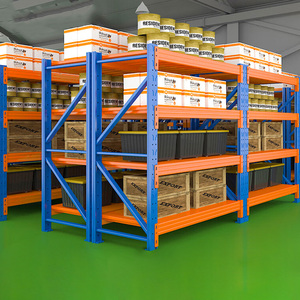
Precision-engineered open steel shelving systems, multi-tier mezzanine frameworks, and heavy-duty industrial storage racks designed for optimized cubic utilization, fire-code safety, and high-frequency intralogistics throughput.
Q235B / Q355B
Prime Certified Steel
High-tensile cold-rolled steel alloy sheets
EN 15512
Structural Compliance
European design standards & load certifications
5,000+ kg
Bay Load Capacities
Validated through rigorous FEA structural analysis
100% Direct
Factory-Direct Supply
Full-cycle fabrication, engineering & global export
Direct OEM / ODM Product Showcase
Heavy-Duty Open Shelving, Pallet Racks & Mezzanines
Explore our industrial-grade storage solutions, engineered for warehouses, distribution hubs, fulfillment centers, and heavy commercial applications with verified unit load ratings.
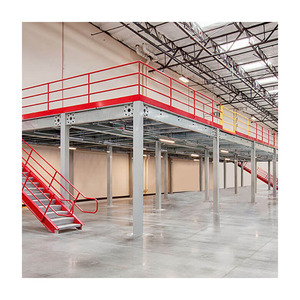
Mezzanines
Mracking Provide Mezzanine Installation Support High Quality Warehouse Storage Industrial Mezzanine Floor Supplier Customized
Engineered multi-level structural steel platforms expanding cubic warehouse space by 200%-300% without structural civil construction.
Structural Metallurgy & Safety Engineering in Open Steel Shelving
In modern high-density distribution architecture, industrial open steel shelving serves as the foundational skeleton of non-palletized inventory processing. Unlike enclosed cabinet shelving, open shelving uses cold-formed upright steel frames, horizontal shelf box beams, diagonal bracing nodes, and open wire mesh or perforated steel decks. This skeletonized geometry delivers three decisive functional advantages: high strength-to-weight ratios, full omnidirectional illumination, and unimpeded compliance with international fire safety sprinkler standards (such as NFPA 13).
Critical Engineering Principle: Under European Standard EN 15512 and ANSI MH16.1 (RMI), open steel shelving designs must accommodate both elastic deflection thresholds (typically L/200 for beam profiles) and second-order P-Delta effects generated by frame sway, eccentricity, and lateral dynamic loads from automated guided vehicles (AGVs) or human pickers.
1. Material Selection: Q235B vs. Q355B Cold-Rolled Structural Coil
The structural longevity and ultimate tensile performance of open steel shelving depend directly on raw alloy chemistry. Verified manufacturers utilize primary strip-mill cold-rolled steel (CRC) conforming to ASTM A1011 or GB/T 700 standards. Q235B steel offers a minimum yield strength of 235 MPa with superior elongation properties (≥26%), making it optimal for roll-formed shelf channels, drop-in step beams, and clip connections subject to cyclical loading.
For high-bay installations, narrow-aisle pick towers, and multi-tier mezzanine supporting columns, leading factories deploy Q355B low-alloy high-strength steel. With a yield threshold of 355 MPa and tensile strength ranging from 470 to 630 MPa, Q355B allows engineers to reduce structural dead-load while sustaining frame buckling resistance across vertical reaches exceeding 12 meters.
2. Open Geometry vs. Closed Shelving: Life Safety & Fire Hydraulics
Industrial facility engineers and warehouse safety directors increasingly mandate open steel shelving configurations over sheet-metal enclosed cabinets. In large automated storage environments, vertical fires spread rapidly through the "chimney effect" if solid horizontal surfaces block air circulation. Open wire mesh decking and perforated steel shelves maintain a free open area exceeding 50% to 70%, allowing ceiling-mounted ESFR (Early Suppression Fast Response) sprinklers to penetrate multiple storage tiers without water pooling on upper levels.
As an authoritative industrial storage equipment manufacturer, our factory ecosystem executes complete end-to-end quality control—from uncoiling high-grade raw steel coils to computerized multi-stage roll-forming, automated CNC punching, robotic welding, and automatic thermoset epoxy powder coating.
Continuous Automated Roll-Forming LinesContinuous cold-roll profiling lines ensure cold-formed upright channels maintain profile tolerances within ±0.2mm, preserving vertical stability under heavy loads.
Advanced Surface Pretreatment & CoatingA 9-stage degreasing, phosphating, and nano-ceramic passivation process ensures powder coating adhesion reaches Grade 0, withstanding 500-1000 hours of continuous ASTM B117 salt spray exposure.
Global Safety Standard CertificationSystems are engineered and certified to EN 15512 (structural design), EN 15620 (installation tolerances), and EN 15635 (operational safety and maintenance inspections).
Full-Spectrum Turnkey Engineering SupportFrom initial on-site 3D laser scanning, floor slab load calculations, and seismic dynamic simulation to on-site assembly supervision and load certification handover.
Engineering Rigor from Coil to Bay
Every frame, connector bracket, and shelf bed undergoes finite element load modeling (FEA) to eliminate stress concentrations before mass fabrication.
Strategic Sourcing Intelligence
Future Procurement Trends in Open Steel Shelving (2025–2030)
Global supply chain volatility, the rapid expansion of third-party logistics (3PLs), and the rise of Autonomous Mobile Robots (AMRs) are fundamentally transforming industrial storage procurement.
1. AMR & AGV Robotic Synergy
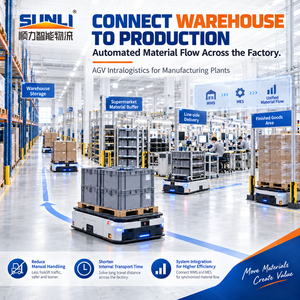
Next-generation open steel shelving is engineered with widened baseplates, flush underside beam flanges, and high-contrast reflective visual markers to accommodate Autonomous Mobile Robots that navigate beneath shelf bays to lift and transport full rack pods.
2. Modular Boltless Expandability
Procurement teams are moving away from welded, static shelving units. Today's facilities require modular, boltless keyhole or teardrop connection interfaces that allow shelf tiers to be reconfigured by 50mm increments in minutes as product SKU profiles evolve.
3. Extreme Climate Corrosion Engineering
With massive logistics growth across coastal, tropical, and desert hubs (such as the UAE and Southeast Asia), buyers prioritize advanced pre-treatment chemistry, including hot-dip galvanizing (≥65µm zinc) and hybrid architectural powder coats that resist thermal cycling and saline exposure.
4. Dynamic Structural Sensor Monitoring
Smart open shelving frameworks are increasingly pre-machined to house low-cost IoT wireless load cells and structural deflection strain gauges, alerting warehouse supervisors to eccentric overloads or forklift impact deformations before catastrophic collapse occurs.
5. Decarbonized & Circular Green Steel
Enterprise ESG mandates are driving global buyers toward mills powered by Electric Arc Furnaces (EAF) utilizing high recycled scrap contents. Specifiers now demand certified Environmental Product Declarations (EPD) detailing embodied carbon per ton of steel shelving delivered.
6. Turnkey Single-Source Supply Chains
International facility managers are consolidating fragmented procurement. Sourcing contracts are awarded to integrated manufacturers that provide site laser survey, structural engineering calculations, direct containerized fabrication, and certified local assembly under one contract.
Engineering Protocols
Technical RFQ Specification Guide for Industrial Open Shelving
To avoid structural under-design, installation bottlenecks, or regulatory non-compliance, project managers and procurement officers should define these six foundational parameters before submitting a Request for Quotation (RFQ):
1. Unit Load Profile & DynamicsDefine maximum load per shelf level (UDL), tote/carton contact geometry, and whether loading is manual, assisted by carton flow rollers, or handled via AGV fork attachments.
3. Concrete Slab Structural DetailsDocument concrete compressive strength (minimum C20/25 or 3,000 PSI), slab thickness (≥150mm), expansion joint locations, and rebar grid depths to calculate anchor bolt embedment.
4. Seismic Zone & Soil CategorySpecify site seismic acceleration coefficients ($S_s, S_1$) per IBC / Eurocode 8. Upright frame column thicknesses and footplate sizes increase significantly in high-seismic zones.
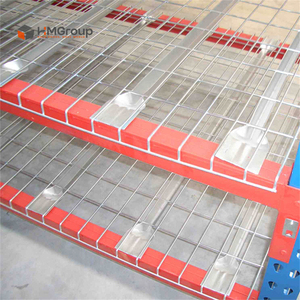
5. Deck Surface Type SelectionSelect welded drop-in wire mesh decking (50x50mm or 50x100mm pattern), solid ribbed cold-rolled steel drop-in shelves, or perforated steel panels based on fire codes and point loads.
6. Operating Environmental FactorsIdentify ambient temperatures, relative humidity cycles, and whether the installation operates within cold-chain facilities (-30°C) or near marine environments requiring special coating formulations.
Expert Technical Guidance
Frequently Asked Questions on Open Steel Shelving Procurement
Detailed technical answers addressing beam deflection, installation tolerances, fire safety codes, and custom factory manufacturing protocols.
What is the maximum permissible deflection limit for open steel shelving beam levels?
Under international engineering standards including EN 15512 and ANSI MH16.1 (RMI), the maximum allowable vertical deflection for industrial steel shelf beams under uniformly distributed loads (UDL) is L/200, where L is the clear horizontal span between upright frame faces. For specialized automated systems or delicate robotic picking zones, deflection limits are often stiffened to L/300 or L/400 to prevent sensor misalignments and automated guided vehicle navigation errors.
How does open steel wire mesh decking satisfy NFPA 13 warehouse fire suppression standards?
NFPA 13 (Standard for the Installation of Sprinkler Systems) mandates that storage shelves exceeding broad footprint thresholds must maintain adequate vertical flue openings to allow ceiling sprinkler discharge to penetrate through to lower combustion tiers. Open wire mesh decking with wire spacings of 50x50mm or 50x100mm maintains a net open aperture of 70% or greater. This design satisfies fire authorities, eliminates water damming on upper tiers, and avoids the costly requirement of installing in-rack sprinkler pipe grids on every tier.
What steel grade is recommended for heavy-duty multi-tier pick towers and mezzanines?
For standard single-tier open shelving bays carrying loads under 350 kg per shelf, certified Q235B cold-rolled carbon steel provides sufficient yield strength (235 MPa) and excellent ductility. However, when designing multi-tier picking towers (mezzanines) where upright columns carry combined live loads, dead weights, and dynamic walkway forces exceeding 3,000 to 10,000 kg, our engineers specify Q355B high-strength low-alloy structural steel (yield 355 MPa). This maintains structural safety factors while keeping overall profile dimensions compact.
What is the difference between electrostatic powder coating and hot-dip galvanization for steel shelving?
Thermoset Epoxy-Polyester Powder Coating: Cured at 180°C–200°C to achieve a thickness of 60–90 microns. It delivers excellent scratch resistance, aesthetic color customization, and is ideal for ambient, dry indoor warehouse environments. Hot-Dip Galvanization (HDG): Steel components are immersed in molten zinc at 450°C, producing a metallurgical zinc-iron alloy layer (65–100 microns thick). Hot-dip galvanization is recommended for outdoor yards, harsh chemical storage, cold-storage deep freezes, or coastal warehouses subject to high ambient humidity and salt exposure.
How frequently should open industrial steel shelving installations be formally inspected?
Under international health and safety regulations and European standard EN 15635 (Application and Maintenance of Storage Equipment), industrial shelving requires a tiered inspection protocol: (1) Weekly visual checks by trained internal warehouse personnel to spot bent diagonal braces, missing safety pins, or floor anchor damage; and (2) A formal documented technical audit conducted at least every 12 months by a qualified structural storage engineer, identifying green, amber, or red structural risk levels.
Can modular open steel shelving be converted into high-density multi-tier mezzanines at a later stage?
Yes, provided the primary upright frames are originally specified with structural steel reserve capacity and cold-rolled punched slot patterns capable of carrying future floor beam junctions. By engineering baseplates, frame gauges, and concrete anchor bolt patterns with future vertical extensions in mind, modular open shelving can be retrofitted with intermediate catwalks, stair towers, handrails, and pallet drop gates without replacing the initial ground-level shelving installation.
What are the lead times for custom-engineered factory-direct production and export?
Standard open shelving modular configurations in stock colors generally complete production within 14 to 21 working days. Large-scale custom configurations involving high-bay mezzanine structures, automated shuttle rails, or special powder formulations typically require 25 to 35 working days from final CAD shop drawing sign-off. High-volume shipments are optimized for 20GP or 40HQ container packing using heavy-duty steel strapping, edge protectors, and waterproof vapor-barrier wrapping.
What documentation and certifications are provided upon project handover?
Every commercial project delivery includes a comprehensive engineering handover dossier: mill test certificates (MTC) verifying steel chemical and mechanical properties, finite element analysis (FEA) structural calculation notes, CE / ISO 9001 compliance certificates, as-built installation drawings, clear operation and maintenance manuals, and certified load capacity warning plaques for every aisle face.
Engineer Your High-Efficiency Storage Layout Today
Submit your warehouse floor plans, target pallet/shelf load profiles, and clearance limits. Our structural storage engineering team will deliver a comprehensive 2D/3D CAD design layout, finite element stress evaluation, and factory-direct quotation within 24 hours.