
No matching pages. Try "pallet", "mezzanine" or "cantilever".
No matching pages. Try "pallet", "mezzanine" or "cantilever".
Combining heavy-duty structural steel platforms, automated shuttle networks, and high-velocity carton flow roller beds to eliminate picking bottlenecks and maximize cubic warehouse utilization.
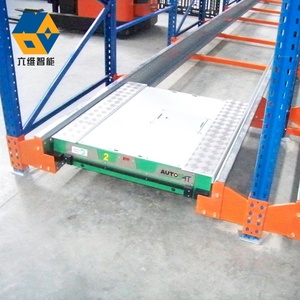
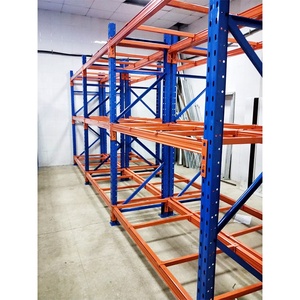
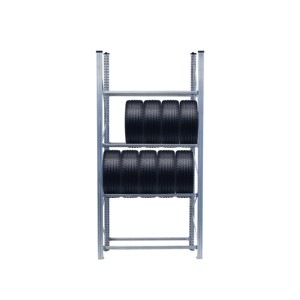
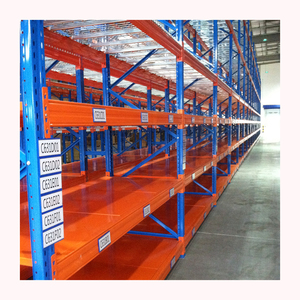
Eliminates picker walking distances by consolidating SKUs into static-loading, gravity-fed pick faces.
Enforces strict first-in, first-out stock rotation for pharmaceutical, perishables, and FMCG items.
Converts dead aisle space into deep live roller tracks, increasing usable pick storage density.
Rigorously calculated under AS/NZS 4084:2023 for ductility, baseplate anchorage, and frame stiffness.
A technical examination of gravity-driven dynamic storage: transforming split-case picking, consolidating SKU presentations, and maintaining structural safety under variable loadings.
In modern high-velocity distribution centers, material handling efficiency is directly governed by order consolidation time and picker transit vectors. Traditional static shelving introduces excessive travel loops, aisle congestion, and ergonomic strain when handling high SKU densities. Carton Flow Racks—frequently referred to as carton live storage or gravity roller beds—solve these friction points by decoupling the loading face from the retrieval face through a precisely pitched, roller-driven dynamic incline.
By utilizing gravity rather than electric power, carton flow systems slide totes, cardboard boxes, and split-case containers from the replenishment aisle at the rear to the picking face at the front. The mechanical core relies on engineered polypropylene, acetal, or galvanized steel roller tracks mounted across heavy-gauge intermediate support beams. The standard incline gradient ranges between 2.5° to 5.0° (approx. 4% to 8% gradient), calibrated specifically against carton bottom deflection, total payload, and roller coefficient of friction. When the lead carton is retrieved by the order picker, trailing cartons immediately advance by gravity, guaranteeing that every single SKU remains continuously presented at the picking margin.
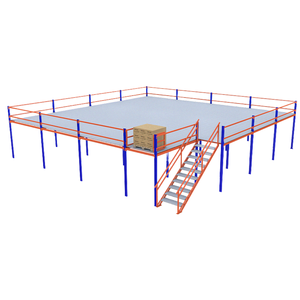
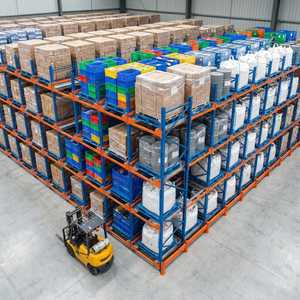
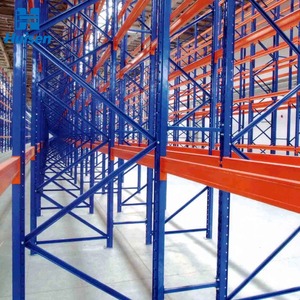
Crucially for New Zealand operations, modern carton flow is not a standalone compromise. Our systems are precision-engineered to integrate directly into selective pallet racking uprights, heavy-duty mezzanine support structures, and pick towers. By converting the lowest 2 to 3 beam levels of a pallet bay into high-density carton flow lanes while preserving upper pallet beam levels for bulk reserve storage, distribution managers achieve complete vertical cubic integration—minimizing secondary transport cycles between bulk storage and active picking faces.
Features quick-clip aluminum or galvanized sheet side channels with ultra-low-friction wheels. Wheel pitch can be adjusted from 16mm to 50mm centers to accommodate lightweight cardboard to 35kg heavy plastic containers without base sag.
Total physical separation between the restocking crew and the picking team prevents pedestrian collision, removes pallet-jack bottlenecks from primary picking routes, and enables zero-downtime inventory replenishment.
Optional tilted pick shelves (layback trays) position open cartons at a comfortable 15° forward tilt angle. This optimizes picker field-of-view, eliminates wrist flexion fatigue, and accelerates order item scanning by over 30%.
Engineered for the distinct logistical, geographic, and operational demands of the North and South Island logistics corridors.
Greater Auckland serves as the primary distribution gateway for over 35% of New Zealand's population. With industrial footprint lease rates reaching historic highs across Drury, Highbrook, and East Tamaki, third-party logistics (3PL) providers and retail omnichannel distributors face immense pressure to compress picking aisles.
Our carton flow rack systems deploy multi-tier configurations that pack up to 40 distinct picking lanes within a single 2700mm pallet racking bay. By combining drop-in roller beds with Pick-to-Light (PTL) digital arrays, Auckland facilities achieve lightning-fast order velocity for fast-moving consumer goods, sporting apparel, and household merchandise.
Navigating the intersection of strict structural building standards, escalating warehousing overheads, and high-efficiency automation.
New Zealand's volatile tectonic environment requires all dynamic and static racking to comply with AS/NZS 4084:2023 and the NZ Building Code B1. Our structures account for site seismic hazard coefficients (Z-factors), baseplate concrete anchoring depths, and load retention stops to prevent roller bed ejection during a seismic event.
With New Zealand minimum and living wage benchmarks steadily increasing, logistics operators cannot afford unproductive warehouse picker walking cycles. Carton flow reduces picker travel distances by up to 70%, minimizing repetitive strain injuries (RSI) and speeding up pick-line throughput.
Lease rates in key South Auckland and Christchurch freight hubs have risen dramatically. By condensing up to 4 times the SKU variety into the same square meter footprint, carton live racks eliminate redundant aisles and delay or completely eliminate the need for expensive warehouse relocation.
Kiwi distribution centers are rapidly modernizing from manual picking to hybrid systems. Carton flow levels are paired with overhead powered take-away belt conveyors and automated guided vehicles (AGVs), positioning New Zealand facilities at the forefront of modern smart warehousing.
Evaluating mechanical properties, storage densities, throughput velocities, and ROI metrics for commercial warehouse operations.
| Evaluation Parameter | Carton Flow Live Storage | Static Longspan Shelving | Selective Pallet Pick Levels | Automated Mini-Load ASRS |
|---|---|---|---|---|
| Stock Rotation Principle | Strict FIFO (Gravity Fed) | FIFO or LIFO (Manual Discipline) | Primarily LIFO at Hand Pick | FIFO Software Controlled |
| Picker Travel Reduction | 60% – 75% Reduction | Baseline (High Travel) | Moderate (Scattered SKUs) | 90% (Goods-to-Person) |
| Restocking Interference | Zero (Rear Aisle Feed) | High (Shared Pick Aisle) | High (Forklift Contention) | Zero (External Infeed) |
| Capital Investment (CapEx) | Moderate (High ROI < 12 Mos) | Lowest Initial CapEx | Low - Medium | Very High (Complex Machinery) |
| Energy Consumption | 0 kW (100% Passive Gravity) | 0 kW (Passive) | 0 kW (Passive) | Continuous High Power Draw |
| Maintenance & Downtime | Minimal (Sealed Wheel Bearings) | Negligible | Low (Forklift Damage Repairs) | Requires Dedicated Specialists |
| NZ Seismic Retrofittability | High (Drop-in Bed Options) | Medium (Requires Floor Bolting) | Standard AS/NZS 4084 | Rigid Base Constraints |
Technical Track & Roller Engineering Profiles: Our carton flow roller beds utilize cold-rolled pre-galvanized high-yield steel frames (1.2mm to 1.8mm gauge) or structural extruded aluminum alloys. The rollers feature precision ball bearings housed within high-impact polypropylene wheels rated for 15 kg to 45 kg per wheel point load. For irregular or humid corrugated cardboard (common in New Zealand winter humidity), we specify full-width continuous roller axles that prevent bottom sag, box puncturing, and line jams.
Combining heavy industrial manufacturing capacity, structural engineering design, and seamless international shipping directly to New Zealand ports.
Every project delivered to New Zealand includes full structural analysis calculations aligned with AS/NZS 4084:2023 and NZS 1170.5. We supply technical documentation and load plaque data to support local council building consent applications and Producer Statement (PS1) engineering reviews.
Our automated production lines utilize premium grade Q235B and Q355B structural steel, processed through multi-stage cold-roll forming lines. Uprights, step beams, and flow shelves undergo automated CNC punching and robotic welding for millimeter-accurate connector tolerances.
We provide regular container shipping (20GP, 40HQ) directly to Ports of Auckland, Port of Tauranga, and Lyttelton (Christchurch). Materials are bundled with heavy-duty steel strapping, protective edge boards, and moisture-barrier shrink wrap to arrive pristine after ocean transit.
Our experienced intralogistics design department generates detailed 2D CAD floor plans, 3D clearance simulations, and SKU flow density mappings before steel is cut. We ensure our carton flow beds snap effortlessly into your existing racking brands.
Addressing engineering certifications, seismic compliance, sea freight customs, and field integration.
Our structural design team conducts rigorous static and dynamic seismic simulations based on AS/NZS 4084:2023 (Steel Storage Racking) in conjunction with NZS 1170.5 (Structural Design Actions - Earthquake Actions). We calculate base overturning moments, frame shear stiffness, and dynamic ductility factors ($\mu$) specific to your facility's location (such as Zone 1 Auckland vs. higher seismicity Zone 3 Christchurch or Wellington). Furthermore, our carton flow beds are fitted with physical mechanical beam locks and anti-jump retainers to prevent track dislodgement under horizontal ground acceleration.
Yes. We engineer universal drop-in bracket assemblies and step-beam adapters specifically tailored to interface with common New Zealand warehouse upright profiles (50mm, 75mm, and 76.2mm pitch slots). Whether you are converting low-level pallet bays into carton flow in Highbrook or adding picking levels beneath an existing structural mezzanine, our beds are engineered to drop directly onto your existing front and rear load beams without requiring on-site cutting or welding.
For standard corrugated cardboard cartons carrying 5 kg to 30 kg, an incline angle between 3.0° and 4.0° (approx. 5% to 7% slope) is typical. Roller pitch is calibrated so that a minimum of 3 to 4 rollers support the bottom of the shortest carton at any point during transit to prevent sagging. In environments where humidity fluctuates—such as seasonal fruit packing or ambient Canterbury warehouses—we recommend our high-density wheel track or continuous steel roller profiles to eliminate base drag caused by softened corrugated fiberboard.
We routinely manage export shipments direct to New Zealand ports under FOB, CIF, or DDP Incoterms. All steel components are strictly non-organic; any wooden timber packaging or dunnage used conforms strictly to ISPM-15 heat-treatment standards with clear official stamps to facilitate seamless Ministry for Primary Industries (MPI) biosecurity clearance. We provide complete documentation: Bill of Lading, Commercial Invoice, Packing List with container weight distribution, and Material Test Certificates (MTC).
Yes. For cold storage and blast freezing applications (common in the New Zealand dairy, seafood, and meat export sectors), standard commercial plastic rollers can become brittle. We specify cold-formulated impact polymers or zinc-plated steel rollers equipped with specialized low-temperature internal lubrication or stainless-steel dry bearings. This guarantees that cartons glide smoothly without frozen bearings or roller fracture even at sustained temperatures of -25°C to -30°C.
To produce an exact CAD layout and structural quotation, our engineering team requires: (1) Minimum and maximum carton dimensions (L x W x H) and gross weights, (2) Carton material type (rigid plastic tote, double-wall corrugated, or single-wall box), (3) Total number of SKUs and desired lane depth, (4) Available warehouse clear height and floor slab specifications, and (5) Your facility location in New Zealand to calculate appropriate seismic load factors. We can turn around comprehensive layout concepts and pricing within 2 to 3 business days.
Connect directly with our senior intralogistics engineering team. Whether you need a retrofit gravity roller bed quote, AS/NZS 4084:2023 seismic structural calculations, or a comprehensive multi-tier pick tower design for an Auckland or Christchurch facility, we provide responsive, expert technical support.