No matching pages. Try "pallet", "mezzanine" or "cantilever".
No matching pages. Try "pallet", "mezzanine" or "cantilever".
Precision-fabricated from Q355B and S355JR structural steel, certified for rigorous structural loads, seismic dampening, and automated warehouse intralogistics workflows.
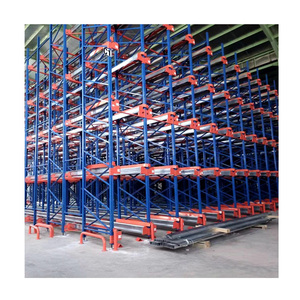
Factory Production Control (FPC) audit compliance for Execution Classes EXC2 and EXC3.
Engineered for dynamic Automated Guided Vehicles (AGV), electric forklifts, and battery assembly lines.
Korean Design Standard structural calculations verified against local horizontal acceleration parameters.
Ultra-accurate automated punching and cold-forming profiles ensuring 100% bolt-together site precision.
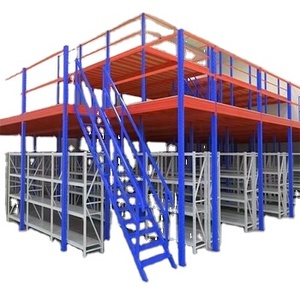
As industrial land prices surge across the Greater Seoul Metropolitan Area (SMR) and key trade nodes such as Incheon, Yongin, and Busan, Korean warehouse operators, third-party logistics (3PL) conglomerates, and advanced manufacturing plants face acute vertical expansion constraints. Installing a CE-certified structural steel mezzanine platform represents the most capital-efficient, demountable, and seismically robust method to double or triple usable floor space without navigating the prolonged regulatory approval cycles of conventional civil construction.
However, exporting steel structures into South Korea is governed by stringent engineering standards. An off-the-shelf mezzanine designed purely for light storage cannot withstand the operational rigors of autonomous mobile robots (AMRs), high-bay material handling interfaces, or the fire suppression parameters enforced post-Icheon warehouse safety reforms. A certified structural mezzanine platform must strictly reconcile the provisions of the European Construction Products Regulation (CPR 305/2011/EU) with the Republic of Korea’s national structural codes:
Mandates comprehensive Factory Production Control (FPC). Every column weld, shear tab, and beam flange undergoes non-destructive testing (NDT), visual testing (VT), and magnetic particle inspection (MPI) by certified ISO 9606-1 welding operators under ISO 3834-2 comprehensive quality oversight.
Calculations for ultimate limit state (ULS) and serviceability limit state (SLS). Deflection criteria under live loads are restricted to $L/400$ for standard operations and $L/500$ to $L/600$ where automated sorting systems or AGVs navigate the floor deck, completely harmonized with Korean Building Code (KBC).
Industrial safety standards governed by the Korea Occupational Safety and Health Agency (KOSHA GUIDE C-08). Stairway flight angles cannot exceed 45 degrees, handrails maintain a continuous 1050 mm height with 100 mm kickplates, and open-grid steel grating guarantees >50% water dispersion for sprinkler heads.
Evaluating structural efficiency, regulatory impact, load capacity, and investment recovery across South Korean industrial facilities.
| Engineering Attribute | CE Certified Structural Mezzanine | Rack-Supported Mezzanine | Traditional Reinforced Concrete Addition |
|---|---|---|---|
| Primary Structural Steel | Hot-rolled H-Beams / Heavy Box Hollow Sections (Q355B / S355JR) | Cold-formed roll-formed upright omega profiles (Q235B / S280GD) | Rebar reinforced concrete slab & cast-in-place columns |
| Uniform Live Load ($Q_k$) | 500 kg/m² to 2,500 kg/m² (Dynamic & Static) | 300 kg/m² to 800 kg/m² (Distributed pick loads) | > 2,000 kg/m² |
| Column Grid Span | Wide Spans: 6.0m × 6.0m up to 12.0m × 10.0m clear bays | Restricted Spans: 1.0m to 2.5m pallet rack bay spacing | Fixed architectural grid (non-adjustable) |
| Ground-Level Flexibility | Maximum: Unobstructed clearance for reach trucks, sorting machines, and staging | Aisle Constrained: Ground level consists of permanent rack uprights | Solid architectural barriers and load-bearing walls |
| Lead Time to Site (Korea) | 4 - 6 Weeks (Fabrication + CNC Pre-drilling + DDP Transit) | 3 - 5 Weeks (Standard cold-formed roll forming) | 6 - 12 Months (Civil permits, curing, pouring) |
| Korean Building Code Compliance | Classified as Equipment / Demountable Platform in many facility permits | Classified as Storage Equipment (Low civil permitting friction) | Full Architectural Revision, GFA recalculation, development tax |
| Relocation & Circularity | 100% Bolted Reusable (Zero demolition waste, relocatable) | 100% Reconfigurable beam clips & modular uprights | 0% (Permanent structure, expensive demolition) |
Industrial spatial demands in South Korea are characterized by high geographic density, extremely specialized industry corridors, and aggressive order-fulfillment service level agreements (SLAs). Our CE-certified platforms are tailored directly to the geotechnical, seismic, and operational parameters of four primary Korean economic clusters:
In logistics centers across Icheon, Yongin, Gwangju, and Anseong serving Coupang Rocket Delivery, Kurly 새벽배송 (Dawn Delivery), and SSG.COM, handling hundreds of thousands of fragmented SKUs requires rapid manual picking and multi-tier sorting loops.
Located within the Incheon Free Economic Zone (IFEZ) and the Gimpo customs bonded zones, air-cargo forwarders and cold-chain bonded warehouses face strict coastal humidity, saline exposure, and high turnover velocity.
In the high-tech industrial corridors surrounding Samsung Pyeongtaek Campus and SK Hynix Cheonan, steel mezzanine platforms are deployed adjacent to cleanroom envelopes for tool maintenance, gas manifold routing, and equipment staging.
Heavy H-beam columns spanning 9 meters clear bay width, rated at 1,800 kg/m² uniform dead-load capacity.
In South Korea’s southeastern industrial backbone (Busan, Ulsan, Changwon), automotive component suppliers, EV battery cell assemblers, and shipbuilding equipment fabricators require ultra-heavy structural mezzanine flooring capable of withstanding extreme point loads from steel dies, engine blocks, and hydraulic tooling.
Three transformative dynamics are redefining structural storage specifications across the South Korean industrial landscape.
With industrial land prices in Gyeonggi-do exceeding 4,000,000 KRW/pyeong ($1,000+/m²) and rising construction interest rates, logistics operators can no longer afford horizontal sprawl. Bolted modular mezzanines convert vertical clear ceiling height (typically 10 to 14 meters in modern Korean logistics warehouses) into viable working square meters at less than 20% of the cost of building new square footage.
Warehouse automation is booming in Korea. Modern mezzanine decks are no longer simply built for foot traffic; they are structural tracks for fleets of autonomous mobile robots (AMRs). This necessitates specialized surface flatness (FF/FL standards), deflection minimization under wheel point loads, and seamless floor decking joints to prevent LiDAR sensor bounce and robot wheel degradation.
Following historic warehouse fire incidents in South Korea, the Ministry of Land, Infrastructure and Transport (MOLIT) and National Fire Agency (NFA) enforce stringent building material flammability rules. All intermediate levels must incorporate non-combustible steel grating (>50% opening ratio) to ensure ESFR ceiling sprinklers can permeate lower levels without thermal obstruction.
Operating high-precision automated manufacturing facilities, our structural steel platform production combines robotic roll-forming, continuous fiber-laser cutting, and automated powder coating.
Laser measurement surveys, structural column alignment checks, and complete Revit/AutoCAD layout integration matching client forklift and automation envelopes.
Finite element structural stress analysis (ANSYS/SAP2000) validating dead, live, wind, and seismic spectral loads per KDS 41 and Eurocode 3 standards.
Robotic plasma cutting, continuous automated submerged arc welding under EN ISO 3834-2, and shot-blasting surface preparation to Sa 2.5 standard.
Professional export packaging, seaworthy anti-rust wrapping, and direct container shipping to Incheon or Busan Port with full customs clearing clearance documentation.
We exclusively procure prime-grade Q355B (equivalent to European S355JR / Korean SM355A) with complete EN 10204 3.1 Inspection Certificates, guaranteeing yield strength $\ge 355\text{ MPa}$ and impact toughness verified at $0^\circ\text{C}$.
Applied through automated electrostatic powder lines, cured at $200^\circ\text{C}$ to produce an 80–120μm durable film resistant to chemical spills, pallet friction, fork scuffs, and thermal fluctuation in cold-chain logistics.
Supplied with complete 3D bolt-together erection drawings, color-coded component tagging, torque load specifications, and optional bilingual on-site installation supervisors dispatched across South Korea.
Key insights addressing regulatory compliance, seismic verification, customs, installation, and floor load engineering for South Korean facilities.
In South Korea, industrial steel mezzanine platforms are evaluated based on their structural permanence and connection to the primary civil structure. When procured as an interior demountable steel platform or rack-supported intermediate system, municipal building authorities and third-party safety auditors review structural calculations for proof of stability.
Our CE EN 1090-1 and EN 1090-2 (Execution Class EXC2 / EXC3) certification provides internationally accredited Factory Production Control (FPC), welder qualification records (ISO 9606-1), and EN 10204 Type 3.1 mill test certificates. These European credentials exceed the baseline material verification required by Korean architectural engineers and provide the necessary compliance documentation for facility safety registration.
Yes. Since the revision of South Korea’s seismic building regulations following the Gyeongju and Pohang earthquakes, structural interior platforms must account for horizontal earthquake forces. We supply comprehensive structural calculation reports generated via ANSYS and SAP2000 that specifically verify the platform’s response spectrum under KDS 41 17 00 (Seismic Design Standard).
Our structural engineers calculate portal frame cross-bracing, baseplate anchor bolt shear capacity (using Hilti or Fischer chemical seismic anchoring data), and column base fixity to ensure horizontal seismic acceleration does not induce plastic deformation or collapse.
South Korean fire marshals and insurance underwriters strictly enforce the National Fire Safety Standard (NFPC 103) regarding early suppression fast response (ESFR) sprinkler systems. If a mezzanine floor is constructed from solid steel plate or plywood without sub-floor piping, it creates a fire suppression blind spot.
To ensure effortless inspection sign-off, we supply press-locked open steel grating with guaranteed open area ratios ranging from 50% to 70%. This allows water discharge from primary ceiling sprinklers to freely penetrate through every mezzanine level down to the facility slab. Alternatively, we engineer pre-drilled intermediate pipe hanger brackets along the main support beams to facilitate the installation of subordinate sprinkler lines directly beneath the platform deck.
The typical total project timeline is 4 to 6 weeks. Following final CAD/BIM drawing approval and structural sign-off, high-precision automated factory production requires 15 to 22 business days. Direct maritime transit from our coastal manufacturing hub to Incheon New Port or Busan Port takes only 3 to 5 days.
All steel members are bundled in sequenced delivery packs to match your on-site erection schedule, wrapped in anti-corrosion barrier film to protect against sea freight moisture, and delivered with full commercial invoices, packing lists, and Certificates of Origin for rapid Korea Customs Service clearance.
Yes. Equipping mezzanine levels for AMR/AGV traffic requires far stricter tolerances than standard foot-traffic platforms. We design robot-ready platforms with the following structural upgrades:
To provide an engineered proposal and quotation, our structural engineering department requires:
Our structures are 100% pre-engineered and CNC drilled at the factory; absolutely no on-site welding or structural burning is required. Components are fastened using Grade 8.8 or Grade 10.9 high-strength structural bolts.
Clients can choose between two execution models: (1) Comprehensive Supervised Installation: We dispatch certified structural project engineers to your site in Korea to oversee, align, laser-level, and inspect the assembly carried out by your local rigging team; or (2) Turnkey Erection Support: We collaborate with vetted, licensed Korean industrial installation contractors to deliver a complete turnkey erection, load-testing, and handover service.
Consult directly with structural storage engineers. Send us your building dimensions, load criteria, and automation plans to receive a customized 3D CAD proposal, KDS 41 seismic evaluation, and direct competitive factory quotation.