
No matching pages. Try "pallet", "mezzanine" or "cantilever".
No matching pages. Try "pallet", "mezzanine" or "cantilever".
Every column protector, cantilever frame, and high-bay pallet racking assembly is fabricated to international engineering standards, configured for rapid shipping to the Ports of Los Angeles and Long Beach.
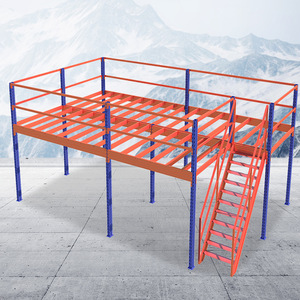
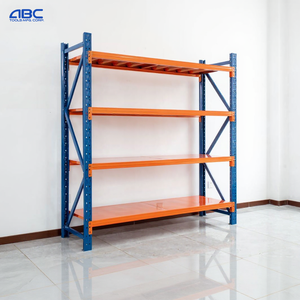
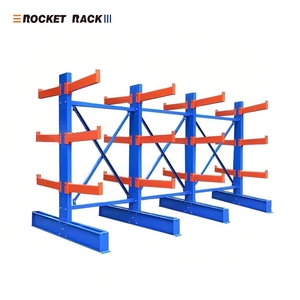
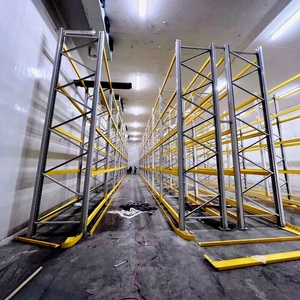
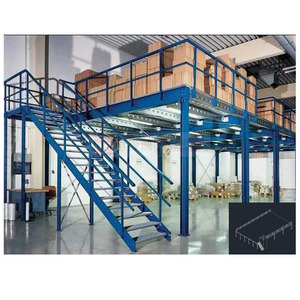
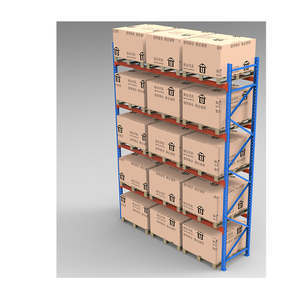
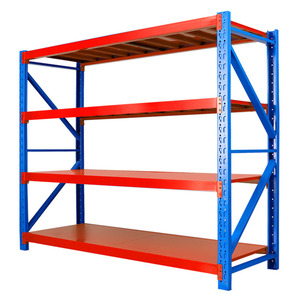
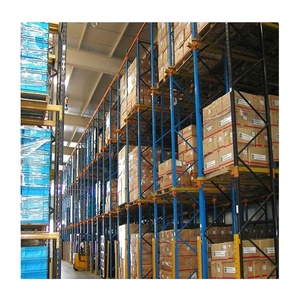
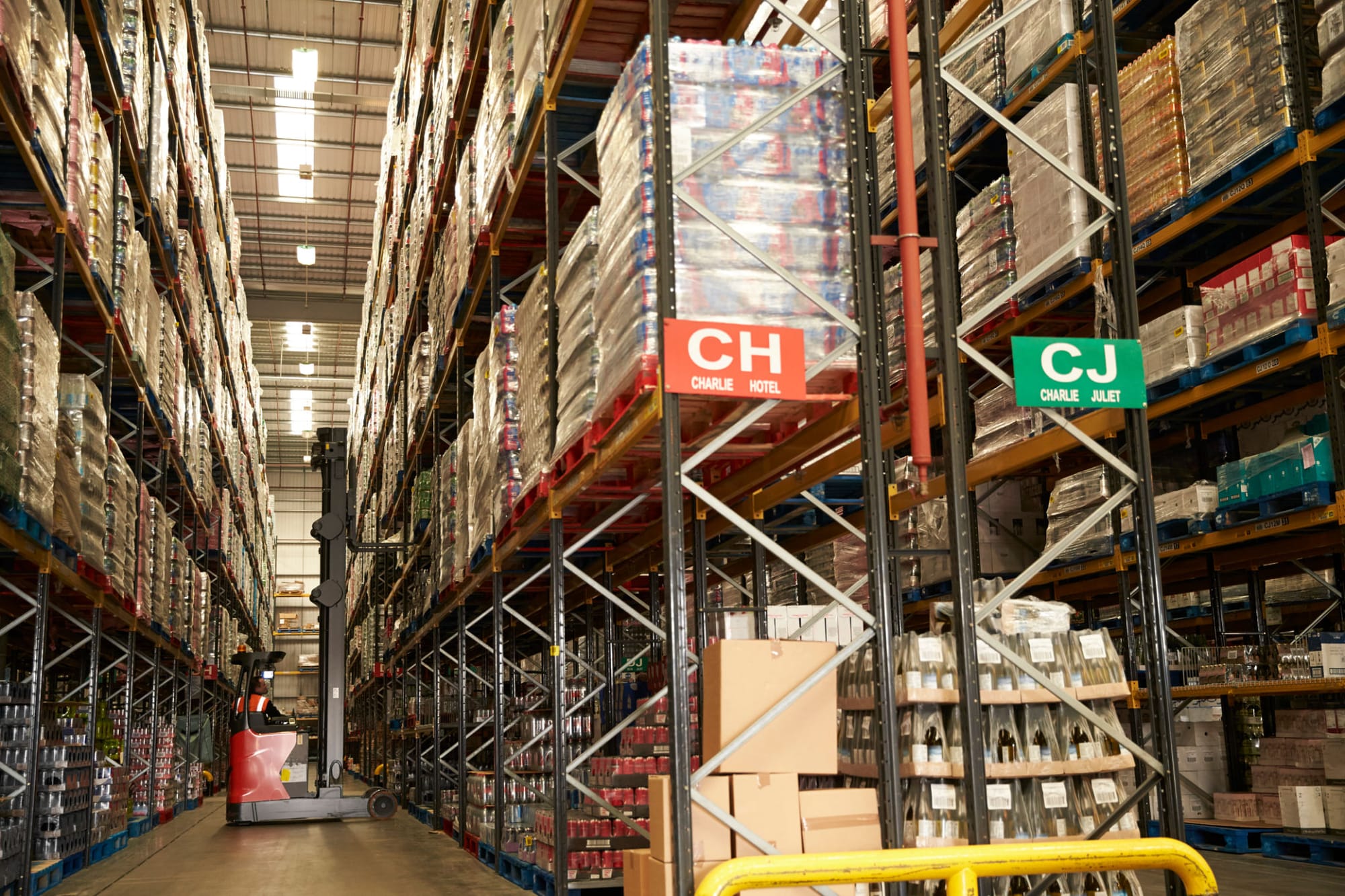
Pallet rack upright frames are designed primarily as slender, axial compression members. Their vertical load capacity is governed strictly by Euler's buckling theory and localized torsional flexure. When a Class I, IV, or V counterbalanced forklift truck carrying a 4,000-pound load collides with an unprotected upright at just 3 to 5 miles per hour, the dynamic point-load energy transferred ranges from 12,000 to 19,800 Joules. In Southern California—classified primarily as Seismic Design Category (SDC) D, E, and F under the California Building Code (CBC Chapter 16) and ASCE 7—an upright dent of merely 0.125 inches (3.1 mm) degrades the post's residual axial load capacity by up to 48%, precipitating localized buckling that can trigger progressive structural collapse during ground acceleration.
Standard roll-formed upright steel has an average thickness of 12 to 14 gauge (0.075 to 0.105 in). When directly impacted, this thin profile undergoes immediate plastic deformation. Our OEM custom rack column protectors employ heavy-gauge, hot-rolled structural steel plate (up to 10mm / 0.393 in thickness) or custom roll-formed Q355B high-tensile alloy engineered with dual-zone deflection geometry.
By physically uncoupling the impact guard from the upright frame—either through floor-anchored bull-nose protectors or shock-dampening elastomeric composite inserts—the incoming kinetic force is diverted directly into the floor slab via Hilti or Simpson Strong-Tie heavy-duty concrete wedge anchors, resulting in zero kinetic force transmission to the critical structural column.
Regulatory Impact Warning: Under Cal/OSHA Title 8, Section 3241, and Rack Manufacturers Institute (ANSI MH16.1), damaged rack columns must be immediately decommissioned and unloaded. Installing verified OEM column protection reduces reportable facility maintenance downtime by up to 92% across multi-shift logistics hubs.
Generic, one-size-fits-all protectors create dangerous snags, protrude excessively into narrow aisles, and fail to secure the upright's structural baseplate. As a direct custom OEM exporter, our automated roll-forming and laser-cutting lines fabricate protectors to precise dimensional tolerances, accommodating standard Teardrop, Structural C-Channel, Speedrack, Unarco, and Ridg-U-Rak upright geometries.
| Protector Profile Model | Material Specification | Impact Energy Rating | Anchoring / Mounting Method | Target Local Application |
|---|---|---|---|---|
| Heavy Bull-Nose Structural Guard | 1/4" to 3/8" (6-10mm) Structural Q235B / A36 Steel | 19,800 Joules (Forklift impact up to 6 mph) | Independent 4-Point Floor Anchoring (3/4" x 5-1/2" wedge anchors) | Port of LA Transload Docks, Counterbalanced Forklift Corridors |
| Form-Fitting Bolt-On Wrap | 5/16" (8mm) Heavy High-Tensile Cold-Rolled Plate | 14,500 Joules (High glancing deflection) | Direct Upright Column Through-Bolting with Grade 8 Hardware | Narrow Aisle (VNA) Logistics Centers & Reach Truck Corridors |
| Elastomeric Shock-Absorbing Snap Guard | Modified Heavy Engineering Polyethylene + Steel Core | 11,200 Joules (Elastic rebound without slab fatigue) | Tool-Less Secure Interlocking Ratchet / Strapping Clamps | Temperature-Controlled Freezers & E-Commerce Micro-Fulfillment |
| End-of-Aisle Double Bull Barrier | 6" Schedule 40 Steel Pipe + 1/2" Baseplate Welded Core | 28,500 Joules (Heavy multi-directional turn crashes) | Core-Drilled or 8-Point High-Shear Concrete Expansion Anchors | Main Forklift Arteries, Inbound Staging, Cross-Dock Intersections |
From deep-freeze cold storage along the 710 freeway to massive intermodal transload hubs in the South Bay, column protection must be calibrated to specific local handling environments and equipment classes.
Historic warehousing centers characterized by compact, high-density layouts, cold chain meat and produce facilities, and tight turning radiuses. Severe clearance constraints require narrow-profile form-fitting steel guards that do not choke narrow reach-truck drive paths.
High-velocity maritime transload terminals running continuous 24/7 cycles. Operators utilize heavy 8,000–12,000 lb counterbalance trucks handling rough ocean containers. Floor-anchored bull-nose 10mm plate guards are critical to withstand repeated heavy-payload impact.
Heavy manufacturing, metal distribution, building supply, and automotive components. Cantilever coil racks and structural steel storage racks require reinforced 24" and 36" tall column armors to protect against irregular, overhanging structural loads.
Mega-fulfillment centers exceeding 500,000 to 1,000,000 sq. ft. operating autonomous mobile robots (AMRs), automated wire-guided VNA turrets, and high-bay racking up to 40 feet. Demands ultra-precise, non-magnetic, safety-yellow powder-coated column guards.
How automation, strict Cal/OSHA regulatory enforcement, and soaring industrial real estate values are reshaping warehouse safety specifications across the LA Basin.
With Los Angeles industrial rent averages among the highest in North America, facilities are pushing clear heights beyond 36–42 feet. As upright heights increase, the bending moment at the bottom 12 inches escalates dramatically, making impact defense mandatory to prevent catastrophic top-heavy rack turnover.
Cal/OSHA inspectors actively target warehousing and distribution nodes under the revised General Industry Safety Orders. Establishments face citations reaching tens of thousands of dollars for unshielded structural posts exhibiting even minor forklift scoring, prompting proactive retrofitting with engineered steel deflectors.
SoCal logistics centers are accelerating the deployment of autonomous automated guided vehicles (AGVs) and AMRs. Modern column protectors must incorporate anti-glare, non-interfering RAL 1023 powder finishes, flush bolt designs, and integrated reflective warning bands so onboard LiDAR/optical sensors clearly navigate aisle lines without spurious obstacle flags.
By controlling every step from raw mill sheet decoiling and robotic welding to containerized ocean freight consolidation, we supply Los Angeles supply-chain operators with top-tier industrial armor at competitive export pricing.
Our in-house engineering team runs finite element analysis (FEA) simulating fork impact velocities, plastic deformation thresholds, and anchorage pull-out stresses to certify every custom profile before tooling.
Sourced exclusively from Tier-1 certified steel mills. Materials are batch-tested for tensile strength, elongation, and yield limits (Q235B, Q355B / ASTM A36, A572 Grade 50) with mill test certificates provided for every order.
12-stage pre-treatment, shot-blasting, and multi-layer electrostatic polyester powder coating guarantee rust, moisture, and chemical resistance—even in coastal marine micro-climates near San Pedro and Long Beach.
Specialized flat-pack nesting designs maximize container cubic utilization, significantly reducing ocean freight tariffs per unit. We coordinate direct CIF, FOB, or DDP delivery to your warehouse yard or 3PL depot.
We supply full OEM services for material handling distributors, systems integrators, and rack installers in Southern California, complete with laser-cut brand insignia, custom heights (12"–48"), and customized safety hues.
Every batch undergoes robotic laser measurement, weld penetration ultrasonic testing, and dry-fit mockups on actual upright frame samples to assure 100% bolt-hole alignment and hassle-free jobsite installation.
Direct technical answers addressing seismic anchorage codes, Cal/OSHA workplace compliance, shipping lead times, and custom OEM manufacturing parameters.
Yes. Our column protectors are engineered to satisfy both Cal/OSHA Title 8, Section 3241 (General Industry Safety Orders for Industrial Plants & Storage) and the Rack Manufacturers Institute (RMI) Specification ANSI MH16.1. Under RMI guidelines, column protection must withstand a minimum impact load of 1,000 lbs (4.45 kN) horizontally at a height of 1.5 feet without transferring detrimental structural stress to the upright column. Our heavy-duty structural steel models exceed these standards by over 400%, dissipating up to 19,800 Joules of dynamic forklift impact force.
Los Angeles County is designated under Seismic Design Categories D, E, and F due to surrounding active fault systems (Newport-Inglewood, Puente Hills, San Andreas). In these seismic zones, floor slabs already carry concentrated compressive and tensile cyclic overturning stresses from heavy high-bay pallet racking. When anchoring floor-mounted protectors, edge distances from existing rack baseplate anchors must strictly adhere to ACI 318 Chapter 17 (Anchoring to Concrete) to avoid concrete breakout or spalling. We offer custom offset-baseplate designs that maintain required anchor clearances (typically 4x to 6x bolt diameter) while fully shielding the structural upright.
Standard OEM tooling and batch production typically require 14 to 20 days following final CAD sign-off and prototype review. Direct ocean transit from our manufacturing export hub to the Ports of Los Angeles / Long Beach ranges from 12 to 16 days. For expedited project schedules, we coordinate direct consolidation and rapid customs clearance through local SoCal freight forwarders, ensuring your installation crews receive units on-site within 35 to 45 calendar days from order placement.
Absolutely. Over 35% of warehouses across Central Los Angeles and the Inland Empire operate older or proprietary rack systems (such as legacy Republic, Frazier structural, Interlake teardrop, or Sturdi-Bilt). Our engineering department can work directly from your laser scans, field measurements, or physical post samples to produce custom roll-formed or press-braked steel protectors with customized slot patterns, side returns, and anchor baseplates that fit flush without modifying your certified upright frame.
For high-throughput transload and cross-dock hubs utilizing 5,000+ lb counterbalance trucks, independent floor-anchored structural bull-nose protectors are superior because impact energy is routed entirely into the foundation slab without touching the rack frame. However, in narrow-aisle (VNA) or reach-truck facilities where floor space is tight, bolt-on steel wrap guards backed with high-density polyurethane shock pads are preferred because they preserve aisle width while providing localized crumple-zone protection.
We apply an industrial-grade thermoset architectural polyester powder coat cured at 200°C over a phosphated, shot-blasted substrate (film thickness 80–120 microns). For facilities near the ports subject to salt marine humidity or cold-storage facilities subject to frequent washdowns and condensation, we provide hot-dip galvanization (ASTM A123) or zinc-rich primer undercoats that withstand 1,000+ hours of continuous salt-spray testing without blistering or flaking.
Our standard production MOQ for custom OEM stamped and welded protectors starts at 200 units for custom profiles, or 50 units for standard structural C-channel bull-nose guards. For containerload procurements (20GP or 40HQ), we offer mixed product consolidation—combining column protectors, pallet rack support bars, wire decking, and cantilever arms into a single optimized export shipment to minimize landed unit costs.