No matching pages. Try "pallet", "mezzanine" or "cantilever".
No matching pages. Try "pallet", "mezzanine" or "cantilever".
Select from 8 field-proven structural racking configurations adapted to raw sawn timber, Konstruktionsvollholz (KVH), Brettschichtholz (Glulam/BSH), plywood sheets, and high-density industrial pallet units.
Analyzing structural loading realities, weatherproofing demands, and strict occupational safety mandates in Germany’s timber wholesale and processing sectors.
The German timber and building materials sector (Holzhandel und Holzbau) is experiencing an unprecedented structural transition driven by the federal Holzbauinitiative des Bundes (Federal Timber Construction Initiative) and stringent European carbon-neutrality frameworks. With engineered wood products such as Cross-Laminated Timber (Brettsperrholz / CLT), glued laminated timber (Brettschichtholz / BSH), and solid structural timber (Konstruktionsvollholz / KVH) replacing carbon-heavy steel and concrete across residential and multi-story commercial projects in Bayern, Baden-Württemberg, and Nordrhein-Westfalen, warehousing logistics have evolved from simple bulk yard staging into an exact science.
Lumber products present unique structural handling challenges that standard commercial shelving systems cannot solve. Long-format timber packs ranging from 6.0 meters to upwards of 18.0 meters possess asymmetrical weight distributions, require strict continuous deflection control to avoid permanent fiber warping, and demand unhindered horizontal access for multi-directional side-loaders (Mehrwege-Seitenstapler). Furthermore, exterior storage yards must withstand severe climatic cycles—ranging from torrential alpine rains to sustained central European snow loadings calculated strictly according to DIN EN 1991-1-3.
As an engineered racking systems manufacturer and global partner, we deliver customized, load-certified storage solutions specifically tailored to the rigorous statutory and operational landscape of the German market. Every upright column, cantilever arm, and tie-back brace is calculated in complete alignment with DIN EN 15512 (structural design of adjustable pallet racks), DIN EN 15620 (tolerances and deformations), and verified for worker safety compliance according to DGUV Regel 108-007 (statutory accident insurance regulations for storage equipment and racks).
Every racking system deployed across Germany is backed by verifiable structural documentation (prüffähige statische Berechnung) calculated to Eurocode 3 (EN 1993-1-3), factoring in local wind suction and regional snow load zones.
For outdoor sawmill applications, hot-dip batch galvanization compliant with EN ISO 1461 guarantees over 30 years of maintenance-free service life under high humidity, wood moisture release, and industrial condensation.
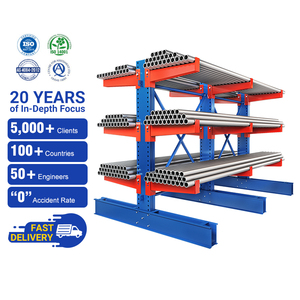
Cantilever arms engineered with an upward 2-degree incline under static deflection tolerances of $L/250$ to $L/300$, equipped with rubber or wooden arm liners to safeguard planed and sanded timber finishes.
From primary log processing hubs in the Black Forest to sophisticated modular timber building factories in Bavaria, our racking systems adapt to localized logistics workflows.
German sawmills require massive outdoor capacity for green timber air-drying and intermediate packs of planed boards. Our roofed cantilever installations (Kragarmregale mit Dach und Regenrinne) provide continuous linear storage without vertical aisle-side column obstructions, ensuring that packages up to 13 meters can be set down instantly using rough-terrain forklifts.
Pre-engineered home manufacturers in Hessen and Baden-Württemberg handle pre-cut wall studs, glulam lintels, and roof purlins sorted on a strict just-in-sequence (JIS) basis. Our heavy-duty adjustable cantilever systems feature tool-free pin-locking arms at 75 mm or 100 mm pitch adjustments, allowing rapid adaptation as job orders switch between varying timber cross-sections.
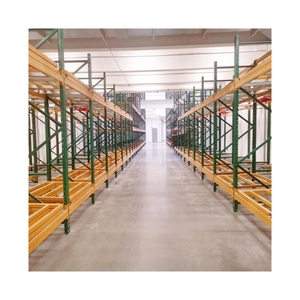
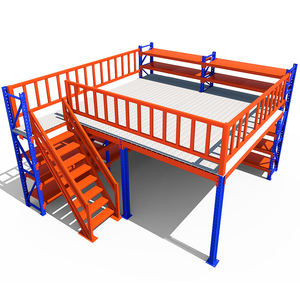
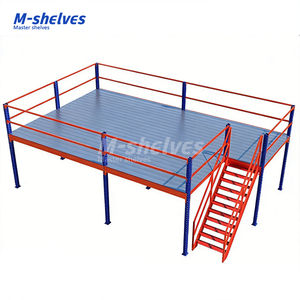
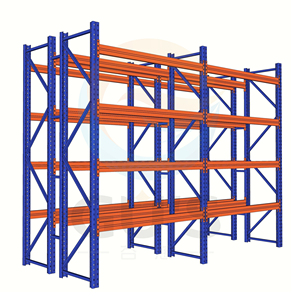
Modern timber merchants supplying regional carpenters (Schreiner & Zimmerer) must balance bulk panel inventory (OSB, MDF, particle board) with small fastener hardware and insulation bales. By integrating wide-span push-back racks with structural steel mezzanine floors, timber distributors double floor space utilization while maintaining 100% selective picking access.
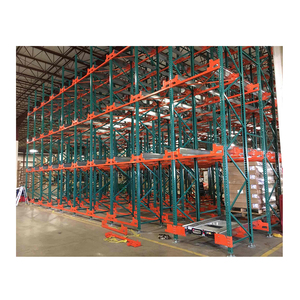
With the surge in European wood pellet heating systems, automated deep-lane storage systems have become critical for seasonal stockpiling. Automated shuttle carts transport palletized bags of ENplus-A1 certified wood pellets inside 30-meter-deep drive-in tunnels, maximizing cubic air volume and operating flawlessly under sub-zero German winter conditions.
Compare mechanical load configurations, building code compliance markers, and handling equipment compatibility for informed capital procurement.
| Racking Architecture | Primary Timber Formats | Capacity Range (Per Level / Arm) | Material Handling Equipment | DIN EN / DGUV Conformity Marker | Outdoor Suitability |
|---|---|---|---|---|---|
| Heavy Cantilever Racks (Roofed) | BSH Glulam, KVH, Solid Sawn Beams, Profiles | 750 kg – 2,500 kg per arm | Four-Way Sideloader / Reach Truck | DIN EN 15620 Cl. 400 | High (Galvanized C4/C5) |
| Standard Heavy Cantilever (Indoor) | Dry Joinery Sawn Wood, Moldings, Pipes | 350 kg – 1,200 kg per arm | Standard Counterbalance / Reach | DIN EN 15512 Structural | Indoor Only (Powder Coat) |
| Push-Back Pallet Racking | OSB, Plywood, Drywall & Veneer Skids | 1,000 kg – 1,500 kg per pallet | Standard Forklift (Front Loading) | DGUV Regel 108-007 | Enclosed Hall / Dry |
| Automated Radio Shuttle Racks | Pellet Bags, Wood Briquettes, Dense Crates | 500 kg – 1,500 kg per position | Radio Shuttle + Front Loader | CE / Machinery Directive | Cold Storage / Semi-Outdoor |
| Structural Mezzanine Systems | Small Hand Timber Fittings, Insulation, Fasteners | 300 kg – 1,000 kg per m² | Pallet Lift / Overhead Hoist / Hand Truck | Eurocode 3 (EN 1993) | Indoor Warehouse Facility |
*Note on Deflection Tolerances: In accordance with DIN EN 15620, the allowable vertical elastic deflection of cantilever arms carrying heavy timber loads must not exceed $L/200$ under full nominal design payload. Where narrow-aisle multi-directional sideloader automated guidance wire systems are installed, arm deflection must be restricted to $L/300$ to prevent mast interference during high-reach retrieval cycles up to 9.5 meters.
Technological advancement, environmental regulation, and energy self-sufficiency are driving rapid innovations in lumber rack engineering across Germany, Austria, and Switzerland.
With statutory solar mandates on newly constructed commercial rooftops expanding across German states (such as Baden-Württemberg and North Rhine-Westphalia), outdoor lumber cantilever rack canopies are increasingly designed as structural PV substructures. Our static designs integrate dead-weight calculations for high-efficiency solar modules, inverter conduits, and wind-uplift resistance factors compliant with DIN EN 1991-1-4.
German timber wholesalers are actively automating their order picking. Rather than relying entirely on manual four-way sideloader operators, high-density lumber racking is now equipped with optical reflective markers, RFID bay location tags, and precision guide-rails engineered to interface seamlessly with Automated Guided Vehicles (AGVs) operating around the clock.
Given the combustible classification of kiln-dried timber and OSB sheets, German fire authorities and property insurers (VdS Schadenverhütung) enforce strict fire containment rules. We engineer specialized hollow upright profiles and cantilever beam brackets that house protected in-rack sprinkler conduits directly beneath each shelf tier, safeguarding both inventory and structure.
Combining heavy structural steel roll-forming capabilities with meticulous European standard compliance, CAD layout modeling, and certified quality control.
We analyze your specific pallet dimensions, lumber bundle weights, building slab core samples, and sideloader turn radiuses to generate complete 2D/3D CAD layout drawings before steel cutting begins.
Manufactured exclusively from certified structural steel grades (S235JR, S355JR according to EN 10025-2) with full mill test certificates (3.1 inspection certificates) ensuring dependable yield and tensile limits.
Every bay is handed over with official, UV-resistant load notices (Belastungsschilder nach DGUV Regel 108-007) specifying maximum arm loads, bay capacities, beam pitch tolerances, and inspection logs.
Our direct export process guarantees transparent door-to-door CIF/DAP shipping to Hamburg, Bremerhaven, or inland logistics hubs, paired with vetted on-site assembly supervision across Germany.
Detailed technical answers addressing static structural approvals, fire protection, foundation slab anchoring, and annual safety inspections.
Yes. For installations inside buildings with rack heights exceeding statutory thresholds, as well as all exterior roofed cantilever structures, local German building authorities (Bauämter) require a verifiable static calculation (prüffähige Statik). Our engineering department supplies complete structural analysis documents prepared in accordance with Eurocode 3 (DIN EN 1993-1-1 and DIN EN 1993-1-3), detailing wind suction zones, regional snow load classes (Schneelastzone 1 to 3), and seismic coefficients (DIN EN 1998-1). These calculations can be directly submitted to your licensed structural test engineer (Prüfstatiker) for swift approval.
Compliance with DGUV Regel 108-007 is embedded into every component we supply. This includes heavy-duty floor-mounted collision protection barriers (Anfahrschutz) engineered to absorb at least 400 Joules of dynamic forklift kinetic impact at aisle corners and upright bases. Furthermore, all cantilever arms feature integrated mechanical safety pins that prevent dislodgement during lifting, anti-roll safety stops (Abrollsicherungen) for round timber or loose bundles, and standardized safety warning signage.
Under the German Industrial Safety Ordinance (BetrSichV - Betriebssicherheitsverordnung) and DIN EN 15635, warehouse operators are legally required to conduct two tiers of inspections: weekly visual inspections carried out by an in-house trained safety officer, and a comprehensive annual inspection performed by a certified racking inspector (Befähigte Person für Regalprüfung). Our systems are supplied with clear damage threshold gauges (green, amber, and red risk classification labels) to simplify compliance and ensure swift localized replacement of damaged structural uprights or bracing.
For heavy cantilever columns supporting timber payloads between 6,000 kg and 20,000 kg per upright frame, the floor slab must typically be reinforced concrete with a minimum compressive strength class of C20/25 or C25/30 in accordance with DIN EN 206. The required slab thickness usually ranges between 180 mm and 250 mm, free of surface expansion joints in the anchoring zone. During the pre-engineering survey phase, we determine exact baseplate dimensions and specify chemical injection anchors or heavy-duty undercut anchors (such as M16 or M20 ETA-approved anchors) to resist overturning moment forces.
Direct contact between bare steel cantilever arms and raw timber can cause point pressure indentation, moisture entrapment, or black iron staining on tannin-rich wood species like oak or larch. To eliminate this, we offer factory-fitted polyurethane (PU) clip-on sleeve protectors, vulcanized rubber pads, or bolted hardwood timbers along the upper arm flange. In addition, arm support pitches are carefully calculated based on wood elasticity modulus (MOE) values to ensure pack deflection remains well within permissible lumber tolerances.
Standard manufacturing cycle times for customized industrial cantilever or heavy-duty pallet racks range from 3 to 5 weeks following technical drawing freeze. Sea transit to northern European ports (Rotterdam, Hamburg, Bremerhaven) takes approximately 22 to 28 days. Goods are packed in rigid steel-framed transport cradles and labeled with bilingual German/English packing manifests. We handle complete export documentation, EUR.1 certificates where applicable, and coordinate direct heavy haulage straight to your job site anywhere in Germany.
Send our engineering team your site layout CAD file, package dimensions, timber weight profiles, and forklift equipment specifications. We will prepare an optimized 2D/3D storage layout with exact bay loading calculations and an all-inclusive project quotation.