
No matching pages. Try "pallet", "mezzanine" or "cantilever".
No matching pages. Try "pallet", "mezzanine" or "cantilever".
Precision-formed vertical upright frames, multi-level shuttle bays, and heavy structural assemblies manufactured for high-throughput distribution hubs across Warsaw, Łódź, Wrocław, and Katowice.
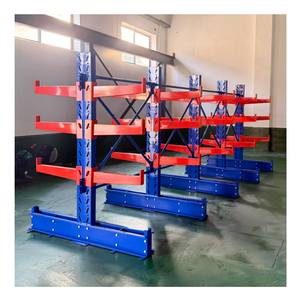
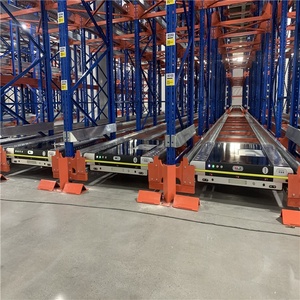
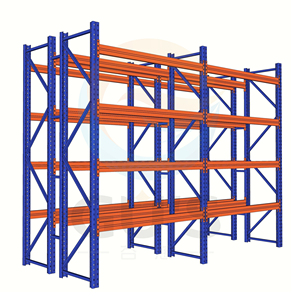
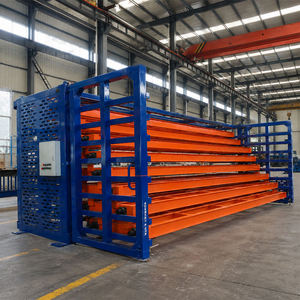
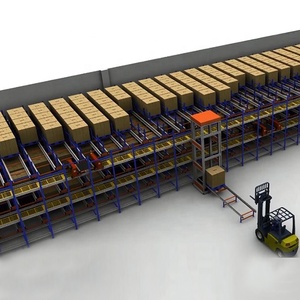
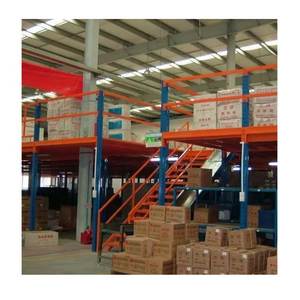
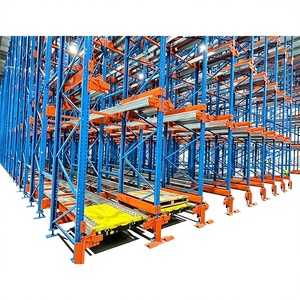
In high-bay racking systems exceeding 12 meters across Polish Class-A distribution centers, rack upright columns are subjected to severe combined axial compression, torsional warping, and dynamic fork-truck impact forces.
Pallet rack uprights, predominantly designed as cold-formed open thin-walled omega or hat profiles, present unique structural engineering complexities that diverge from standard rolled universal columns. Perforations along the face and return flanges (designed on 50mm or 75mm European standard increments for beam connector insertion) reduce the gross cross-sectional area, making analytical calculation through basic elastic theory inadequate.
Under the revised standard PN-EN 15512:2020 (Steel static storage systems – Adjustable pallet racking systems – Principles for structural design), upright frame designs delivered to the Polish market must incorporate non-linear finite element modeling (FEM) validated by physical testing. This accounts for distortional buckling, local flange wrinkling, and flexural-torsional buckling under unsymmetrical live loading caused by standard Euro-pallet (800 × 1200 mm) configurations.
Poland's warehouse inventory exceeds 32 million square meters of gross leasable area (GLA). Racking structural performance criteria vary fundamentally across Poland's primary industrial arterial corridors.
Situated at the intersection of the A1 and A2 motorways, Central Poland operations process extreme picking volumes. Uprights serve as structural supports for 3-4 tier pick towers with integrated automated carton conveyors, requiring high modulus uprights (120x95x2.5mm) to absorb dynamic vibrational resonance.
Operating within Poland's industrial manufacturing heartland, racking facilities support Tier-1 OEM suppliers, engine components, and lithium-ion EV battery packs. Upright columns require ultra-heavy wall thicknesses (up to 3.0mm Q355B) and heavy welded baseplates with M16 chemical resin anchors to resist massive concentrated loads.
Driven by skyrocketing urban land costs around the Warsaw metropolis, facility designers maximize cubic airspace through 14-meter free-standing upright frames serviced by narrow-aisle (VNA) turret trucks. Tolerances must comply with PN-EN 15620 Class 300 high-precision installation standards.
Serving immediate outbound freight lines to Germany, the Czech Republic, and Austria via the A4 highway. Warehouses deploy dynamic push-back racking and high-density gravity live flow systems where vertical frames endure continuous cyclic loading and un-nesting momentum impacts from telescopic carts.
Deep-freeze cold storage facilities (-28°C) linked to Baltic container transshipment demand uprights impervious to structural steel cryogenic embrittlement. Uprights feature continuous pre-galvanized or hot-dip post-galvanized finishes complying with ISO 1461 to eliminate zinc peeling under maritime chloride-rich condensation.
Poznań is the historical trading gateway between Western Europe and Warsaw. Facilities house massive fast-moving consumer goods (FMCG) operations utilizing standardized EUR-1 wooden pallets (1200x800mm). Racking upright depth profiles are calibrated to 1,100mm to guarantee 50mm front and rear pallet overhang compliance under PN-EN 15620.
Engineering data comparing our cold-rolled profile lines against European standard static racking criteria. All capacities are calculated with a minimum factor of safety (γM = 1.4) under PN-EN 15512.
| Profile Model | Dimensions (W × D) | Steel Thickness | Effective Area (Aeff) | Moment of Inertia (Ix) | Max Bay Capacity* | Recommended Beam Span | Polish Market Application |
|---|---|---|---|---|---|---|---|
| UP-80A | 80 × 70 mm | 1.8 mm | 3.12 cm² | 24.8 cm&sup4; | 8,500 kg | 2,700 mm (2-Pallet EUR) | Light/Medium 3PL Picking |
| UP-90B | 90 × 70 mm | 2.0 mm | 4.05 cm² | 38.6 cm&sup4; | 12,500 kg | 2,700 mm / 3,600 mm | Standard Selective Racks |
| UP-100B | 100 × 70 mm | 2.0 mm | 4.68 cm² | 54.2 cm&sup4; | 16,000 kg | 2,700 mm / 3,600 mm | E-Commerce High Turnover |
| UP-100H | 100 × 70 mm | 2.5 mm | 5.82 cm² | 66.4 cm&sup4; | 19,500 kg | 2,700 mm / 3,600 mm | Heavy FMCG & Chemicals |
| UP-120H | 120 × 95 mm | 2.5 mm | 7.45 cm² | 118.5 cm&sup4; | 24,000 kg | 3,600 mm (3-Pallet EUR) | Automotive & Push-Back |
| UP-120HD | 120 × 95 mm | 3.0 mm | 8.86 cm² | 139.2 cm&sup4; | 28,500 kg | 3,600 mm / Heavy Span | Cold Store Shuttle Systems |
| UP-140HD | 140 × 95 mm | 3.0 mm | 10.35 cm² | 184.0 cm&sup4; | 32,000 kg | High-Bay AS/RS Racks | High-Bay Silos (>15m Height) |
*Note: Maximum Bay Capacity is dependent on first beam level elevation (nominal 1,500mm to 1,800mm clear). Exact structural capacity requires project-specific static calculations verified against PN-EN 15512 with Eurocode 3 Part 1-3 design rules.
Analyzing technological and regulatory inflections driving pallet rack engineering demands from Wrocław to the Baltic coast.
Global geopolitical repositioning has transformed Poland into the primary manufacturing and distribution surrogate for Western Europe. Facilities increasingly hold buffer components for just-in-time assembly, demanding reconfigurable uprights with standardized 50mm pitch punchings that accommodate shifting component heights without structural cutting or re-welding.
With industrial electricity tariffs and heating costs surging across Europe, new cold stores and dry-bulk distribution centers in Stryków and Gliwice are pivoting from wide-aisle selective racking to ultra-dense shuttle channels. Upright frameworks must absorb intense horizontal braking loads (±12 kN) from automated battery runners through heavy-duty back-bracing systems.
Poland's National Labor Inspectorate (Państwowa Inspekcja Pracy - PIP) enforces rigorous adherence to BHP workplace safety standards. Damaged uprights with residual deflections over 3mm (Green/Amber/Red hazard categories) require rapid, non-disruptive replacement. Supplying universally compatible open profiles ensures seamless compliance during annual independent rack audits.
Connect directly with our structural engineering team. We provide complete CAD design proposals, beam slot clearance calculations, seismic checks, and structural load plaques compliant with Polish building regulations.
From raw structural coil decoiling to final installation on your Polish job site: our ISO 9001 certified manufacturing facilities guarantee single-source accountability.
The manufacturing integrity of a pallet rack upright is decided during the cold-forming stage. Inadequate tooling sets force high-strength steel through aggressive bend radiuses, inducing severe internal shear stresses, micro-cracking at the bend corners, and premature tensile failure under buckling load tests.
Our advanced manufacturing plant utilizes multi-pass 24-station continuous roll-forming lines. By incrementally forming profile angles through progressive small steps, we preserve the grain boundary integrity of EN 10149-2 S355 steels while maximizing the cold-work strain hardening effect along the profile return lips.
High capacity rolling lines running up to 35 meters/minute, ensuring complete 40ft container dispatch within 15-20 days from CAD sign-off.
Complete structural verification documentation provided with each quote, demonstrating compliance with Eurocodes and PN-EN standards.
Packaged to prevent salt-mist exposure during ocean freight into DCT Gdańsk or direct containerized rail transit through Małaszewicze.
Upright frame packages include pre-punched steel shims, column protectors (RAL 1023), row spacers, and 8.8 grade anchor bolts as standard.
Detailed answers addressing engineering validation, CE marking, customs clearance, and building codes for facility managers and technical purchasing teams in Poland.
Yes. All pallet rack upright profiles, bracing bars, and beam connectors are engineered and tested in accordance with PN-EN 15512:2020 (Steel static storage systems – Adjustable pallet racking systems – Principles for structural design). We provide comprehensive mill test certificates (EN 10204 Type 3.1) verifying steel chemical composition, yield strength, and elongation, alongside independent third-party laboratory stub-column compressive test reports.
For standard lengthwise storage of EUR-1 pallets (1,200 mm depth), we manufacture upright frames with a standard 1,100 mm depth. This provides the mandatory 50 mm front and 50 mm rear pallet overhang required by PN-EN 15620, ensuring the timber pallet skids sit securely across both front and rear load-bearing box beams. For crosswise storage or industrial pallets (1,000 × 1,200 mm), frame depths can be engineered to 900 mm or 1,000 mm with optional cross-support safety bars or galvanized wire mesh decking.
Yes. We regularly handle full container load (FCL) shipments under Incoterms 2020 on a DDP, DAP, CIF, or FOB basis. For DDP orders into Poland, our logistics partners manage customs clearance at the ports of Gdańsk or Gdynia (or rail container terminals such as Małaszewicze/Warsaw), settle import tariffs, and coordinate final scheduled flatbed or curtain-sided truck delivery directly to your job site.
For standard dry ambient facilities, we roll-form uprights using high-tensile Q235B and Q355B (equivalent to S235JR and S355JR under EN 10025-2). For sub-zero cold storage operations (-25°C to -30°C), we utilize micro-alloyed, impact-tested structural steels with guaranteed Charpy V-notch impact energy at sub-zero temperatures (e.g., S355J2 or S355NL), preventing brittle fracture. For corrosion protection in condensing environments, we recommend continuous hot-dip galvanized strip (EN 10346 Z275) or post-fabrication hot-dip galvanizing conforming to EN ISO 1461.
Every delivered racking system is supplied with a comprehensive Technical Project Dossier. This includes: (1) General Arrangement and Assembly CAD drawings; (2) Static Calculation Verification signed by a structural engineer; (3) Mill Test Material Certificates (3.1); (4) Operation and Maintenance Manual conforming to PN-EN 15635; and (5) High-visibility aluminum Load Warning Signage (Tablice Znamionowe) specifying maximum unit load per pallet, beam level capacity, and total bay capacity in Polish and English.
While Poland is categorized as a low-to-moderate seismic hazard zone under Eurocode 8 (PN-EN 1998-1), dynamic forklift collisions and high-bay building drift must be resisted by baseplate anchoring. We engineer baseplates using 6 mm to 12 mm hot-rolled steel plates with oversized anchor holes suitable for M12 or M16 heavy-duty wedge anchors or chemical injection mortars. Anchor pull-out and concrete cone breakout strengths are verified against your specific warehouse floor slab specification (minimum concrete compressive strength class C20/25, slab thickness ≥ 180 mm).
Our upright profiles feature standardized European 50 mm and 75 mm hole punching pitches with universal teardrop, diamond, and butterfly slot geometries. We can precision-match existing profile cross-sections, depths, and connector slots for facility expansion or partial frame replacement. Our engineers evaluate your existing sample or technical drawing to ensure structural continuity and connector pin safety locking compliance.
Share your warehouse layout, building clear height, pallet dimensions, and target port or delivery address in Poland. Our engineering team responds with complete preliminary CAD designs and load-bearing estimates within 24 hours.