Industrial Racking Structural Integrity

Pallet Support Bars Manufacturer & Factories in Mexico City

Engineered heavy-duty steel pallet cross-bars, flanged hat supports, and seismic-rated load distribution members manufactured for high-throughput distribution hubs and manufacturing plants across the Mexico City Metropolitan Area (ZMVM).

2,500 KG
Max Pair Capacity
NTC & RMI
Structural Compliance
ASTM A36 / A1011
Certified Structural Steel
24-48 HR
CDMX Logistics Delivery
Precision Manufacturing Catalog

Industrial Pallet Support Bars Engineered for Racking Systems

Direct factory supply of structural steel cross-members designed to eliminate deflection, support undersized or non-standard skids, and reinforce heavy storage bays against seismic shifting.

Structural Engineering Whitepaper

The Physics of Pallet Cross Supports: Mitigating Longitudinal Beam Deflection & Seismic Spread

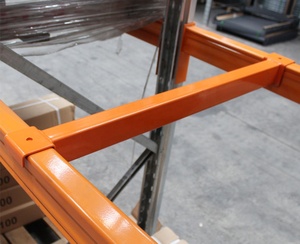
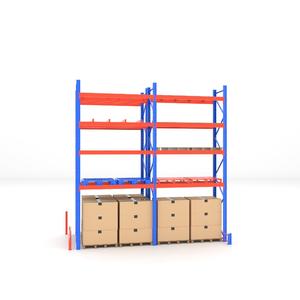
In high-bay racking systems operating under the dynamic conditions of the Mexico City logistics valley, pallet support bars (known locally in industrial procurement as travesaños de seguridad or barras de soporte para racks) are critical load-bearing structural members. Rather than serving as passive accessories, support bars bridge the structural gap between the load plane and front-to-back rack beams, mitigating severe point loading caused by non-uniform wooden skids, broken bottom deck boards, and uneven weight placement.

Under American standard ANSI MH16.1 (Specification for the Design, Testing and Utilization of Industrial Steel Storage Racks) and European equivalent EN 15512, the deflection limit for horizontal rack beams is set at L/180. However, when concentrated loads rest on bottom-runner skids without adequate support bars, the beam experience torsional twisting (rotational torsion), significantly accelerating fatigue along the beam-connector weld lines. By integrating precision-engineered flanged or drop-in support bars, the concentrated wheel or runner load is mechanically transferred directly into vertical shear planes, distributing the Uniform Distributed Load (UDL) across both structural shelf beams.

Seismic Restraint & Anti-Beam Spread Function

During seismic ground motions—particularly the prolonged resonant wave frequencies characteristic of Mexico City's lacustrine subsoil—racking upright frames experience substantial out-of-plane lateral sway. Pallet support bars secured with self-drilling structural screws (Tek-screws) function as physical cross-ties. They mechanically lock the distance between front and rear load beams, entirely eliminating beam displacement or "spread," which is the primary cause of sudden catastrophic pallet fall-through during seismic events.

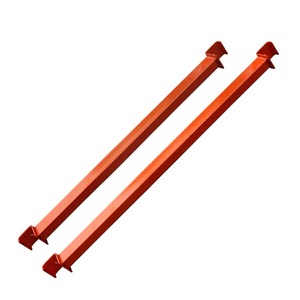
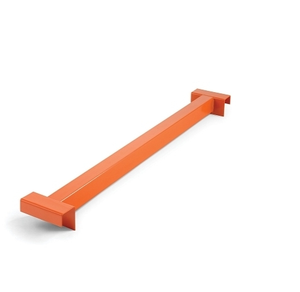
Flanged (Top-Hat) Profiles

Rest securely over the crown of standard step beams and structural box beams. The extended lip design prevents lateral slide and features pre-punched fastener holes for immediate mechanical pinning directly into beam faces.

Flush Step-Beam Drop-Ins

Engineered to nest seamlessly inside the 1-5/8 inch (41.3 mm) step recess of step beams. Provides a completely flush horizontal plane, ideal for multi-level carton flow, picking decks, and operations utilizing sliding plastic bins.

Structural C-Channel Rails

Formed from cold-rolled ASTM A1011 heavy-gauge structural steel. Built to handle extreme concentrated point weights such as heavy automotive injection molds, engine casting totes, and metal sheet coil pallets up to 2,500 kg.
Regional Industrial Focus

Mexico City (CDMX) & Edomex Logistics Corridor Deployment

Strategic supply and technical engineering for the hyper-dense logistics corridors surrounding the Mexican capital, fulfilling the surge of nearshoring investments and e-commerce distribution demands.

The manufacturing and warehousing landscape of the Greater Mexico City Metropolitan Area (Zona Metropolitana del Valle de México - ZMVM) is experiencing unprecedented structural densification driven by the nearshoring wave under the USMCA (T-MEC) trade framework. As international aerospace, automotive tier-1 suppliers, and global e-commerce operators establish distribution centers in central Mexico, warehouse space has reached historic occupancy rates exceeding 98% in prime submarkets.

Warehousing operations in Mexico City face unique civil engineering challenges. Unlike flat ground installations in lower-risk geological regions, installations across the CDMX valley sit over former lakebeds (Zone III Lacustrine soft clay), necessitating rigorous structural dynamic compliance with the Normas Técnicas Complementarias del Reglamento de Construcciones para el Distrito Federal (NTC-RCDF 2023) and federal workplace storage safety regulations under NOM-006-STPS-2014. Racking configurations must handle seismic acceleration coefficients reaching upwards of $S_a = 0.40g$ to $0.65g$. Pallet support bars act as non-negotiable insurance against frame failure under lateral ground shifts.

CDMX Urban Core

Vallejo Industrial Park

Azcapotzalco's vital urban infill hub. Demands high-density vertical selective and drive-in racks with high load-safety ratios for quick last-mile urban logistics fulfillment.

CTT Golden Corridor

Cuautitlán & Tultitlán

The premier logistics corridor hosting colossal national distribution centers (Cedis). High-throughput cross-docking requires robust flanged supports handling standard 1000x1200mm Mexican tarimas.

Industrial Manufacturing

Tlalnepantla & Naucalpan

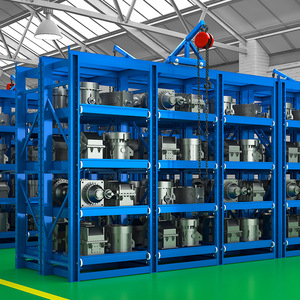
Manufacturing center for metalworking, plastic mold injection, and automotive suppliers requiring high-capacity structural C-channel bars for tool and die racks.

New Logistics Node

Tepotzotlán & AIFA Hub

Rapidly developing logistics megacluster adjacent to Felipe Ángeles International Airport. Focuses on air cargo freight, multi-tier mezzanines, and cold-chain temperature-controlled racking.

Data-Driven Load Engineering

Structural Pallet Support Bar Specification Matrix

Physical load tolerances calculated under cold-formed carbon steel yield standards (ASTM A36, Q235B, and high-strength A1011 SS Grade 50) based on clear spans ranging from 36" (914 mm) to 48" (1219 mm).

Model / Profile Type Material Specification Steel Thickness Standard Depths Pair UDL Capacity Primary Industrial Application
PSB-FL-Standard
Flanged Hat Profile
ASTM A36 / Q235B Cold-Rolled 1.8 mm (14-Gauge) 42" (1067 mm)
48" (1219 mm)
1,200 kg General FMCG, Retail Warehousing, Selective Racking
PSB-FL-Heavy
Flanged Structural
ASTM A1011 HSLAS Gr. 50 2.0 mm (13-Gauge) 42" (1067 mm)
48" (1219 mm)
1,600 kg Automotive Tier-1 Logistics, 3PL Distribution Hubs
PSB-ST-Flush
Drop-In Step Bar
Cold-Formed Carbon Steel 1.8 mm (14-Gauge) 36" (914 mm)
42" (1067 mm)
1,400 kg Order Picking Floors, High-Bay Pallet Flow Lanes
PSB-CH-Extreme
Structural C-Channel
Hot-Rolled ASTM A36 Steel 2.5 mm (12-Gauge) 48" (1219 mm)
54" (1372 mm)
2,200 kg Heavy Castings, Machine Dies, Chemical Drum Totes
PSB-TUB-DieRack
Reinforced Tube Section
High-Tensile Structural Tube 3.0 mm (11-Gauge) Custom Fabricated 2,500 kg+ Stamping Die Storage, Extreme Concentrated Loads
Original Manufacturing Advantages

Why Industrial Engineers & Logistics Directors Choose Our Factory

From single-pallet replacement orders to multi-kilometer rack retrofit projects, our turnkey manufacturing capabilities eliminate the risks of supplier fragmentation and load non-compliance.

Custom Structural CAD Layouts

Every facility receives dedicated engineering support: site surveys, CAD cross-sectional drawings, and finite element analysis (FEA) to ensure bar profiles match your exact forklifts, beam sections, and tarima specifications.

Certified Automated Roll-Forming

State-of-the-art continuous roll-forming lines with inline automated punching yield millimeter tolerances (±0.5 mm). Every batch is stamped with lot numbers and verified by 3.1 mill test inspection certificates.

Seismic Anchor & Fastener Preps

All flanged support profiles include pre-punched slotted fastener holes designed to accommodate heavy-duty self-tapping Tek-screws, fulfilling CDMX NTC structural code requirements for dynamic seismic locking.

Dual Finish Surface Protection

Available in electrostatic thermoset epoxy-polyester powder coating (exceeding 500-hour ASTM B117 salt spray tests) or continuous pre-galvanization, ideal for high-humidity and sub-zero cold room environments.

Procurement Intelligence

Frequently Asked Questions: Pallet Support Bars in Mexico

Key technical, regulatory, and procurement questions answered for Mexican facility directors, logistics heads, and corporate safety auditors.

What are the standard pallet dimensions used in Mexico City, and how many support bars are required per pallet position?
In Mexico, the two predominant industrial pallet standards are the standard Mexican tarima (1000 mm x 1200 mm) and the US GMA/CHEP wooden skid (40 x 48 inches). Standard selective rack depth across Mexican warehouses is 42 inches (1067 mm) or 48 inches (1219 mm). For standard operations, a minimum of two support bars per pallet position (4 bars per standard 2.7-meter shelf beam holding two pallets) is mandatory. For high-weight loads exceeding 1,200 kg or operations utilizing fragile single-use perimeter-base skids, installing three support bars per pallet position prevents mid-span deflection and stringer board collapse.
How do pallet support bars assist in passing Mexican safety inspections under NOM-006-STPS-2014 and Protección Civil?
NOM-006-STPS-2014 outlines occupational safety protocols for materials handling and storage in Mexico, mandating that storage racks prevent product collapse, tipping, and structural degradation. Local Protección Civil inspectors in Mexico City and the State of Mexico strictly verify load placards and cross-support mechanisms. By installing load-rated, certified pallet support bars, facilities eliminate open fall hazards between beams. Furthermore, mechanical fixation (Tek-screwing) of the bars guarantees that beams cannot expand laterally, satisfying structural stability compliance under civil protection audits.
What is the difference between flanged hat support bars and flush step-beam support bars?
Flanged (Hat) Support Bars feature top flanges that extend over the top surface of the rack beam. They are universal, capable of fitting on both stepped beams and rectangular box beams, making them the most versatile choice for existing warehouse retrofits. Flush Step-Beam Bars drop completely into the 1-5/8" recessed shelf of step beams, leaving the top surface of the bar perfectly flush with the top edge of the beam. Flush bars are highly favored in order-picking tiers, carton storage zones, and facilities utilizing handheld pallet jacks, as pallets can slide onto the level surface without snagging outer flanges.
Why are pallet support bars critical in Mexico City’s Seismic Zone III (Zona Lacustre)?
Mexico City is situated over a historical lacustrine lakebed composed of deep clay layers that amplify low-frequency seismic waves (such as those observed during the 1985 and 2017 earthquakes). Under NTC-RCDF (Normas Técnicas Complementarias) guidelines, racks must be designed to withstand significant dynamic lateral displacement. As upright towers sway back and forth during seismic events, the front and back load beams can separate laterally. Flanged support bars fastened directly with structural screws function as horizontal structural braces, holding the beams at an exact, unyielding distance and stopping loaded pallets from falling through the center gap.
Are your support bars compatible with major rack brands installed in Mexico (e.g., Mecalux, AR Racking, SSI Schaefer)?
Yes. Our pallet support bars are engineered to interface seamlessly with all primary domestic and international rack manufacturers present in Mexico, including Mecalux Mexico, AR Racking, SSI Schaefer, Interlake Mecalux, and custom roll-formed teardrop or structural profiles. During the initial technical inquiry, our engineering department reviews your beam profile type (standard step beam, heavy-duty box beam, or structural roll-formed channel) and fabricates custom flange geometries and lengths to ensure a tight, secure fit.
What anti-corrosion finishes are recommended for cold storage (cuartos fríos) facilities in central Mexico?
For refrigerated distribution centers (+4°C) and deep-freeze logistics facilities (-18°C to -25°C) common in food distribution corridors such as Tultitlán and Tepotzotlán, standard low-cost paint finishes can crack and flake under thermal contraction and humidity condensation. We recommend our continuous pre-galvanized zinc coating or hot-dip galvanized finish (HDG conforming to ASTM A123). For cleanroom and sanitary pharmaceutical warehouses, we also provide marine-grade electro-powder polyester finishes resistant to caustic sanitation detergents.
What lead times and delivery logistics can buyers expect for facilities across the CDMX metropolitan area?
Standard inventory sizes (42" and 48" flanged supports) for standard step and box beams are stocked for expedited dispatch to industrial parks throughout CDMX and the State of Mexico (Vallejo, Tlalnepantla, Cuautitlán Izcalli, Toluca, Lerma) within 24 to 48 hours. Custom engineering runs—including heavy-duty 2,500 kg mold channels, pre-punched lengths, or custom powder-coat color branding—typically ship within 7 to 14 business days. We coordinate delivery with full DDP / CIF options directly to your warehouse loading dock.
Do we need to anchor every pallet support bar with screws, or is drop-in gravity resting sufficient?
In non-seismic zones, drop-in gravity bars are sometimes permitted. However, for industrial facilities operating anywhere in Mexico City (Zones II and III under structural seismic zoning), mechanical anchoring using self-drilling structural Tek-screws through the pre-punched flange holes is strongly recommended by RMI and required by CDMX structural regulations. Anchoring prevents forklift operators from inadvertently dislodging the bars during high-speed pallet elevation and ensures beam tie retention during an earthquake.

Upgrade Your Warehouse Load Safety & Seismic Reliability Today

Whether you are expanding a high-throughput distribution center in Cuautitlán, refitting an automotive manufacturing plant in Naucalpan, or bringing a facility into compliance with NOM-006-STPS and Civil Protection requirements, our structural engineering team is on standby to assist with CAD layouts, load capacity calculations, and factory-direct pricing.

Inquire Now