
No matching pages. Try "pallet", "mezzanine" or "cantilever".
No matching pages. Try "pallet", "mezzanine" or "cantilever".
Precision-manufactured roll-formed uprights, load-bearing cross beams, bracing profiles, and automation accessories configured for Australian standard pallets (1165mm x 1165mm) and heavy industrial payloads.
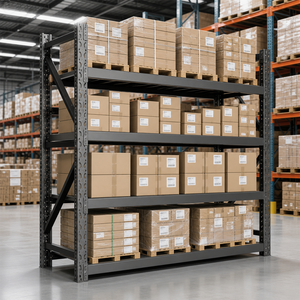
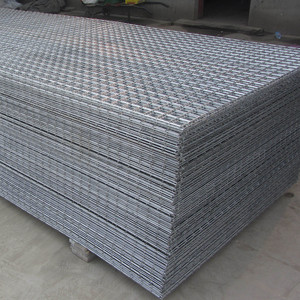
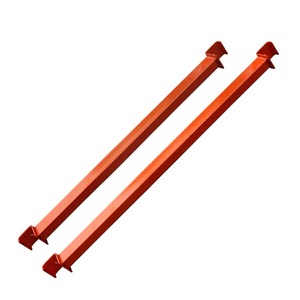
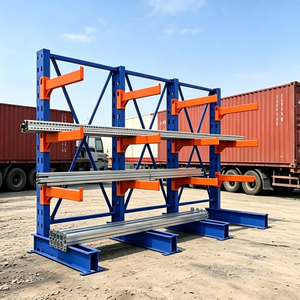
Greater Sydney's industrial property landscape is navigating unprecedented land valuation surges, particularly throughout premier distribution corridors including Western Sydney's Aerotropolis, Eastern Creek, Erskine Park, and Kemps Creek. With industrial vacancy rates remaining constrained and warehouse leasing costs reaching historical benchmarks per square meter, logistics directors and third-party logistics (3PL) providers can no longer afford inefficient floor footprint allocation. Maximizing vertical cubic storage efficiency while adhering strictly to Australian structural standards is the definitive metric for supply chain profitability.
Roll formed pallet racking—cold-formed from continuous high-strength coil steel through precision multi-stage progressive roller dies—represents the global engineering standard for flexible, seismically resilient, and highly scalable warehouse racking. Unlike hot-rolled structural steel sections that carry significant dead-weight, demanding heavier foundation footing depths and exhibiting rigid, brittle behaviors under seismic harmonic resonance, cold roll-formed upright profiles deliver optimized strength-to-weight ratios through advanced cold work hardening. The resultant structural profiles feature cold-worked omega (Ω) or multi-flanged geometric cross-sections that provide superior sectional modulus, torsional rigidity, and resistance against local buckling under high static compressive loads.
Information Gain Engineering Directive: Under the revised Australian Standard AS 4084:2023 (Steel Storage Racking), the design criteria for steel storage systems enforce rigorous limit-state analysis, continuous upright perforation displacement calculations, and documented dynamic baseplate anchor evaluations. Our exported roll-formed systems incorporate proprietary teardrop and multi-slot continuous vertical pitches, engineered to interface seamlessly with hooked beam end-connectors, providing maximum rotational joint stiffness without compromising field adjustability.
As direct manufacturers and specialized exporters supplying Sydney and New South Wales (NSW) commercial operations, we bridge the gap between competitive offshore manufacturing precision and uncompromising compliance with Australian industrial workplace safety standards enforced by SafeWork NSW. Every beam level, column profile, and run-spacer bracing lattice is backed by verified limit-state structural design calculations, finite element analysis (FEA), and factory QA/QC traceabilities ensuring hassle-free handover and rapid structural engineer sign-off.
From heavy maritime container staging adjacent to Port Botany to automated mega-fulfillment centers across the Western Sydney Aerotropolis, roll formed storage architectures are tailored to localized operational requirements.
High-bay logistics centers operating clear roof heights from 13.7m to 16.5m demand precision roll-formed uprights capable of bearing cumulative frame loads exceeding 24,000 kg. Designed to integrate directly with automated narrow aisle (VNA) and automated guided vehicle (AGV) systems, our roll-formed upright geometries eliminate mast sway and maintain strict vertical tolerances across long-span run installations.
Facilities handling direct container destuffing and cross-docking in Botany, Banksmeadow, and Moorebank Intermodal precinct experience corrosive coastal marine atmospheres combined with intense forklift handling cycles. Our export configurations utilize heavy-gauge pre-galvanized upright frames and electrophoretic powder-coated cross beams to resist saline atmospheric oxidization while absorbing high-frequency cyclic loading.
High-velocity grocery, retail, and pharmaceutical fulfillment operations require hybrid storage systems combining heavy-duty roll-formed selective pallet positions with carton-live flow levels and push-back rack lanes. Continuous 50mm and 75mm beam adjustment pitches enable rapid bay re-profiling as product dimensions and seasonal stock keeping unit (SKU) profiles fluctuate.
Selecting storage racking for Australian industrial installations requires evaluating both structural mechanics and operational total cost of ownership (TCO). While hot-rolled structural channel steel has historically been deployed in heavy-abuse yard environments, modern cold roll-formed high-tensile steel represents over 88% of indoor warehouse storage solutions across Australia due to its advanced metallurgical profile, ductile seismic energy dissipation, and superior dimensional consistency.
| Evaluation Parameter | High-Tensile Cold Roll-Formed Racking | Hot-Rolled Structural Channel Racking | Sydney Warehouse Operational Impact |
|---|---|---|---|
| Steel Metallurgy & Yield Strength | Q235B / Q355B (Yield up to 355-450 MPa via cold work hardening) | AS/NZS 3679.1 Grade 300 (Nominal yield 300 MPa) | Roll formed sections achieve higher load capacities with 35-40% less dead weight, reducing floor slab loading. |
| Seismic Performance (AS 1170.4) | High ductility ratio; engineered joint flexibility absorbs harmonic ground acceleration without shear failure. | Rigid, high-mass behavior; transmits unattenuated dynamic shear stress to concrete slab anchors. | Critical for Western Sydney sedimentary geology; eliminates slab blowout risks during low-frequency seismic events. |
| Beam Level Adjustability | Continuous vertical pitch (50mm / 75mm); tool-less multi-prong connector bracket engagement. | Bolted channel connection; requires structural unbolting, torque calibration, and downtime. | Enables Sydney 3PL operators to reconfigure shelf clearance within minutes to match changing pallet profiles. |
| Manufacturing & Freight Economics | Precision roll tooling; tightly nestable frame components maximizing 40ft HQ container cubic utilization. | Bulky, heavy structural shapes; high cubic transport waste and elevated sea-freight tariffs. | Reduces import logistics landed costs into Port Botany by up to 28% per pallet storage position. |
| Impact Resistance & Repairability | Engineered localized crumple zone; damaged modular upright components can be spliced or replaced rapidly. | Transmits impact shock to rear bracing and anchors; difficult to straighten without structural degradation. | Streamlines SafeWork NSW annual compliance audits through standard modular replacement sections. |
In accordance with Australian workplace safety guidelines, rack failure is completely preventable through precise structural calculation, controlled manufacturing tolerances, and the integration of physical impact mitigation elements.
The industrial storage landscape across New South Wales is evolving beyond traditional static racking. Commercial buyers, industrial builders, and supply chain developers are aligning their infrastructure investments with three distinct sector trends:
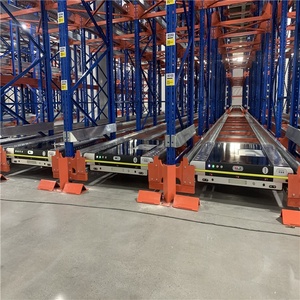
With Sydney real estate prices dictating extreme density, drive-in racking is increasingly replaced by four-way and two-way automatic radio shuttle racking systems. Our cold roll-formed guide rails are fabricated to sub-millimeter tolerances, providing uninterrupted traversing tracks for autonomous battery-operated pallet runners while cutting forklift travel time and reducing rack impact frequency by up to 80%.
SafeWork NSW regulatory enforcement has increased scrutiny on non-compliant, uncertified imported racking installations that lack verified load placards or third-party engineering calculations. Buyers are standardizing on suppliers who provide full metallurgical mill certificates, limit-state seismic design calculations in accordance with AS 1170.4, and standardized component traceability numbers embossed directly onto beams and uprights.
The explosive expansion of temperature-controlled distribution hubs in Western Sydney catering to grocery and cold-storage logistics has exposed standard powder coatings to thermal shock, condensation, and corrosion. We supply advanced hot-dip galvanized (HDG) roll-formed uprights and specialized dual-cure zinc primer electrostatic finishes that endure perpetual -28°C blast-freezer conditions without micro-fissuring or delamination.
Combining multi-hectare roll-forming manufacturing capacity with rigorous engineering verification, we deliver turnkey industrial racking solutions directly to Sydney job sites.
Every project begins with building geometry evaluation. We review pallet dimensions, unit weights, slab capacities, and material handling equipment (MHE) turning circles to engineer an optimized layout balancing SKU selectivity and volumetric density.
Our uprights and beams are rolled from certified structural coil steel. Each production batch undergoes rigorous destructive mechanical testing, yield-tensile testing, and weld penetration testing to verify absolute compliance with AS 4084:2023 design parameters.
We manage direct sea freight logistics, customs export documentation, and container packing optimization. Materials are flat-packed and bundled with precision strapping to prevent transit abrasions, ready for rapid forklift unloading on-site in Sydney.
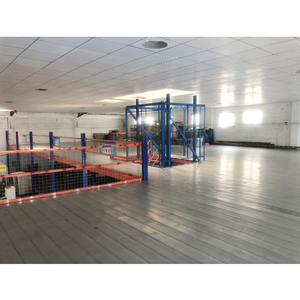
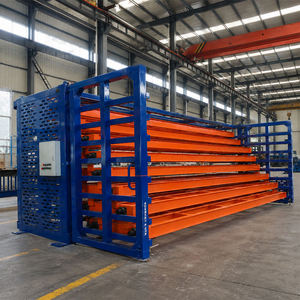
Beyond standard selective pallet racking, we design and manufacture complex multi-tier pick towers, rack-supported structural mezzanine floors, and long-span cantilever systems designed for Sydney timber, pipe, and building supplies distributors.
All export orders include certified structural anchor bolts, high-tensile frame connection hardware, leveling shims, floor column guards, and pre-calculated engineering load rating plaques ready for immediate installation sign-off.
You work directly with dedicated structural project engineers. From preliminary concept CAD drawings to real-time container dispatch updates and post-installation technical guidance, we eliminate unnecessary middlemen markups and delays.
Essential legal, engineering, and logistics considerations for sourcing, importing, and certifying roll formed pallet racking across Sydney and New South Wales.
The revised AS 4084:2023 standard mandates rigorous limit-state structural design methodologies, taking into account beam-to-column connector rotational stiffness, second-order sway effects, and comprehensive perforated upright section calculations under combined axial load and bending moments. Our roll formed systems are designed, tested, and structurally calculated in accordance with these standards. We supply comprehensive structural engineering calculation packages, verified mill test certificates, and load capacity tables that allow your Australian structural certifying engineer to review and sign off on site-specific SafeWork NSW compliance without friction.
Yes. While international markets frequently utilize 1200mm x 800mm (Euro) or 1200mm x 1000mm (ISO) pallets, our export product line features frame depths specifically engineered for the standard Australian timber pallet (1165mm x 1165mm, commonly CHEP or Loscam). Standard frame depths are configured at 840mm or 900mm to allow standard 100mm to 150mm pallet overhangs at the front and rear faces, ensuring positive beam engagement. We also offer standard 2591mm, 2743mm, and 3810mm beam lengths designed to comfortably hold two or three Australian standard pallets per bay with required safety operating clearances.
For maritime customs clearance into Sydney via Port Botany, we supply clean bills of lading, detailed packing lists, commercial invoices, and non-wood packaging declarations compliant with Australian Department of Agriculture, Fisheries and Forestry (DAFF) biosecurity requirements. For local workplace safety approvals, we furnish structural engineering data sheets, material test reports (MTRs) certifying steel chemistry and yield strength, as-built assembly schematics, and compliant load capacity rating plaques ready to be installed on every rack aisle end.
In accordance with AS 1170.4 (Structural design actions - Earthquake actions in Australia), warehouse storage racking must be analyzed for seismic acceleration coefficients based on Sydney's specific geological sub-soil profile. Cold roll-formed steel structures possess inherently favorable ductility characteristics. Our engineering team calculates the dynamic fundamental vibration period of the loaded rack structure, optimizing horizontal and diagonal frame bracing angles, baseplate footprint dimensions, and concrete anchor embedment depths to ensure seismic ground energy is dissipated without brittle weld fracture or column buckling.
Under AS 4084:2023 and internationally recognized engineering norms, the maximum permissible elastic vertical deflection of a horizontal pallet rack beam carrying its uniformly distributed rated design load is limited to L/200, where 'L' represents the clear span distance between upright columns (for instance, a 2740mm beam is restricted to a maximum deflection of 13.7mm under maximum payload). Our box and step beam profiles are precision roll-formed with engineered return lips to ensure deflection remains well within this safety threshold, preventing pallet displacement and forklift handling interference.
Standard production lead times for custom-engineered containerized roll formed racking systems typically span 2 to 3 weeks following approved engineering CAD layout drawings. Direct ocean container shipping from port to Port Botany in Sydney generally requires 12 to 18 transit days. Our logistics export department coordinates closely with your appointed Australian customs broker or freight forwarder to guarantee efficient container release, biosecurity clearing, and direct transport to your warehouse facility in Sydney.
Send our structural team your warehouse CAD drawings, clear ceiling heights, pallet load schedules, and forklift specifications. We will generate an optimized, AS 4084-compliant roll-formed storage layout and a transparent factory-direct export proposal delivered to Port Botany.