Top 10 Factory Warehouse Racking Factories & Exporters Serving Berlin
An authoritative engineering and procurement assessment on heavy-duty pallet racking, automated AS/RS shuttle systems, structural compliance under DIN EN 15512 / DGUV 108-007, and cold-formed steel manufacturing for Germany's logistics capital.
100%
DIN EN 15512 & CE Certified Execution
≥45k
Metric Tons Cold-Rolled Export Capacity
+40%
Volumetric Storage Gain over Standard Wide-Aisle
48h
Engineering CAD & Structural Calculation Delivery
Heavy-Duty Warehouse Systems
Engineered Industrial Racking Systems for Berlin Warehouses
Discover high-density, load-rated racking systems precision-engineered for European pallet configurations (EPAL 1: 1200 x 800 mm and Industrial Pallet: 1200 x 1000 mm). Each component is statically analyzed, epoxy powder-coated, and tested for seismic and structural rigidity under rigorous Eurocode 3 standards.
LIFO Dynamic
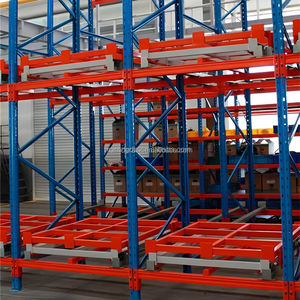
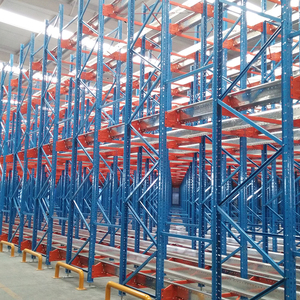
Push Back Pallet Racking System
High-density gravity-cart nested trolley system. Pallets slide on inclined structural rails, providing deep storage for 2 to 6 pallets deep per lane without forklift intrusion.
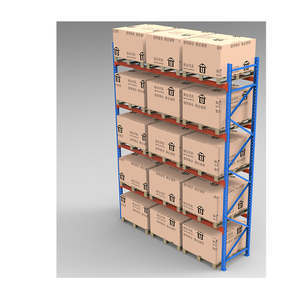
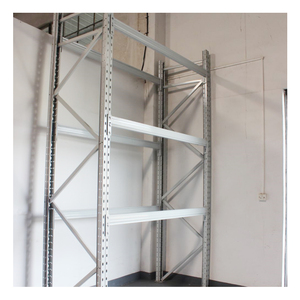
Versatile beam-and-upright system offering unimpeded access to every pallet position. Adjustable pitch at 50mm / 75mm increments designed for rapid SKU turnover in 3PL hubs.
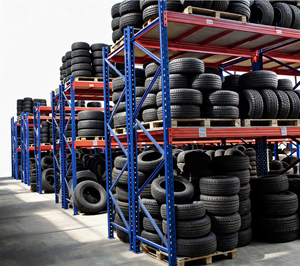
Structural cold-rolled Q355B high-tensile steel frames with electrostatically cured thermoset epoxy coating. Formulated for heavy engineering and automotive spares staging.
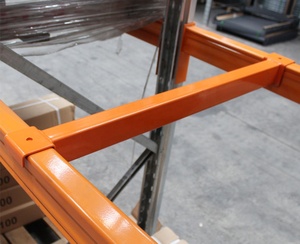
Secondary structural tie bars preventing undersized or weak wooden pallets from dislodging. Flush-fitting or top-hat flanges lock seamlessly over box and step beams.
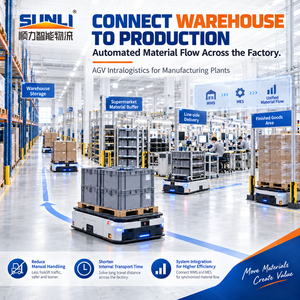
Ultra-narrow aisle automated high-bay warehouse racking system integrated with WMS/WCS, optical positioning, and dual-mast cranes reaching heights up to 40 meters.
Rapid interlocking clip-in shelf system engineered for bin picking, cartons, and archive handling. Rivet-less design allows infinite reconfigurations without special tooling.
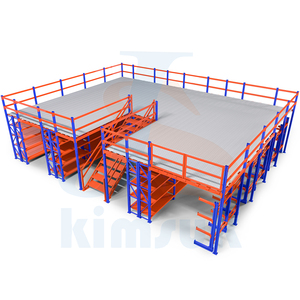
Multi-tier industrial picking mezzanine using heavy upright structural frames as floor column supports. Multiplies overhead building cubic volume by 200% to 300% without structural extension.
Planning a Warehouse Facility in the Berlin-Brandenburg Region?
Connect directly with our structural engineering team. We supply verified load statics, CAD layout files, factory direct FOB/CIF container shipping quotations, and turnkey installation support compliant with German DGUV Regel 108-007.
Engineering Comparative Benchmark for Berlin Logistics Facilities
A detailed intralogistics trade-off matrix balancing floor space utilization, equipment capital expenditure, material handling speed, and compliance under EN 15512 and DGUV regulations.
Racking System
Space Utilization
Direct Selectivity
Material Handling Unit
Floor Load Profile
DIN EN Standard
Optimal Berlin Application
Selective Pallet Racking
Moderate (35–40% Floor Area)
100% Immediate Direct Access
Standard Counterbalance / Reach
Point load 25–60 kN/footplate
DIN EN 15512
GVZ Großbeeren 3PL & multi-client hubs
Double Deep Racking
High (50–58% Floor Area)
50% Direct (LIFO per pair)
Pantograph Double Reach Truck
Point load 40–80 kN/footplate
DIN EN 15512
FMCG buffer & fast-moving retail stock
Radio Shuttle System
Maximum (>75% Floor Area)
Channel Selective (FIFO/LIFO)
Autonomous Electric Shuttle + Truck
Point load 60–110 kN/footplate
DIN EN 15620
Cold storage & high-volume food processing
AS/RS High-Bay Racking
Ultra-High (>85% Cubic Volume)
100% Automated by WMS/WCS
Automated Stacker Crane / Shuttle
Foundation strip load >150 kN/m
DIN EN 528 / 15620
Automotive Tier-1 & e-commerce megahubs
Push Back Pallet Rack
High (55–65% Floor Area)
Lane Selective (LIFO Cart Flow)
Standard Forklift (Front face only)
Point load 35–75 kN/footplate
DIN EN 15512
Medium SKU velocity, beverage distributors
Rack Mezzanine Platform
Multi-Level Cubic Multiplier
100% Manual Picking on Floors
Hand pallet truck, vertical conveyors
Distributed 5–12 kN/m² floor
DIN EN 1993 (EC3)
Urban micro-fulfillment & pharma retail
Localized Geographic Execution
Industrial Implementation Hubs Across Berlin-Brandenburg
The capital region of Berlin and surrounding Brandenburg represents one of Central Europe's most dynamic multimodal transport corridors. We tailor racking geometry to the specific ceiling heights, soil foundations, and throughput profiles of local GVZ hubs.
GVZ Großbeeren (Berlin Süd)
As the largest freight village in Eastern Germany handling consumer goods and third-party logistics (3PL), facilities here demand heavy-duty selective and double-deep racking with reinforced column guards. Our engineering incorporates wide-bay layouts accommodating rapid turnover cross-docking operations along the B101 and A10 motorway rings.
GVZ Freienbrink & Automotive Belt
Anchored by high-capacity electric vehicle and battery manufacturing corridors east of Berlin, suppliers require heavy-capacity industrial racking capable of holding heavy stamping dies, raw sheet steel coils, and EV battery cell pallets. We engineer cold-rolled Q355B profiles with up to 5,000 kg per beam level and seismic load validation.
Berlin Urban Brownfields & Micro-Hubs
Inside the inner-city ring (S-Bahn-Ring) and repurposed industrial halls in Spandau, Reinickendorf, and Marzahn, logistics operators face ceiling constraints and tight footprints. Our modular boltless shelving and rack-supported mezzanine platforms maximize clear ceiling heights of 6 to 9 meters without requiring civil building alterations.
GVZ Wustermark & Cold-Chain Corridors
Serving regional temperature-controlled grocery distribution across Western Brandenburg, cold storage sites demand dense radio shuttle and drive-in racking. Our cold-store steel alloys undergo impact testing at -30°C to prevent brittle fracture, paired with moisture-resistant hot-dip galvanization or low-bake epoxy treatments.
Berlin-Buch & Adlershof Biotech Clusters
Life sciences and medical technology campuses in Adlershof require cleanroom-compatible storage, stainless steel boltless shelving, and secure pharmaceutical gravity flow racks. Our electrostatic powder coatings are formulated without heavy metals, resisting alcohol wipe-downs and aggressive sanitization regimes.
BER Airport & Schönefelder Kreuz Logistics
High-velocity air freight forwarders operating near Berlin Brandenburg Airport (BER) depend on dynamic gravity roller tracks and cantilever systems for over-length aviation cargo. We provide integrated roller beds and impact dampers ensuring gentle cargo flow during rapid customs turnaround windows.
The Intralogistics Engineering Mandate for the Berlin-Brandenburg Region
Modern warehouse logistics in the Berlin metropolitan region is undergoing a profound structural transformation. Rapid industrial expansion—exemplified by electric mobility giga-factories in Grünheide, expanding pharmaceutical research corridors in Potsdam and Berlin-Buch, and consumer e-commerce consolidation at GVZ Großbeeren—has triggered intense competition for prime industrial land. With industrial rents climbing sharply across Brandenburg, logistics directors can no longer afford wide, under-utilized forklift aisles and low static storage densities. Every cubic meter of clear warehouse height must deliver verified return on capital expenditure.
However, converting horizontal space into vertical storage creates substantial structural engineering challenges. Under German building codes and regional trade association regulations (DGUV Regel 108-007, formerly BGR 234), warehouse storage systems are legally categorized as operational work equipment and load-bearing structures. This dual classification means racking installations are subject to strict structural calculations under DIN EN 15512:2020 and must comply with the German Industrial Safety Ordinance (Betriebssicherheitsverordnung - BetrSichV).
Technical Note on Deflection Criteria: According to DIN EN 15512, horizontal beam members supporting European pallets (EPAL 1/2/3) must not exceed a vertical deflection limit of $L / 200$ (where $L$ represents clear beam length between uprights). For automated crane-served high bays governed by DIN EN 15620, this deflection tolerance tightens to $L / 300$ or lower to prevent stacker crane optical positioning faults.
Material Metallurgy and Structural Integrity in High-Bay Environments
The primary load-bearing members of modern industrial racking—the upright frames and horizontal box beams—are cold-formed from high-yield structural steel coils. While commodity domestic suppliers often rely on lower-grade commercial carbon steels, high-bay export manufacturers engineered for the European market deploy premium structural alloys like Q355B (equivalent to European S355JR in minimum yield strength $R_{eH} \ge 355\text{ N/mm}^2$) and cold-rolled certified strips with guaranteed elongation values.
Cold-forming imparts unique structural advantages: through specialized roll-forming lines with 20 to 26 successive roller stations, omega-shaped upright profiles achieve optimized radius-to-thickness ratios. This geometry suppresses local torsional buckling under extreme axial compressive loads. When calculating bay capacity ratings that exceed 20,000 kg, finite element analysis (FEA) models must calculate both second-order elastic-plastic effects ($P-\Delta$ and $P-\delta$ geometric non-linearities) and semi-rigid connection behavior at the beam-to-column connector lugs.
Seismic Considerations and Floor Slab Dynamics Across Berlin Basins
Although Berlin is located in low-to-moderate seismic hazard zones (DIN EN 1998-1 / Eurocode 8 National Annex), the localized geology of the Berlin-Warsaw glacial valley (Urstromtal) presents geotechnical nuances. Many logistics hubs constructed over post-glacial sand deposits or compacted brownfield reclamation sites experience differential settlement. Floor slab tolerances must conform strictly to DIN 18202 (Tolerances in Building Construction), Table 3, Group 3 or Group 4 for narrow-aisle installations.
A floor slab level deviation of merely 2 mm per meter can translate into a lateral deflection exceeding 60 mm at the top of a 14-meter-high narrow aisle rack. Without precision leveling shims, certified heavy-duty anchor bolts with European Technical Assessments (ETA Option 1 for cracked concrete), and structural aisle portal bracing, forklift mast oscillations pose severe collision hazards. Our turnkey export engineering packages integrate site-specific foundation anchor engineering, calculating concrete shear cone failure modes and pull-out resistance directly for local structural inspectors (Prüfstatiker).
Strategic procurement trends observed across high-throughput distribution hubs, manufacturing staging sites, and retail supply chains in Eastern Germany.
High-Density Verticality
With industrial land scarce inside the A10 outer ring, new facilities build vertically to 14–22m heights. High-bay selective and narrow-aisle (VNA) systems maximize volume while maintaining strict European safety clearances.
Autonomous Shuttle Adoption
Labor shortages across the capital region drive investments into radio shuttle carts and automated storage & retrieval systems (AS/RS). Semi-automated channels improve pallet throughput speeds by over 60%.
Stringent Safety Audits
German health & safety auditors (Berufsgenossenschaften) strictly enforce annual rack inspections per DIN EN 15635. Structural integrity requires collision buffers, upright footplate protectors, and visible load badges.
Green Building Standards
New warehouses comply with DGNB (German Sustainable Building Council) Gold or Platinum ratings. Racking procurement requires low-VOC powder coatings, recyclable structural steel, and energy-efficient automated crane drives.
Certified Quality ManagementISO 9001, ISO 14001, and EN 1090-1 Factory Production Control certified execution.
Manufacturing & Export Authority
Why Berlin Industrial Buyers Partner Directly with Our Factories
By eliminating intermediate regional distributors, we deliver direct mill-to-site pricing, customized engineering designs, and complete European regulatory compliance.
Precision Roll-Forming Tolerances
State-of-the-art continuous roll-forming lines maintain web, flange, and slot pitch tolerances within ±0.5 mm, ensuring seamless on-site connector beam engagement.
German Static Calculation Books (Statische Berechnung)
Every proposal includes verified load calculation books prepared according to DIN EN 15512, ready for direct submission to local building authorities (Bauaufsichtsamt).
Seaworthy Container Packaging & Rail Logistics
Export bundles are steel-strapped with heavy edge protectors, waterproof plastic wrapping, and desiccants, dispatched directly via Hamburg or Bremerhaven ports to Berlin freight hubs.
Frequently Asked Questions by German Logistics Directors
Clear, legally grounded engineering answers addressing statutory compliance, structural standards, Euro-pallet dimensions, and on-site assembly rules in Berlin.
What statutory standards govern the design and installation of pallet racking in Berlin?
In Germany, industrial warehouse storage equipment must comply with a hierarchy of European and national regulations:
1. DIN EN 15512:2020: Specifies the structural design principles for adjustable pallet racking systems, defining limit states, load combinations, and safety factors.
2. DIN EN 15620: Outlines required building tolerances, deformations, and operational clearances for both manual and automated fork trucks.
3. DIN EN 15635: Mandates the operational guidelines, user responsibilities, and annual inspection schedules.
4. DGUV Regel 108-007 (formerly BGR 234): The binding statutory accident insurance regulation governing warehouse equipment safety, floor anchoring, load notices, and protective barriers.
Can your structural engineering department provide a German static calculation (Statik)?
Yes. We deliver comprehensive structural calculation reports (Statische Berechnung) calculated under DIN EN 15512 / Eurocode 3. These reports detail cross-sectional properties, effective yield strengths, connector rotational stiffness values, buckling curves, and anchor plate tension calculations. These calculation books are routinely approved by German independent proof engineers (Prüfstatiker) and building supervisory authorities (Bauaufsichtsamt).
How does standard EPAL Euro-pallet sizing influence beam span and clear aisle widths?
The standard EPAL 1 pallet measures 1,200 mm in depth by 800 mm in width. To accommodate three EPAL 1 pallets per bay in accordance with DIN EN 15620 safety clearances (a minimum 75 mm lateral clearance between pallets and 75 mm to the uprights), the required clear beam length is 2,700 mm. For two industrial pallets (1,200 x 1,000 mm), a 2,250 mm or 2,300 mm beam is standard. Aisle widths are dictated by your specific handling equipment: typically 3,000–3,300 mm for reach trucks and 1,650–1,900 mm for Very Narrow Aisle (VNA) turret trucks.
What fire suppression and in-rack sprinkler rules apply to high-bay racking in Germany?
In Germany, warehouse fire safety is governed by VdS CEA 4001 guidelines and local state building codes (Brandenburgische Bauordnung / Bauordnung für Berlin). For pallet storage exceeding 7.5 meters to the top pallet level (or lower when storing flammable materials), in-rack sprinkler levels are legally mandated. In solid deep-storage systems or rack shelves, wire mesh decking with >70% open area or perforated steel panels must be installed to allow water penetration from overhead ceiling sprinklers down to lower levels.
What ongoing maintenance and annual inspection is required under BetrSichV?
Under Section 10 of the German Industrial Safety Ordinance (BetrSichV) and DIN EN 15635, warehouse operators must conduct weekly visual checks by internal safety delegates, supplemented by a formal, documented inspection every 12 months carried out by an accredited racking inspector (Verband für Lagertechnik zertifizierter Regalprüfer). Damaged components are categorized into Green (minor defect), Amber (hazardous damage requiring unloading within 4 weeks), and Red (immediate unloading and decommissioning of the bay).
How are factory-direct container shipments delivered to Berlin logistics sites?
We handle comprehensive door-to-door or CIF container export logistics. Shipments are packed in 40ft High Cube containers loaded at our manufacturing facilities, transiting via European northern range ports (Hamburg, Bremerhaven, or Rotterdam). Containers are transferred via direct freight rail or road chassis into Berlin freight terminals (such as BEHALA Westhafen or GVZ Großbeeren) for scheduled site offloading by crane or forklift.
What is the difference between Q355B steel and European S355JR in structural racking?
Both Q355B (under Chinese standard GB/T 1591) and S355JR (under European standard EN 10025-2) are low-alloy, high-strength structural steels with an identical minimum nominal yield strength of 355 MPa (N/mm²) for material thicknesses below 16 mm. Both share comparable chemical compositions regarding carbon equivalent values (CEV), ensuring identical weldability, cold roll-forming ductility, and structural load factors under Eurocode 3 calculation methodologies.
What floor anchoring and slab strength is required for high-bay racking systems?
Standard industrial pallet racking requires a reinforced industrial concrete floor slab with a minimum concrete compressive strength class of C20/25 (ideally C25/30 or fiber-reinforced industrial flooring), with a minimum slab thickness of 180–200 mm. Footplates are anchored using high-performance mechanical wedge anchors or chemical injection resin studs certified under ETA (European Technical Assessment) Option 1 for cracked concrete, resisting seismic shear and overturning pull-out moments.
Request Your Project Engineering Blueprint & Factory Quote
Submit your warehouse layout drawing (DWG/PDF), clear ceiling height, and pallet payload parameters. Our senior intralogistics engineers will provide a verified DIN EN 15512 layout concept and comprehensive manufacturing price estimate within 48 hours.