
No matching pages. Try "pallet", "mezzanine" or "cantilever".
No matching pages. Try "pallet", "mezzanine" or "cantilever".
Precision-engineered cold-formed uprights, high-tensile box beams, and high-density automation systems custom-certified for the Norwegian supply chain.
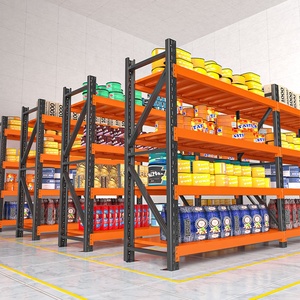
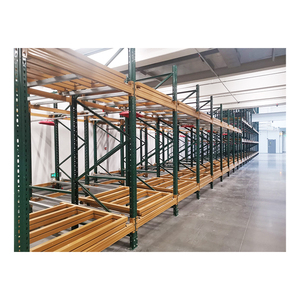
Norway represents one of Europe's most demanding logistics and warehousing operational environments. Characterized by high industrial wage rates, steep commercial real estate land acquisition costs around Greater Oslo and Vestby, extreme seasonal temperature variances, and stringently enforced labor safety standards mandated by Arbeidstilsynet (The Norwegian Labour Inspection Authority), warehouse managers cannot afford structural instability, excessive installation labor, or sub-optimized cubic storage utilization.
In modern industrial storage design, the choice between cold roll-formed steel racks and heavy hot-rolled structural steel profiles hinges on structural yield strength optimization, economic freight weight across North Sea logistics shipping routes, and geometric flexibility. Roll-formed upright columns are precision-manufactured by continuously cold-rolling high-tensile steel strip coils (typically grade S350GD, S420MC, or high-ductility micro-alloyed steel) through progressive forming stages. This process introduces strain hardening at profile radii, significantly increasing structural yield strength ($f_y$) without adding dead load weight.
Furthermore, European Standard NS-EN 15512:2020 (Steel static storage systems - Adjustable pallet racking systems - Principles for structural design) forms the definitive engineering baseline for any racking imported into Norway. Roll-formed sections, characterized by perforated web patterns (typically 50 mm or 75 mm pitch), permit precision height adjustment of beam levels to accommodate standard EUR-pallets (800 × 1200 mm), FIN-pallets (1000 × 1200 mm), and specialized seafood transport containers, while maintaining total torsional and flexural-torsional buckling resistance under severe vertical and horizontal seismic/impact load combinations.
An independent comparative evaluation assessing structural design capabilities, material grades, automated manufacturing tolerances, cold-chain surface resilience, and Nordic distribution support.
| Manufacturer / Exporter | Primary Production Technology | Certified Steel Grades | Nordic / EN Standards | Surface Treatment / Corrosion Class | Automated System Integration |
|---|---|---|---|---|---|
| GENEX / Global Supply Engineering Hub | CNC Multi-Stage Progressive Roll Forming; Laser Notching | EN 10346 S350GD + Z275; S420MC High-Tensile | NS-EN 15512, NS-EN 15620, NS-EN 15635, CE / EN 1090-1 | Pre-Galvanized + Electrostatic Thermosetting Epoxy (C3/C4) | Native compatibility with 4-Way Radio Shuttles & ASRS |
| Constructor Norway AS (Gonvarri) | Continuous Cold Roll Forming; Custom Punching Dies | S280GD to S350GD Structural Steel | NS-EN 15512, ISO 9001, FEM 10.2.02 | Pre-galvanized Uprights; Powder Coated Beams (C2/C3) | VNA Pallet Runner & High-Bay Crane Integrations |
| SSI Schaefer AS (Nordic Division) | High-Precision Roll Forming lines; Automated Welding | High-Strength Micro-alloyed Cold Rolled Strip | EN 15512, RAL-RG 614, DIN EN ISO 14001 | Duplex Powder Coating & Galvanized executions | Proprietary Automated Guided Vehicles (AGV) & Shuttles |
| Stow Group (Stow Norway) | Heavy Roll Forming; Robotic Robot-Welded Connectors | High-Grade S355 / S420 Structural Strip | EN 15512:2020, EN 15620 Class 300 / 400 | Hot-Dip Galvanized (ISO 1461) & Epoxy Paint | Atlas 2D Radio Shuttle Systems |
| Nedcon B.V. (Serving Nordic 3PLs) | Specialized Precision Cold Forming Mills | Certified European Steels EN 10149 / 10025 | EN 15512, Eurocode 3, DIN standards | High-durability organic powder finishes | Custom AS/RS & Multi-Tier Pick Towers |
| Jungheinrich Norge AS | Automated Beam & Upright Roll-Forming Cell | Certified High-Yield Cold Strip | NS-EN 15512, CE Certified, FEM Directives | Anti-scratch electrostatic powder bake | Autonomous Mobile Robots (AMR) & Narrow Aisle Cranes |
| BITO Lagertechnik Nordic | Multi-Profile Roll Forming Mills; Boltless Punching | European Quality Steels EN 10346 | EN 15512, RAL-RG 614/1 Quality Seal | Bright Galvanized and Powder Coated Finishes | Automated Small-Parts (AKL) & Shuttle Systems |
| AR Racking (Nordic Projects) | Continuous In-Line Profiling & Fully Automated Punching | Certified Structural Steel Coil (ArcelorMittal source) | EN 15512, ISO 3834-2, EN 1090-1 | Galvanized Cold Profiling (C3 Standard) | AR Shuttle Satellite Racking Systems |
| Dexion Nordic (Constructor Group) | Standardized European Roll Forming Arrays | S250GD to S350GD Coil Stock | NS-EN 15512, NS-EN 15635, ISO 9001 | Standard Epoxy-Polyester Powder | Pallet Shuttle and Dynamic Gravity Flow Racks |
| Voestalpine Krems Finaltechnik | Heavy Gauge Roll Forming; High-Tolerance Mills | Voestalpine In-House High-Performance Steels | EN 15512, EN 1993-1-3 (Eurocode 3) | Hot-Dip Galvanized & High-Corrosion Pre-Coated | Self-Supporting Rack Clad Buildings (Silo Warehouses) |
Note: Technical ratings established based on verifiable European Declaration of Performance (DoP) documents, published structural testing to EN 15512 protocols, and documented cold-chain installations across Norway.
From the Arctic fishing ports of the north to the automated logistics corridors surrounding the Oslo Fjord, storage systems must operate reliably under distinct climatic, regulatory, and mechanical stresses.
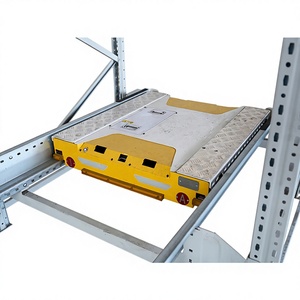
Concentrated in Tromsø, Bodø, Ålesund, and the Lofoten islands, pelagic fish processing facilities operate blast-freezers running at continuous temperatures from -25°C down to -35°C. Cold temperatures induce steel embrittlement and risk ductile-to-brittle transitions. We specify specialized cold-rolled strip with documented Charpy V-notch impact energy absorption at sub-zero temperatures. High-density 4-Way Radio Shuttle roll-formed configurations maximize expensive refrigerated volume while minimizing thermal loss during pallet handling.
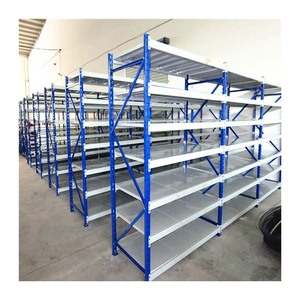
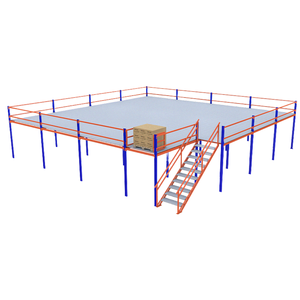
Covering the central southern triangle of Vestby, Moss, Berger, and Gardermoen, these facilities demand ultra-tall, high-bay Selective and Very Narrow Aisle (VNA) racking systems reaching up to 14 meters. The roll-formed profiles must comply with rigorous NS-EN 15620 Class 300 tolerances to eliminate sway and allow high-speed reach trucks and wire-guided AGVs to maneuver without collision risks. Rack-supported mezzanine platforms are deployed here to double e-fulfillment sorting spaces.
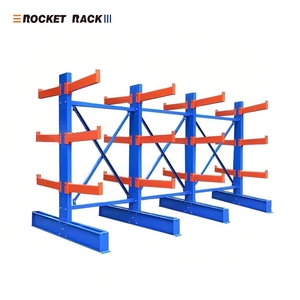
Facilities based in Stavanger (Tananger), Mongstad, and Kristiansand serve the North Sea oil, gas, and offshore wind industries. Storage requirements include heavy tubular drilling pipes, marine umbilical spools, and subsea hardware. We install roll-formed and heavy-duty cantilever racking treated with hot-dip galvanization to ISO 1461 or C4-grade maritime paint coatings to resist saline atmospheric corrosion generated by constant fjord moisture.
The warehousing landscape in Norway is undergoing a structural shift driven by decarbonization policies, strict building energy codes (such as TEK17 and BREEAM-NOR v6.0 certification), and pervasive labor shortages. Three macro-trends dictate the engineering of next-generation roll-formed racking:
Norwegian commercial developers increasingly mandate Environmental Product Declarations (EPDs) for interior steel structures. Roll-formed systems utilize significantly less steel tonnage than fabricated structural beams to support identical dynamic loads, enabling developers to lower building embodied carbon (Scope 3 emissions) by up to 22% across the warehouse life-cycle.
Rising hourly wages in Norway make manual forklift operation in low-temperature cold stores uneconomical. Roll-formed racking channels are now cold-rolled with dedicated longitudinal running rails that house lithium-ion powered 4-way autonomous pallet shuttles, facilitating lights-out 24/7 cold storage operations.
Under Arbeidstilsynet mandates, annual rack inspections under NS-EN 15635 are legally binding. Norwegian warehouses are adopting digital sensor caps integrated directly onto roll-formed upright protectors that automatically record forklift kinetic impacts, transmitting real-time strain telemetry to warehouse management software (WMS).
Critical regulatory, structural, and import questions resolved with reference to Norwegian building laws and European engineering standards.
In Norway, warehouse storage systems fall under the jurisdiction of the Arbeidstilsynet (Norwegian Labour Inspection Authority) through the statutory regulation Forskrift om utførelse av arbeid (Regulations concerning the performance of work, Chapter 10). Legally, the installation must conform to European standards: NS-EN 15512 for structural calculation and load limit determination, NS-EN 15620 for erection tolerances, and NS-EN 15635 for operational maintenance. Each rack row must display a permanent, indelible load warning notice (Belastningsskilt) stating permissible beam level capacity, bay capacity, slab point loads, and annual inspection cycles by certified racking inspectors (Sakkyndig person).
Cold roll-formed steel racking utilizes high-tensile pre-galvanized or micro-alloyed strip steels (such as S350GD). Through cold-work hardening induced along the profile bends during multi-stage roll forming, the yield strength of the steel increases substantially. This allows the sections to achieve exceptional load-bearing capacities with up to 30% less steel volume than hot-rolled structural I-beams. For Norwegian enterprises, this translates to reduced transportation costs across maritime corridors, significantly easier on-site assembly without specialized cranes, and millimeter-level modular adjustability on 50mm or 75mm beam pitch increments.
Standard carbon steels can experience brittle fractures at temperatures below -20°C due to loss of impact ductility. For Norwegian seafood and frozen produce cold stores, our export specifications utilize structural steel grades strictly compliant with EN 10025-2 Grade J2 or K2, or pre-galvanized structural steels tested for Charpy V-notch energy absorption down to -30°C. Furthermore, beam-to-column connector claws are designed with tighter mechanical tolerances to account for thermal contraction differentials between the beams and concrete base slabs.
Warehouses situated in maritime coastal centers like Bergen, Stavanger, and Kristiansand are subject to atmospheric corrosivity categories C3 to C4 (ISO 12944) due to high airborne chloride concentrations. Standard interior powder coating alone may degrade over time. We engineer roll-formed uprights utilizing continuous sendzimir hot-dip galvanized strip (Z275 coating with 275 g/m² zinc mass) or apply an advanced multi-stage electrostatic thermosetting epoxy coating after phosphate immersion, guaranteeing a minimum of 500 hours salt-spray resistance.
While most of mainland Norway has low seismic hazard levels, specific northern and coastal regions (including the Rana earthquake zone in Nordland, Sunnfjord, and parts of the continental shelf margin) require seismic coefficient verification under NS-EN 16681 (Steel static storage systems - Adjustable pallet racking systems - Principles for seismic design). In these zones, baseplate anchor embedment depths, cross-aisle vertical bracing towers, and longitudinal sway frames are dimensioned to resist ground acceleration values ($a_g$) ranging from 0.05g to 0.12g.
Warehouse racking is classified under HS Code 7308.90 (Structures and parts of structures of iron or steel). Steel racking imported into Norway is duty-free under standard trade agreements, subject only to Norwegian standard 25% VAT (Merverdiavgift - MVA), which is reclaimable by registered business entities (MVA-registrerte foretak). Our export documentation includes comprehensive Bill of Lading, CE Declaration of Performance (DoP), detailed steel mill test certificates (EN 10204 Type 3.1), and CAD installation manuals for immediate customs clearance at Oslo, Brevik, or Larvik sea freight terminals.
Drawing on decades of structural manufacturing experience, we eliminate intermediary distributor markups, providing Norwegian project managers with direct engineering communication, mill-certified steel traceability, and customized fabrication tailored to individual architectural footprints.
Every proposal includes structural calculation packages verified under NS-EN 15512 using Finite Element Analysis (FEA), calculating global sway stability, torsional moment distribution, and frame second-order effects.
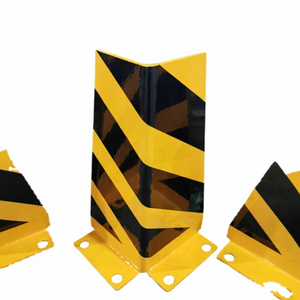
Our heavy-duty wrap-around column protectors, end-of-aisle safety barriers, and floor-anchored steel bollards are engineered to surpass Arbeidstilsynet dynamic impact absorption thresholds, safeguarding your capital investment.
Components are pre-bundled with sea-worthy protective moisture wraps, timber skids, and corrosion vapor inhibitors (VCI) to arrive undamaged and clean at Norwegian sea hubs or directly to your job site.
Send our structural team your warehouse CAD drawings, ceiling clearance dimensions, and forklift fleet specifications. We will deliver an optimized NS-EN 15512 compliant layout, capacity analysis, and competitive export proposal within 48 hours.