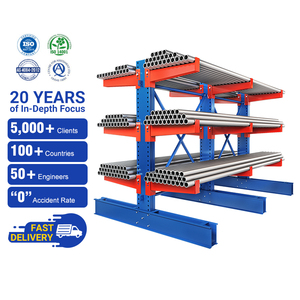
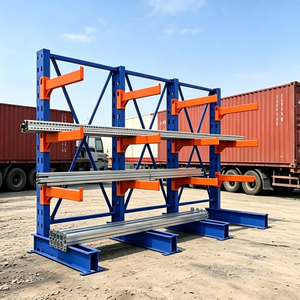
Heavy-Duty Industrial Cantilever Racking System
- Application: Long-span Frozen Goods / Pipes
- Temp Rating: -30°C Cold-Ductile Steel
- Load Index: Up to 1,500 kg per Arm

No matching pages. Try "pallet", "mezzanine" or "cantilever".
Factory-direct structural steel configurations optimized for ultra-deep freezing facilities, automated cold logistics centers, and refrigerated consolidation terminals serving Greater Tokyo.
Sourcing heavy industrial storage from an advanced manufacturing plant in China requires rigorous technical alignment with Japanese regulatory statutes, material ductility thresholds, and micro-logistics challenges along the Tokyo Bay coastline.
Standard cold-rolled structural steels (such as commercial Q235B) undergo a catastrophic ductile-to-brittle transition (DBTT) when subjected to continuous sub-zero temperatures below -15°C. In high-bay facilities around Tokyo Bay operating at -25°C to -35°C (and up to -60°C for sashimi tuna distribution in Toyosu), standard structural tubing faces brittle fracture risks under dynamic impact loading from forklifts.
Our manufacturing facilities utilize certified Q355D and Q355E high-strength micro-alloyed structural steel, fully verified via Charpy V-Notch impact tests at -20°C and -40°C ($A_V \ge 34\text{ J}$). This guarantees metallurgical ductility and prevents sudden fracture even under extreme post-earthquake cyclic loading.
Japan’s Building Standards Act (建築基準法, Kenchiku Kijun-hō) and cabinet order design codes demand rigorous verification of horizontal seismic shear coefficients ($K_h \ge 0.2\sim 0.35$). Because cold storage facilities in Koto-ku, Shinagawa, and Chiba Port are built on reclaimed soft marine soils (Tokyo Bay sediment), seismic wave amplification is severe during major subduction earthquakes.
We supply specialized torsionally stiff upright profiles with 12-bend roll-formed cross sections, reinforced base plates ($t \ge 16\text{ mm}$), and anchor bolt groupings that distribute seismic shear evenly across the insulated wear slab, preventing puncturing of vapor barrier sub-layers.
Anchoring heavy industrial racking in refrigerated environments poses a critical challenge: breaking the floor's thermal insulation layer can cause continuous moisture vapor transmission, forming ice lens expansion, frost heaving, and eventual slab cracking.
Our engineering packages for Tokyo warehouses provide precision structural interface designs: thermal-break polyimide isolation pads beneath structural baseplates and cryogenic resin capsule anchors. These solutions isolate thermal transfer from the warm structural foundation slab while absorbing ground motion without compromising the insulation integrity.
Cold warehouse real estate in Tokyo is among the most expensive globally per tsubo (3.3 m²). Storage layouts must maximize volumetric efficiency without bottlenecking high-throughput delivery schedules.
Consolidated seafood operations relocating from historical Tsukiji to Toyosu and Shinagawa cold hubs handle extreme cargo profiles: fresh, vacuum-sealed, and bulk-frozen tuna blocks held at F-Class (-20°C to -30°C) and Ultra-Deep Cold (-50°C to -60°C).
In these facilities, our Hot-Dip Galvanized Cantilever and Heavy-Duty Push-Back Systems prevent saltwater-induced corrosion while allowing direct crane or forklift loading for non-standard, palletized seafood containers.
Greater Tokyo is served by tens of thousands of convenience stores (7-Eleven, FamilyMart, Lawson) requiring 3-to-4 daily fresh food replenishment cycles. Hubs clustered in Saitama (Misato, Yashio) and Chiba (Funabashi, Ichikawa) handle massive SKU counts in tight C-Class chilled zones (0°C to +5°C).
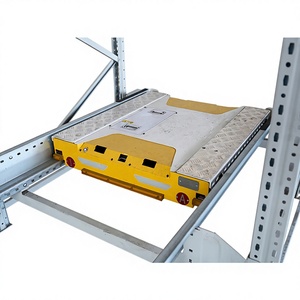
Our Automatic 4-Way Pallet Shuttle and Live Dynamic Gravity Flow Racks facilitate high-velocity first-in, first-out (FIFO) rotation, ensuring zero dwell time for short shelf-life dairy, bento, and fresh ready-to-eat products.
With life-science corridors thriving in Kawasaki's King Skyfront and the northern Kanagawa biomedical belt, cold-chain integrity for biopharmaceuticals, active ingredients, and vaccines demands strict temperature mapping.
We supply custom Galvanized Wire-Decked Shelving and Automated Radio Shuttle Racks engineered with specific open-grid surface geometries ($>70\%$ free airflow) to eliminate warm micro-pockets and satisfy the Japanese Ministry of Health, Labour and Welfare (MHLW) GDP guidelines.
The Japanese logistics industry faces an unprecedented structural inflection point driven by regulatory overtime caps on truck drivers (the "2024 Problem"), an aging warehouse workforce, and aggressive carbon-neutrality initiatives.
Forklift operators working in -25°C freezers can operate safely for only 30-45 minutes before requiring mandatory warming rest periods under Japanese occupational safety rules. This ergonomic bottleneck drastically increases operating overhead and lowers throughput speed.
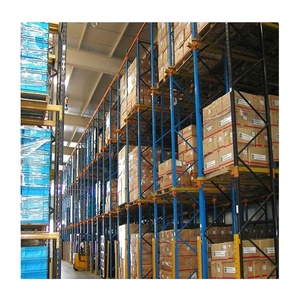
Tokyo operators are aggressively replacing traditional drive-in racking with Automated 4-Way Radio Shuttle Systems. Shuttles automate pallet transfer within deep-freeze lanes, eliminating the need for forklifts to enter cold chambers, boosting operational throughput by 220%, and minimizing human physical exposure to extreme environments.
Industrial land leasing rates along Tokyo Bay (e.g., Koto-ku, Shinagawa, Heiwajima) have surged past historical highs, demanding vertical volume utilization over broad horizontal footprint expansion.
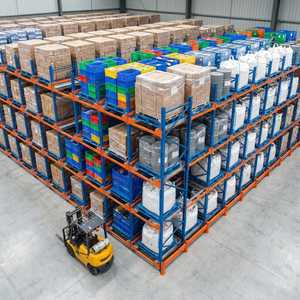
By engineering high-bay cold storage racking systems that reach up to 24 meters—integrated with narrow aisle reach trucks or stacker cranes—our solutions achieve volumetric storage efficiencies exceeding 85%. This represents a 40% density increase compared to conventional selective pallet racking setups.
Japan's aggressive energy-efficiency targets and the phase-out of fluorocarbon refrigerants in favor of natural $CO_2$ systems have placed a strong focus on thermal operational efficiency in refrigerated buildings.
Our layout designs utilize Computational Fluid Dynamics (CFD)-verified aerodynamic upright slotting and ventilated wire mesh decking. This ensures uninterrupted convective cold air circulation from evaporator blowers to the warehouse floor, reducing refrigeration compressor loads and decreasing annual electricity consumption by up to 14%.
Evaluate key structural, economic, and logistical trade-offs across storage configurations tailored to Tokyo cold logistics real estate.
| System Architecture | Volumetric Density | Access Selectivity | Sub-Zero Efficiency | Seismic Resistance (Tokyo $K_h$) | Recommended Tokyo Application |
|---|---|---|---|---|---|
| 4-Way Radio Shuttle Racking | Ultra-High (85%+) | Lane-Based FIFO/LIFO | Exceptional (Zero FLT entry) | Superior (Low center of gravity) | Large-scale frozen distribution centers (Chiba/Yokohama) |
| Deep Push-Back Racks | High (70-75%) | LIFO per lane (2-6 pallets) | High (Gravity cart return) | High (Nested cart design) | Tokyo Bay marine & import meat consolidation hubs |
| Drive-In Pallet Racking | High (65-70%) | Strict LIFO | Moderate (FLT incurs cold loss) | Moderate (Demands heavy portal bracing) | Single-SKU seasonal beverage & bulk butter/raw milk storage |
| Standard Selective Pallet Rack | Standard (40-45%) | 100% Direct Immediate | Lower (High cubic volume unutilized) | Standard (Requires $X$-bracing arrays) | Pharma cold vaults & multi-SKU retail staging zones |
| Heavy-Duty Cantilever Racks | Medium (Custom) | 100% Direct per tier | High (Unobstructed arm space) | High (Welded base & spine cross bracing) | Frozen carcass, seafood crates & oversized boxed proteins |
We combine state-of-the-art Chinese roll-forming capabilities with Japanese industrial engineering rigor, delivering structural reliability, compliance, and significant capital expenditure savings.
Every structural upright and load beam is rolled from prime hot-rolled coils sourced directly from top-tier Chinese state mills (Baosteel, Shougang). We supply EN 10204 Type 3.1 Inspection Certificates alongside complete chemical heat analysis and mechanical tensile testing for every production heat.
Our raw materials strictly conform to JIS G3101 SS400 and SS490 standards, ensuring seamless integration with Japanese structural engineering expectations.
Structural cold storage beams operate under severe thermal contraction stresses. Our automated manufacturing facility utilizes Panasonic Multi-Axis Robotic Welding Workstations with $CO_2$ / Argon mixed shielding gas to ensure 100% full-penetration welds without slag, micro-porosity, or cold-cracking risks.
Surface treatments utilize an automatic 9-stage pre-treatment wash followed by a food-grade, non-toxic epoxy-polyester powder coating cured at 200°C (thickness: 70-110 μm). This prevents peeling, flaking, and blistering down to -40°C. For aggressive saline or wash-down conditions, full hot-dip galvanizing to ASTM A123 / ISO 1461 is standard.
We provide full structural support: 3D CAD modeling, BIM coordination, seismic Finite Element Analysis (FEA) calculation dossiers, and load placards calibrated to Japanese unit standards.
We manage end-to-end logistics with direct container shipping from Shanghai/Ningbo to Port of Tokyo (Oi/Aomi Container Terminals) and Yokohama Port within 3 to 5 days ocean transit, accompanied by clear packing lists and bilingual (English/Japanese) assembly schematics.
Clear, authoritative technical answers addressing common structural, customs, seismic, and installation concerns when importing industrial racking to Tokyo.
Our factory specifies Chinese structural steels with precise chemical and mechanical equivalents to Japanese Industrial Standards (JIS). Standard temperature components utilize Q235B, which matches JIS G3101 SS400 in yield strength ($f_y \ge 235\text{ N/mm}^2$) and elongation properties.
For high-bay columns, dynamic seismic frames, and deep-freeze facilities (-25°C to -40°C), we employ Q355D and Q355E, which align with JIS G3106 SM490B/C. Most importantly, Q355D/E provides certified Charpy V-notch impact absorption toughness tested at -20°C and -40°C ($A_V \ge 34\text{ J}$), satisfying the Japanese cold embrittlement safety margins specified by the Architectural Institute of Japan (AIJ).
Yes. When installing high-bay racking systems in Tokyo that are classified as building-integrated storage or exceed local jurisdictional height limits, municipal approvals require structural engineering verification. Our in-house structural engineering department generates full Finite Element Analysis (FEA) reports in English and Japanese.
Calculations incorporate horizontal seismic coefficients ($K_h = 0.20$ to $0.35+$) based on the target zone's soil profile (such as Tokyo Bay soft ground zones). We calculate ultimate lateral drift, second-order P-Delta moments, and provide reaction force data for verification by your registered Japanese First-Class Architect (Ikkyū Kenchikushi).
In typical Japanese cold storage buildings, the floor consists of a bottom structural concrete slab, an extruded polystyrene (XPS) rigid insulation barrier, a vapor seal, and a reinforced concrete wear slab ($t = 150\text{ to }200\text{ mm}$).
Our engineering ensures anchor bolts (chemical capsules or mechanical undercuts) are sized to anchor securely within the depth of the upper wear slab without penetrating the vapor retarder below. Furthermore, we supply high-compressive-strength, non-conductive thermal break spacer pads (Polyamide / High-Density Phenolic) positioned beneath each rack footplate to eliminate condensation and stop conductive heat transfer into the cold room envelope.
Manufacturing lead times typically range from 3 to 5 weeks, depending on project scale, custom roll-forming profiles, and surface finish selections (galvanized vs. electrostatic powder coat). Factory Acceptance Testing (FAT) and video inspections are completed prior to dispatch.
Containers depart from Shanghai or Ningbo ports with a direct maritime transit time of just 3 to 5 days to Tokyo Port (Oi/Aomi terminals) or Yokohama Port. We arrange CIF or DDP delivery terms, providing full export documentation, Certificate of Origin (RCEP applicable for tariff reductions), and customized palletized loading optimized for swift devanning in Japanese port facilities.
Yes. Our cold-chain radio shuttles are designed specifically for sub-zero performance. They feature cryogenic Lithium Iron Phosphate (LiFePO4) or specialized Lithium Titanate batteries equipped with internal self-regulating thermal heating jackets that maintain optimal internal battery core temperatures during continuous multi-shift cycles.
All internal printed circuit boards (PCBs) are vacuum-sealed with multi-layer conformal moisture coatings rated to IP65, preventing internal dew condensation and short circuits during transition between cold storage zones and ambient battery charging rooms.
Connect with our structural racking engineers to discuss floor layouts, load requirements, seismic criteria, and direct factory pricing for your upcoming project in Greater Tokyo or across Japan.