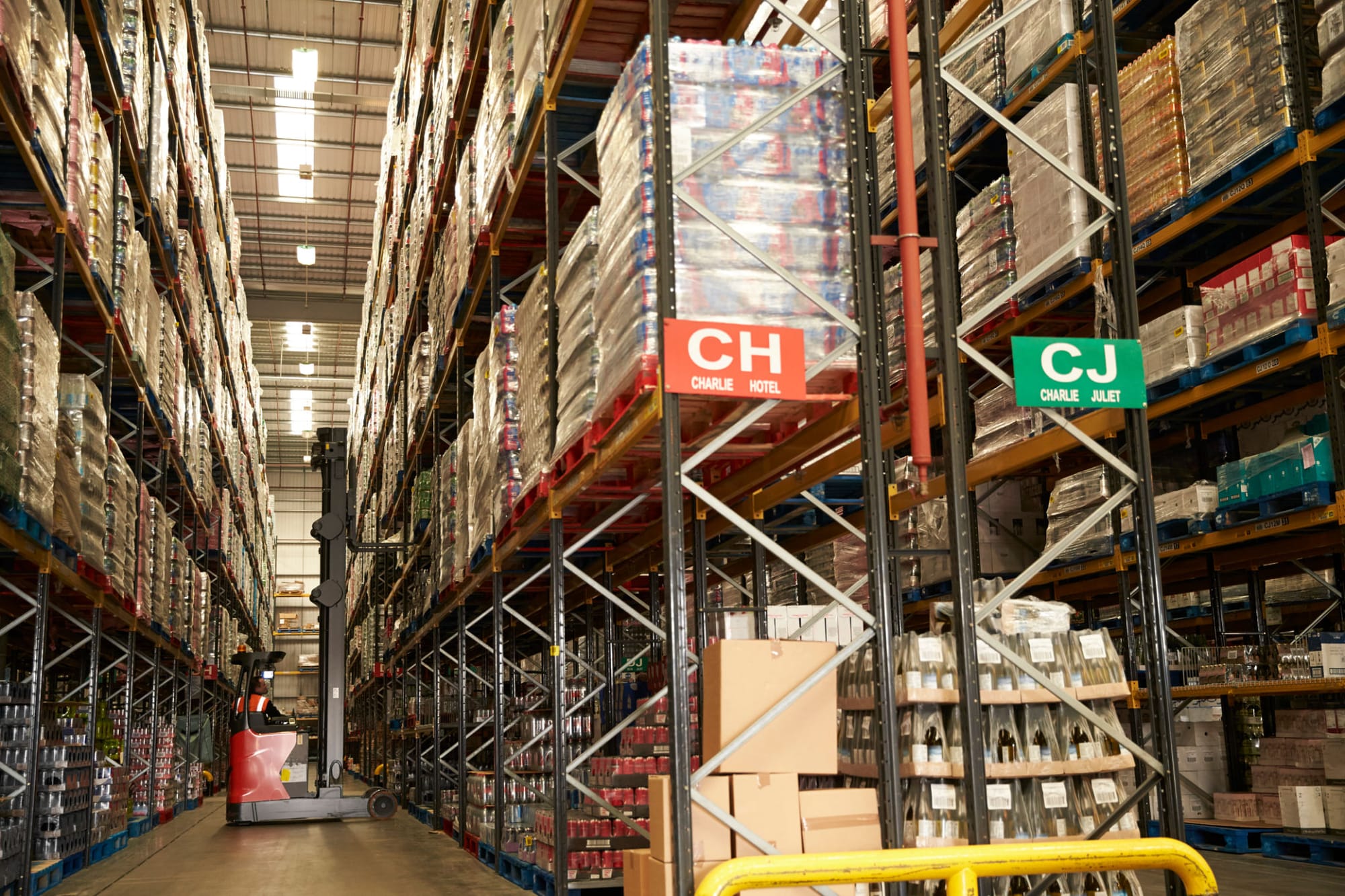
High-bay warehouse storage rack solutions engineered and installed by GENEX
Industrial warehouse storage rack solutions showing upright frames, beam locking pins, and pallet configurations
Strategic Procurement & Engineering

Optimizing Volumetric Density, Throughput Dynamics & Structural Safety

In high-throughput omnichannel supply chains and multinational third-party logistics (3PL) hubs, warehouse racking is no longer treated as passive metal shelving. It is a critical structural asset that defines picking cycles, automated material handling equipment (MHE) navigation, seismic resilience, and facility life-cycle costs. At GENEX, our approach aligns finite element structural modeling with real-world warehouse operations to deliver verified capacity and code-compliant installations.

Precision Site Surveys & CAD Layouts

Detailed architectural surveys factoring in slab point loading, floor flatness tolerances, column grids, overhead mechanical ducting, and ESFR fire sprinkler coverage.

Certified Structural Steel Fabrication

Cold-formed high-tensile uprights and box beams manufactured from certified steel coils with traceable Mill Test Certificates conforming to international standards.

Turnkey Assembly & Base Anchoring

Certified in-house installation crews executing millimeter-level plumb alignment, expansion wedge anchoring, safety locks, and full load capacity signage.

Lifecycle Audit & Risk Mitigation

Annual structural damage inspections, upright plumb checks, and prompt replacement protocols strictly upholding EN 15635 and local safety regulations.

Warehouse Storage Rack Solutions: The Complete Engineering, Selection & Global Sourcing Blueprint

Enterprise procurement managers, logistics developers, and operations directors face soaring commercial real estate expenses, unpredictable SKU proliferations, and the imperative to automate. Selecting the right Warehouse Storage Rack Solutions directly determines whether a distribution hub operates at peak volumetric throughput or struggles with costly space bottlenecks, high forklift damage rates, and unacceptable health and safety hazards.

GENEX Racking Solutions UAE delivers custom-tailored industrial racking and storage systems across Dubai, Abu Dhabi, the Northern Emirates, and international export markets. Engineered under rigorous global standards, our selective, double-deep, high-density drive-in, gravity flow, and multi-tier mezzanine frameworks transform underutilized vertical air space into reliable, high-yield operational capacity.

Comparative Engineering Analysis

Technical Specification Matrix for Modern Racking Solutions

Compare storage density, SKU accessibility, capital expenditure, and MHE operational requirements across our core industrial storage systems before committing capital expenditure.

Detailed performance metrics and operating parameters of industrial warehouse storage rack systems
System Architecture SKU Selectivity Floor Space Utilization Inventory Rotation Handling Equipment (MHE) Ideal Application Profile
Selective Pallet Racking 100% Immediate Direct Access 35% – 45% Footprint Efficiency FIFO / LIFO Standard Counterbalance, Reach Trucks (2.8m - 3.4m Aisle) Fast-moving consumer goods, retail cross-docking, high-SKU distribution hubs
Double Deep Pallet Racking 50% Direct (2 Pallets per Slot) 55% – 65% Footprint Efficiency LIFO Specialized Double-Deep Reach Trucks with Pantograph Forks Dry grocery reserve, medium SKU velocity, batch manufacturing storage
Drive-In / Drive-Through Low (Lane-Restricted Entry) Up to 75% Floor Utilization LIFO (Drive-In) / FIFO (Drive-Thru) Counterbalance or Narrow Reach Trucks driving into racking bays Cold storage, deep-freeze chambers, homogeneous raw materials, seasonal stock
Gravity Pallet Flow Racking High per Lane (Auto-Index) Up to 80% High Density Strict FIFO Separated Inbound Loading and Outbound Picking Forklifts Perishable goods, pharmaceutical cold chains, rapid dispatch staging areas
Cantilever Racking Systems 100% Unobstructed Length Optimized for Non-Standard Formats Direct Access Standard Forklifts, 4-Way Side Loaders, Overhead Cranes Structural steel sections, aluminum profiles, timber boards, PVC conduit tubing
Rack-Supported Mezzanine Multi-Tier High Selectivity 200% – 300% Vertical Area Gain Manual / Conveyorized Goods Lifts, Spiral Chutes, Vertical Reciprocating Conveyors E-commerce order fulfillment centers, spare parts picking, archiving facilities
Heavy Duty Industrial Shelving 100% Manual Hand-Pick Optimized Medium/Light Loads Manual FIFO Stock pickers, manual hand carts, order picking trolleys Maintenance workshops, hardware depots, automotive spare parts distribution

All structural load tolerances, span limits, and vertical aisle clearances are confirmed by our certified structural engineering team using dynamic load modeling and site-specific floor slab geotechnical analysis.

Tailored System Architectures

Recommended Warehouse Storage Rack Solutions

Discover our engineered storage configurations manufactured to balance structural longevity, operational efficiency, and spatial optimization across diverse operating environments.

Selective Pallet Racking

The universal industry benchmark for multi-product warehousing. Engineered with step-box beams, teardrop or diamond slot upright profiles, and tool-free adjustability on 50mm or 75mm pitch increments to accommodate shifting unit load configurations without operational downtime.

  • Unit Bay CapacityUp to 24,000 kg UDL
  • Access Ratio100% Immediate Selectivity

Double Deep Racking Systems

By nesting pallets two positions deep across single-aisle operational zones, double deep configurations eliminate 40% of operating aisles. This delivers an exceptional balance between high storage density and moderate SKU access using tele-reach forklifts.

  • Footprint Gain+30% vs Selective Systems
  • Operational ModelBatch LIFO Flow

High-Density Drive-In Racking

Engineered for high-cube bulk warehousing where cubic space cost is paramount. Eliminates intermediate travel aisles by allowing forklifts to enter multi-tiered storage lanes. Fabricated with rolled heavy-duty cantilever guide rails and flared entry channels for driver safety.

  • Volume UtilizationUp to 80% Space Efficiency
  • Primary UseCold Stores, Beverage Depots

Dynamic Gravity Pallet Flow

Utilizing high-endurance steel roller beds angled on a 3-4% incline, pallets automatically glide under controlled gravitational velocity via integrated centrifugal brake rollers. Guaranteed FIFO cycle ensures freshness for dairy, food, and pharmaceuticals.

  • Pallet Speed Control0.15 - 0.25 m/s In-Lane
  • Safety InterlocksAutomatic Separation Stops

Heavy-Duty Cantilever Racking

Engineered without front vertical uprights to eliminate horizontal storage boundaries. Column structures fabricated from hot-rolled I-beams or structural steel tubing with adjustable tapered arms provide damage-free handling for extrusions, long timber packs, and pipes.

  • Arm Capacity500 kg to 3,500 kg per Arm
  • Column HeightConfigurable up to 12 Meters

Multi-Tier Mezzanine Floors

Transform excessive ceiling clearance into 2 to 3 tiers of fully accessible mezzanine picking platforms. Built from certified cold-formed galvanized decking or heavy-gauge steel checker plates, complete with kickplates, stair towers, and safety drop-gates.

  • Deck Loading300 kg to 1,200 kg / m² UDL
  • Vertical MultiplicationDouble or Triple Floor Space

Heavy-Duty Industrial Shelving

Engineered for high-density bin picking and mid-weight cartoned inventory. Features rolled-edge uprights, boxed upright posts, and galvanized wire decking or solid steel shelves that resist dynamic point load deflections in demanding manufacturing spare parts rooms.

  • Shelf Load SpanUp to 1,000 kg Uniform Load
  • Shelf Height PitchAdjustable every 25mm / 50mm

Very Narrow Aisle (VNA) Systems

VNA systems reduce operating aisles down to 1.6 - 1.8 meters, capitalizing on lift heights up to 17 meters with wire or mechanical rail-guided man-up turret trucks. Designed to precise EN 15620 class 300 tolerances for rapid automated distribution operations.

  • Aisle Width ReductionDown to 1.6m Clear Width
  • Vertical Ceiling ReachEngineered up to 17+ Meters
Strategic Horizon

The global warehousing market is shifting rapidly under the pressure of land scarcity, dark warehouses, and stringent environmental sustainability mandates. Align your procurement roadmap with these macro industry trends.

Trend 01

Automated Guided Vehicles & AMR Integration

Modern industrial rack layouts are dropping human-centric wide-turn parameters in favor of automated fleet compatibility. Procurement specifications now mandate high-reflectivity beam level barcode targets, tighter column plumbness (less than 1/500 deflection), and reinforced bottom uprights capable of resisting high-speed repetitive robotic docking cycles without lateral sway.

Trend 02

High-Yield Green Steel & Sustainable Supply Chains

Global procurement teams must now quantify embodied carbon. The shift is on toward electric arc furnace (EAF) steel production and ultra-high-yield micro-alloyed structural coils. These lighter profiles cut raw steel consumption by up to 18% while exceeding yield strengths of 400–550 MPa, backed by Environmental Product Declarations (EPDs) for LEED and Estidama certifications.

Trend 03

IoT Sensor Nodes & Real-Time Structural Telemetry

Enterprise racking installations are becoming smart cyber-physical systems. Embedded piezoelectric impact sensors and laser deflection monitoring devices communicate with cloud maintenance platforms, logging forklift collisions in real time, detecting micro-fractures, and alerting facility engineers to overload risks before catastrophic structural failures occur.

Engineered pallet racking installation showing structural integrity and load labeling
Engineered Structural Integrity Strict compliance with EN 15512, EN 15620, and RMI standards ensures structural safety margins across high-density storage facilities.
Technical Rigor & Compliance

Structural Engineering Standards: Designing Beyond Catastrophic Failure

Industrial pallet racking is a complex, slender-profile cold-formed steel structure operating under severe static and cyclic dynamic stress. Compromising on structural design standards introduces grave corporate liabilities. GENEX applies proven mechanical engineering methodologies to ensure uncompromised installation performance.

  • Semi-Rigid Joint Connection Stiffness (EN 15512)

    We test upright-to-beam hook connector rotational spring stiffness (Cd) and beam safety pin shear resistances using multi-point laboratory cyclic loading, eliminating lateral sway without excessive bracing overhead.

  • Concrete Slab Load Distribution & Punching Shear

    Our engineers perform finite-element footplate load analyses, confirming baseplate dimensions (such as 100x120x6mm to 160x180x10mm) and chemical or mechanical anchor depths against floor slab yield strengths (25–40 MPa) to prevent punching shear fractures.

  • Seismic & Thermal Cold-Storage Dynamic Modeling

    Custom structural calculations factoring in geographic spectral acceleration parameters (Ss, S1) and low-temperature steel notch embrittlement (-30°C cold storage), ensuring yield properties retain impact toughness.

Enterprise Strengths

Why Global Supply Chain Leaders Choose GENEX

From individual regional cold stores to complex multi-level distribution hubs, GENEX delivers single-source accountability, robust engineering, and rapid turnaround across the GCC and export markets.

Single-Source Turnkey Delivery

No sub-contractor handoffs. We control every stage: on-site laser surveys, structural FEA calculations, in-house component fabrication, freight logistics, precision installation, and Civil Defence documentation.

Traceable High-Tensile Steel

All load-bearing uprights and boxed beams are formed from certified structural steel (S355JR / Q355B). Mill Test Certificates accompany every batch, guaranteeing consistent yield, elongation, and finish quality.

Strict International Code Adherence

Our solutions conform to European EN 15512, EN 15620, EN 15635, and American RMI MH16.1 specifications, ensuring global enterprise safety compliance, simplified insurance underwriting, and audit approvals.

Experienced In-House Riggers

Our safety-certified, factory-trained erection teams follow strict HSE protocols, using laser-leveling equipment to anchor baseplates, install column wraps, and mount structural row-spacers with high precision.

Strategic UAE Hub & Global Shipping

Centrally located in Dubai, UAE, our logistics facilities facilitate expedited delivery across GCC states, Africa, and Central Asia with optimized container loading, export packing, and swift customs processing.

Post-Commissioning Maintenance

Complete peace of mind through scheduled structural audits, racking damage surveys, prompt original-part replacements, and load re-certifications as your SKU mix and handling equipment evolve.

Engineering Specification Input

Critical RFP Checklist for Racking Procurement

To avoid project delays, layout discrepancies, or unexpected structural retrofits, prepare these essential operational and architectural inputs before issuing your Request for Proposal (RFP).

  1. Pallet Dimensions & Overhang

    Overall width, depth, height, bottom board orientation (2-way vs 4-way entry), and maximum cargo overhang on all sides.

  2. Gross Unit Load Profiles

    Nominal and maximum gross weight per loaded pallet, dynamic point loads, and total allowable capacity per clear horizontal beam span.

  3. True Clear Building Height

    Distance from the finished floor to the lowest overhead obstruction: roof trusses, lighting fixtures, smoke curtains, or fire sprinklers.

  4. Material Handling Equipment (MHE)

    Forklift type, collapsed mast height, maximum reach elevation, chassis turning radius, and minimum right-angle stacking aisle requirements.

  5. Concrete Floor Slab Engineering

    Reinforced slab thickness, compressive concrete strength (C25/30 or C30/37), subgrade modulus, joint locations, and flatness tolerances.

  6. Operating Environment & Egress

    Ambient humidity, cold-storage temperatures down to -30°C, chemical exposure, emergency egress routes, and municipal fire separation codes.

Expert Technical Answers

Frequently Asked Questions on Warehouse Storage Racks

In-depth engineering answers to the most common technical, safety, and procurement questions raised by global supply chain managers.

How do I calculate the floor load-bearing capacity required for high-bay warehouse storage rack solutions?

Calculating floor capacity requires analyzing concentrated point loads beneath upright baseplates rather than relying solely on uniform distributed load (UDL) figures. Structural engineers sum the total dead load of the racking system plus maximum live pallet loads per bay, multiplied by dynamic impact coefficients. This concentrated load is divided across the baseplate footprint. The concrete floor slab thickness (typically 180mm to 250mm+), compressive strength (f'c), tensile reinforcement, sub-base modulus of elasticity (k), and punching shear parameters must be validated in accordance with standards such as ACI 360R or EN 1992. When point loads exceed allowable limits, heavy-gauge spreader plates are specified to distribute stress safely across the subgrade.

What structural differences separate European standard EN 15512 from American RMI MH16.1 specifications?

While both frameworks ensure the structural integrity of steel industrial racks, EN 15512 relies on Limit State Design (LSD), using partial material and action safety factors based on Eurocode principles. It mandates explicit semi-rigid spring stiffness calculations for beam-to-column connectors obtained via standardized laboratory test procedures. In contrast, ANSI/RMI MH16.1 (Specification for the Design, Testing and Utilization of Industrial Steel Storage Racks) utilizes Load and Resistance Factor Design (LRFD) or Allowable Stress Design (ASD) methodologies, with distinct approaches to base anchoring, seismic spectral accelerations, and upright torsional buckling criteria. Both are trusted globally when correctly applied to site-specific conditions.

Can conventional warehouse storage rack solutions be retrofitted for Autonomous Mobile Robots (AMRs) or Automated Storage and Retrieval Systems (ASRS)?

Yes, but retrofitting conventional manual racking for automated systems requires stringent engineering upgrades. Manual forklift operations typically accept beam deflections of L/200 under full load, whereas automated shuttles, AMRs, and SRM cranes demand deflections restricted to L/300 or L/400 to prevent optical sensor faults and extraction jams. Structural tolerances under EN 15620 (Class 100 to 400) dictate millimeter-precise plumbness. Furthermore, bottom uprights require reinforced low-profile impact guards, floor levelness must be surveyed and shimmed, and clear bay openings must be calibrated with optical barcode targets and laser positioning guides.

What surface treatment should be specified for high-humidity or sub-zero cold chain warehouse environments?

For standard ambient warehouses, an electrostatic powder coating cured at 180°C–200°C provides reliable impact resistance and aesthetic zoning. However, in cold storage facilities operating between -18°C and -30°C, and in high-humidity coastal facilities subject to condensation, standard powder coating can crack from thermal contraction, allowing moisture to cause hidden sub-film oxidation. For these demanding applications, hot-dip galvanization conforming to EN ISO 1461 (minimum 55–85 microns of zinc-iron alloy) or continuous pre-galvanized high-yield steel coils (Z275 coating) are required to deliver decades of maintenance-free corrosion resistance.

What documentation and certifications must international buyers insist on before approving factory dispatch?

Prior to freight release and container loading, international procurement teams should require: (1) Certified Mill Test Certificates (MTC Type 3.1) confirming raw material chemical composition and mechanical yield strengths; (2) AWS D1.1 or ISO 3834 welding inspection reports, including ultrasonic non-destructive testing (NDT) on heavy beam connector brackets; (3) Finite Element Analysis (FEA) structural calculation dossiers stamped by a qualified structural engineer; (4) Detailed assembly drawings and installation manuals; and (5) Load safety signage schematics specifying maximum permissible shelf loads and bay capacities in compliance with EN 15635.

How frequently should warehouse storage racks undergo formal structural inspections?

Under international health and safety codes such as EN 15635, a layered inspection regime is required. Facility operators must conduct daily or weekly visual checks for obvious forklift collisions, sheared locking pins, or displaced pallets. Additionally, a formal, documented structural inspection must be conducted at least every 12 months by an independent, technically competent rack inspector. Damage is categorized using a traffic light classification: Green (acceptable wear), Amber (hazardous damage requiring priority unloading and replacement), and Red (severe deformation requiring immediate total offloading and cordoning of the affected bay).

Engineer Your High-Performance Storage System with GENEX

Send our senior engineering team your architectural DWG floor plans, pallet handling profiles, and operational parameters. We will model an optimized warehouse storage rack layout designed for peak throughput, compliance, and long-term ROI.

+971-556461225 [email protected]