No matching pages. Try "pallet", "mezzanine" or "cantilever".
No matching pages. Try "pallet", "mezzanine" or "cantilever".
Engineered for high structural stability, maximum spatial density, and seamless operating performance in low-temperature and ambient logistics environments.
Designing pallet racking systems for refrigerated warehouses and deep-freeze environments (-18°C to -30°C) presents critical structural challenges that ambient warehouse engineers rarely encounter. Cold temperatures severely impact the ductility and notch toughness of standard structural carbon steels. Under sub-zero conditions, ordinary steel undergoes a metallurgical shift known as the ductile-to-brittle transition temperature (DBTT), significantly increasing the vulnerability of upright frames and beam connectors to sudden brittle fractures caused by dynamic forklift impacts or shock loading.
As leading CE-certified cold storage racking manufacturers, our structural engineering team selects premium high-tensile structural steel alloys—primarily Q355B and Q355D grades—which undergo rigorous Charpy V-Notch impact testing at -40°C. This ensures that the material absorbs high kinetic energy without micro-fracturing. Furthermore, column section geometry is optimized using cold-rolled omega profiles with continuous stiffening ribs, delivering exceptional section modulus values while minimizing total structural deadweight. This metallographic design discipline guarantees that long-term dynamic loading from heavy pallets does not induce structural fatigue over decades of continuous cold chain operation.
Surface treatment selection in cold storage design is equally pivotal. Standard electrostatic powder coating can succumb to micro-cracking during rapid thermal cycling (defrosting phases), allowing ambient humidity to penetrate the steel substrate and initiate insidious sub-surface oxidation. To neutralize moisture-induced micro-corrosion, our cold storage racking components feature high-grade hot-dip galvanizing conforming to EN ISO 1461 standards (minimum 65–85 μm coating thickness) or specialized thermosetting epoxy-polyester coatings formulated with anti-freeze elasticity additives. This prevents coating flaking, maintains hygienic compliance for food contact zones, and extends structural service life beyond 25 years.
Maximizing volumetric footprint within temperature-controlled facilities is vital due to the high energy cost per cubic meter of refrigeration. The technical comparison below outlines key operational parameters across major cold room racking architectures:
| Racking Architecture | Storage Density | Pallet Selectivity | Thermal Efficiency | Automation Integration | Ideal Cargo Profile |
|---|---|---|---|---|---|
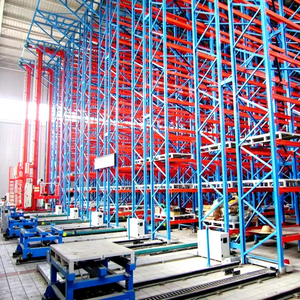
| Automated Radio Shuttle Racking | Ultra-High (85-90%) | LIFO / FIFO Flexible | Maximum (Minimal air gap) | Fully Automated / Semi-Auto | High Volume, Fast-Moving Food & Beverage |
| Drive-In Racking System | High (70-80%) | Strict LIFO | High | Manual Forklift Access | Homogeneous Bulk SKUs, Frozen Meat/Seafood |
| ASRS Stacker Crane System | Maximum (90-95%) | 100% Automated Access | Optimal (Vertical Density) | Fully Robotic Automation | High-Bay Distribution, Pharmaceutical Cold Chains |
| Mobile Pallet Racking (Powered) | Very High (85%) | 100% Direct Access | Very High | PLC Integrated Electric Drive | Medium-to-High SKU Variety, Cold Logistics 3PL |
| Selective Pallet Racking | Standard (40-50%) | 100% Immediate | Low (Wide Aisles) | Manual / Conventional | Rapid Turnover, Diverse Temperature-Sensitive SKUs |
Selecting the optimal structure requires balancing operational throughput, floor slab loading limits, and total lifecycle energy efficiency. Our engineering experts generate custom 3D CAD stress simulations to guide logistics managers toward the highest return on investment.
The global cold chain logistics industry is undergoing a massive structural shift driven by stringent energy efficiency targets, food safety regulations, and labor constraints in sub-zero environments. Forward-thinking procurement directors are shifting from static, manually operated racking systems to dynamic, energy-optimized automated infrastructure. Key procurement trends shaping the industry over the next decade include:
1. Thermal Loss Minimization via Dense Automated Systems: Every square meter of unutilized vertical space in a cold room acts as a heat sink, burning expensive electrical power. Future racking tenders increasingly mandate ultra-dense designs such as Pallet Shuttle ASRS systems that compress storage footprints, reduce the building perimeter ratio, and minimize overall energy consumption by up to 40% compared to traditional wide-aisle selective configurations.
2. Dynamic Seismic and Frost-Heave Anchor Engineering: Sub-zero warehouses constructed over insulation layers and floor heating pipes face micro-settlement, slab frost-heave, and thermal expansion forces. Modern procurement criteria require anchor bolt designs featuring isolation sleeves, shock-absorbing baseplate shims, and localized floor pressure calculation reports certified to international seismic compliance frameworks (such as US RMI and European EN 16681).
3. IoT Sensor-Embedded Rack Integrity Monitoring: Industry 4.0 integration has reached physical storage structures. Advanced cold store installations now incorporate embedded strain gauge sensors, wireless impact detectors, and temperature-humidity monitoring nodes directly into upright profiles. This allows maintenance teams to receive real-time alert logs regarding forklift collisions or structural deflection before catastrophic collapse risks arise.
4. Sustainable Green Steel & Low-Carbon Galvanizing: Environmental, Social, and Governance (ESG) compliance has elevated green procurement standards. Exporters offering cold-rolled structural steel manufactured via electric arc furnaces (EAF) with recycled scrap content, alongside zero-emission closed-loop galvanizing lines, hold a strong competitive edge in international municipal and corporate tenders.
A trusted manufacturing powerhouse delivering precision-engineered racking solutions to over 60 countries across the Middle East, Europe, Americas, and Southeast Asia.
Every batch of cold-rolled steel profiles undergoes continuous yield strength, tensile resilience, and weld seam ultrasonic inspection to ensure 100% compliance with CE, EN 15512, and ISO standards.
Equipped with high-precision continuous roll-forming production lines, robotic laser cutting, and automatic welding cells, enabling high monthly production volume and short export delivery lead times.
From initial site survey and 3D space optimization modeling to structural beam deflection testing and global installation support, our engineering team manages the complete project lifecycle.
We strictly utilize specialized low-temperature impact-resistant steel grades (Q355D/E) and thermal-elastic powder coatings designed to prevent micro-fractures in -30°C freezing conditions.
Robust international supply chain capability backed by sea-freight optimized modular packaging, container stuffing plans, and export customs compliance across major international ports.
Providing documented load capacity plates, annual structural safety inspection frameworks, and emergency spare part replenishment guarantees for ongoing operational reliability.
For operating temperatures ranging from -18°C to -30°C, structural steel must be specified with guaranteed impact energy absorption at sub-zero temperatures. Standard carbon steel (like Q235B) can become brittle. We strongly recommend using low-alloy high-strength steel grades such as Q355D or Q355E (equivalent to EN 10025 S355J2 / S355K2). These materials undergo formal Charpy V-notch testing down to -40°C, ensuring that the structural frame retains ductility and resists impact fractures during heavy forklift loading.
In cold storage rooms, frequent temperature fluctuations during defrost cycles generate atmospheric condensation. Moisture trapped in crevices can quickly degrade standard paint films, causing localized rust underneath the coating. Hot-dip galvanizing (conforming to EN ISO 1461) creates a metallurgical zinc-steel alloy bond that provides active sacrificial corrosion protection. However, if powder coating is specified, specialized thermosetting epoxy primers with anti-microbial and elasticity additives must be applied to prevent micro-flaking under extreme thermal contraction.
Refrigeration energy costs are directly correlated to total spatial volume. Traditional selective pallet racking systems require multiple wide aisles (typically 3.0 to 3.5 meters), resulting in air volume utilization rates of less than 45%. By upgrading to high-density systems such as Pallet Shuttle Racking, Mobile Racking, or ASRS Stacker Crane Systems, aisle space is dramatically consolidated. This elevates volume utilization up to 85%, reducing unnecessary air cooling overhead and lowering monthly refrigeration power consumption by 30% to 50% per pallet stored.
Cold storage floor slabs typically feature a multi-layer sandwich structure comprising concrete topping, vapor barriers, rigid insulation boards (XPS/PU), and sub-slab heating conduits to prevent ground frost-heave. Racking anchor bolts must be precisely engineered so that their drill depth does not breach thermal insulation layers or puncture underlying glycol/electric heating lines. Our engineering team calculates exact anchor bolt shear, tension values, and baseplate load spreading dimensions to safely distribute vertical and seismic forces within the top reinforced concrete slab layer.
According to international standards such as EN 15635, warehouse racking systems must be inspected by a qualified safety inspector at least once every 12 months. In sub-zero cold rooms, however, visual checks by internal warehouse personnel should occur weekly or monthly due to restricted visibility from frost accumulation and elevated risks of forklift collision. Damaged uprights, bent beams, or missing safety locking pins must be tagged, unloaded immediately, and replaced with original manufacturer components.
Yes. As a global exporter, we supply comprehensive engineering documentation packages with every project. This includes certified structural deflection calculations (limiting beam deflection to L/200 under full rated capacity), seismic resistance simulations, 3D CAD layout drawings, material test certificates (MTC), and CE compliance documentation required by local building authorities and insurance underwriters across Europe, the Middle East, and the Americas.
Connect with our senior logistics engineers for a tailored site analysis, CAD layout design, and competitive direct-factory quote for CE-certified cold storage racking systems.
Contact Us