
No matching pages. Try "pallet", "mezzanine" or "cantilever".
No matching pages. Try "pallet", "mezzanine" or "cantilever".
Each cold-rolled storage component is manufactured from structural high-strength steel coils (Q235B/Q355B), engineered to strict EN 15512 calculation thresholds, and surface-treated through automated electrostatic powder coating.
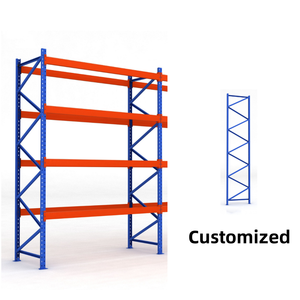
Continuous roll-formed box beams paired with multi-profile teardrop uprights. Engineered for 100% selective stock retrieval and multi-ton unit loads.
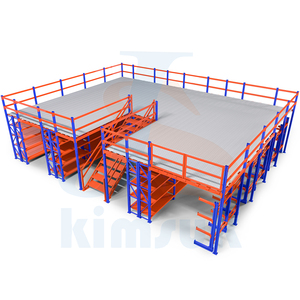
Converts unused vertical warehouse cubic volume into multi-tier picking platforms, supported directly by cold roll-formed upright columns.
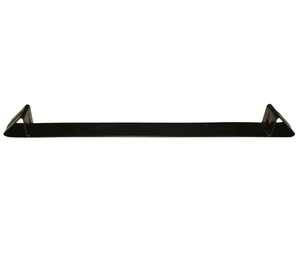
Reinforced cold-formed channel construction designed specifically for stabilizing master steel coils, industrial rolls, and heavy round freight during storage and transport.
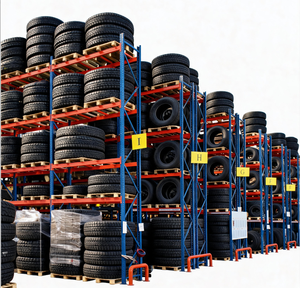
Engineered to client-specific bay widths, upright depths, and seismic ratings. Manufactured using high-tolerance roll form tooling for automated distribution hubs.
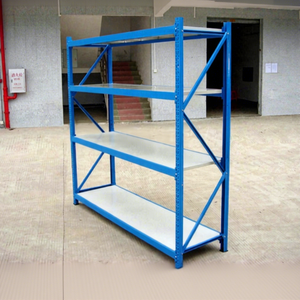
Formed steel cross-ties drop cleanly across box or step beams to prevent bottom pallet sag, uneven point loads, and bottom-board split failures.
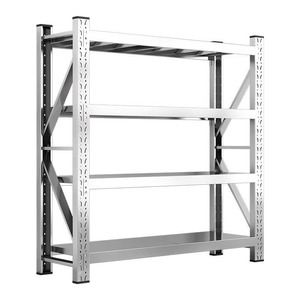
Corrosion-proof AISI 304/316 roll-formed uprights and louvered or solid shelves. Ideal for cold store chambers, pharmaceutical vaults, and food prep environments.
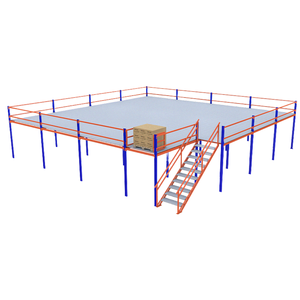
Combines cold roll-formed secondary purlins with primary structural I-beams to achieve extensive unobstructed ground-level clearance for automated guided vehicles (AGVs).
Anchor-mounted high-yield steel column guard absorbs direct forklift impact energy, preventing dangerous plastic deformation on vulnerable corner and aisle uprights.
Integrating decades of structural steel mastery with international supply chain reach, our engineering operations bridge the gap between architectural warehouse design and high-volume industrial roll-forming.
Every project begins with laser site surveys, forklift turn radius calculations, and structural Finite Element Analysis (FEA). We model second-order elastic deformation effects under variable warehouse pallet configurations to ensure non-sway stability.
We source prime certified hot-rolled coil (Q235B, Q355B, and EN 10025 standard structural coils) featuring precise silicon and manganese ratios. Every heat run includes mill test certificates verifying yield, tensile strengths, and elongation properties.
Our manufacturing systems adhere strictly to European Norm EN 15512 (cold-formed steel storage systems) and EN 15620 (operational tolerances). Structural components carry CE execution declarations (EN 1090-1 CPR certified) for global jurisdictional permitting.
Equipped with 24-to-30 station continuous cold-forming profiling mills. Progressive bending profiles minimize residual tensile stress in high-radius bends, preventing micro-fractures in upright open-section lips and structural flange sections.
We provide accredited installation supervision, torque-certified anchor bolting, plumb-and-square laser validation, and EN 15635 load capacity warning signage, giving asset owners a single chain of operational liability.
Choosing between thin-gauge cold-formed steel and heavy hot-rolled structural steel shapes defines long-term capital expense, floor slab deadweight loading, and overall warehouse reconfigurability.
Cold roll-forming transforms flat-rolled strip steel at ambient temperature through a sequence of calibrated mating rolls. This cold-working mechanism elevates yield strength through dislocation strain hardening, allowing an optimized 2.0mm to 3.2mm upright section to withstand exceptional compressive bucking loads.
Unlike rigid hot-rolled C-channels that require manual on-site bolt torquing, roll-formed rack systems integrate precision punch patterns that accept interlocked beam end connectors. This provides dynamic energy dissipation during minor impacts while maintaining rapid level adjustability as inventory dimensions change.
How cold roll-formed uprights and stepped box-beams outperform hot-rolled structural channels in commercial distribution environments:
| Evaluation Parameter | Cold Roll-Formed Steel Racking | Hot-Rolled Structural Steel Racking | Procurement Advantage |
|---|---|---|---|
| Raw Material Chemistry | High-tensile strip coil (Yield: 235 - 355 MPa) | Heavy structural C/I beams (Yield: 235 MPa) | Roll-Formed: Higher Yield/Mass Ratio |
| System Self-Weight | Low-to-medium (Optimized profile geometry) | Heavy (Thick web and flange profile) | Roll-Formed: Reduces Foundation Demands |
| Initial Capex Investment | Economical; lower raw steel tonnage cost | High; 35% - 60% higher steel weight and freight | Roll-Formed: Superior ROI |
| Installation Speed | Modular hook-in teeth locked with safety pins | Bolted connections requiring dual-wrench crews | Roll-Formed: 50% Faster Erection |
| Damage Sensitivity | Elastic recovery to threshold; guard rails recommended | High local impact absorption before yield | Structural: For Heavy Foundry/Yard Use |
| Seismic Response Behavior | Semi-rigid joint connections provide system ductility | Heavy mass induces elevated base shear forces | Roll-Formed: Superior Seismic Damping |
Emerging distribution models, automation robotics, and carbon-reduction initiatives are transforming the engineering requirements of warehouse racking systems.
As warehouses transition from manual forklifts to automated shuttles and AMRs, racking systems must adhere to EN 15620 Class 100/200 deflection criteria. Future roll-forming tooling must deliver millimeter-precise beam camber and plumbness tolerances to prevent optical sensor faults during high-speed robotic pallet handling.
Multinational 3PLs and corporate warehouse operators face strict Scope 3 greenhouse gas reporting mandates. Procurement contracts now demand Environmental Product Declarations (EPDs) reflecting scrap-based Electric Arc Furnace (EAF) production, reducing the embodied carbon footprint by up to 60% compared to blast-furnace roll coils.
The next generation of high-bay roll-formed uprights incorporates flush-mounted strain gauges, impact accelerometers, and optical tilt monitors. This hardware reports real-time frame impact overload and structural stress data directly to the warehouse WMS/ERP system before physical failure can develop.
Driven by skyrocketing urban land costs, warehouse developments increasingly eliminate separate structural building pillars. Instead, precision cold-formed upright assemblies support both internal storage tiers and exterior insulated wall/roof cladding, drastically cutting construction schedules.
Civil safety bodies are enforcing rigorous non-linear dynamic analysis for all cold-formed storage frameworks installed in active seismic zones. Buyers must insist on verified cyclic-load testing protocols for upright-to-beam connectors to guarantee life-safety ductile deformation behavior.
Clear, objective answers addressing structural engineering parameters, international certifications, and site deployment variables.
In accordance with European and international structural engineering standards, roll-formed industrial racks must be calculated in compliance with EN 15512:2020 (Steel static storage systems – Adjustable pallet racking systems – Principles for structural design). Fabrication execution must conform to EN 1090-1 / EN 1090-2 Execution Class EXC2, backed by Factory Production Control (FPC) certificates that authorize the CE marking. Furthermore, operational tolerances must satisfy EN 15620, and annual inspections must strictly follow EN 15635 safety guidelines.
Roll-forming utilizes cold-work strain hardening. Passing structural steel through 20 to 30 sequential pairs of precision-machined rollers introduces localized plastic deformation along profile bends and returns without heating the strip. This metallurgical strain hardening increases yield strength along critical section radii. When combined with multi-ribbed upright cross-sections, hat-stiffeners, and return flanges, the resulting member resists torsional and local elastic buckling, allowing high load capacities from 2.0mm to 3.0mm profiles.
To finalize an efficient CAD layout and structural load schedule, our engineering team requires:
1. Pallet characteristics: Full width, depth, height, and maximum loaded weight (including pallet overhang).
2. Handling equipment: Forklift model, maximum mast lift height, collapsed mast height, and minimum right-angle stacking aisle width (Ast).
3. Facility envelope: Clear ceiling height below sprinkler lines, column spacing, dock door locations, and floor expansion joints.
4. Civil slab data: Slab thickness, concrete compressive strength ($f'_c$), reinforcing layout, and maximum allowed point load.
5. Geographic zone: Local seismic design classification, soil category, and ambient operational temperature (ambient vs. sub-zero cold room).
Yes. However, standard room-temperature carbon steel can experience ductile-to-brittle transitions below -20°C. For cold storage and blast freezing facilities, we specify structural steel grades with guaranteed Charpy V-notch impact toughness (e.g., S355J2 or killed steel with fine grain practice). Surface protection options include heavy continuous pre-galvanization (Z275), hot-dip galvanizing, or specialized low-temperature, non-flaking electrostatic epoxy coatings to prevent condensation rust.
Under international EN 15512 and RMI standards, the maximum allowable vertical deflection ($\delta$) for pallet rack beams under full nominal working load is limited to $L/200$ (where $L$ is the clear span distance between upright frames). For automated ASRS installations or installations using sensitive optical sensors, deflection is typically restricted to $L/300$ or a maximum of 10mm to guarantee clean, collision-free automated shuttle retrieval.
Because cold roll-formed upright walls range from 1.8mm to 3.2mm thick, direct impact from moving forklifts can cause structural denting or twisting. We address this by installing heavy-gauge (4.0mm - 6.0mm) floor-anchored steel column protectors, wrapping upright corners with wrap-around polymer shock-dampers, and installing heavy tubular end-of-aisle crash barriers designed to absorb over 400 Joules of energy without transferring dynamic shear forces to the rack frame.
Standard profile configurations (selective teardrop or 75mm-pitch box-beam designs) generally ship within 2 to 4 weeks of final structural sign-off. Highly customized systems requiring custom steel rolling tooling, seismic base plates, automated deck manufacturing, or third-party engineering calculations typically ship within 5 to 7 weeks, backed by consolidated container packaging that protects finishes during ocean transit.
Send us your warehouse CAD drawings, pallet loading requirements, and lift equipment specifications. Our structural engineers will calculate beam profiles, bay load tables, and seismic base configurations to optimize your intralogistics budget.