Industrial Logistics & Engineering Whitepaper

China Best Commercial Pallet Racking Exporter & Exporters

Global engineering authority delivering verified seismic-rated storage racks, automated logistics racking structures, and ISO-compliant industrial warehouse mezzanine architectures worldwide.

Featured Commercial Storage Systems & Industrial Assemblies

Manufactured using prime high-yield structural steel (Q235B / Q355B), continuous roll-forming lines, and computerized electrostatic epoxy finishes to guarantee high load safety coefficients across modern supply chain hubs.
Prefabricated Steel Warehouse Building Mezzanine Floor Multi Level Storage Industrial Steel Frame Structure System
Multi-Tier Mezzanine

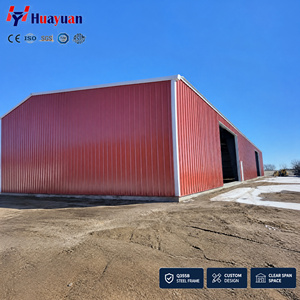
Prefabricated Steel Warehouse Building Mezzanine Floor Multi Level Storage Industrial Steel Frame Structure System

  • Floor Load Limit300 – 1200 kg/m²
  • Deck TypeCold-Rolled Steel Plate
  • StandardEN 15512 / ISO 9001
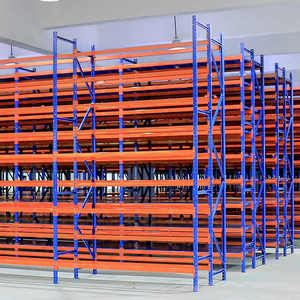
Heavy Duty Warehouse Storage Rack Steel Shelving System for Commercial Warehouse
Heavy Duty Shelving

Heavy Duty Warehouse Storage Rack Steel Shelving System for Commercial Warehouse

  • Shelf Loading800 – 2000 kg/Level
  • Upright Profile90x65 / 100x70 mm
  • AssemblyInterlocking Boltless
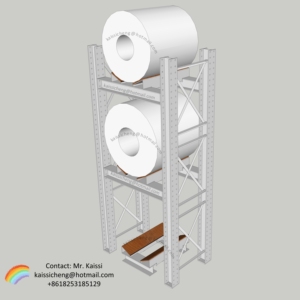
Standard and Custom Heavy-Duty Steel Coil Racks
Specialized Coil Handling

Standard and Custom Heavy-Duty Steel Coil Racks

  • Coil CapacityUp to 15,000 kg/Bay
  • Cradle SaddleWelded V-Baffle Support
  • ApplicationSteel Processing & Automotive
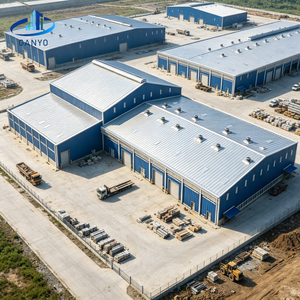
Light Steel Structure Prefabricated Two Story Factory Building With Mezzanine Floor And Workshop
Modular Plant Systems

Light Steel Structure Prefabricated Two Story Factory Building With Mezzanine Floor And Workshop

  • Portal FrameH-Beam / C-Section Steel
  • Wind Load DesignUp to 0.65 kN/m²
  • CustomizationComplete Workshop Layout
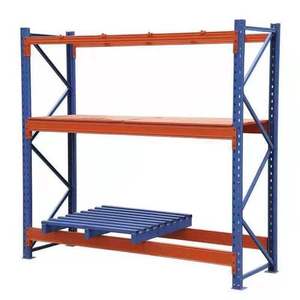
Adjustable Pallet Rack Warehouse Storage Heavy Duty Shelving Pallets Racking For Warehouse Storage
Selective Pallet Systems

Adjustable Pallet Rack Warehouse Storage Heavy Duty Shelving Pallets Racking For Warehouse Storage

  • Bay Capacity1000 – 4500 kg/Level
  • Pitch Adjustability50 mm / 75 mm
  • CertificationCE, RMI, FEM 10.2.02
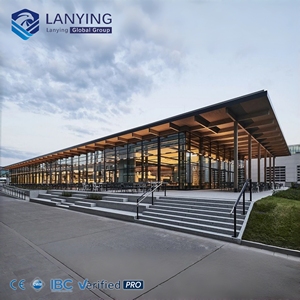
Steel Structure Exhibition Hall Display Center Showroom Building Prefabricated Steel Frame With Mezzanine Floor
Commercial Exhibition

Steel Structure Exhibition Hall Display Center Showroom Building Prefabricated Steel Frame With Mezzanine Floor

  • Clear Span18 – 36 Meters
  • FinishHigh Anti-Corrosion Alkyd
  • IntegrationIntegrated Display Racking
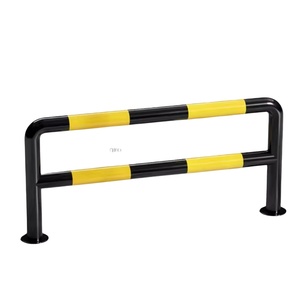
Heavy Duty Pallet Rack Column Guard Upright Protector End Frame Protector Barrier
Safety & Protection

Heavy Duty Pallet Rack Column Guard Upright Protector End Frame Protector Barrier

  • Material Thickness4.0 – 6.0 mm Structural Steel
  • Impact ResistanceUp to 400 J Floor Protection
  • CoatingSafety Yellow Epoxy Powder
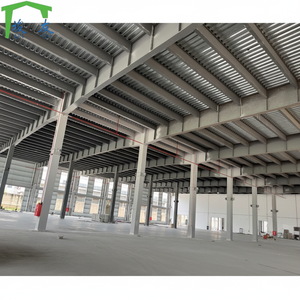
2-Floor Steel Structure Warehouse Double-Deck Portal Frame Storage Building with Mezzanine Layout
High-Bay Portal Storage

2-Floor Steel Structure Warehouse Double-Deck Portal Frame Storage Building with Mezzanine Layout

  • Height EfficiencyDual Level High Eaves
  • MaterialQ355B Hot-Rolled Primary Frame
  • ComplianceGB 50017 / AISC Standards
60,000+
Tons Annual Output
95+
Countries Exported
100%
Certified Full Traceability
±0.05mm
Roll-Forming Precision

Structural Precision, Metallurgical Integrity & International Standards

As China’s foremost commercial pallet racking exporter, we bridge cold-formed steel engineering with strict international compliance codes, mitigating seismic, dynamic, and static risks in global distribution infrastructure.

Certified Metallurgy: Q235B & Q355B Steel

Structural reliability starts with raw materials. Sourced strictly from tier-one steelmakers like Baosteel and Shougang, every coil undergoes spectrometer chemical verification and tensile elongation testing. Our Q355B grade profiles yield upwards of 355 MPa, providing superior load-bearing capacity while drastically reducing dead-weight steel consumption per pallet position.

Finite Element Analysis & FEM Compliance

Every selective, drive-in, or mezzanine configuration is verified using advanced 3D ANSYS simulation software. Designs strictly adhere to European standard EN 15512 (Steel Static Storage Systems), American RMI MH16.1, and Australian AS4084-2023, calculating second-order structural sway, upright torsional buckling, and seismic base shear values.

Continuous Multi-Roll Forming Lines

Our upright profiles are roll-formed through 24 sequential precision rolling stations, maintaining accurate section geometry and zero internal micro-fissuring. Automated inline punching units ensure pitch accuracy within ±0.05 mm across the entire 12-meter column length, providing effortless field assembly and uniform beam lock pin engagement.

Electrostatic Powder Polymerization

All structural components undergo an automated 7-stage surface pre-treatment including acid washing, zinc phosphating, and deionized water rinsing, followed by electrostatically applied epoxy-polyester thermosetting powder coating. The resulting 80–120 micron dry film thickness yields over 500 hours of ASTM B117 salt spray corrosion resistance.

Intermodal Flat-Pack Container Optimization

Logistics freight charges represent a crucial factor in international storage equipment procurement. Our engineering department uses automated 3D container packing algorithms to optimize beam bundling, upright nestling, and pallet spacer orientation, achieving 98%+ volumetric container utilization and reducing ocean freight overhead per unit.

Single-Accountability Turnkey Engineering

From architectural CAD layout drawings, local municipality clearance verification, clear height calculation under fire sprinklers, to professional load calculation plaques and ongoing safety inspection procedures (EN 15635), we furnish global buyers with a single accountable partner across every development phase.

Engineering Comparative Matrix: System Dynamics & Selection

Choosing the right racking structure requires balancing storage selectivity, cube utilization, material handling equipment (MHE) turning radius, and order-picking velocity.

Racking Typology Access Selectivity Volumetric Density Stock Rotation MHE / Forklift Compatibility Typical Engineering Applications
Selective Pallet Racking 100% Direct Standard (35-40%) FIFO / LIFO Counterbalance, Reach Truck, VNA Fast-moving retail distribution, third-party logistics (3PL) hubs
Heavy-Duty Warehouse Shelving 100% Direct Medium-High Manual Access Manual Picking, Order Pickers Industrial spare parts, mechanical equipment, wholesale hardware
Double Deep Pallet Racking 50% Direct High (55-60%) LIFO Preference Pantograph / Double-Deep Reach Truck FMCG, cold chain facilities, medium-velocity reserve storage
Drive-In / Drive-Through Lane-Specific Maximum (75-80%) LIFO / FIFO Counterbalanced / Standard Reach Trucks Uniform cold storage, beverage manufacturing, seasonal inventory
Multi-Tier Mezzanine Floor Multi-Level Direct Expanded 200-300% Any Dynamic Pallet Gates, Goods Hoists, Conveyors E-commerce fulfillment centers, carton live picking, archive storage
Heavy-Duty Coil & Cantilever 100% Open Face Custom Profile Any Dynamic Side Loaders, Overhead Cranes, Heavy Trucks Steel slitting coils, lumber, extrusions, piping, automotive sheets

Future Procurement Trends in Industrial Pallet Racking (2025–2030)

Technological disruption, automation integration, and global supply chain reconfigurations are reshaping how institutional procurement teams invest in commercial storage assets.

1. Automation-Ready Tolerances (ASRS & Shuttle Synergies)

Manual forklift operations are rapidly yielding to automated pallet shuttles, autonomous mobile robots (AMRs), and stacker cranes. These robotic systems demand manufacturing tolerances far tighter than traditional static racks (±1.0 mm cumulative over a 20-meter run). China’s high-precision roll-forming factories are engineered to deliver micro-tolerance upright geometries, laser-calibrated guide tracks, and deflection-free beam designs that prevent autonomous vehicle sensor stalls.

2. Green Decarbonized Steel & Life-Cycle Assessment

Global multi-national enterprise (MNE) buyers subject to EU Carbon Border Adjustment Mechanisms (CBAM) or stringent ESG reporting are mandating low-carbon footprint storage solutions. Exporters utilizing scrap-based electric arc furnace (EAF) steel, clean solar-powered coating lines, and non-toxic zinc phosphating are replacing legacy blast furnace suppliers. Verifiable Environmental Product Declarations (EPDs) will soon be a mandatory prerequisite for public infrastructure tenders.

3. High-Corrosion Pre-Galvanized & ZAM Alloys

Cold-chain food logistics and harsh pharmaceutical warehouse environments accelerate steel oxidation. Conventional post-weld hot-dip galvanizing produces uneven surfaces and dimensional warping. Next-generation procurement favors continuous pre-coated Zinc-Aluminum-Magnesium (ZAM) structural steel. Offering self-healing cut-edge corrosion resistance up to four times greater than standard galvanization, ZAM represents the future benchmark for low-temperature environments.

4. Dynamic Seismic Design for Disaster Resilience

With seismic activity codes becoming stricter across the Pacific Rim, Middle East, and Latin America, static dead-load calculations are no longer sufficient. Modern procurement prioritizes dynamically ductile structures capable of absorbing ground acceleration through specialized baseplate anchoring geometry, boxed column reinforcement collars, and semi-rigid beam-end connectors that disperse destructive energy without structural frame collapse.

5. Vertical High-Bay Optimization & Real Estate Economics

As industrial land costs surge across metropolitan transit nodes worldwide, the economic model has shifted from horizontal sprawl to vertical utilization. Storage racking now routinely scales to clear heights between 15 and 35 meters. Exporters capable of supplying seamless splice-jointed high uprights, coupled with rack-clad warehouse designs (where the racking framework supports the building's exterior walls and roof), deliver substantial Capex savings to industrial developers.

6. IoT-Enabled Structural Health Monitoring (SHM)

Safety regulations like EN 15635 require continuous integrity audits. Future racking assemblies are increasingly integrating IoT impact sensors into lower upright column protectors. These digital nodes detect accidental forklift collisions in real-time, instantaneously alerting facility managers to yield stress deformations before catastrophic mechanical failures occur, minimizing legal liabilities and operation halts.

Frequently Asked Questions: Global Racking Procurement

Detailed answers to the critical engineering, quality verification, and logistical questions international procurement teams face when importing commercial storage racking from China.

What structural calculations and engineering standards must be specified when importing racking from China?

Procurement teams must specify compliance with relevant international design codes based on the project location: European standard EN 15512 (which supersedes FEM 10.2.02), American RMI MH16.1, or Australian AS4084-2023. You should demand project-specific design verification calculations from the exporter. These calculations must define maximum permissible beam deflection (standardly limited to L/200 for conventional systems or L/300 for sensitive automated systems), second-order structural sway stability ($P-\Delta$ effects), and upright axial load capacities based on actual vertical pitch spacing. Always ensure that test certificates verify the steel's chemical composition and yield strength (such as Q235B with minimum 235 MPa or Q355B with 355 MPa).

How does a commercial buyer differentiate top-tier Chinese racking exporters from low-grade trading companies?

Direct manufacturers possess automated, in-house roll-forming production lines with at least 18–24 forming stations, robotic seam welding stations for beam end connectors, and an automated continuous multi-stage electrostatic powder coating line. Low-grade intermediaries often outsource fabrication to multiple small job shops, creating inconsistencies in column punching holes, metal gauge tolerances, and paint adhesion. Always request proof of ISO 9001:2015 quality management system certification, CE conformity documentation, mill test certificates (MTC) linked to your specific batch numbers, and full Factory Acceptance Test (FAT) video audits prior to container dispatch.

What warehouse floor parameters are needed to calculate the pallet rack baseplate anchoring?

To properly engineer footplates and anchor bolts, your structural engineer must provide: the concrete slab thickness (typically 150 mm to 250 mm for light to heavy industrial operations), concrete compressive strength grade (such as C20/25, C25/30, or 3000–4000 PSI), whether the concrete is reinforced or fiber-matrix cast, and the location of expansion or saw-cut joints. Anchor bolt pull-out and shear forces must be engineered according to concrete breakout strength. If the concrete slab exhibits settling, steel leveling shims (1.0 mm to 5.0 mm thickness) must be supplied to ensure upright verticality tolerances do not exceed 1/500 of the total frame height as dictated by EN 15620.

How is corrosion and transit damage prevented during maritime oceanic container shipments?

Ocean transport exposes steel to high relative humidity, temperature fluctuations, and saline atmosphere, creating risk of "sweat corrosion" and abrasive surface scratches. Reliable exporters bundle upright frames and box beams using protective corrugated cardboard wrapping, protective corner angles, heavy-gauge poly-woven sheeting, and heavy-duty PET steel strapping. Crucially, industrial desiccants must be hung inside 40ft High Cube containers to absorb condensation. Contact points between steel components are buffered by corrugated dividers or EPE foam strips to preserve the 80–120 micron epoxy coating finish.

What are the trade-offs between Selective Racking, Double Deep, and Mezzanine Systems?

Selective Racking provides 100% immediate selectivity to every single pallet, making it optimal for dynamic SKUs and third-party logistics operations. However, it requires numerous working aisles, utilizing only 35–40% of the total cubic volume. Double Deep racking stores pallets two-deep, increasing storage capacity by up to 30%, but demands specialized pantograph/reach forklifts and operates on a LIFO discipline where front pallets block rear access. In contrast, Mezzanines double or triple floor space vertically by taking advantage of ceiling heights over 6 meters, creating picking zones for hand-loaded cartons, small components, and e-commerce sortation, though requiring greater upfront investment in stairs, fire-rated decking, and life-safety systems.

What fire safety considerations and municipal approvals impact warehouse racking layouts?

Racking designs directly intersect with building fire codes (such as NFPA 13 in the United States or equivalent local Civil Defence regulations). Sprinkler head clearances require a minimum unobstructed zone of 450 mm to 900 mm between the topmost pallet load and ceiling sprinkler deflectors. For storage heights exceeding 7.5 to 9.0 meters, in-rack sprinkler systems integrated into longitudinal flues are often mandatory. Wire mesh decking is usually preferred over solid steel or wood shelving because it allows vertical water penetration from fire sprinklers down through lower tiers and avoids smoke trapping.

How often should commercial racking systems undergo maintenance and formal safety inspection?

Under EN 15635 standards, racking requires three levels of inspection: immediate daily visual reports by forklift operators for severe forklift impact hits; weekly or monthly visual checks by a designated internal Person Responsible for Racking Safety (PRRS); and a comprehensive, documented structural inspection every 12 months by a qualified, technically competent racking engineer. Bends, buckling, missing beam locking pins, dislodged base anchors, or localized column damage are categorized under Red (immediate unload), Amber (unload upon dispatch, no reloading), and Green (monitor within safe limits) hazard classifications.

Can customized engineering drawings be adapted for integration with Automated Guided Vehicles (AGVs)?

Yes. Integrating AGVs or AMRs requires modifications to aisle clear widths, floor guidance paths, and bottom-level beam clearances. Baseplates are often flush-mounted or recessed to avoid obstructing LiDAR navigation sensors. Additionally, custom mechanical lead-in entry funnels, precision optical alignment targets on upright columns, and rigid floor anchors are engineered directly into the CAD layout to facilitate accurate automated pallet drop-off and pickup routines without manual human intervention.

Initiate Your Warehouse Storage Engineering Consultation

Send our senior engineering team your warehouse architectural CAD drawing, clear height limits, and pallet handling parameters. We deliver an optimized bay layout, finite-element load calculations, and an itemized export pricing schedule tailored to your operational specifications.