
No matching pages. Try "pallet", "mezzanine" or "cantilever".
No matching pages. Try "pallet", "mezzanine" or "cantilever".
In high-velocity supply chains, material handling infrastructure is not merely steel fabrication; it is an engineered asset governing volumetric utilization, pallet transit velocity, floor-slab loading integrity, and seismic stability. As China's premier manufacturer and direct exporter of industrial warehouse racking, we combine certified Q235B/Q355B structural cold-formed profiles, automated continuous roll-forming lines, and comprehensive Finite Element Analysis (FEA) to provide turnkey storage installations worldwide.
Explore our flagship heavy-duty storage configurations, automated pallet runners, and impact protection modules engineered to optimize payload capacity and eliminate operational downtime.
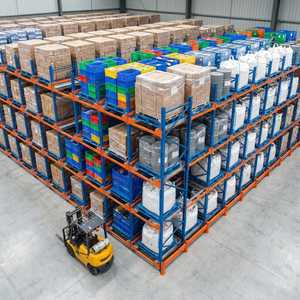
High-density, semi-automated deep-lane pallet matrix operated via intelligent radio shuttle carts. Drastically cuts forklift transit times and maximizes cubic bay utilization in omnichannel distribution hubs.
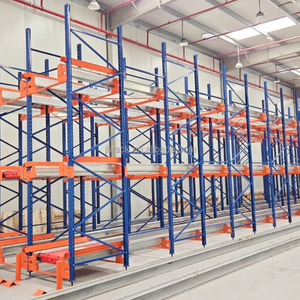
Engineered for high-volume batch storage operations and cold-chain facilities. Features ultra-rigid galvanized guide rails, laser positioning guidance, and lithium-ion battery integration for round-the-clock throughput.
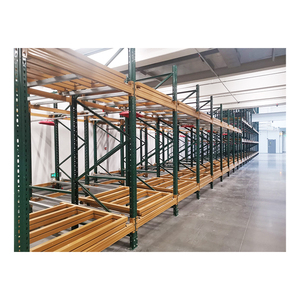
Nested rolling cart system operating on inclined structural channels. Accommodates 2 to 6 pallets deep per lane, delivering exceptional density while preserving single-aisle forklift accessibility.
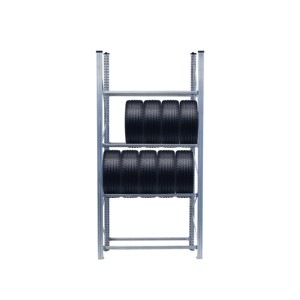
Modular, high-strength racking configuration engineered specifically for automotive workshops, radial tire manufacturers, and fleet garages. Angled structural cross-beams prevent tire casing distortion.
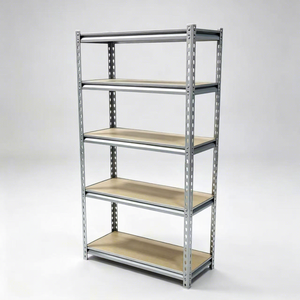
Rapid knockdown, rivet-locking manual picking shelf for warehouses, retail stockrooms, and light industrial parts storage. Sturdy cold-rolled steel posts with flush-fitting moisture-resistant MDF decks.
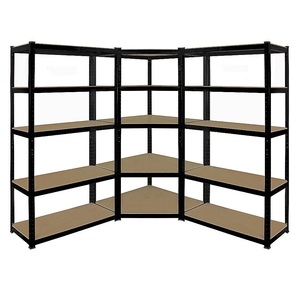
Heavy-duty longspan shelving system suited for unpalletized bulk cartons, spare components, and intermediate picking floors. Roll-formed box beams lock securely into Omega-profile upright posts.
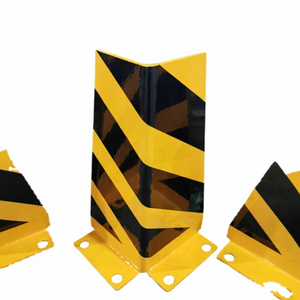
Structural plate steel impact protector engineered to dissipate forklift collision energy at high-risk aisle intersections. Protects structural vertical uprights from irreversible bucking and structural failure.
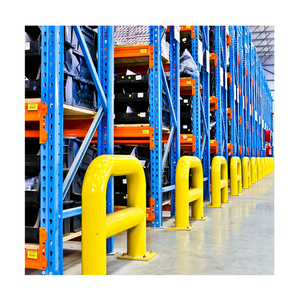
Continuous heavy tubular and channel steel end-of-aisle crash barrier assemblies. Hot-dip galvanization provides exceptional atmospheric and chemical resistance in demanding industrial and exterior yards.
Global logistics engineering is undergoing a transformative transition driven by soaring commercial real estate values, widespread labor constraints, and the proliferation of high-SKU omnichannel retail. Warehouse operators are aggressively retiring traditional wide-aisle static layouts in favor of automated, high-density, verticalized racking frameworks. When sourcing material handling racks from China, international procurement leaders are no longer evaluating mere price-per-kilogram metrics; modern technical due diligence centers on lifecycle structural integrity, automation compatibility, and lifecycle total cost of ownership (TCO).
Key procurement developments dominating global specifications include the migration from standard low-carbon Q235B steel toward High-Strength Low-Alloy (HSLA) Q355B and structural steels with verified yield strengths surpassing 355 MPa. This metallurgical evolution enables thinner profile gauges that simultaneously deliver higher sectional moment of inertia ($I_x, I_y$) and superior torsional rigidity ($J$), drastically lowering dead-weight structural loads while meeting severe seismic spectral acceleration requirements. Furthermore, as robotic automation matures, tolerances for rail deflection and column plumbness have tightened from standard construction tolerances ($\pm 5\text{ mm}$) down to sub-millimeter precision ($\pm 0.5\text{ mm}$) to support autonomous guided vehicles (AGVs) and shuttle cart kinematics.
Procurement is decisively shifting from static selective racking to 2D and 4D radio shuttle systems and AS/RS crane-compatible high-bay structures. By compressing aisle footprints and leveraging heights exceeding 30 meters, facilities unlock up to 75% greater pallet capacity over conventional floor-based forklift operations.
Global tenders now enforce stringent adherence to international design codes: EN 15512:2020 (Europe), RMI ANSI MH16.1 (USA), and AS 4084:2023 (Australia). Tier-1 Chinese exporters validate structural beam-to-column connector tightness, seismic ductility, and cyclic load testing via third-party ISO 17025 laboratories.
Traditional toxic chromate conversion processes have been completely replaced by environmentally benign silane/zirconium nano-conversion pre-treatments combined with TGIC-free epoxy-polyester electrostatic powder coatings. This delivers >500 hours salt-spray corrosion resistance without hazardous waste discharge.
A rigorous engineering comparison to guide supply chain planners in selecting optimal racking typologies based on selectivity, density, and capital intensity.
| Storage System Architecture | Pallet Selectivity | Volumetric Density | Operating Principle | Forklift Equipment Match | Typical Capital Intensity |
|---|---|---|---|---|---|
| Radio Shuttle Racking | Lane-Dependent (Medium) | Ultra-High (85-90%) | FIFO or LIFO Automated | Standard Counterbalance / Reach | High (High ROI in volume) |
| Standard Selective Pallet Rack | 100% Direct Access | Standard (35-40%) | Universal Random Access | Any Forklift / Counterbalance | Low (Minimal Entry CapEx) |
| Double-Deep Pallet Rack | 50% Immediate Access | High (55-65%) | LIFO Operational Cycle | Deep-Reach Pantograph Truck | Low - Medium |
| Push-Back Cart Racking | Lane Front Face Only | Very High (70-75%) | LIFO Gravity Dynamic | Standard Counterbalance / Reach | Medium - High |
| Drive-In / Drive-Through | Restricted (Lane Batch) | High (65-75%) | LIFO / FIFO Track Run | Narrow Mast Reach Truck | Medium |
| Gravity Pallet Flow Rack | Face Picking Direct | Ultra-High (80-85%) | Strict FIFO Gravity Rollers | Standard Forklifts at End Faces | High (Roller Beds & Braking) |
| Multi-Tier Mezzanine Rack | 100% Manual Hand Pick | 200-300% Floor Area | Batch / Zone Manual Picking | Personnel, Vertical Lifts, Chutes | Medium |
*Notes: Density metrics reflect cubic warehouse footprint utilization. Final structural designs must be validated against concrete slab floor point load ratings and local seismic codes.
Leveraging deep industrial metallurgy, automated manufacturing cells, and comprehensive global export engineering, we provide international clients with an uncompromised supply chain partnership.
Every proposal begins with custom structural engineering calculations, 3D parametric BIM modeling, and floor slab load distribution analyses tailored to your forklift fleet and building constraints.
Direct sourcing contracts with tier-1 steel mills (Baosteel, Shougang) guarantee authenticated Mill Test Certificates (MTC EN 10204 3.1) proving chemical composition, yield strength, and elongation limits.
Continuous computerized punch-and-roll lines maintain ±0.05 mm slot pitch precision, while 6-axis robotic welding cells guarantee full-penetration welds on beam connectors and heavy base plates.
Custom steel strapping, protective non-scratch corrugated interlayers, and optimized shipping nesting protocols ensure maximum 40HQ container payload density (up to 26–28 metric tons) with zero transit scuffing.
To avoid catastrophic site installation delays or structural under-specification, overseas project managers and supply chain directors should compile and verify these critical engineering inputs prior to issuing formal RFQs:
Define exact pallet overhang (front, back, sides), pallet base board layout (Euro 1200x800, Industrial 1200x1000, US 48x40"), and true center-of-gravity load height under full stretch-wrap.
Provide concrete compressive strength (e.g., C25/30 or 4,000 psi), slab thickness, rebar mesh layout, expansion joint locations, and maximum allowable point load ($kN$) to prevent floor punching.
Document minimum right-angle stacking aisle width (Ast), collapsed mast height, maximum reach elevation, chassis load wheel types, and forklift turn radius clearances.
Comprehensive engineering and commercial answers to resolve core procurement, compliance, and structural design inquiries.
Q235B possesses a nominal yield strength of 235 MPa, making it an excellent, ductile material for standard light-to-medium pallet beams, boltless shelving, and low-rise frames. Q355B is a High-Strength Low-Alloy (HSLA) structural steel boasting a yield strength of 355 MPa (approx. 51% higher load yield threshold). In heavy-duty upright frames, automated high-bay AS/RS structures, and seismic-rated racking, specifying Q355B reduces overall steel dead-weight by 15–20% while simultaneously providing higher sectional modulus, superior resistance to buckling under concentrated axial loads, and extended fatigue life under dynamic shuttle operations.
Under international standards including EN 15512, FEM 10.2.02, and RMI MH16.1, the standard allowable maximum vertical deflection of a pallet rack load beam under uniform working load (UDL) is $L/200$, where $L$ is the clear span distance between upright columns (e.g., for a standard 2,700 mm beam bay, maximum deflection is $2700 / 200 = 13.5\text{ mm}$). However, for automated radio shuttle channels, push-back cart tracks, and automated crane picking bays, deflection limits are engineered significantly tighter at $L/300$ or $L/400$ to prevent sensor misalignments, cart jamming, or automated shuttle derailment.
Our structural engineering workflow complies with ASCE 7-22, EN 16681, and local seismic building codes. Using specialized Finite Element Analysis (FEA) software, we calculate spectral response coefficients ($S_s, S_1$), site soil class amplification factors, and seismic base shear ($V$). In high-risk seismic zones, our designs incorporate widened heavy-duty baseplates, increased concrete anchor embedment depths, cold-formed tubular diagonal bracing frames, and heavy-gauge column stiffeners designed to dissipate kinetic energy without catastrophic brittle connection failure.
Electrostatic powder coating (thickness 60–90 microns) is the ideal, cost-effective solution for ambient temperature indoor dry warehouses, offering high scratch resistance and color-coded zoning. Hot-dip galvanization (HDG according to ISO 1461, coating thickness 70–120 microns) is strictly mandated for: (1) Outdoor open-air yard storage exposed to UV and rain, (2) Sub-zero cold chain freezers (-25°C to -30°C) where high condensation cycling causes internal corrosion behind hollow box sections, and (3) Harsh chemical or fertilizer storage where atmospheric acidity accelerates steel oxidation.
Sea freight involves dynamic vessel pitching and humid oceanic air. Our export protocol uses custom-welded steel bottom dunnage runners for direct forklift access during container unloading. Upright frames and beams are nested symmetrically, separated by non-abrasive closed-cell PE foam interleaving to avoid paint friction scuffs, and bound with high-tensile steel banding equipped with edge-protector angles. Each bundle is heat-shrunk in heavy-duty polyethylene moisture-barrier film containing industrial desiccant bags, ensuring rust-free arrival at destination ports worldwide.
Yes. We operate as an end-to-end solutions partner. For overseas installations, we provide complete bilingual CAD shop drawings, 3D exploded assembly diagrams, detailed anchor torque specifications, and comprehensive video installation manuals. On large-scale distribution centers and complex radio shuttle AS/RS projects, we deploy experienced bilingual site engineers to provide on-site installation supervision, frame leveling alignment verification, and formal sign-off load testing before operational handover.
Send your warehouse architectural CAD drawing, pallet payload specifications, and forklift parameters. Our senior structural engineers will return a complete layout design, structural load calculation report, and competitive DDP/CIF quotation within 24 hours.