No matching pages. Try "pallet", "mezzanine" or "cantilever".
No matching pages. Try "pallet", "mezzanine" or "cantilever".
Direct manufacturer supply of heavy-duty, certified cold-formed steel racking systems, automated shuttles, and specialized industrial fixtures configured to your exact facility layout.
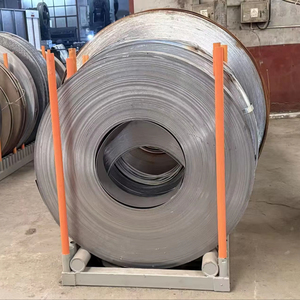
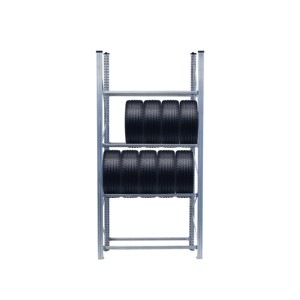
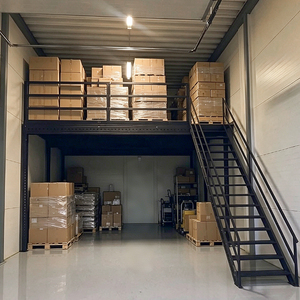
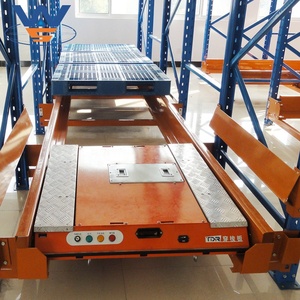
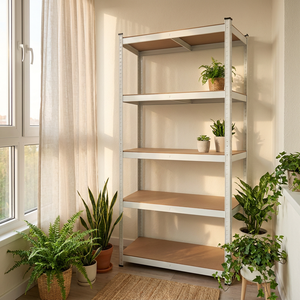
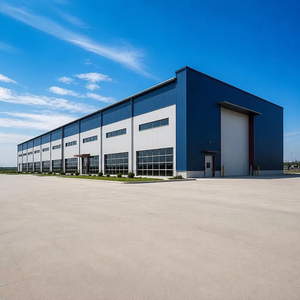
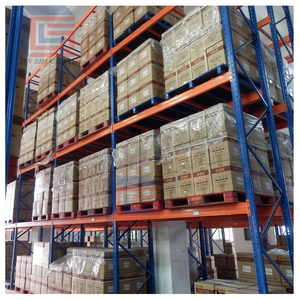
From metallurgical verification of raw coil stock to finite element structural simulations and on-site EPC installation supervision, we eliminate single points of failure across industrial storage lifecycle management.
Every facility layout begins with direct pallet geometry, dynamic load vectors, forklift turning radii, and fire sprinkler clearance rather than generic catalog dimensions.
We source certified prime Q235B and Q355B hot-rolled strip steel from Baosteel, utilizing automated multi-station roll-forming lines to achieve precise cold-work hardening.
Our dedicated structural installation crews ensure rapid erection, vertical plumbness calibration, high-grade floor anchoring, and safety lock verification on every beam connector.
We provide lifetime system support, periodic structural load inspections, laser damage detection, and standardized OEM modular replacements for damaged uprights or bracing.
Industrial modular shelving systems operate as unbraced or semi-rigid framed structural steel networks subjected to combined axial compression, flexural bending, and cyclic dynamic impact. Unlike standard architectural steelwork governed strictly by hot-rolled sections, modular warehouse racks predominantly employ cold-formed thin-walled steel profiles (typically ranging from 1.5mm to 3.5mm in structural thickness). When designing racks conforming to international benchmarks such as EN 15512:2020 (European Standard for Steel Static Storage Systems) and RMI (Rack Manufacturers Institute) MH16.1, engineers must resolve complex localized phenomena including distortional buckling, local flange-lip buckling, torsional-flexural buckling, and structural connector joint slippage under partial and fully laden bay conditions.
At our manufacturing facilities in China, upright post geometries are designed with unique omega-profile cross-sections featuring multi-bend stiffening ribs. These compound bends significantly increase the section's second moment of area (moment of inertia) while minimizing structural dead load. High-frequency punch presses pierce precise teardrop or diamond slotting on tight 50mm or 75mm pitches with pitch tolerances controlled within ±0.1mm across continuous roll lengths exceeding 12 meters. This precision ensures that beam end connectors—fitted with 3 to 5 cold-stamped locking claws—achieve high rotational stiffness and reliable moment-resisting connection behavior. Under finite element analysis (FEA) and physical testing, our moment-rotation connection curves validate superior energy dissipation during seismic excitation events, minimizing horizontal displacement drift across high-bay installations.
| System Typology | Pallet Accessibility | Volumetric Efficiency | Stock Rotation Logic | Structural Steel Spec | Typical MHE Equipment |
|---|---|---|---|---|---|
| Selective Pallet Racking | 100% Direct | Standard (~40-50%) | FIFO / Random Access | Q235B / Q355B (1.5 - 2.5mm) | Counterbalance, Reach Truck |
| Radio Shuttle System | Deep Lane (~15%) | Ultra-High (85-90%) | FIFO or LIFO Configurable | Q355B Galvanized Guide Rails | Automated Pallet Shuttle + Forklift |
| Multi-Tier Mezzanine Platform | 100% Manual Pick | High (200-300% Footprint) | Any Rotation / Pick Flow | H-Beams, C-Purlins, Steel Decking | Vertical Cargo Lifts, Hand Carts |
| Drive-In / Drive-Through | Lane-Based (~20%) | Very High (70-80%) | LIFO (Drive-In) / FIFO (Drive-Thru) | Q355B Cantilever Arms & Rails | Standard Counterbalance Forklift |
| Heavy-Duty Cantilever | 100% Frontal | Medium-High (50-65%) | Random / Batch Access | Q235B/Q355B I-Beams, Tube Arms | Side-Loaders, Multi-Directional MHE |
The transition from passive steel structures to intelligent, automated, and sensor-monitored intralogistics nodes is fundamentally altering modern warehouse architecture.
Modern modular shelving is no longer designed solely for human picker ergonomic envelopes. Standardized upright punching and baseplate spacing now integrate directly with automated guided vehicles (AGVs), automated storage and retrieval systems (AS/RS), and high-speed radio pallet shuttles. Tight deflection criteria (stricter than L/300 under full payload) are engineered to prevent optical sensor misalignment on autonomous shuttle fleets operating in dark-warehouse logistics facilities.
Deploying strain gauge rosettes, laser deflection sensors, and 3-axis accelerometer shock monitors along rack upright bases and critical beam-to-column node connections. These embedded micro-sensors trigger real-time alerts if a forklift collision exceeds structural tolerance thresholds or if accidental bay overloading compromises the design yield strength, facilitating predictive maintenance before catastrophic progressive collapse can occur.
While traditional epoxy electrostatic powder coating remains standard for dry commercial distribution centers, harsh microclimates—such as coastal logistics parks, refrigerated cold-chain facilities (-30°C), and chemical bulk storage—increasingly specify continuous Zinc-Aluminum-Magnesium (ZAM) hot-dip coated steels. ZAM coatings offer self-healing edge corrosion resistance that outperforms standard pre-galvanized sheets by up to five times in ASTM B117 salt spray testing.
Procurement executives and supply chain directors overseeing capital expenditure (CapEx) for mega-distribution hubs are fundamentally shifting how modular shelving and pallet racking are specified, audited, and contracted. Rather than viewing warehouse racks as generic, commoditized steel hardware procured solely on initial per-ton price, forward-thinking procurement teams evaluate assets on a 15-to-20-year Total Cost of Ownership (TCO) methodology. This framework encompasses raw material scrap recovery value, ease of modular bay reconfiguration, cross-generational backward compatibility, container cube utilization during maritime transport, and carbon footprint verification through Environmental Product Declarations (EPDs).
A critical factor driving global procurement from premier Chinese manufacturers is our sophisticated Complete Knock-Down (CKD) packing engineering. Cold-formed teardrop uprights and stepped box-beams are bundled using custom high-density steel nesting frames, maximizing the weight-to-volume ratio within 40-foot High-Cube (40HQ) ocean containers. By exceeding 25 to 27 metric tons per container while eliminating transit abrasion damage through automated strapping and PE protective film wrapping, overseas buyers achieve significant freight cost savings per pallet position stored.
Ensure chemical composition (C, Si, Mn, P, S) and mechanical yield/tensile strength conform to EN 10025 S355JR or GB/T 1591 Q355B with third-party SGS/BV inspection certificates.
Audit site-specific 3D structural calculation reports, confirming safety factors under regional seismic design ground acceleration ($S_s, S_1$) and wind loads for rack-supported structures.
Verify dry film thickness (DFT ≥ 60-80 μm) using cross-hatch cross-cut adhesion tests (ISO 2409) and 500-hour neutral salt spray corrosion performance reports (ASTM B117).
Review computerized container loading plans (CLP) designed to prevent cargo shift, bending deflection during maritime haulage, and rapid unloading at target ports.
Direct technical and commercial clarifications to help project managers and facility planners make informed, structurally compliant procurement decisions.
We require the clear internal warehouse height under sprinkler heads and HVAC ducts, floor slab thickness and compressive concrete grade (e.g., C25/30), soil geotechnical report for heavy column loads, detailed pallet dimensions including cargo overhang (W × D × H), maximum loaded weight per unit pallet, and specific forklift model data including maximum mast lift height, collapsed mast height, and minimum right-angle stacking aisle width (Ast).
Our structural design team calculates dynamic seismic load responses adhering to international codes including EN 16681, AS 4084, and US RMI MH16.1. We adjust upright cross-section gauges, increase baseplate surface areas and anchor bolt embedment depths (using Fischer or Hilti mechanical/chemical anchors), and integrate horizontal and vertical diagonal bracing towers to resist dynamic lateral forces based on your site's specific seismic spectral response acceleration.
Q235B provides a minimum yield strength of 235 MPa and is widely used for standard light-to-medium duty shelving, decking panels, and horizontal bracing. Q355B (equivalent to European S355JR or ASTM A572 Grade 50) delivers a significantly higher minimum yield strength of 355 MPa (~51% stronger). We specify Q355B exclusively for heavy-duty main upright columns, high-bay roll-formed box beams, and cantilever main masts, providing superior structural capacity with reduced steel weight.
Prior to powder deposition, raw steel components undergo an automated 16-stage pre-treatment cycle including immersion degreasing, ultrasonic water rinsing, zinc phosphating or nano-ceramic silane passivating to establish an ultra-dense conversion layer. Architectural-grade polyester powders (such as AkzoNobel or Tiger) are then electrostatically applied via robotic spray guns and oven-cured at 200°C, ensuring uniform film thickness (60-90 μm) and superior chip resistance.
Yes. Our automated CNC punching dies can replicate standard international pitch profiles, including 50mm metric European pitch, 75mm British/SE Asia standard pitch, and 76.2mm (3-inch) US teardrop punch patterns. However, before intermixing uprights and beams from different manufacturers, we strongly recommend a joint structural load review to verify that connector moment-rotation characteristics match original capacity calculations.
Standard production runs for 5 to 20 full container loads (FCL) of selective pallet racking or boltless modular shelving typically require 20 to 25 calendar days from signed engineering drawings and deposit receipt. Fully automated systems, multi-tier mezzanine floors, and heavy coil racks require 30 to 35 days to accommodate customized laser cutting and structural robotic welding. We manage turnkey CIF/DDP logistics shipping from Shanghai, Ningbo, or Qingdao ports.
Send us your building architectural CAD file, pallet specification sheets, and material handling equipment parameters. Our senior structural storage engineers will calculate static and dynamic bay capacities, maximize your cubic space utilization, and deliver a formal quotation within 24 hours.