White Paper: Engineering Mechanics of Boltless Rivet Shelving Systems
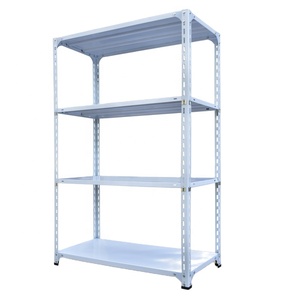
As modern international logistics hubs, fulfillment centers, and industrial spare-part facilities scale vertically, structural rack reliability directly governs workplace safety, picking velocity, and operational continuity. Industrial rivet shelving—commonly referred to in international procurement specifications as boltless racking, keyhole shelving, or teardrop clip-in systems—utilizes friction-fit tapered rivets seated firmly into precision-stamped upright keyholes. Unlike conventional bolted angle iron that loosens over cyclical dynamic loading, rivet shelving forms a rigid mechanical collar under gravity. As downward payload increases, the tapered cylindrical pins lock tighter into the cold-formed column wall, creating a self-stabilizing moment frame without diagonal turnbuckles.
Information Gain Insight: Our engineering tests demonstrate that transitioning from a single-rivet horizontal beam to a double-rivet recessed shoulder channel boosts lateral sway resistance by over 38% under high uniform distributed load (UDL) conditions, fully satisfying European EN 15512 safety deflection thresholds (L/200 standard and L/240 high-performance requirements).
Metallurgical Formulation and Yield Strength Criteria
The structural longevity of Chinese export-grade rivet shelving relies upon the metallurgical integrity of cold-rolled strip steel. We mandate high-ductility Q235B and SPCC carbon structural steel conforming to ASTM A1008/A1008M standards. With a nominal yield strength ($f_y$) exceeding 235 MPa and ultimate tensile strength ($f_u$) between 370 and 500 MPa, our roll-formed upright posts (commonly 1.5mm to 2.0mm thickness / 14 to 16 Gauge) undergo multi-stage cold-roll forming. This progressive contouring work-hardens the 90-degree angle radii, significantly elevating post resistance to local torsional buckling under concentrated vertical loads.
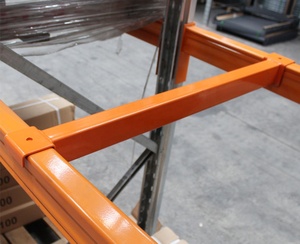
Double-Rivet Interlock
Dual parallel pins stamped at each beam shoulder distribute rotational torque evenly across the column face, eliminating forward tilting during rapid bin retrieval.
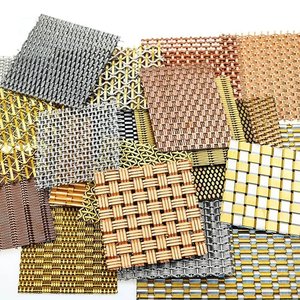
Modular Decking Substrates
Seamlessly compatible with 9mm–18mm CARB P2 high-density particleboard, melamine-coated moisture-resistant MDF, wire mesh grilles, or flush galvanized steel deck pans.
Zero-Hardware Assembly
No nuts, lock washers, or thread lockers needed. Complete bay erection requires merely a dead-blow rubber mallet, reducing on-site labor overhead by up to 65%.
Procurement Benchmark
Rivet Shelving Engineering & Load Rating Matrix
Review engineering configurations across our standard industrial tiers to identify the exact column profiles, beam gauges, and decking specifications aligned with your warehouse pallet or box-picking workflows.
Operating as a direct China wholesale supplier and verified global exporter, our state-of-the-art facility bridges high-volume metalworking speed with meticulous structural engineering standards. Our production plant features 18 automated cold-roll forming lines, high-precision automated CNC punch presses for uniform keyhole center-to-center pitch, and robotic plasma welding cells. This infrastructure eliminates dimensional variations that historically cause out-of-square racking or jamming during on-site field assembly.
Automated Electrostatic Powder Coating
Our 9-stage degreasing, phosphating, and deionized water rinsing line applies lead-free, non-toxic epoxy polyester powder cured at 200°C. Verified to surpass 500-hour ASTM B117 salt spray testing with zero blister peeling.
Strict Batch Deflection & Proof Testing
Every steel master coil undergoes inbound optical emission spectrometry and mechanical tensile verification. Batch-assembled shelving bays are tested with load cell transducers to measure beam deflection under 125% rated proof load.
Optimized High-Density Container Stuffing
Engineered bundle nesting configurations and customized pallet cradles maximize volumetric stuffing efficiency inside standard 40ft HQ shipping containers, achieving 58 to 64 CBM per container to slash ocean freight cost per unit.
Furthermore, our engineering department provides comprehensive CAD layout design, floor slab anchoring assessments, and seismic clearance reviews for global contractors. Adhering strictly to international codes—including EN 15512 for structural steel racking design, EN 15620 for installation tolerances, and EN 15635 for inspection compliance—we ensure every consignment delivers consistent structural safety and reliable load certification plaques upon final commissioning.
Future Sourcing & Technological Trends in Industrial Rivet Shelving (2025–2030)
The global intralogistics landscape is undergoing a permanent transition driven by high-density fulfillment, automated mobile robotics (AMR), and stringent corporate environmental governance (ESG). Procurement directors and warehouse expansion managers must align their long-term supply agreements with several macro transformations defining the next five years:
1. Automated Guided Vehicle (AGV) & AMR Micro-Fulfillment Compatibility
Rivet shelving units are transitioning from static manual storage toward dynamic hybrid picking cells. Modern installations increasingly integrate heavy bottom steel kick plates, barcode retro-reflective location targets, and customized cantilever top-caps tailored for overhead robotic vision navigation. Suppliers capable of manufacturing sub-millimeter tolerances on post spacing allow seamless integration with autonomous mobile robots that traverse narrow aisles without risking column collision.
With international carbon border adjustment mechanisms (such as the EU CBAM) shifting supply chain economics, Tier-1 buyers demand validated environmental product declarations (EPDs) from Chinese exporters. Forward-thinking manufacturers are adopting electric arc furnace (EAF) steel with lower embodied carbon footprints and swapping out solvent-heavy surface treatments for zero-VOC, heavy-metal-free thermosetting powder chemistries. Traceable green steel metallurgy is evolving from a premium option into a non-negotiable prerequisite in cross-border corporate tenders.
3. Fire Protection & Flue Space Regulation Compliance
Global fire insurance underwriters (such as FM Global and NFPA 13 standards) have tightened regulations surrounding solid-shelf flue spaces in high-density facilities. The traditional use of solid raw particleboard is rapidly declining in favor of drop-in galvanized steel wire mesh decking and perforated steel panels that permit unobstructed water penetration from ceiling sprinkler arrays down to lower tiers. This trend significantly reduces facility fire hazard ratings and lowers annual enterprise insurance premiums.
Wholesale distributors are prioritizing drop-tested, reinforced five-ply corrugated packaging that enables direct split-shipment from seaport arrival directly to retail clients or end-users. By integrating laser-cut edge protection buffers and shrink-wrapped component bundles, modern export packing protocols prevent freight bending damage, minimizing warranty claims and zeroing out intermediate handling overhead.
Procurement Due Diligence
Industrial Rivet Shelving FAQ: Engineering & Global Sourcing
Critical structural, metallurgical, and international export questions answered by our chief racking design engineers to guide your next bulk procurement project.
What is the fundamental engineering difference between single-rivet and double-rivet beam shelving?
Single-rivet beams feature a low vertical profile (typically 1 inch to 1-1/4 inch) with a single teardrop lug at each end, engineered primarily for intermediate light-duty access levels and maximizing vertical clear space between tiers. Double-rivet beams utilize heavy angle or step-section steel (typically 2-3/4 inches high) with dual parallel rivets that seat into two adjacent column keyholes. This double-lug geometry provides substantial rotational stiffness and moment resistance, allowing long spans (up to 2,400mm) and heavy industrial uniform loads exceeding 600kg to 800kg per level without requiring external diagonal sway braces.
How do you verify uniform distributed load (UDL) ratings and prevent catastrophic beam deflection?
Uniform Distributed Load (UDL) implies that inventory weight is distributed completely evenly across the entire surface of the shelf deck rather than applied as a concentrated point load. We design beam cross-sections based on finite element analysis (FEA) calibrated to a maximum deflection ratio of L/200 under normal service loads (or L/240 for specialized sensitive operations), where L is the horizontal beam length. Furthermore, our quality assurance protocols include testing full bay mockups at 1.25x to 1.5x allowable payload to establish a verified structural safety factor before batch release.
Which decking substrate should be specified for high-humidity or cold-storage environments?
Standard raw particle board or basic MDF should strictly be avoided in high-humidity or sub-zero cold room environments, as moisture absorption causes structural fiber swelling, mold growth, and a drastic 60%+ loss in flexural strength. For such environments, we specify heavy-duty electro-galvanized or hot-dip galvanized drop-in steel deck panels, 304 stainless steel expanded grilles, or marine-grade phenolic film-faced plywood. Galvanized steel pans provide impervious chemical resistance, allow thorough washdown sanitization, and eliminate fire safety hazards.
What surface preparation standard is used to prevent chipping and rust during ocean container transit?
Prior to coating, all cold-rolled steel profiles pass through a multi-tank chemical pre-treatment system that includes high-pressure alkaline degreasing, acid pickling to eliminate mill scale, and micro-crystalline zinc phosphating. This chemically etches the steel substrate to guarantee mechanical adhesion. We then electrostatically apply a 60–90 micron layer of pure polyester or epoxy-polyester powder, followed by induction baking at 190°C–210°C. Finished components are wrapped with polyethylene foam spacers, moisture-absorbing silica gel desiccants, and heavy corrugated edge protectors inside the shipping container to prevent transit abrasion and maritime condensation ("container rain").
Can rivet shelving uprights be connected back-to-back or vertically extended into multi-tier mezzanines?
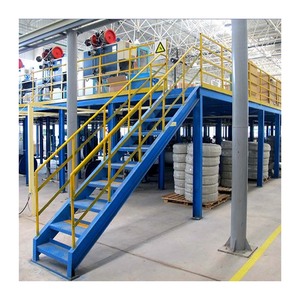
Yes. Uprights can be integrated into dual-entry back-to-back runs using heavy steel row spacer clamps that maintain precise flue space between bays. For vertical expansion, we manufacture internal heavy-gauge steel column splices and continuous engineered posts up to 6 meters in height. These support intermediate catwalks, staircases, landing decks, and handrail systems, transforming ground footprint into two or three working mezzanine floors without adding auxiliary building structural steel.
What is the standard production lead time and minimum order quantity (MOQ) for custom OEM configurations?
For standard catalog dimensions (such as 18"x36", 24"x48", 36"x72" in standard industrial blue, light grey, or matte black powder finish), the typical production lead time is 15 to 20 business days for a standard 40ft High Cube container. For custom OEM specifications requiring non-standard punch pitches, custom gauge steel, specialized corporate colors, or customized private-label retail packaging, the initial prototype lead time is 7 to 10 days, followed by full volume production within 25 days. Our minimum order quantity (MOQ) is generally one 20ft container or mixed equivalent.
How do you handle container stuffing optimization to minimize sea freight landing costs?
Because metal racking components are dense yet bulky, inefficient packing causes either premature weight "cubing out" or excessive empty space. Our logistics engineers utilize computerized 3D container packing software to calculate nested bundles of angle uprights and interlocked step beams. We balance heavy steel members on customized base pallets while placing lighter decking or accessories on top, consistently achieving 58 to 64 cubic meters of usable cargo in a 40ft HQ container while maintaining axle weight compliance for destination overland trucking.
What certifications and engineering documentation accompany each wholesale export order?
Every commercial consignment is supported by Mill Test Certificates (MTC conforming to EN 10204 Type 3.1) verifying steel chemical composition and tensile elongation. We also provide ISO 9001 factory quality audit certificates, third-party SGS or TUV load deflection validation reports, detailed PDF installation manuals with step-by-step assembly diagrams, and durable adhesive high-visibility safe working load (SWL) rating plaques for workplace safety compliance.
Accelerate Your Storage Efficiency with Factory-Direct Engineering
Whether you need bulk container shipments of standard boltless rivet shelving, custom OEM branded packaging, or an engineered CAD layout for an industrial distribution center, our direct mill engineering team is ready to deliver verified structural solutions.