No matching pages. Try "pallet", "mezzanine" or "cantilever".
No matching pages. Try "pallet", "mezzanine" or "cantilever".
Direct manufacturer procurement for standard teardrop racking, heavy-duty wire decking, reinforced push-back modules, coil chocks, and cold-rolled modular mezzanines engineered for extreme volumetric density.
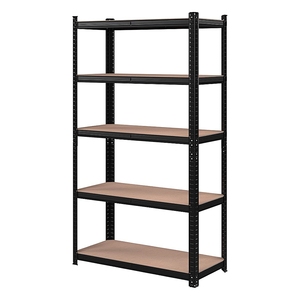
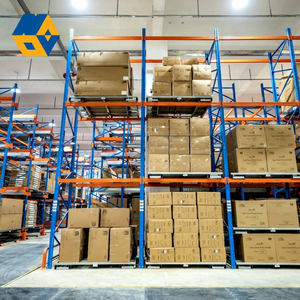
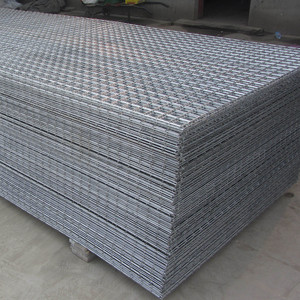
In global warehousing and automated fulfillment logistics, structural steel wire mesh shelving and wire decking serve as the critical interface between dynamic load handling and infrastructural safety. Sourcing directly from tier-one Chinese manufacturers offers international enterprise buyers, system integrators, and material handling distributors unrivaled economies of scale, metallurgical customization, and tight dimensional repeatability. However, achieving maximum return on capital expenditures requires a forensic understanding of raw material steel chemistry, cold-drawing physics, automated multi-spot resistance welding parameters, and localized compliance with standards such as ANSI MH26.2 in North America and EN 15512 across the European Union.
A primary risk factor in low-tier wholesale procurement is metallurgical variability. Authoritative manufacturers utilize prime-grade carbon steel rod stock sourced exclusively from tier-one state-certified steel mills (such as Baosteel or Shougang). For standard static wire mesh shelving and heavy-duty wire decking, Q235B steel (with yield strength $f_y \ge 235 \text{ MPa}$ and tensile strength $370\text{--}500 \text{ MPa}$) provides the ideal balance between elongation ductility and shear resistance. For seismic-rated racking uprights and dynamic high-density push-back support beams, high-yield Q355B alloy is selected to ensure structural stability under cyclic strain.
During the wire drawing stage, automated multi-pass continuous cold-drawing machines reduce the raw rod down to precise metric diameters (typically 4.0mm to 6.0mm, or American Wire Gauge 4 to 8 AWG) with a tolerance of less than $\pm 0.03\text{ mm}$. This cold-work hardening process increases the fundamental tensile strength of the outer wire envelope, ensuring that when resistance-welded into 50x50mm, 50x100mm, or 25x100mm grid configurations, the intersection shear values exceed the 2,500 N per joint threshold prescribed by stringent warehouse safety mandates.
Insurance regulations, particularly NFPA 13 standards established by the National Fire Protection Association, have drastically accelerated the obsolescence of solid timber and sheet-metal rack decks in favor of wire mesh decking. Solid platforms create hazardous thermal barriers that impede early smoke detection, trigger sprinkler delay, and deflect ceiling water outward into warehouse aisles rather than through the racking matrix onto combustible payloads.
Engineered wire mesh decking provides a verified minimum open area of 70%, guaranteeing unobstructed downward water flow from ceiling ESFR (Early Suppression, Fast Response) fire sprinklers. Furthermore, wire decking prevents the dangerous vertical chimney-effect draft common in poorly ventilated facilities while eliminating the accumulation of combustible cardboard dust and debris. Under ANSI MH26.2 testing protocols, a properly manufactured wire deck must withstand uniformly distributed static loads (UDL) up to 1,500 kg (3,300 lbs) per level with an allowable central deflection ratio not exceeding $L/200$ (where $L$ is the clear distance between load beams).
| Storage Decking Type | NFPA 13 Sprinkler Rating | Load Deflection (L/200) | Dust / Pest Resistance | Corrosion Resistance Life | TCO Score |
|---|---|---|---|---|---|
| Industrial Wire Mesh Decking (Galv/Powder) | >70% Open Area (Optimal) | Verified 1,000 - 1,500 kg UDL | Self-cleaning, Zero harborage | 15 - 25 Years (Indoor) | Lowest Lifecycle Cost |
| Solid Plywood / Marine Timber Decks | 0% Flow (Severe Risk) | Prone to sagging and warping | High dust absorption, mold risk | 3 - 7 Years (Delaminates) | High (Periodic Replacement) |
| Slotted Steel Racking Plates | 20% - 35% Flow (Marginal) | Rigid up to 2,000 kg | Moderate debris trapping | 10 - 20 Years | High Initial CapEx |
| Expanded Metal Grating | >50% Open Flow | High point-load rigidity | Moderate edge snagging | 10 - 15 Years | Moderate to High |
A critical engineering distinction when specifying wholesale wire mesh decking from Chinese suppliers is the geometry and thickness of the underlying structural support channels. The wire deck does not support loads through wire tensile strength alone; it transfers the downward vertical load into the rack beams through cold-formed roll-section steel channels welded beneath the wire mesh panel:
1. Universal Flanged Channels: Characterized by flat horizontal wings resting directly on the top surface of roll-formed box beams or structural channel beams. Flanged channels offer maximum universal compatibility across disparate beam types and are ideal for 3PL facilities with mixed beam brands.
2. Step Beam Flush Channels: Engineered with a notched profile that nests securely inside the 7/8-inch or 1-inch internal step of step-beams. This creates a low-profile deck surface completely flush with the top beam flange, preventing carton snagging and ensuring zero obstruction for forklift operators handling low-clearance pallets.
3. Inverted Structural Channels: Specifically specified for food-grade, pharmaceutical, and high-cleanliness fulfillment centers. The channel is welded with its apex pointing upward, eliminating the open upward trough common to traditional channels and preventing the deposition of dust, rat droppings, or moisture.
How automated logistics, cross-border carbon border adjustment mechanisms, and supply chain resilience are fundamentally redefining the technical specifications demanded by global procurement officers.
The explosive proliferation of Autonomous Mobile Robots (AMRs), Automated Storage and Retrieval Systems (AS/RS), and four-way radio shuttles is driving decking tolerances from standard static allowances down to sub-millimeter precision. Shelving panels must maintain uniform coplanarity without point-load sagging that could misalign robotic optical sensors, laser LiDAR navigation, or automatic pallet pickup forks.
Global procurement teams in Europe and North America are prioritizing Chinese steel suppliers capable of certifying low-carbon metallurgy. With the enforcement of the EU Carbon Border Adjustment Mechanism (CBAM), manufacturers deploying scrap-fed Electric Arc Furnace (EAF) steel wire and closed-loop water treatment in zinc phosphatization facilities are winning multi-year wholesale contracts over legacy coal-intensive blast furnace producers.
With volatile maritime container shipping rates, buyers demand intelligent nesting ratios. Optimized waterfall wire mesh geometries allow upward of 2,200 to 2,800 standard 46" x 42" wire decks to be tightly banded per 40ft High Cube container without deformation, effectively reducing per-unit landed ocean freight costs by up to 28% compared to non-nested channel profiles.
Cutting-edge production technologies that distinguish advanced tier-one Chinese wire mesh factories from regional workshops, guaranteeing repeatable structural excellence across mass-volume procurement batches.
Leading factories deploy synchronized CNC multi-head resistance spot-welding gantries capable of fusing up to 64 wire intersections simultaneously. Digital thyristor control modulates weld pressure, electrical current (in kVA), and dwell micro-seconds, eliminating cold weld brittleness and burned wire burn-through to guarantee 100% penetration across every structural coordinate.
Surface finishing has transitioned from solvent dipping to fully automated 7-stage eco-friendly pre-treatment tunnels featuring silane or zinc-phosphate conversion coatings, followed by electrostatic robotic powder deposition and curing at 200°C. This yields a non-porous 70–100μm thermoset epoxy-polyester shell offering 500+ hours of continuous ASTM B117 salt-spray corrosion resistance.
Before mass die punching and wire stamping, tier-one manufacturers utilize digital structural modeling and Finite Element Analysis (FEA) to simulate cyclic stress concentrations, pallet drop impacts, and dynamic fork-tine collisions. This predictive simulation optimizes channel gauge thickness down to the exact millimeter, eliminating superfluous dead weight while maximizing live payload safety margins.
Full-lifecycle manufacturing accountability: From millimeter-exact CAD layout simulation to high-volume containerized global shipping, we protect your capital investment at every operational phase.
We do not simply sell standard catalogue components. Our engineering team converts your warehouse floor plans into comprehensive structural drawings, verifying aisle clearances, forklift turning radiuses, building column envelopes, and clear ceiling heights under sprinkler lines.
Every structural batch is accompanied by authenticated 3.1 Mill Test Certificates (MTC), certifying chemical composition, carbon equivalent, yield strength, and Charpy impact values. Uprights, step beams, and wire decks are verified for exact pallet static and dynamic loads.
Every delivered system includes high-visibility load plaques conforming to OSHA and EN 15635 standards, spring-locking safety pins, structural heavy-duty floor anchor bolts, and floor-level column protectors that shield the bottom meter of uprights from forklift damage.
Dedicated logistics loading teams engineer computerized container pack plans using steel dunnage, protective foam edge-caps, and heavy-duty poly strapping to guarantee zero transit warping, scratching, or bundle shifting across long-distance ocean voyages.
Essential technical, logistical, and commercial inquiries resolved by our chief structural engineers to assist procurement directors in writing watertight technical tenders.
Uniformly Distributed Load (UDL) presumes that the payload weight is evenly spread across the entire horizontal grid matrix of the wire deck, allowing the support channels and perimeter wire perimeter to transfer stress proportionally into the rack beams. A Point Load occurs when concentrated weights (such as four small feet of a rigid steel container or wire basket) rest on tiny localized zones of the mesh. Wire mesh decks designed for UDL must never be subjected to equivalent Point Loads without adding heavy-gauge inverted hat channels or thick auxiliary bearing plates, as concentrated loads can shear cross-wires or cause severe plastic deformation.
NFPA 13 dictates that rack storage platforms must maintain a minimum open area of 50% (and ideally >70%) to ensure that water discharged from ceiling-mounted ESFR or standard spray sprinklers can quickly penetrate through multiple storage tiers down to the primary ignition source. Wire mesh decking with typical 50x100mm (2"x4") or 50x50mm (2"x2") grid apertures provides an unobstructed open flow exceeding 70%, which satisfies all major global commercial insurance underwriters (including FM Global), whereas solid wood or solid steel decks require costly in-rack sprinkler pipe installations.
Electro-Galvanized (EG) coatings provide an economical, aesthetically bright zinc layer (typically 8–12 μm) suitable for ambient temperature dry indoor distribution centers. Hot-Dip Galvanizing (HDG) immerses the fabricated steel panel into molten zinc at 450°C, creating a thick, metallurgically bonded zinc-iron alloy barrier (≥ 60–80 μm) that provides multi-decade corrosion resistance for harsh outdoor storage, marine coastal zones, or walk-in chemical storage. Thermoset Powder Coating offers an extensive range of RAL colors for picking zoning, scratch resistance, and an ultra-smooth non-abrasive surface optimal for retail backrooms and carton hand-picking.
A waterfall wire deck features wire extensions bent 90 degrees downward over the front and rear face of the load beam (typically a 1.5-inch drop). This waterfall geometry serves two vital functions: First, it acts as an absolute physical stop that prevents the wire deck panel from sliding forward or backward off the beam ledge during aggressive forklift pallet placement. Second, it covers the sharp roll-formed edge of the step beam, preventing snagging of shrink-wrap and carton tears while protecting manual order pickers from laceration injuries.
To produce an authoritative structural quotation, our engineering department requires: (1) Pallet dimensions (Length x Width x Height including cargo overhang) and maximum loaded gross weight per unit; (2) Warehouse clear building height to the underside of the lowest obstruction (sprinkler heads, lighting fixtures, or roof trusses); (3) Forklift model, mast lift height, and minimum aisle turning clearance radius; (4) Floor slab concrete grade, compressive strength (psi or MPa), and slab thickness; and (5) An architectural DWG/CAD floor plan indicating column spacing, fire exits, and dock loading zones.
High-volume manufacturers engineer the support channel spacing and waterfall geometry so that identical panels nest deeply into one another. Pallets are systematically stacked into dense bundles of 40 to 50 units, protected with corner edge-boards, wrapped in heavy VCI anti-corrosion film, and bound under pneumatic steel strapping. When loaded into 40ft High Cube containers, dynamic air bags and heavy timber floor bracing are installed to prevent container cargo roll during rough sea passages.
International standard EN 15635 mandates a three-tier inspection protocol: (1) Immediate daily reporting of forklift collision impacts by warehouse drivers; (2) Formal weekly or monthly visual safety inspections by a qualified warehouse safety manager; and (3) An annual expert technical audit conducted by an independent certified structural racking engineer. Deflections in upright columns exceeding 3.0mm over a 1-meter span or permanent beam deflections exceeding $L/200$ require immediate load offloading and structural component replacement.
Whether you require standard teardrop wire mesh decks, automated radio shuttle racking arrays, or a full turnkey multi-tier mezzanine layout, our engineering desk delivers precision CAD drawings, finite element stress analysis, and factory-direct wholesale pricing within 24 hours.