
No matching pages. Try "pallet", "mezzanine" or "cantilever".
No matching pages. Try "pallet", "mezzanine" or "cantilever".
Explore our turnkey, field-proven radio shuttle cart and rack architectures engineered for heavy payloads, sub-zero cold stores, fast-paced retail fulfillment centers, and high-bay AS/RS hubs.
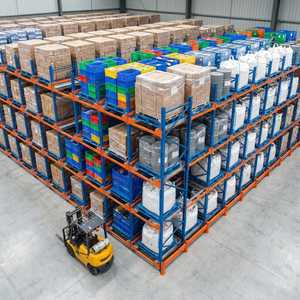
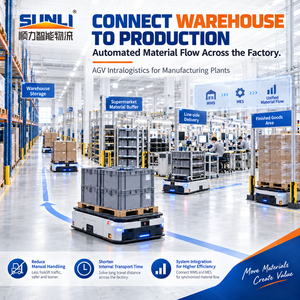
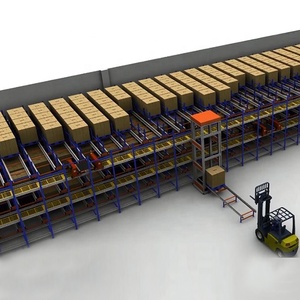
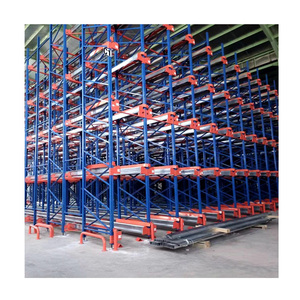
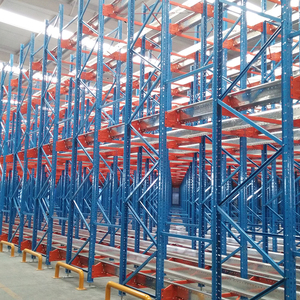
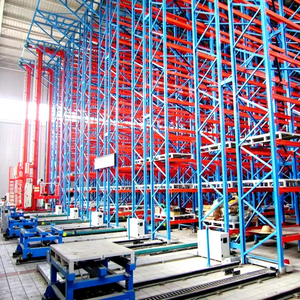
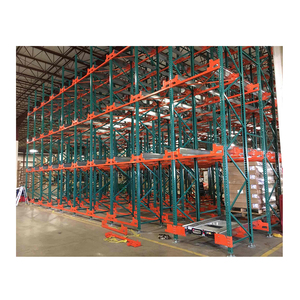
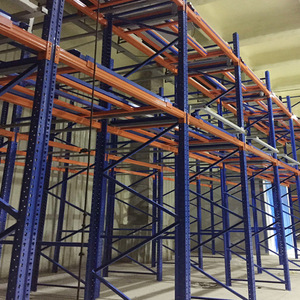
From custom structural profile extrusion and multi-axis CNC punching to rigorous static and seismic FEA simulation, our OEM export operations satisfy the highest demands of global supply chain infrastructure.
We source prime, certified Q235B and Q355B structural steel directly from state-owned mills. Every heat number undergoes ultrasonic testing and tensile coupon verification, guaranteeing deflection performance within 1/200th span under max dynamic payloads.
Our proprietary galvanized shuttle rails are cold-roll-formed in single-piece continuous lengths without section welding. Engineered with internal dual-lip tracks, they eliminate wheel derailment risks and support millions of high-acceleration shuttle cycles.
We do not push off-the-shelf catalogues. Every project begins with pallet mass-distribution calculations, forklift mast clear heights, slab flatness (DIN 18202 / TR34), and local fire-sprinkler shadow analyses to produce tailored CAD/BIM blueprints.
A comprehensive technical breakdown of how semi-automated radio shuttle pallet racking balances extreme cubic density with high dynamic throughput.
Frames feature bolted omega-profile upright columns up to 140 mm width, engineered to absorb vertical axial loads while resisting torsional racking stresses. Optimized bracing patterns comply with European EN 15512 and FEM 10.2.02 codes.
Equipped with brushless AC servo drives, regenerative electro-mechanical lift platforms, and military-grade CAN-bus microcontrollers. Integrated proximity photoelectric cells ensure millimeter-precise pallet positioning inside lanes.
Advanced Lithium Iron Phosphate (LiFePO4) power cells with built-in internal thermal heating jackets allow unhindered charging and continuous deep-freeze operation down to -30°C without capacity drop or electrolyte crystallization.
End-of-lane physical drop-stops, entry centering visual guides, fail-safe hydraulic wheel brakes, and Class-1 laser distance scanners prevent cart overtravel, forklift misplacement, and load tipping during emergency stops.
How global supply chain directors, third-party logistics (3PL) conglomerates, and retail giants are reshaping their automated storage investments to counter rising industrial real estate costs.
Traditional procurement once favored low initial CapEx systems like Drive-in racking. Today's procurement executives calculate Total Cost of Ownership (TCO) across 10-year operational cycles. Shuttle racking slashes forklift transit travel by up to 65%, cuts labor requirements in half, and virtually eliminates catastrophic rack upright impact damages caused by forklift in-lane intrusion.
With cold storage kilowatt-hour refrigeration tariffs escalating globally, cubic volumetric efficiency is the primary metric. Shuttle systems achieve up to 85% warehouse cubic volume utilization compared to only 45-50% in standard selective layouts, drastically minimizing the refrigerated cubic airspace that must be cooled.
Procurement departments are mitigating technological obsolescence through stepped investments. Operations start with semi-automated radio shuttles moved between lanes via existing reach trucks, and subsequently scale up into fully automated mother-child shuttles, vertical reciprocating conveyors (VRC), or stacker crane AS/RS as throughput peaks mandate.
Evaluate key technical, operational, and financial trade-offs before locking down your warehouse architectural layout.
| Storage Architecture | Cubic Space Efficiency | Forklift Damage Exposure | Throughput Cycle Velocity | Operating Method | CapEx Intensity | Labor Cost Reduction |
|---|---|---|---|---|---|---|
| Radio Shuttle Racking | 80% – 88% (Very High) | Ultra-Low (Exterior Only) | High (Auto Lane Transit) | Flexible FIFO or LIFO | Moderate | 40% – 60% |
| Drive-In Racking | 65% – 75% (High) | Extremely High (Trucks enter rack) | Low (Slow operator movement) | Strictly LIFO | Low | 0% – 10% |
| Selective Pallet Racking | 40% – 45% (Low) | Moderate (Many open aisles) | Very High (Direct access) | 100% Random Access | Very Low | Baseline |
| Gravity Pallet Flow Rack | 70% – 80% (High) | Low (Loading/unloading faces) | Moderate (Braked gravity flow) | Strictly FIFO | High (Roller tracks) | 20% – 30% |
| Stacker Crane ASRS + Shuttle | 85% – 95% (Extreme Max) | Zero (Fully automated) | Ultra-High (24/7 lights-out) | Full Software Managed | High – Very High | 80% – 95% |
Where intralogistics engineering is heading over the next decade: the convergence of robotics, AI-driven slotting, and omnidirectional pallet kinematics.
Evolution from traditional 2-way longitudinal carriers to 4-way multi-directional shuttles. Using dual wheelsets that mechanically switch 90 degrees, 4-way shuttles travel down storage tunnels and cross cross-aisles autonomously without manual forklift handling.
Next-generation shuttles incorporate hybrid graphene supercapacitors alongside LiFePO4 batteries. Shuttles top up power automatically in seconds whenever they dock on transport lifts or motherboard stations, enabling uninterrupted 24/7 round-the-clock operations.
Smart rack uprights and shuttle bogies embedded with strain gauges and vibration sensors stream real-time structural health diagnostics via Industrial IoT (IIoT). WCS platforms predict motor brush wear, bearing degradation, and rail misalignment before downtime strikes.
Machine-learning dispatch algorithms communicate directly with ERP systems. During warehouse shift changes or low-activity periods, shuttles independently execute automated lane consolidation, moving fast-moving SKUs to front pick faces based on forecasted daily order profiles.
Comprehensive answers addressing civil engineering, mechanical load constraints, operational safety, and overseas export standards.
For installations reaching heights up to 12 meters, concrete floor slabs must conform to DIN 18202 Group 3 or TR34 Class FM2 tolerances. Higher vertical AS/RS configurations exceeding 18 meters require FM1 or Superflat category slabs. Our structural team provides customized baseplate point-load calculations so your civil contractor can verify slab punching shear strength.
Radio shuttles require consistent pallet bottom skids. Deflected, cracked, or broken bottom boards can cause sensor trips. Our shuttle carriages feature optical profile scanners that verify bottom pallet clearance before elevating. For mixed or irregular pallets (such as Euro 800x1200mm and US 40x48" in the same facility), we supply custom dual-deck rail profiles and multi-sensor shuttles capable of auto-sensing pallet depth.
Yes. The physical racking rails run unobstructed from the loading aisle to the retrieval aisle. If an installation has an aisle on both the front and rear faces, operating in FIFO mode is a simple software command selection. If the rear face backs against a wall, the system operates in high-density LIFO mode. This provides future-proof operational versatility if your distribution logistics change.
We deploy industrial-grade Lithium Iron Phosphate (LiFePO4) cells rated for 3,000+ full discharge-charge cycles at 80% DoD (Depth of Discharge), equating to 7–9 years of active service. Standard configurations utilize a 1-to-1 or 2-to-3 ratio of spare batteries with quick-release slide-in battery trays, allowing continuous 24/7 multi-shift operations without taking shuttles off-line.
Structural components (uprights, beams, rails) are nested with heavy-gauge corrugated timber battens, polyester strapping, and multi-layer vapor-corrosion-inhibiting (VCI) shrink wrapping. Radio shuttles, electronic control boxes, and sensitive sensors are packed in export-certified, shock-damped plywood crates meeting ISPM 15 phytosanitary regulations.
For installations in earthquake-prone regions, our structural engineering team utilizes non-linear dynamic time-history FEA models in compliance with EN 16681 and RMI MH16.1. We engineer increased upright web dimensions, reinforced heavy-duty back-to-back ties, baseplates with chemical anchor embedment, and seismic anti-bounce rail locks that stop shuttle carts from dislodging under ground acceleration.
From architectural CAD layout analysis to final site SAT handover, we maintain unified quality oversight at every operational phase.
Reviewing pallet data, SKU turnover rates, and building clearances to generate structural Finite Element Analysis reports and 3D architectural CAD models.
Rollforming high-tensile steel uprights and galvanized guide rails on automated continuous roll lines with inline optical laser dimension verification.
Factory Acceptance Testing (FAT) on full test tracks: verified payload speed, electronic sensor braking, and radio signal integrity before export packaging.
Supervised field erection, plumb-and-level alignment, chemical floor anchoring, load signage commissioning, and operator certification.
Connect directly with our senior intralogistics structural engineers for custom OEM layout consultations, dynamic load calculations, and competitive FOB/CIF export quotations tailored to your exact specifications.