
No matching pages. Try "pallet", "mezzanine" or "cantilever".
No matching pages. Try "pallet", "mezzanine" or "cantilever".
Explore our structural mezzanine systems, high-density pallet racking units, and heavy-duty load-distribution support components manufactured under rigorous ISO 9001:2015, EN 15512, and ANSI MH28.3 quality management protocols.
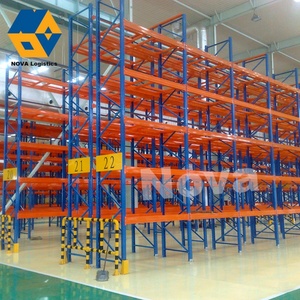
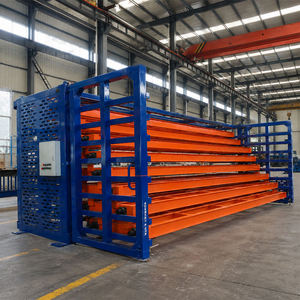
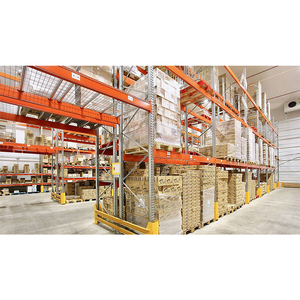
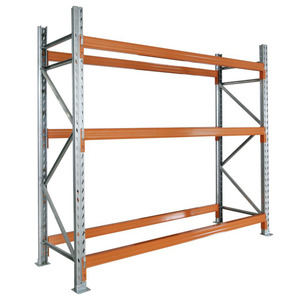
In the contemporary era of rapidly inflating industrial land expenditures, facility asset managers and third-party logistics (3PL) conglomerates can no longer afford to evaluate warehouse capacity strictly in terms of horizontal square meters. The financial imperative demands maximizing cubic volumetric efficiency ($m^3$). An elevated warehouse work platform—commonly designated in structural engineering as an industrial mezzanine, rack-supported platform, or elevated maintenance cat-walk—functions as a self-supporting structural sub-building erected within the building envelope. Unlike field-welded static civil structures, an engineered modular platform manufactured by a custom OEM exporter must harmonize three conflicting parameters: rigid deflection tolerances under unpredictable dynamic loading, rapid demountable field assembly without structural hot-work, and unyielding compliance with municipal seismic criteria.
Per ANSI MH28.3 (Design, Testing, and Utilization of Industrial Steel Work Platforms) and Eurocode 3 (EN 1993-1-1), structural members must be verified for limit state stress criteria where $M_{Ed} \le M_{c,Rd}$. The deflection of primary support girders under characteristic uniform live load ($q_k$) and concentrated single-point wheel loads ($Q_k$) produced by electric order pickers or AGVs must not exceed $L/240$ for standard industrial mezzanine floors, or $L/360$ to $L/500$ when supporting sensitive conveyance automation or continuous automated sorters.
When evaluating cold-formed thin-walled structural members (such as high-yield cold-rolled C-channel or Sigma purlins) against hot-rolled structural steel profiles (universal I-beams, H-sections, and rectangular hollow sections), structural deflection calculations dictate column grid layouts. Modern custom OEM platforms leverage high-tensile hot-rolled columns (minimum yield strength $f_y = 355\text{ MPa}$, equivalent to Q355B or ASTM A572 Grade 50) configured on 6m × 6m to 9m × 12m wide-span column grids. These expansive column bays accommodate ground-floor autonomous mobile robots (AMRs) and forklift traffic while supporting secondary cold-formed continuous joist systems spaced at 300mm to 600mm centers to distribute concentrated pallet truck wheel pressures without localized deck punching.
Procuring custom-engineered warehouse work platforms from a specialized OEM exporter eliminates the multi-tier markups of regional distributors while securing direct access to metallurgic test certifications, precise engineering submittals, and custom architectural tailoring. Operating over 45,000 square meters of vertically integrated fabrication floor space, our export-oriented manufacturing base integrates automatic continuous cold roll-forming lines, multi-spindle CNC beam drilling platforms, robotic GMAW welding cells, and an automated continuous six-stage chemical pre-treatment electrostatic powder coating line.
Every structural coil and beam undergoes automated ultrasonic thickness gauging and optical emission spectrometry to guarantee certified carbon, manganese, and silicon chemical composition matching EN 10025 S355JR and GB/T 1591 Q355B standards.
Automated 3D laser cutting machines contour connection plates, column baseplates, and bracing gussets to within ±0.5mm tolerances, eliminating on-site reaming, field flame cutting, and structural misalignment during international destination erection.
High-traffic industrial mezzanines demand abrasion resilience. Components pass through shot-blasting to ISO 8501-1 Sa 2.5 cleanliness, receiving thermosetting epoxy-polyester architectural powder coat (60–90 μm) or continuous hot-dip galvanization to EN ISO 1461 for cold storage or chemical zones.
Export packaging is an engineering discipline in itself. Heavy structural I-beams, cold-rolled joist bundles, floor decking pallets, safety handrails, and crated hardware are sequenced via 3D container stuffing software. This guarantees optimum weight distribution across 40-foot High Cube (40HC) and flat-rack ocean containers, mitigating shipping deformation while reducing container demurrage by ensuring immediate offloading order based on the site erection sequence.
Selecting the optimal warehouse platform architecture depends directly on the stored item profile, load handling machinery, slab compressive rating, and building fire protection design.
| Platform Typology | Primary Structural Support | Uniform Live Load Capacity | Max Column Spacing | Material Handling Integration | Primary Regulatory Alignment |
|---|---|---|---|---|---|
| Structural Steel Work Platform | Hot-rolled H-Columns & Primary Universal I-Beams | 500 – 2,500 kg/m² | Up to 12.0 Meters | Electric Pallet Jacks, AGVs, AMRs, Heavy Assembly | ANSI MH28.3, AISC 360-16, EN 1993-1-1 |
| Rack-Supported Mezzanine | Cold-Formed High-Bay Pallet Rack Uprights & Beams | 300 – 1,000 kg/m² | Standard Pallet Bay Widths (2.3m – 3.6m) | Manual Cart Picking, Tote Flow, Vertical Reciprocating Lifts | RMI MH16.1, EN 15512, EN 15620 |
| Catwalk / Multi-Tier Shelf Platform | Light-to-Medium Duty Storage Upright Posts | 200 – 500 kg/m² | Shelving Shelf Depths (0.6m – 1.2m) | Hand Picking, Garment Hanging, Bin Sorting | OSHA 1910.28, EN ISO 14122-2 |
| Cantilever Elevated Work Deck | Heavy Central Columns with Extended Load Arms | 400 – 1,200 kg/m² | Cantilever Centerline (1.2m – 2.0m) | Bar Stock, Pipe Storage, Timber, Side-Load Forklifts | EN 1993-1-3, RMI Standards |
Equally critical is the selection of the platform floor substrate. Standard options engineered at our factory include:
The international warehousing landscape is undergoing unprecedented transformation driven by robotic automated fulfillment, tight carbon-neutral manufacturing regulations, and extreme architectural agility demands. Procurement directors, EPC contractors, and supply chain vice presidents must account for four prevailing technological developments when preparing specifications:
Standard work platforms designed solely for human foot traffic fail under the high-cycle concentrated point dynamics of automated guided vehicles. The next generation of OEM platforms features dynamic damping structural trusses, reinforced joint dampeners, and joint-free floor coatings that deliver flatness ratings exceeding ASTM E1155 F-min 75 to eliminate robotic navigation sensor drift.
With fluctuating lease agreements on commercial warehouses, real estate tenants avoid non-recoverable capital expenses. Modern OEM designs strictly specify zero on-site welding. All structural connections rely on grade 8.8 or 10.9 high-strength structural bolts, enabling complete mechanical dismantling, containerization, and re-erection in alternative facilities with zero loss of structural integrity.
Factory pre-drilled structural members now come pre-configured to mount IoT deflection transducers, dynamic load-cell strain gauges, and impact vibration sensors. These devices deliver live telemetry alerting safety directors to unapproved localized platform overload, forklift structural base-column strikes, and structural post-seismic settling.
Global multinational corporations mandate Scope 3 carbon reduction profiles. As an OEM exporter, our raw steel sourcing includes Electric Arc Furnace (EAF) produced high-recycled-content structural profiles, finished with volatile organic compound (VOC)-free thermoset coatings with full Environmental Product Declarations (EPDs).
Answers to critical questions regarding technical design standards, anchor validation, site seismic parameters, and ocean freight logistics for EPC contractors and warehouse owners.
Connect directly with our senior structural mezzanine engineering team. Receive detailed architectural CAD layout drawings, finite element analysis (FEA) reports, and a comprehensive factory-direct export proposal tailored to your facility parameters within 24–48 hours.