
No matching pages. Try "pallet", "mezzanine" or "cantilever".
No matching pages. Try "pallet", "mezzanine" or "cantilever".
Engineered for direct containerized logistics and high-throughput warehouse environments. Each assembly utilizes high-tensile cold-formed upright uprights with custom hole punch geometries compliant with European EN, American RMI, and Australian AS standards.
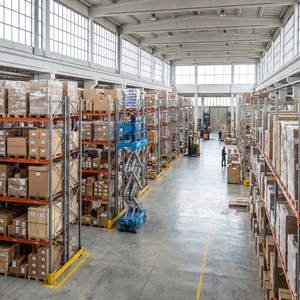
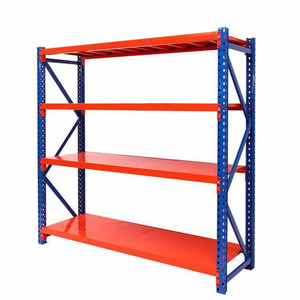
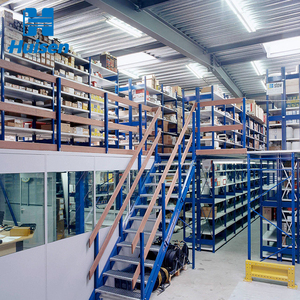
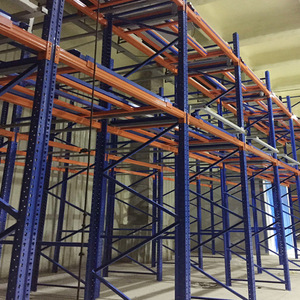
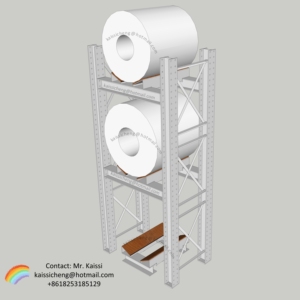
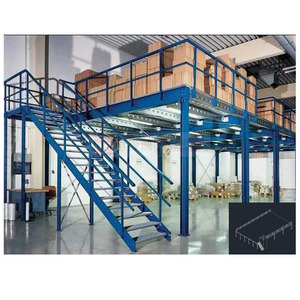
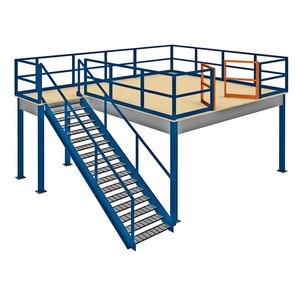
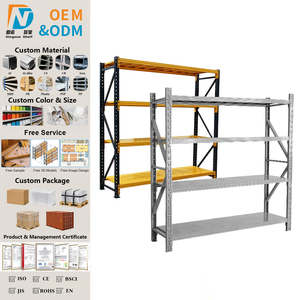
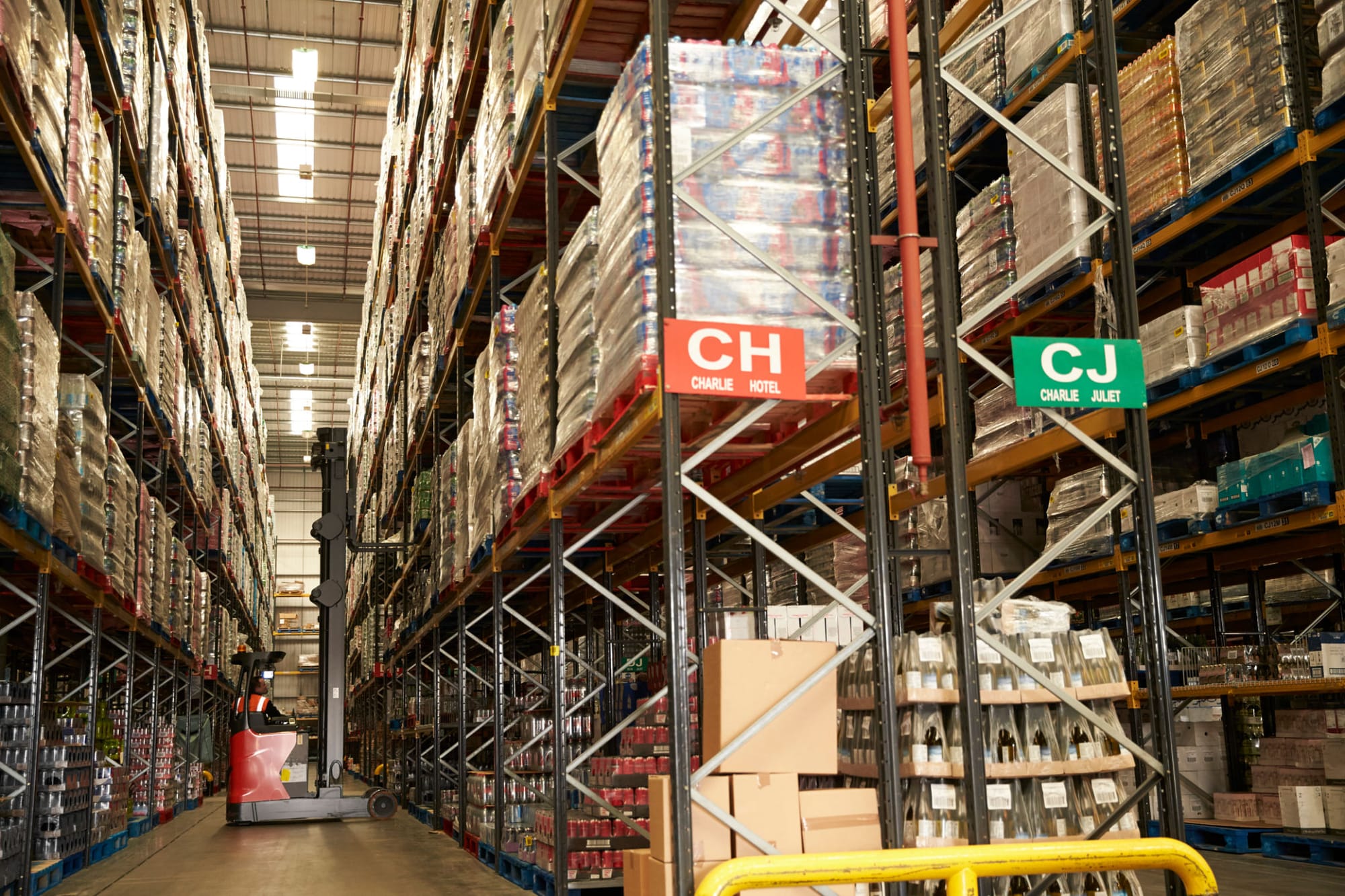
Pallet rack upright frames are the primary vertical load-bearing elements in industrial warehouses. Unlike standard structural hot-rolled columns, cold-formed open-section uprights must resist complex buckling modes—including local plate buckling, distortional buckling, and flexural-torsional buckling—governed by international design codes such as EN 15512:2020 and ANSI/RMI MH16.1-2021.
Our OEM/ODM manufacturing facility utilizes continuous roll-forming lines with up to 24 progressive bending stations. This gradual deformation schedule preserves the ductile microstructure of the material while introducing controlled work hardening along bend corners, significantly increasing effective section yield strength without compromising impact ductility.
As an established OEM/ODM manufacturing center, we deliver structural reliability, turnkey engineering calculations, and containerized export efficiencies to global contractors, distributors, and logistics designers.
We source prime hot-rolled and cold-rolled coils exclusively from top-tier primary mills (e.g., Baosteel, Shougang). Every batch is accompanied by genuine 3.1 Material Test Reports (MTR) confirming chemical composition, yield limits, and minimum 22% elongation.
Following proven engineering field workflows, our design team performs building surveys, slab capacity verification, forklift turning radius calculations, and full AutoCAD / BIM layout modeling prior to roll-forming production.
Full design compliance with EN 15512 (Limit State Design of Racking), EN 15620 (Tolerances and Clearances), EN 15635 (Inspection/Maintenance), and ANSI/RMI MH16.1. Certified stub-column and frame testing reports are available for structural sign-offs.
Automated pre-treatment including multi-stage degreasing, iron phosphating, and deionized water rinsing followed by electrostatic thermosetting polyester powder coating baked at 200°C. Delivers 500+ hours salt spray test resistance.
We manufacture custom punch patterns (Teardrop, Hexagonal, Diamond, Keyhole) and bespoke column widths (80mm to 140mm). We engineer drop-in replacement uprights for legacy installations worldwide, matching beam connector claws exactly.
Uprights are shipped either pre-assembled or in precision Knocked-Down (KD) condition. Interlocking profile bundling maximizes 40ft High Cube container volumetric capacity, driving down overseas ocean freight expenditure by up to 35%.
As automated warehouses, high-bay shuttle logistics, and stringent seismic requirements reshape modern intralogistics, pallet rack upright engineering is evolving rapidly across materials, geometries, and smart sensing.
Transition from standard Q235B to micro-alloyed Q355B and Q460 cold-forming grades. Advanced alloying (niobium, vanadium, titanium) reduces component tare weight while elevating load resistance, lowering carbon footprint and raw material tonnage.
High-bay Automated Storage and Retrieval Systems (AS/RS) exceeding 24 meters require upright vertical straightness tolerances within ±1.0mm per 10m height. Progressive roll-forming calibration prevents twist and camber, ensuring flawless automated crane transit.
Modern upright frames incorporate seismic isolator footplates and energy-absorbing ductile anchor connections. Compliant with FEMA 460 and Eurocode 8, these assemblies mitigate base-shear collapse under dynamic ground accelerations.
Next-gen upright installations are integrating embedded wireless strain and acoustic emission sensors into high-risk aisle posts. Real-time telemetry detects forklift impact anomalies and structural fatigue prior to permanent frame failure.
Supply chain directors and enterprise project managers are moving away from opportunistic spot buying toward direct foundry partnerships that mitigate tariff volatility, ensure traceability, and optimize Total Cost of Ownership.
Global procurement teams bypass regional traders to partner directly with primary OEM/ODM upright manufacturers. This eliminates broker markups, grants direct engineering oversight, and ensures audited quality control from steel coil to container loading.
High ocean container rates prioritize high-density shipping. Sourcing upright columns and bracing kits in knocked-down nested bundles doubles container payload weight, reducing logistics cost per pallet position by 30% compared to pre-assembled frames.
Procurement audits now emphasize life-cycle integrity rather than initial FOB piece cost. Specifying high-grade zinc-phosphated coatings and thicker column base assemblies prevents premature corrosion and costly operational warehouse downtime.
Multinational warehouse operators standardize on cross-compatible upright patterns (such as hybrid teardrop-slotted columns) to interchange beams, wire mesh decking, and accessories across facilities in EMEA, APAC, and the Americas.
Calculated according to EN 15512 and RMI standards. Capacities are contingent upon first beam elevation height and total frame bay configuration. Custom sections are available via our OEM tooling department.
| Profile Model | Dimensions (W x D mm) | Available Gauges | Material Spec | Max Frame Capacity | Pitch Options | Typical Application |
|---|---|---|---|---|---|---|
| UP-80 | 80 × 60 mm | 1.5 / 1.8 / 2.0 mm | Q235B Steel | Up to 11,000 kg | 50mm / 75mm | Medium-Duty Retail & Shelving |
| UP-90 | 90 × 70 mm | 1.8 / 2.0 / 2.3 mm | Q235B / Q355B | Up to 16,500 kg | 50mm / 75mm / 76.2mm | Standard Selective Pallet Rack |
| UP-100 | 100 × 70 mm | 2.0 / 2.3 / 2.5 mm | Q355B High-Yield | Up to 21,000 kg | 50mm / 75mm | Heavy-Duty & Double Deep |
| UP-120 | 120 × 95 mm | 2.5 / 2.8 / 3.0 mm | Q355B / Q460 | Up to 28,000 kg | 75mm / 76.2mm | Drive-In & High-Bay AS/RS |
| UP-140 | 140 × 95 mm | 2.8 / 3.0 / 3.2 mm | Q355B High-Yield | Up to 34,000 kg | 75mm Continuous | Automated Clad-Rack Buildings |
Theoretical upright calculations must be verified by on-site warehouse realities. Based on over two decades of international field installations across distribution centers, factories, and retail hubs, our engineering process incorporates crucial safety and durability provisions into every upright frame export package:
Addressing key engineering, structural compliance, surface integrity, and logistical questions commonly raised by industrial buyers, structural engineers, and global procurement managers.
EN 15512 uses limit state design principles with specific partial safety factors applied to loads and materials, requiring comprehensive stub-column and frame testing to determine effective section modulus. RMI MH16.1 utilizes both Allowable Strength Design (ASD) and Load and Resistance Factor Design (LRFD) based on AISI cold-formed steel specifications. Our engineering office performs calculations under either standard depending on your jurisdiction.
For international shipments, bolted upright frames are strongly recommended. Bolted frames ship knocked-down (KD), maximizing container cube utilization and reducing freight expenditure by up to 35%. Furthermore, if an upright column or diagonal strut suffers forklift damage during warehouse operations, a bolted assembly allows individual component replacement without discarding the entire upright frame.
We roll-form uprights primarily from Q235B (yield strength ≥ 235 MPa) and high-strength Q355B (yield strength ≥ 355 MPa, comparable to European S355JR and ASTM A1011 Grade 50). Full 3.1 Material Test Reports (MTR) detailing chemical heat analysis (C, Si, Mn, P, S) and mechanical tensile testing accompany each shipping lot.
An upright frame's buckling capacity is directly tied to the unbraced length of the lowest bay (the distance from the floor slab to the first beam level). As bottom beam height increases to accommodate reach trucks or ground pallet hand-pallet jacks, the column's effective slenderness ratio increases, reducing allowable frame load. Our engineers adjust column gauge or section depth to maintain design safety factors.
For sub-zero cold stores and blast freezers, continuous Hot-Dip Galvanization (HDG) compliant with ISO 1461 is ideal, providing complete metallurgical zinc-iron alloy protection against condensation and oxidation. Alternatively, we provide our low-temperature epoxy-polyester architectural powder coat engineered to resist brittle micro-cracking under thermal contraction down to -35°C.
Yes. Our in-house tooling division builds custom punching dies for OEM/ODM contracts. Whether your facility utilizes traditional American Teardrop, European Keyhole, 50mm pitch Omega, or specialized hook configurations, we can duplicate the profile geometry and connector pitch to integrate seamlessly with your existing beam inventory.
In moderate to high seismic zones (IBC Seismic Design Categories C through E), upright baseplates are enlarged and thickened (typically 8mm to 12mm plate) with slotted dual-anchor holes. This configuration redistributes seismic overturning moments across multiple concrete anchor bolts and facilitates ductile energy dissipation without catastrophic anchor pull-out.
According to EN 15620 (Class 400 adjustable pallet racking), the maximum out-of-plumb tolerance in both the cross-aisle and down-aisle directions is $H / 350$, where $H$ is the total frame height. For high-bay automated AS/RS racking (Class 100/200), tolerances tighten to $H / 500$ or less. Every installation must be verified with optical laser levels prior to commissioning.
Whether you require full-container shipments of standard teardrop upright profiles, custom roll-formed geometries for AS/RS automated integration, or complete site layout engineering compliant with EN and RMI standards, our technical specialists are ready to calculate your loads and supply comprehensive factory quotations.