
No matching pages. Try "pallet", "mezzanine" or "cantilever".
No matching pages. Try "pallet", "mezzanine" or "cantilever".
Explore our benchmarked warehouse racking configurations designed for max throughput, seamless FIFO stock movement, and high-load safety compliance.
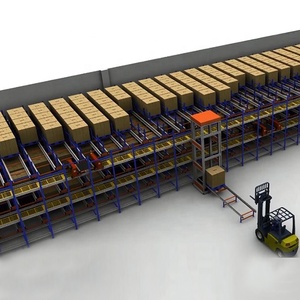
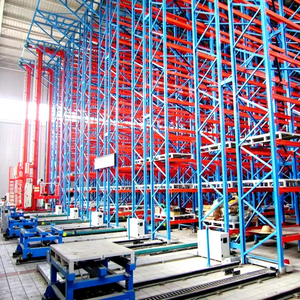
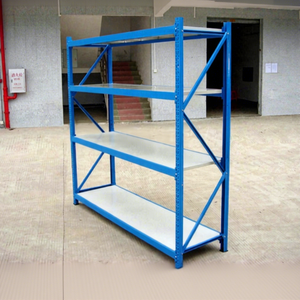

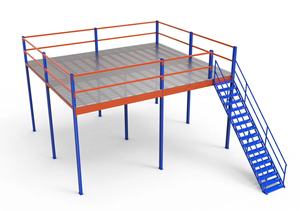
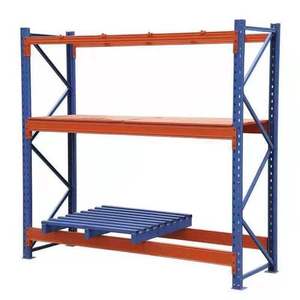
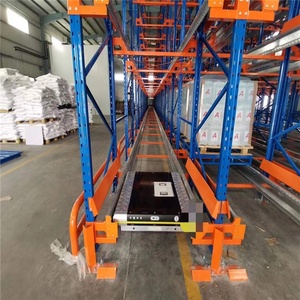
In modern e-commerce fulfillment centers, third-party logistics (3PL) hubs, and automotive distribution networks, the management of split-case picking and high-velocity SKUs demands maximum space utilization and zero-latency picking cycles. **Carton Flow Racking Systems** (also recognized as dynamic flow racking or gravity flow tracks) serve as the backbone of high-density, First-In, First-Out (FIFO) inventory management.
By utilizing inclined wheel or roller tracks integrated into structural racking frames, carton flow systems allow inventory loaded at the rear charge face to glide smoothly via gravity to the front discharge picking face. This physical segregation of loading and picking aisles eliminates labor bottlenecks, reduces travel distance for picking staff by up to 75%, and ensures continuous inventory rotation without electrical energy consumption.
A high-performance industrial carton flow shelf consists of four engineered sub-assemblies:
Selecting the optimal tier-1 OEM factory requires rigorous technical evaluation across manufacturing precision, steel metallurgy, safety compliance, and customization capability.
Tier-1 factories utilize high-tensile Q235B or Q355B cold-rolled steel profiles with certified yield strengths exceeding 235 MPa, ensuring zero structural sag under max dynamic capacity.
Leading manufacturers feature precision-molded thermoplastic wheels fitted with zinc-plated solid steel axles, rated for over 1,000,000 continuous roll cycles without wear deformation.
Full adherence to FEM 10.2.06, EN 15512 (Racking Design), EN 15620 (Tolerances), and RMI (Rack Manufacturers Institute) standards guarantees international safety clearance.
| System Type | Wheel / Roller Type | Max Load per Linear Meter | Optimal Incline Pitch | Primary Industry Best-Use |
|---|---|---|---|---|
| Light-Duty Poly Wheel Flow | Polypropylene (PP) Plastic Wheels | 25 kg / m | 3.0% – 4.5% | Pharmaceuticals, Small Electronic Parts |
| Medium-Duty Full Roller | Galvanized Steel Full-Width Rollers | 80 kg / m | 3.5% – 5.0% | E-commerce Split-Case Picking, FMCG |
| Heavy-Duty Aluminum Bed | Extruded Aluminum Tracks + Steel Bearings | 150 kg / m | 2.5% – 4.0% | Automotive Sub-Assembly, Industrial Hardware |
| ESD Anti-Static Flow Track | Conductive Polypropylene Wheels | 40 kg / m | 3.5% – 4.5% | PCB Manufacturing, Cleanroom Electronics |
As smart warehousing moves toward fully autonomous intralogistics ecosystems, carton flow racking systems are evolving beyond basic passive mechanical gravity tracks. Forward-thinking procurement officers must evaluate emerging technological innovations when specifying system requirements:
Modern carton flow discharge beds are pre-engineered with integrated wiring channels and sensor brackets designed to mount LED Pick-to-Light modules, driving picking accuracy to 99.99%.
Advanced factories are equipping carton flow charge faces with automated side-loading funnels that allow Autonomous Mobile Robots (AMRs) to automatically load totes directly onto gravity tracks.
Embedded optical sensors track carton movement in real-time, detecting lane jams or low inventory levels automatically and triggering replenishment alerts in the Warehouse Management System (WMS).
Next-generation flow tracks feature clip-in drop-over brackets that allow facility managers to adjust shelf incline pitch and lane widths in seconds without taking bays offline.
To ensure flawless performance, material handling engineers must perform critical physics calculations prior to issuing RFQs to factory suppliers.
The standard incline angle ($\theta$) for smooth carton travel ranges between **3.0% and 5.0%** grade (approx. 1.7° to 2.8°). The formula for determining pitch drop ($H$) across a flow bed length ($L$) is expressed as:
Height Drop (H) = Bed Length (L) × Desired Pitch Gradient (%)Different packaging materials exhibit varying static friction coefficients against plastic wheels or steel rollers:
GENEX Racking Solutions UAE stands as a premier regional manufacturer and turnkey integrator of heavy-duty industrial storage, pallet racking, and specialized carton flow racking systems. Serving global logistics hubs, factories, and commercial centers, GENEX delivers uncompromising engineering precision.
Our engineers perform 3D Laser site measurements and CAD structural simulation to verify floor slab integrity, sprinkler clearances, and aisle logistics.
From structural upright cold-forming to high-grade zinc galvanization and automated powder coating, GENEX provides full traceability on all components.
We provide certified rack safety inspections according to EN 15635 standards, rapid spare parts deployment, and ongoing capacity upgrades.
Technical and commercial guidance for warehouse operations managers and supply chain procurement leads.
Carton flow systems are engineered specifically for manual picking of individual split cases, totes, and small boxes using plastic or steel mini-rollers. Pallet flow racking utilizes heavy-duty multi-lane steel rollers designed to move full, palletized loads (up to 1,500kg per pallet) via forklift loading.
Yes. OEM carton flow beds are modularly engineered to fit onto standard selective pallet racking beams using universal clip-on step-beam hangers or dedicated adapter brackets, enabling rapid conversion of lower beam levels into high-density pick faces without structural replacement.
Carton stalling occurs due to insufficient incline slope or soft carton bottoms. To resolve this: 1) Increase the shelf incline pitch by 0.5% – 1.0%; 2) Upgrade from plastic wheels to full-width galvanized steel rollers; 3) Install plastic totes for soft or flexible cardboard containers.
Light-duty plastic wheel tracks typically support 15kg to 30kg per linear meter. Medium-to-heavy-duty full-width steel roller tracks support up to 100kg per linear meter, suitable for dense industrial hardware or liquid containers.
Per EN 15635 guidelines, visual in-house inspections should be conducted weekly, with formal documented inspections carried out by a certified racking engineer every 12 months. Roller tracks should be checked for debris, bent end-stops, and bearing free-play.
Connect with GENEX structural engineers to request custom CAD drawings, load calculations, and competitive OEM factory pricing tailored to your facility layout.
Get a Quote