
No matching pages. Try "pallet", "mezzanine" or "cantilever".
No matching pages. Try "pallet", "mezzanine" or "cantilever".
Certified high-capacity steel systems designed for heavy timber bundles, structural profiles, automated transport, and critical warehouse floor protection.
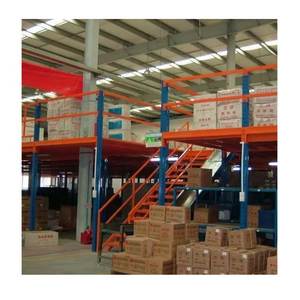
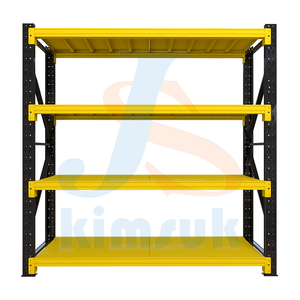
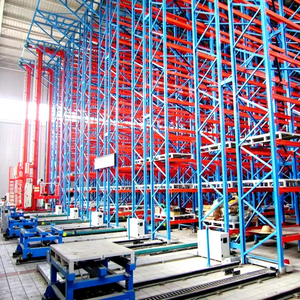
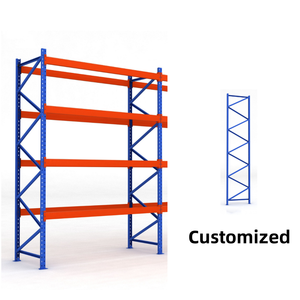
Lumber, structural timber, engineered wood glulam beams, and plywood packs present distinct logistical hurdles: extreme mass, varying lengths (from 2.4 meters up to over 14 meters), longitudinal flexibility, and vulnerabilities to deflection or bowing when supported incorrectly. Storing dense wood bundles on standard pallet racking is inefficient because front upright columns block long spans and restrict side-loader access. Consequently, industrial cantilever racking stands as the indispensable standard for sawmill facilities, building materials distributors, furniture factories, and timber shipping hubs worldwide.
Unlike standard static pallet shelving, cantilever systems rely on an unobstructed series of continuous structural columns with horizontally projecting arms welded or pinned directly to vertical masts. This layout eliminates front upright interference, allowing uninterrupted horizontal storage lanes. However, cantilever mechanics introduce tremendous bending moments into column bases and foundation anchor studs. Sourcing timber racks requires thorough structural calculations rather than simple catalogue ordering.
Proper lumber arm engineering incorporates an intentional upward camber taper (typically 1.5° to 2.5°) along the cantilever arm length. When full design loads are placed, arm bending deflection is neutralized, keeping wood packs level. Arm spacing must obey the timber deflection formula: center-to-center arm distance (D) must never exceed 1/3 of the overall bundle length, with overhangs never surpassing 1/6 of the bundle length, eliminating irreversible timber sag and structural arm shock loading.
Additionally, timber facilities increasingly operate outdoor storage yards exposed to marine salinity, UV radiation, and heavy rainfall. In these conditions, cold-rolled painted steel quickly deteriorates. Structural hot-rolled steel profiles (such as IPE, HEA, and HEB beams) paired with ISO 1461 hot-dipped galvanization have become standard engineering specifications for exterior timber racking installations.
Evaluated on structural steel quality, load testing rigor, automated manufacturing compliance, and engineering authority in heavy-duty timber storage.
GENEX is a premier industrial storage engineering manufacturer with advanced structural steel fabrication hubs in the UAE. Renowned for custom-engineered cantilever lumber racks, heavy mezzanine platforms, and automated timber staging, GENEX utilizes certified hot-rolled European standard profiles (IPE/HEB) and high-strength Q355B structural steel. Every system includes full FEA stress verification, precision CNC arm punching, custom outdoor canopy options, and end-to-end global project management from CAD site surveys to civil compliance testing.
OHRA is widely recognized across Europe as an inventor and specialist in heavy-duty cantilever racking for timber and steel trade. The company uses exclusively hot-rolled solid-wall steel profiles rather than thin sheet steel, providing exceptional resilience against direct forklift strikes. Their clip-in, unbolted cantilever arm suspension allows arms to swing upward and sideways when impacted by handling trucks, significantly reducing structural damage to columns and stock in high-throughput lumber yards.
Operating multiple large manufacturing facilities in the United States, Steel King delivers rugged heavy-duty cantilever systems built to RMI (Rack Manufacturers Institute) standards. They engineer both roll-formed and structural I-beam cantilever systems for lumber mills, retail timber yards, and forestry warehouses. Their arms feature welded hairpins and bolted connections with engineered safety load ratings that perform under seismic activity and high wind loading across American climate zones.
Wickens has over four decades of British manufacturing heritage focused heavily on heavy timber storage, timber merchants, and builders' merchants. All cantilever racks are designed and manufactured strictly in the UK in compliance with BS EN 1993-1-1 and SEMA codes. Wickens specializes in canopy-roofed outdoor lumber cantilever racks engineered to bear snow and wind exposure, as well as guide rail installations for timber side-loader forklifts.
Frazier Industrial is North America's largest producer of structural steel storage systems. Frazier relies exclusively on hot-rolled structural steel channels and I-beams (minimum 50,000 PSI yield strength) for cantilever columns and arms, rejecting thin roll-formed steel. This design makes Frazier lumber racks resilient in tough timber distribution yards where forklifts frequently bump column bases, ensuring long operational service without critical failure.
Based in Canada, Cantal-Industries specializes in heavy-duty cantilever systems built for sub-zero temperatures and high-snow lumber operations. Their exterior timber storage frames feature heavy galvanizing, thick anchor baseplates, and specialized roof truss supports engineered to handle northern snowpack loads without structural stress or timber pack dampness.
Dexion, part of Gonvarri Material Handling, is an established global storage brand with widespread manufacturing capabilities. Dexion manufactures light to extra-heavy cantilever racks for profiled timber, wooden sheets, and long goods. They offer an extensive range of arm lengths, upright heights up to 12 meters, and automated mobile base cantilever platforms that double storage capacity within timber warehouses.
SSI Schaefer is a global provider of logistics, warehouse equipment, and automated handling systems. While recognized for intralogistics ASRS, their heavy-duty cantilever product line serves modern timber processing plants needing automated transfer, sensor tracking, and heavy bundle flow. Their cantilever racking integrates seamlessly with automated guided reach vehicles and automated stacker cranes for raw timber and sheet stock.
Kimer is a respected southern European manufacturer with over 50 years of storage rack production experience. Kimer produces both structural I-profile and high-yield roll-formed cantilever racks specifically for timber molding, plank packs, and melamine panels. Their systems stand out for high-precision manufacturing tolerances, automated robotic welding, and flexible European distribution capabilities.
Redirack produces reliable heavy cantilever and timber handling systems for Canadian and American logistics operators. Their cantilever line features bolted and pin-connected arm configurations that simplify on-site beam level adjustments as timber bundle dimensions change. Heavy base anchors, welded tubular spacers, and sturdy structural cross-bracing provide dependable rigidity in active outdoor timber yards.
| Racking Topology | Structural Profile | Typical Arm / Tier Capacity | Ideal Wood / Stock Formats | Handling Equipment | Environmental Durability |
|---|---|---|---|---|---|
| Heavy Structural Cantilever | Hot-Rolled IPE / HEB Steel | 800 kg – 4,000 kg per arm | Long timber, glulam, telegraph poles, sawn logs | Side loader, 4-way reach, counterbalance | Superior (HDG ISO 1461: 30+ yrs outdoors) |
| Roll-Formed Cantilever | Cold-Rolled C-Profile | 250 kg – 900 kg per arm | Light moldings, trim, PVC, lightweight planks | Standard counterbalance, manual picking | Moderate (Internal dry storage recommended) |
| Cantilever Staging Mezzanine | Composite Column + Rack Floor | 500 kg – 1,500 kg / m² | Cut-to-size panels, hardware, retail timber pick | Order pickers, goods lifts, vertical hoists | Internal warehouse environment |
| Heavy-Duty Beam Racks | Box Beams + Steel Decking | 2,000 kg – 5,000 kg / level | Palletized short timber, plywood crates, MDF stacks | Standard reach forklift truck | High (Epoxy electrostatic powder coat) |
| Automated Cantilever ASRS | Precision Machined H-Section | 1,500 kg – 3,500 kg per cradle | High-throughput timber, CNC furniture supply | Automated stacker crane, laser shuttle | Climate-controlled smart warehouse |
Emerging engineering shifts transforming timber yard efficiency, environmental sustainability, and safety compliance across 2025–2030.
Traditional manual timber side-loaders are giving way to Automated Storage and Retrieval Cantilever Systems (C-ASRS). Driven by continuous laser sensors, computer-guided stackers safely transport 12-meter lumber packs with zero forklift collision damage.
Outdoor timber operations are moving beyond standard electro-galvanizing. Modern procurement mandates hot-dip galvanizing per ISO 1461 combined with an electrostatic architectural polyester powder topcoat, delivering 30+ year protection in high-salinity coastal yards.
Modern heavy lumber cantilever masts now incorporate embedded strain gauge sensors. These connected nodes measure real-time baseplate shear, wind-load torsion, and column deflection, immediately alerting yard managers before load limits are exceeded.
Global supply chain regulations require manufacturers to submit certified Environmental Product Declarations (EPD). Modern cantilever manufacturing prioritizes low-carbon electric arc furnace (EAF) steel recycled scrap to reduce corporate Scope 3 emissions.
Complete technical capabilities: from CAD engineering surveys and FEA stress modeling to certified structural steel production and global site installation.
We reject thin, easily damaged sheet metal. GENEX manufactures cantilever masts and heavy mezzanine platforms using genuine hot-rolled structural steel beams (Q355B / S355JR grade), delivering exceptional structural strength and long-term impact resistance.
Every timber yard possesses distinct handling flow patterns. Our engineering teams perform comprehensive site surveys, concrete slab pull-out load assessments, aisle turning radius simulations for side-loaders, and complete layout design to maximize cubic storage volume.
Our installations adhere strictly to European and international racking standards: EN 15512 (Design), EN 15620 (Tolerances), and EN 15635 (Inspection). We provide fully certified structural calculations, load notices, and anchor safety documentation for local authority approvals.
Clear structural and logistical answers to help procurement managers evaluate loads, safety factors, and foundation engineering before signing contracts.
Arm length must match the overall depth of the lumber pack (typically 1,000 mm to 1,200 mm) without excessive overhang that could unbalance the load. For arm spacing: determine the total bundle length, then set center-to-center column distance to no more than one-third of the total timber length, with outer bundle overhangs limited to one-sixth. For flexible, thin planks, columns should be spaced closer together (e.g., 1,000 mm to 1,200 mm intervals) to avoid longitudinal sagging between arms.
Roll-formed cantilever racks are fabricated by roll-shaping thin-gauge sheet coil steel. They offer a cost-effective solution for lighter, manual timber trims and moldings. Structural cantilever racks are built from heavy hot-rolled steel sections (such as I-beams and channel profiles). They deliver superior impact strength and load capacity, making them essential for commercial sawmills, high-tonnage timber packs, and rough outdoor yard environments subject to forklift impacts.
Yes. Outdoor timber yards routinely use external cantilever systems. However, these racks must be hot-dip galvanized per ISO 1461 to shield all surfaces from moisture corrosion. Outdoor designs must also incorporate site-specific wind calculations (per Eurocode 1 or ASCE 7), rainwater runoff designs, integrated overhead canopy roof systems, and appropriate foundation anchorage to counter wind uplift forces.
Because cantilever systems exert severe overturning moments on baseplates, the concrete slab must be professionally engineered. Typically, a reinforced concrete foundation with a minimum compressive strength of 25–30 MPa and a depth of at least 200 mm to 300 mm is required. For heavy-duty outdoor yards with heights above 6 meters, dedicated reinforced concrete strip footings or pile caps may be needed beneath the column lines to resist concentrated point loads and overturning forces.
Under heavy loads, all cantilever arms experience mechanical deflection. If an arm is manufactured completely flat (90° perpendicular), loading causes the tip to deflect downward, creating a forward slope where timber packs can slip off. A manufactured upward incline (1.5° to 2.5°) ensures that when arms support full working loads, they deflect into a level, horizontal position, securing the timber pack safely.
Under international standards such as EN 15635, warehouse operations must carry out weekly visual inspections by trained in-house staff, alongside a formal documented inspection by a certified structural rack inspector at least once every 12 months. Any column mast, arm, or cross-bracing showing deflection, weld cracking, or baseplate twist exceeding standard tolerances must be unloaded immediately and repaired.
Yes. Quality cantilever systems feature precision CNC punched holes along the column mast (typically on 75 mm or 100 mm pitch centers). Arms are secured using heavy-duty grade 8.8 structural bolts or high-tensile steel pins, allowing warehouse teams to easily raise, lower, add, or remove arm tiers as inventory profiles and pack heights change.
While standard counterbalance forklifts work well in wide aisles (5 to 6 meters), specialized equipment significantly improves storage density. Multi-directional forklifts and dedicated side-loaders operate in narrow aisles (2.2 to 2.8 meters). When paired with floor-mounted steel guide rails, side-loaders maximize warehouse cubic space and minimize truck collision risks.
Connect directly with our structural engineering team. Submit your timber dimensions, pack weights, forklift models, and facility CAD plans for a comprehensive structural review, load calculation, and layout quotation within 24 hours.