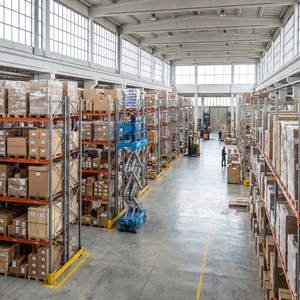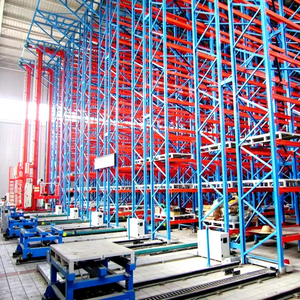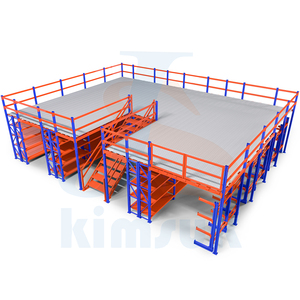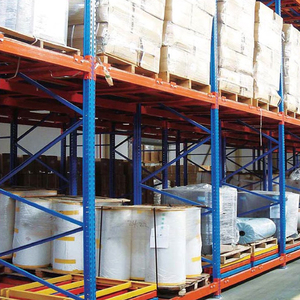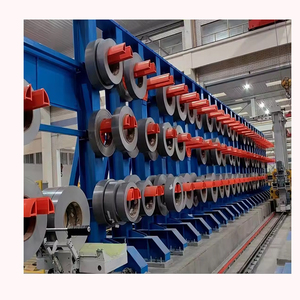
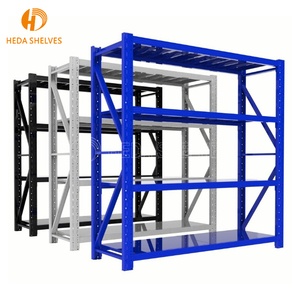
Wholesale Heavy-Duty Industrial Shelves Steel Multi-Layer Thickened Medium-Duty Rack for Warehouse Storage Light-Duty
- Bay Capacity: 800 - 3,500 kg/tier
- Steel Grade: Q235B Cold-Rolled
- Adjustment Pitch: 50 mm Boltless
- Finish: Electrostatic Epoxy
No matching pages. Try "pallet", "mezzanine" or "cantilever".
Every rack profile is precision roll-formed from cold-rolled structural steel, optimized through dynamic load simulations to withstand seismic events and aggressive high-frequency forklift operations.
Operating as an established Chinese bulk storage rack manufacturer with fully integrated manufacturing, we combine raw metallurgy selection, robotic stamping, continuous cold roll forming, and automated powder coating into an unbroken quality chain.
We source prime strip coils exclusively from top-tier state-owned mills including Baosteel and Shougang. Every batch undergoes verified yield point, tensile elongation, and chemical spectrometer testing (MTC EN 10204 3.1 certification guaranteed), rejecting second-rate micro-alloy scrap.
Our 24-pass cold roll-forming lines feature automatic online CNC high-speed punching. By applying progressive micro-forming rather than abrupt bending, our upright omega profiles retain cross-sectional thickness and work-hardening integrity without internal micro-cracks or torsional stress.
Beam connectors utilize laser-cut 3-to-5 claw brackets joined to step and box beams via OTC multi-axis industrial welding robots. Zero-spatter shielding gas guarantees 100% deep root penetration and maximum bending moment resistance under critical dynamic floor vibrations.
Components pass through a 9-stage surface pre-treatment (alkaline degreasing, nano-ceramic silane conversion, dual deionized rinsing) followed by automated Swiss/German GEMA powder guns. This yields an 80-120 micron uniform cured coating exceeding 500 hours of ASTM B117 salt-spray testing.
Structural engineering calculations comply strictly with European EN 15512:2020, American ANSI/RMI MH16.1, and Australian AS 4084-2023. Our engineering department executes full finite element analysis (FEA) to confirm stability across live load deflections, seismic shear, and wind loads for outdoor racks.
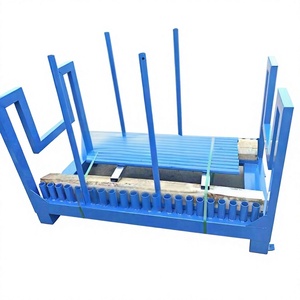
Upright frames are custom bundled using automated strapping machines with high-density EPE foam cushions, heavy corrugated protectors, and desiccant packs. Beams are stacked in interlocking cradles to maximize 40HQ container cube utilization while eliminating transit abrasions and rust during ocean voyages.
Evaluate industrial warehouse rack types across key mechanical criteria: storage footprint density, material handling vehicle requirements, rotational methodology, and relative capital expenditure.
| System Architecture | Floor Density | Pallet Selectivity | Rotation | Equipment Match | Max Clear Height | TCO Cost Index |
|---|---|---|---|---|---|---|
| Selective Pallet Racking | Baseline (40-45%) | 100% Direct Immediate | FIFO / LIFO | Standard Counterbalance, Reach Truck | Up to 14 m | $$ (Lowest Capex) |
| Double-Deep Pallet Rack | High (+30% vs Selective) | 50% Direct (2 Pallets Deep) | LIFO | Pantograph Double-Deep Reach Truck | Up to 12 m | $$$ (Moderate) |
| Drive-In / Drive-Thru | Very High (65-75%) | Low (Lane-based batch) | LIFO / FIFO | Narrow Counterbalance / Reach Truck | Up to 11 m | $$$ (Moderate) |
| Push-Back Cart Racking | High (55-65%) | Lane Selective (2-6 Deep) | LIFO | Standard Counterbalance Forklift | Up to 9 m | $$$$ (Advanced) |
| Pallet Flow (Gravity Roller) | Maximum Static (75-80%) | Dedicated Lane FIFO | Strict FIFO | Standard Reach / Counterbalance | Up to 12 m | $$$$$ (High Roller) |
| Multi-Tier Mezzanine Rack | Vertical Multiplication (+200%) | 100% Manual Hand Pick | Any Pick | Pallet Jacks, Goods Lifts, Conveyors | Multi-Level (15 m) | $$$$ (High Area Gain) |
| Cantilever Storage System | Specialized Linear Bulk | 100% Frontal Linear Access | Any Profile | Side Loaders, 4-Way Combilifts, Cranes | Up to 10 m | $$$ (Structural H-Beam) |
| Automated Crane ASRS | Ultra-High Dynamic (85-92%) | 100% Computerized High-Speed | Dynamic WMS | Robotic Stacker Cranes & Shuttles | Up to 35 m+ | $$$$$$ (Automated Turnkey) |
*Values derived from standard warehouse layouts adhering to EN 15620 clearance guidelines and 1,000 kg standard Euro/ISO unit loads.
How global warehouse operators, supply chain directors, and third-party logistics (3PL) conglomerates are shifting procurement criteria to prepare for automation, carbon compliance, and volatile inventory surges.
Procurement teams are shifting away from standalone static racking toward hybrid systems designed to interface seamlessly with Autonomous Mobile Robots (AMRs) and automated Guided Vehicles (AGVs). This requires tighter upright column tolerances (±1.0mm over 12 meters), specialized floor baseplate recessing, and the integration of barcode, QR, and RFID scanning surfaces directly into rack front flanges.
To reduce shipping weight, carbon footprint, and overall steel consumption without sacrificing structural integrity, next-generation procurement demands Q355B and high-strength micro-alloy grades. Utilizing cold-formed steel with enhanced yield points enables beam and column wall thicknesses to be optimized by 15-20%, reducing raw freight costs per container while retaining identical carrying capacities.
The rapid expansion of pharmaceutical and fresh perishable logistics has spiked demand for racks operating down to -30°C. Standard structural steel undergoes brittle transitions at sub-zero temperatures. Leading procurement specifications now dictate Charpy V-notch impact-tested steels (Q355D/E) combined with pre-galvanized or hot-dip galvanized DX51D+Z anti-corrosion treatments to eliminate micro-fracturing.
Rapid changes in e-commerce SKU velocity require modular storage geometries. Procurement contracts increasingly specify universal pitch systems (typically 50mm or 75mm European standard punching) with toolless quick-disconnect beam locks and modular mezzanine floors that can be disassembled, extended vertically, or relocated to new fulfillment facilities with minimal scrap loss.
Global logistics hubs situated in active seismic zones (e.g., California, Mediterranean Europe, Latin America, Pacific Rim) no longer accept generic load tables. Procurement whitepapers mandate site-specific modal response spectrum analyses matching IBC/Eurocode 8 seismic parameters, verifying ductile connection behavior between beam end-connectors and upright perforations.
Supply chain leaders are bypassing domestic rack middlemen and trading companies to partner directly with primary Chinese manufacturing facilities. By integrating turnkey CAD design, automated manufacturing, and direct container consolidation at source, enterprises reduce equipment capital expenditure by 28% to 42% while retaining end-to-end material warranty enforcement.
In-depth structural engineering insights into modern cold roll-forming, stress distribution mechanisms, and digitized warehouse racking life-cycle safety.
Modern rack structural validation relies on sophisticated non-linear elastic-plastic FEA software. We model the semi-rigid connection behavior (rotational stiffness $C_d$) between multi-claw beam connectors and perforated uprights. This accurate rotational restraint modeling prevents over-design while ensuring buckling safety factors exceeding 1.65 under maximum rated working loads.
Our 13-bend Omega (Ω) column cross-sections represent a major evolutionary step beyond conventional 7-bend profiles. The supplementary internal stiffening lips dramatically increase the torsional-flexural buckling threshold. This enables slender structural members to support massive axial compression loads while reducing overall deadweight.
Emerging smart warehouses are integrating optical and piezoelectric strain sensors along critical heavy-duty beam spans. These IoT nodes track real-time deflection ratios ($L/200$ to $L/300$) and log forklift collision energy transfers into warehouse management systems, triggering automated safety alerts before structural failure occurs.
Before issuing a Request for Quotation (RFQ) for bulk storage racking, prepare these technical parameters to ensure rapid layout turnaround and accurate engineering calculations.
Define accurate maximum pallet dimensions (Width x Depth x Height including cargo overhang) and maximum verified gross weight. Specify whether pallets are standard GMA (48"x40"), Euro (1200x800mm), or industrial skids, along with bottom runner orientation (2-way vs 4-way entry).
Measure building height to the lowest obstruction—typically fire sprinkler heads, lighting fixtures, HVAC ducting, or roof trusses. Maintain at least 500mm safety clearance between the top of the upper loaded pallet and sprinkler heads per NFPA / FM Global standards.
Verify concrete compressive strength (minimum C20/25 or 3,000 PSI recommended), slab thickness (typically 150mm to 250mm), reinforcement mesh type, and expansion joint locations. Footing anchor embedment depths must be verified against anchor pull-out shear tables.
Document specific forklift models, mast collapse heights, maximum fork elevation, and Right-Angle Stacking Aisle (AST) specifications. Standard counterbalance units require 3.5m - 4.0m aisles, reach trucks require 2.7m - 3.2m, and VNA turret trucks operate in 1.6m - 1.8m guided channels.
Specify the site's seismic zone parameters ($S_s, S_1$ acceleration values) according to local building authorities. In high seismic zones, rack upright baseplates require increased footprint dimensions, dual chemical/wedge anchor bolting, and heavy cross-bay back bracing.
State whether the installation is ambient indoor, sub-zero cold storage (-30°C), temperature-controlled pharmaceutical, high-humidity coastal, or outdoor exterior. Exterior or corrosive environments require hot-dip galvanizing (≥65μm) rather than standard powder coating.
Direct answers to the most common engineering, commercial, and operational questions asked by international supply chain procurement executives.
We primarily utilize prime cold-rolled carbon steel grades Q235B and Q355B (equivalent to European S235JR and S355JR, or American ASTM A36 and ASTM A572 Grade 50). Upright profiles requiring extreme axial compression strength are formed from Q355B with minimum yield strengths of 355 MPa, while horizontal load beams and secondary brace struts are roll-formed from Q235B. Every batch comes with certified 3.1 Mill Test Certificates verifying chemical composition and mechanical properties.
Our engineering design methodology strictly follows EN 15512 (European standard for cold-formed steel racking systems), ANSI/RMI MH16.1 (Specification for the Design, Testing, and Utilization of Industrial Steel Storage Racks), and Australian AS 4084. We perform regular physical destructive stub-column compression tests, beam connector shear-claw moment tests, and frame portal tests in our certified internal laboratory to validate finite element software simulations.
For standard selective pallet rack projects (1 to 5 containers 40HQ), standard production turnaround is 15 to 22 business days from drawing sign-off and deposit receipt. For complex engineered systems involving automated ASRS stacker crane rails, structural mezzanine platforms, or customized coil cradles, production spans 25 to 35 business days. Fast-track production lines are available for urgent logistics schedule demands.
Prior to powder coating, components undergo an automated 9-stage pre-treatment wash including chemical degreasing, pickling, and zirconium-based nano-passivation. We apply thermosetting epoxy-polyester hybrid powder coats cured at 200°C, producing an impervious 80-120 micron shell. For maritime transport, container stuffing includes heavy industrial desiccants and poly-wrap bundling to prevent condensation moisture and salt-fog oxidation.
Yes. Our in-house technical solutions department provides turnkey AutoCAD and 3D Revit/BIM layout design free of charge for qualified commercial projects. We evaluate building column matrices, clear heights, emergency egress corridors, NFPA sprinkler layouts, and forklift fleet specifications to deliver an optimized balance between static pallet density and operational cycle throughput.
Our standard pallet rack load beams are engineered to conform to the maximum permissible vertical deflection limit of $L/200$ (where $L$ is beam span length) under static uniformly distributed load (UDL), in accordance with EN 15512 and RMI standards. For automated crane ASRS systems or robotic shuttle tracks, we enforce stricter deflection criteria of $L/300$ or $L/400$ to maintain absolute sensor alignment.
We provide extensive OEM/ODM manufacturing partnerships for leading racking distributors, material handling integrators, and engineering houses globally. We can tool custom pitch punching (such as 50mm, 75mm, 76.2mm / 3-inch American teardrop patterns), customized claw connector styles, private-label branding embossed into uprights, and customized RAL corporate color powder formulations.
Each upright frame includes heavy-gauge baseplates drilled for mechanical wedge expansion anchors (typically M12 x 100mm to M16 x 120mm) or chemical capsule anchors for cracking-sensitive slabs. We also engineer wrap-around column guards, heavy steel U-shaped corner protectors, and rubber-cushioned end-of-aisle double crash barriers rated for 400 Joules impact absorption.
Connect directly with our engineering team for custom warehouse layouts, structural load calculations, factory direct pricing, and full container shipping schedules. Let us turn your warehouse footprint into a high-density, future-proof asset.