Certified Structural Fabrication & Engineering Exporters

Top China Steel Mezzanine Platforms Supplier & Exporters

Precision-Engineered Industrial Work Platforms, Multi-Tier Mezzanines, and High-Density Warehouse Storage Systems Fully Compliant with EN 15512, RMI, and AS 4084 Standards.

Export Solutions Portfolio

Featured Steel Mezzanine & Heavy-Duty Racking Systems

Manufactured using premium Q235B/Q355B structural steel, our modular multi-tier platforms and warehouse racks maximize vertical airspace and deliver uncompromising structural safety.
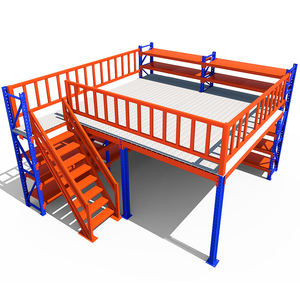
Steel Structure Mezzanine Floor Rack Platform
Mezzanine Platform

Steel Structure Mezzanine Floor Rack Platform

  • Load Capacity: 300–1,500 kg/m²
  • Decking Type: Steel Plank / B-Deck
  • Column Grid: Up to 9m Clear Span
  • Standards: EN 15512 / ISO 9001
View Product Specs
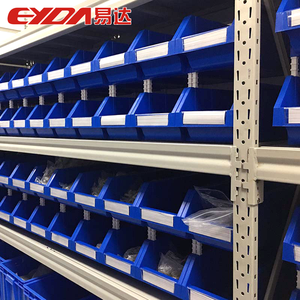
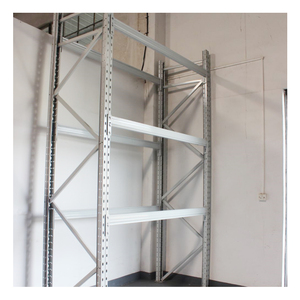
Heavy Duty Boltless Shelf Rack Adjustable Metal
Industrial Shelving

Heavy Duty Boltless Shelf Rack Adjustable Metal

  • Bay Load: 200–800 kg/Level
  • Assembly: 100% Boltless Interlock
  • Coating: Epoxy Powder Coated
  • Adjustability: 50mm Pitch Step
View Product Specs
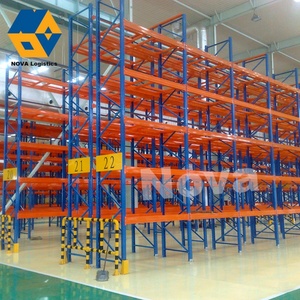
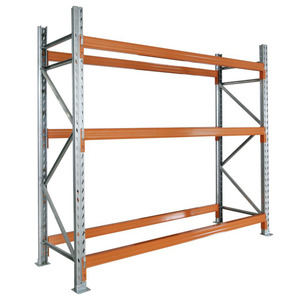
Industrial Warehouse Storage Steel Heavy Duty Pallet Rack
Pallet Racking

Customized Industrial Storage Heavy Duty Pallet Rack

  • Pallet Rating: 1,000–4,500 kg/Level
  • Steel Grade: High Tensile Q235B
  • Access: 100% Direct Selectivity
  • Finish: Electrophoretic Coating
View Product Specs
Light Duty Multi-Level Steel Storage Racks
Multi-Level Storage

Light Duty Multi-Level Steel Storage Racks

  • Configuration: 2 to 4 Working Tiers
  • Load per Tier: 150–350 kg/Shelf
  • Integration: Integrated Walkways
  • Application: E-Commerce / Spare Parts
View Product Specs
Automatic Pallet Racking System
High Density Racking

NOVA Heavy Duty Stacking Industrial Pallet Racking

  • Structure: Reinforced Upright Profile
  • Bay Heights: Up to 16,000 mm
  • Corrosion Class: ISO 12944 C3/C4
  • Beam Connection: 5-Hook Safety Locks
View Product Specs
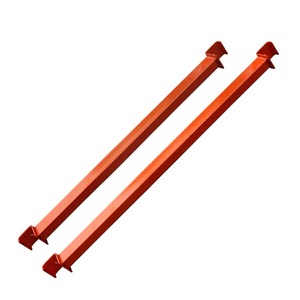
Heavy Duty Pallet Storage Support Bar
Safety Components

Heavy Duty Pallet Storage Cross Support Bar

  • Profile: Flanged / Top-Hat Fit
  • Material: Solid Rolled Steel
  • Safety: Prevents Pallet Sagging
  • Finish: Galvanized or Powder Coated
View Product Specs
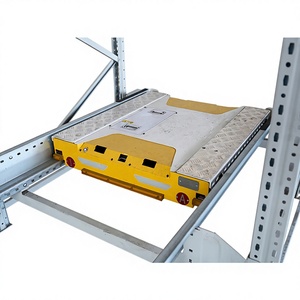
Pallet Shuttle Racking System
Automation & Shuttle

Automatic 4-Way Pallet Shuttle Cold Storage Rack

  • Operation: Automated 4-Way Travel
  • Environment: Ambient & Cold (-25°C)
  • Density: Up to 90% Footprint Use
  • Handling: Radio Remote / WMS Auto
View Product Specs
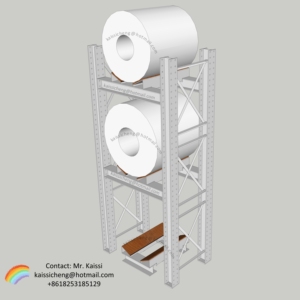
Heavy-Duty Steel Coil Racks
Heavy Heavyweight

Standard and Custom Heavy-Duty Steel Coil Racks

  • Load per Cradle: Up to 15,000 kg
  • Cradle Saddle: Urethane Lined / Steel
  • Design: Chock & Anti-Roll Lock
  • Structure: Structural H-Section Steel
View Product Specs
100%
Cubic Height Utilization
2.5k+
Global Projects Installed
Q355B
High-Tensile Prime Steel
EN 15512
Structural Code Certification
Industry Whitepaper & Technical Analysis

Engineering High-Capacity Steel Mezzanines: Structural Archetypes

In modern high-throughput logistics and industrial manufacturing, horizontal land acquisition costs represent an escalating barrier to scalable capital expenditure. Industrial steel mezzanine platforms solve footprint congestion by engineering structural work environments within existing vertical cube envelopes.

As international logistics hubs, fulfillment facilities, and automated factories face premium warehousing rental costs, structural steel mezzanine systems deliver an immediate doubling or tripling of functional operational square footage. When procuring steel platforms from certified Chinese manufacturing exporters, international buyers must discern between distinct engineering structural typologies to balance static structural payloads, seismic deflection allowances, and material handling workflows.

Structural I-Beam Mezzanines

Fabricated using heavy-gauge universal structural steel columns and hot-rolled H/I-beams. Engineered with wide column spans (up to 8m–12m clear bays), these systems provide expansive ground-level clearances ideal for autonomous mobile robots (AMRs), counterbalanced forklifts, and complex assembly lines.

Rack-Supported Mezzanines

Utilizing cold-formed structural pallet rack uprights and box beams as the primary load-bearing foundation. This configuration combines heavy unit-load pallet racking beneath with multi-tiered manual order picking corridors above, offering unmatched cost efficiency for high SKU density.

Multi-Tier Shelving Platforms

Engineered for lightweight carton consolidation, postal sorting, and e-commerce picking. By integrating modular boltless shelving frameworks with cold-formed, perforated interlocking steel flooring panels, multi-tier platforms create up to 4 picking levels without dedicated building alterations.

"Structural integrity in mezzanine engineering is governed not merely by ultimate tensile strength, but by strict Serviceability Limit State (SLS) deflection criteria. Under standard international building codes, live load deflection limits must adhere to L/360 or L/480 to prevent floor bounce, ensure sensitive conveyor alignment, and guarantee workforce ergonomic safety."

Technical Flooring & Decking Substrate Sizing Matrix

Selecting the proper deck profile depends on pallet jack rollability, fire safety code penetration, lighting transmission, and static concentrated point loads:

Decking Media Point Load Rating Sprinkler Transparency Pallet Jack Usability Ideal Industrial Application
Solid Checkered Steel Plate Extremely High (1,500+ kg) 0% (Requires Under-Deck Piping) Smooth Rolling Heavy Machinery, Tooling, Oil Drum Storage
Perforated Interlocking Steel Planks High (500–1,000 kg) 50% Open (Civil Defence Approved) Excellent General Warehousing, Multi-Tier Picking Towers
Heavy-Duty Galvanized Bar Grating Extremely High (1,200+ kg) 70%+ (Max Daylight & Airflow) Requires Steel Runners Industrial Processing, Chemical Storage, HVAC Plants
B-Deck with 25mm High-Density Resindek Medium-High (800 kg) 0% (Standard Dry Deck) Quiet & Smooth E-commerce Automation, AGV/AMR Sortation Decks
Enterprise Manufacturing Competence

Why Tier-1 Contractors Partner with China's Premier Exporters

From initial structural layout design to robotic cold-roll profiling and precision powder coating, our end-to-end quality assurance eliminates engineering risks for international infrastructure projects.

Certified Primary Mill Steel (Q235B / Q355B)

We source prime, mill-certified hot-rolled coils directly from world-class producers like Baosteel and Shougang. Every batch undergoes ultrasonic testing, yield strength verification, and chemical composition documentation, guaranteeing uniform yield thresholds of 235 MPa to 355 MPa without brittle fracture risks.

Global Engineering Standard Compliance

Our structural design workflows leverage 3D Tekla BIM and Finite Element Analysis (FEA) calibrated to international standards: European EN 15512, EN 15620, and EN 15635; American RMI MH16.1 and AISC 360; and Australian AS 4084-2023. We ensure compliance with strict seismic acceleration criteria and municipal building safety codes.

Advanced Automated Finishing & Galvanizing

Equipped with fully continuous automated shot-blasting, multi-stage acid phosphating, and electrostatic epoxy polyester powder-coating lines. We deliver coating thicknesses of 70–90 microns with cross-hatch adhesion tested to ISO 2409, as well as hot-dip galvanizing to ASTM A123 for harsh coastal or sub-zero cold-chain facilities.

Precision Trial Assembly & Quality Audits

Prior to international crating, primary column frameworks, staircase modules, swing gates, and heavy cross-beams undergo physical mock-up staging at our factory. Tolerances are validated using laser micrometers to prevent misalignments during overseas on-site installation.

Optimized Export Packaging & Ocean Logistics

Structural sections are flat-packed with high-tensile steel strapping, rust-inhibiting VCI film, and heavy-gauge wooden dunnage designed specifically for 40ft High Cube container stuffing. We maximize cubic container filling rates while safeguarding critical beam connector ears and powder finishes.

Full Project Lifecycle Engineering Support

Every export package comes complete with 3D assembly shop drawings, verified structural load calculations, component part numbering, and PE-stamped engineering reports. Our technical engineering specialists provide real-time remote supervision and on-site field assembly guidance across Europe, the Middle East, and the Americas.

Procurement Strategy & Intelligence

Future Development Trends: Steel Mezzanine Procurement (2025–2030)

The convergence of omnichannel supply chains, automated logistics robotics, and aggressive corporate decarbonization metrics is fundamentally changing how industrial mezzanine platforms are engineered and procured.

1. Robotics-Ready Structural Sizing

Future-proof mezzanine procurement increasingly specifies strict dynamic point-load allowances to accommodate Autonomous Mobile Robots (AMRs), Automated Guided Vehicles (AGVs), and vertical reciprocating conveyors (VRCs). Flooring systems are transitioning to resin-composite decks that eliminate vibration harmonics, dissipate static electricity, and withstand heavy wheel friction.

2. Modular Bolted Prefabrication

On-site welding and hot-work permits carry high operational liabilities and insurance costs in active warehouses. Modern procurement prioritizes 100% pre-punched, bolted structural connections. Prefabricated modular configurations allow fast multi-tier assembly, non-disruptive facility retrofits, and 100% structural relocatability as lease terms evolve.

3. Circularity & EPD Carbon Tracking

Multinational procurement contracts now require Environmental Product Declarations (EPDs) alongside standard mill test reports. Tier-1 Chinese steel fabricators are embracing electric arc furnace (EAF) scrap recycling, low-VOC powder coat chemistries, and structural beam optimization to cut embedded carbon across the supply chain.

Technical Planning Guide

Engineering Checklist: What Overseas Buyers Must Prepare

Providing verified building and operational parameters during initial inquiries shortens engineering cycles and ensures rapid turnaround on structural concept layouts and price quotes.

Phase 01

Clear Building Heights

Measure floor-to-lowest obstruction: HVAC ducts, roof trusses, crane bridges, and ESFR fire sprinklers. A safe minimum clearance of 2.4m per working level is required.

Phase 02

Slab Compressive Strength

Provide existing concrete slab depth (typically 150mm–250mm), core compressive strength (e.g., C25/30), sub-base reinforcement, and floor expansion joint placements.

Phase 03

Load Profile Breakdown

Define dead loads, uniform distributed live loads (UDL in kN/m² or kg/m²), pallet truck wheel-point weights, and dynamic equipment vibrations for AMR/conveyor systems.

Phase 04

Egress & Safety Compliance

Confirm local municipal guidelines: maximum travel distance to emergency exits, stair tread dimensions, self-closing safety gates, and 100mm kickplate toe-boards.

Expert Technical Guidance

Frequently Asked Questions: Steel Mezzanine Procurement

Comprehensive engineering insights addressing key procurement, certification, and structural safety questions for international buyers.

What are the key structural differences between Q235B and Q355B steel in mezzanine fabrication?
Q235B and Q355B represent the most widely specified Chinese structural steel grades, directly comparable to European S235JR and S355JR, or American ASTM A36 and ASTM A572 Grade 50. Q235B possesses a nominal yield strength of 235 MPa and is ideal for standard roll-formed decking, light-duty multi-tier uprights, and shelf stringers where geometric deflection governs design. Q355B offers a higher yield strength of 355 MPa (over 50% stronger), making it essential for primary structural columns, long-span heavy universal I-beams, and seismic cross-bracing. Utilizing Q355B reduces overall steel dead-weight while expanding column grid clear spans up to 10–12 meters.
How do Chinese manufacturers guarantee compliance with European (EN 15512) and American (RMI) standards?
Compliance is maintained through rigorous testing, finite element analysis (FEA), and strict manufacturing execution standards. EN 15512:2020 dictates Limit State Design methods, accounting for partial safety factors across live, dead, wind, and seismic load combinations. Our engineering teams perform stub-column compression tests, beam-to-column connector shear/moment stiffness tests, and full-scale bay push-over analyses. Component fabrication strictly adheres to EN 1090-2 Execution Class 2 (EXC2) with documented non-destructive weld testing (NDT), dimensional tolerance audits under EN 15620, and full material batch traceability.
Can a steel mezzanine be anchored safely onto an existing warehouse slab without new pile foundations?
In most instances, yes. Standard industrial concrete floor slabs with a thickness of 150mm to 200mm and a compressive strength rating of 25–30 N/mm² (3,500–4,000 PSI) can accommodate moderate column point loads (20 kN to 60 kN). Our structural engineers size custom oversized baseplates (typically 300x300mm to 500x500mm, with thicknesses from 12mm to 25mm) to safely distribute concentrated point loads below the concrete punching shear threshold. For heavy installations exceeding slab capacities, we design extended footings or configure multi-post load-spreading shoes, eliminating the cost and downtime of floor cutting and sub-slab piling.
How are fire safety and sprinkler requirements resolved on multi-level mezzanine platforms?
Fire safety regulations depend on local jurisdiction guidelines (such as NFPA 13 in the Americas, EN 12845 in Europe, or Civil Defence codes in the Middle East). If solid steel or timber decking exceeds specific square footage thresholds, water from ceiling ESFR sprinklers cannot penetrate lower tiers, requiring secondary under-deck fire suppression pipe networks. To avoid expensive under-deck plumbing, we frequently engineer floors with open steel grating or high-permeability perforated interlocking steel planks (providing 35% to 50% net open surface area). This design allows sprinkler water and smoke detection systems to operate freely across all levels.
What are typical production lead times, and how are components protected during long ocean shipping routes?
Standard manufacturing cycles range between 25 and 40 business days depending on system complexity, custom beam roll-forming, and tonnage. Because ocean transit exposes components to high humidity and salt-laden air, we use multi-layer packaging protection: critical beam connector brackets and machined surfaces are treated with vapor corrosion inhibitors (VCI), structural upright bundles are separated by wooden dunnage to eliminate friction, and packages are shrink-wrapped in UV-stable heavy-gauge polyethylene. We provide pre-packed modular hardware kits clearly marked with piece-level identifiers for direct assembly out of the container.
How does rack-supported mezzanine construction compare financially with traditional structural steel building extensions?
Opting for an internal rack-supported mezzanine typically saves between 50% and 75% compared to purchasing additional commercial land or pouring external concrete building extensions. Additionally, because free-standing and rack-supported steel platforms are classified in many jurisdictions as demountable capital equipment rather than permanent real estate fixtures, they qualify for accelerated tax depreciation (such as Section 179 in the US). They can also be demounted, expanded, reconfigured, or relocated if your operations move, protecting long-term capital investments.

Design Your Custom Structural Mezzanine System

Send our structural engineering department your warehouse architectural CAD drawings, clear ceiling heights, and payload requirements. We will engineer a custom, code-compliant 3D mezzanine layout and provide a competitive direct export quotation within 24 hours.

Send an Inquiry