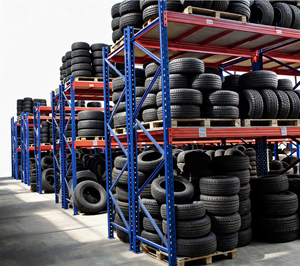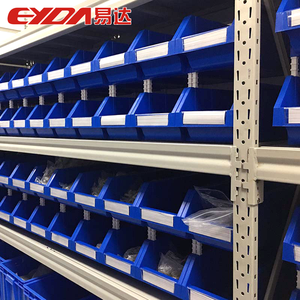
Top Trusted Industrial Storage Racks Suppliers & Exporters

Global Engineering Excellence in High-Density Heavy Duty Warehouse Pallet Racking, Custom Cold-Rolled Steel Storage Systems & ISO-Compliant Turnkey Logistics Infrastructure

Product Catalog

High-Performance Industrial Storage Rack Systems

Engineered with premium cold-rolled Q235B/Q355B steel, modular flexibility, and verified load ratings to optimize cubic warehouse space and warehouse safety standards globally.
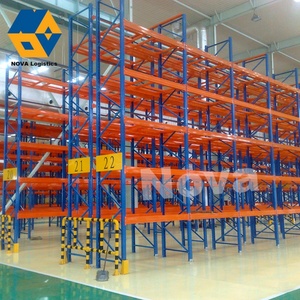
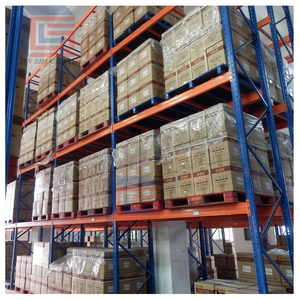
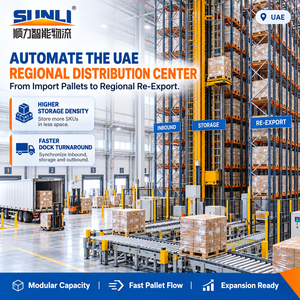
Customized Industrial Warehouse Storage Steel Heavy Duty Pallet Rack
Load Capacity: 1000 - 4500 kg/level
Material: Cold Rolled Q235B Steel
Feature: Adjustable Beam Pitch
Inquire Now
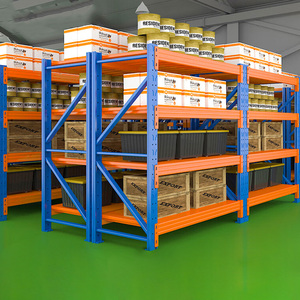
Industrial Heavy Duty Steel Pallet Rack Warehouse Shelving System
Load Capacity: Up to 5000 kg/bay
Surface Finish: Epoxy Powder Coated
Application: Logistics & Factories
Inquire Now
SHUNLI 5 Layer Heavy Duty Industrial Storage Shelf
Structure: Bolt-Free Adjustable
Layers: 5 Multi-Tier Storage
Protection: Anti-Rust Coating
Inquire Now
HY Heavy Duty Warehouse Pallet Racking
Frame Height: 2000 - 12000 mm
Access: 100% Direct Selectivity
Compliance: ISO9001 / EN 15512
Inquire Now
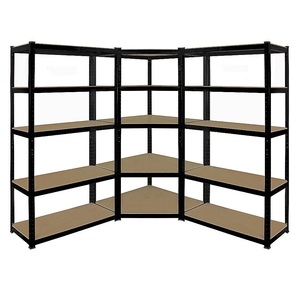
Metal 5 Layers Steel Warehouse Shelving Storage Rack System
Color Options: Black / Silver / Custom
Decking: Steel / Mesh / MDF Board
Versatility: Store & Warehouse
Inquire Now
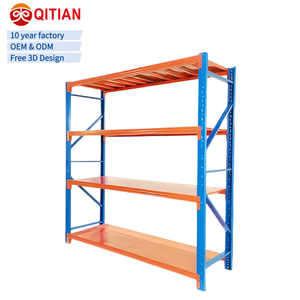
4-Tier Boltless Steel Warehouse Storage Rack
Tier Capacity: 200 kg / Level
Assembly: Boltless Interlocking
Coating: Powder-Coated Anti-Rust
Inquire Now
Yueyang Heavy Load Multi Layer Epoxy Powder Coated Racking
Heavy Duty: Structural Box Beam
Upright Section: 80/90/100/120 mm
Finishing: Electrostatically Applied
Inquire Now
Wholesale Light Duty Multi-Level Steel Storage Racks
Load Profile: 100 - 300 kg/tier
Customization: Height, Width & Layers
Target Use: Spare Parts & E-commerce
Inquire Now
25+
Years Manufacturing Authority
80+
Countries Exported Worldwide
50,000T
Annual Steel Processing
ISO/EN
Certified Structural Standards
Industrial Whitepaper

Engineering Standards & Enterprise Manufacturing Advantages

Comprehensive insight into structural metallurgy, safety compliance, and bespoke engineering for high-density warehouse environments.

In modern globalized supply chains, warehouse storage infrastructure is no longer viewed as static shelving; it is a critical structural asset directly affecting floor space utilization, operational safety, and throughput efficiency. Selecting leading industrial storage racks suppliers and exporters requires evaluating raw material integrity, finite element analysis (FEA) design capabilities, coating longevity, and compliance with stringent international structural standards such as EN 15512, FEM 10.2.02, and ANSI/RMI MH16.1.

Q235B & Q355B Structural Steel Integrity

Our heavy-duty pallet racking systems utilize high-tensile cold-rolled steel sourced exclusively from top-tier state steel mills. Cold-rolling enhances structural yield strength by up to 20%, ensuring frame stability under seismic loads and extreme weight thresholds up to 4,500 kg per beam level.

Electrostatic Thermosetting Epoxy Finish

Components undergo an automated 7-stage surface pre-treatment (degreasing, phosphating, rinsing) followed by electrostatically applied epoxy powder coating baked at 200°C. This yields superior impact resistance and protection against chemical abrasion, moisture, and corrosion (salt spray tested > 500 hours).

FEA Load-Testing & Structural Safety

Every profile design undergoes computer-simulated Finite Element Analysis (FEA) to determine buckling margins, safety factors (typically 1.65 to 1.8), and connection rigidity between upright columns and interlocking beam connectors equipped with high-visibility safety locks.

Enterprise Value Proposition: By combining computer-aided layout planning (CAD/BIM), strict metallurgical quality assurance, and automated continuous roll-forming lines, we reduce project execution lead times by 30% while offering extended 10-year structural integrity warranties on all heavy-duty industrial warehouse storage racking installations.
Industry Insight

Future Procurement & Technological Trends in Industrial Racks

Strategic analysis of automated warehousing, sustainable steel manufacturing, and high-density storage evolution through 2030.

1. Integration with Automated Storage & Retrieval Systems (AS/RS)

The global industrial racking procurement landscape is rapidly shifting from conventional static selective pallet racks to AS/RS-ready infrastructure. Modern multi-tier installations require ultra-tight tolerances (per EN 15620 Class 100/200) to support automated crane guidance, pallet shuttles, and Autonomous Mobile Robots (AMRs). Buying teams are now prioritizing rack suppliers capable of delivering structural deflection rates under L/300 to facilitate seamless robotic interaction and maximize vertical cube utilization up to 40 meters.

2. Sustainability, Circularity & Low-Carbon Steel Racking

Scope 3 emission targets are driving corporate procurement managers to select storage rack manufacturers utilizing zero-carbon recycled steel scrap and eco-certified powder coatings free of VOCs and heavy metals. Future export requirements in Europe and North America will necessitate Environmental Product Declarations (EPDs), carbon footprint accounting per ton of manufactured rack, and fully recyclable modular designs that permit easy reconfiguration without scrapping structural members.

3. Data-Driven IoT Load Monitoring & Smart Structural Sensors

Smart rack monitoring systems represent the next technological leap. Embedded strain gauges, vibration sensors, and impact detectors installed on baseplates and beam connectors deliver real-time Telemetry regarding structural fatigue, accidental forklift collisions, and unbalance loading. Procurement teams are seeking suppliers offering smart racking solutions that sync with Warehouse Management Systems (WMS) to trigger automated safety maintenance alerts.

4. Flexible Modular Cold-Chain & High-Density Shuttle Systems

With global cold-chain logistics expanding rapidly for pharmaceuticals and frozen food distribution, demand is surging for specialized hot-dip galvanized drive-in and radio shuttle racking systems. Galvanized surface protection resists severe condensation and temperatures down to -30°C. Multi-deep shuttle racking increases footprint efficiency by over 70% compared to standard selective setups while drastically lowering operating energy costs in refrigerated facilities.

Decision Matrix

Comparative Performance Analysis of Industrial Storage Rack Systems

Technical evaluation to guide global procurement managers in selecting optimal racking structures based on selectivity, density, rotation, and equipment interaction.

Racking System Type Direct Pallet Selectivity Storage Density Stock Rotation Method Max Load Capacity / Level Required Forklift / Handling Equipment
Selective Pallet Racking 100% (Immediate Access) Standard (40-50%) FIFO / LIFO Flexible 1,000 kg – 4,500 kg Counterbalance, Reach Truck, VNA
Heavy-Duty Steel Racking 100% Direct Access Medium (50-60%) FIFO / LIFO Up to 5,000 kg Heavy Forklift, Overhead Crane
Double Deep Pallet Racking 50% Immediate Access High (60-70%) LIFO (Last-In, First-Out) 1,500 kg – 3,000 kg Pantascope / Double-Deep Reach Truck
Drive-In / Drive-Thru Racking Low (Lane Dependent) Very High (75-85%) LIFO (Drive-In) / FIFO (Drive-Thru) 1,000 kg – 2,000 kg Standard Counterbalance Forklift
Gravity Pallet Flow Racking Medium (Face Access) Maximum (80-90%) Strict FIFO (First-In, First-Out) 1,000 kg – 1,800 kg Standard Load / Unload Forklifts
Cantilever Storage Racks 100% Open Access Specialized High Density Flexible 500 kg – 3,000 kg per arm Side Loader, Four-Way Forklift
Multi-Tier Mezzanine Racking 100% Manual / Pick-Face Multiplies Floor Area 2x-4x FIFO / Hand-Pick 300 kg – 1,000 kg / sqm floor Conveyors, Freight Lifts, Order Pickers
Boltless Light/Medium Shelving 100% Manual Access High Vertical Shelf Density Hand Picking 100 kg – 500 kg / tier Manual Loading / Hand Trolleys
Export Expertise

Global OEM/ODM Manufacturing & Turnkey Export Support

As a premier supplier and exporter of industrial storage racks, we bridge the gap between heavy structural engineering and international project execution. We serve logistics contractors, warehouse developers, and end-user enterprises across North America, Europe, the Middle East, Southeast Asia, and South America.

  • Complete Engineering Documentation: Structural calculations, stamped CAD drawings, finite element stress analysis reports, and installation manuals provided for municipal safety permits.
  • Optimized Container Loading: Customized packaging utilizing steel pallets, protective corner wraps, and bundled column framing to prevent ocean transit damage and maximize container volume utilization.
  • On-Site Supervision & Turnkey Installation: Experienced technical engineers deployed globally to supervise local installation crews, verify anchoring stability, and issue official safety load signage.
  • Strict Quality Control Protocols: In-house lab verification of steel tensile strength, weld penetration ultrasonics, and dry film coating thickness (DFT) checks on every batch.

Comprehensive Project Execution Workflow

1
Data Collection & CAD Layout:

Reviewing pallet dimensions, building clear heights, floor slab capacities, and forklift turn radiuses.

2
Precision Roll-Forming & QA:

Continuous cold-rolling profiles, automated multi-head punching, robotic welding, and epoxy powder coating.

3
Export Packaging & Shipping:

Steel-strapped bundle packing, sea-worthy moisture barrier wrapping, and direct port dispatch.

4
Installation & Handover Inspection:

Leveling baseplates, expansion chemical anchoring, safety lock engagement, and load capacity plaque mounting.

Procurement Guide

Frequently Asked Questions (FAQ) for Industrial Storage Racks

Expert engineering answers to critical procurement, safety, load rating, and customization inquiries.

How do I determine the correct load capacity required for my warehouse pallet racking system?
To determine the correct load capacity, calculate the combined maximum weight of your heaviest palletized goods (including pallet weight) and multiply by the maximum number of pallets stored per beam level. Add a minimum safety margin of 15-20%. Additionally, verify overall frame (upright bay) load capacity based on the vertical distance between beam levels, as larger unbraced beam intervals decrease the structural capacity of the upright frame.
What is the difference between Q235B and Q355B structural steel in industrial rack manufacturing?
Q235B steel offers a yield strength of approximately 235 MPa and tensile strength up to 470 MPa, making it ideal for standard medium to heavy-duty racking systems. Q355B (high-strength low-alloy steel) provides a yield strength of 355 MPa, allowing for thinner structural profiles with higher load-carrying capacity. Q355B is typically specified for high-bay racking systems over 10 meters, AS/RS structures, and heavy cold-storage installations.
What international structural standards should trusted industrial storage rack suppliers comply with?
Reputable exporters and manufacturers should design and test their systems according to European standards EN 15512 (Structural Design of Adjustable Pallet Racking), EN 15620 (Tolerances, Deformations, and Clearances), EN 15635 (Application and Maintenance of Storage Equipment), or American standard ANSI/RMI MH16.1. Facilities certified with ISO 9001 quality management and ISO 14001 environmental standards ensure consistent manufacturing precision.
What surface finishing option is best for cold storage or outdoor storage environments?
For cold storage rooms down to -30°C or semi-outdoor storage where condensation occurs, Hot-Dip Galvanizing (HDG) is superior. HDG coats steel components in molten zinc, forming a metallurgical bond that resists rust and physical impact. For standard temperature-controlled warehouses, a 7-stage pre-treatment electrostatically applied epoxy powder coating is cost-effective, durable, and highly resistant to scratching and chemical spillages.
How does aisle width impact the choice between Selective, Double Deep, and VNA Racking?
Aisle width directly dictates forklift selection and space efficiency. Standard Selective Pallet Racking requires aisle widths of 3.5 to 4.2 meters for standard counterbalance forklifts. Reach trucks reduce required aisle width to 2.8 - 3.2 meters. Double Deep racking uses similar aisle widths but doubles pallet depth (requiring deep-reach trucks). Very Narrow Aisle (VNA) systems compress aisle width to 1.6 - 1.8 meters using specialized turret trucks or wire-guided pickers, increasing space utilization by up to 50%.
What floor slab specifications are necessary before installing heavy-duty pallet racking?
The concrete floor slab must be structurally engineered to support concentrated point loads imposed by upright baseplates (often exceeding 5 to 10 tons per post). Requirements include a minimum slab thickness of 150 mm to 250 mm with non-shrink concrete (characteristic compressive strength ≥ C25/30 or 3000 PSI), levelness tolerances per DIN 18202 or ASTM E1155, and adequate distance from slab expansion joints to ensure secure anchor bolt expansion.
How often should warehouse industrial storage racking be inspected for safety compliance?
Under EN 15635 standards, racking systems require continuous visual checks by warehouse safety personnel, weekly/monthly documented internal inspections, and an annual comprehensive inspection carried out by an independent certified expert inspector. Any damaged uprights showing residual deflection exceeding 3 mm over a 1-meter length, or damaged beams with permanent deflection exceeding L/200, must be immediately unloaded and replaced.

Ready to Optimize Your Warehouse Storage Capacity?

Consult with our senior structural storage engineers today for customized CAD layout design, detailed load calculations, and competitive direct-factory export quotes tailored to your logistical requirements.