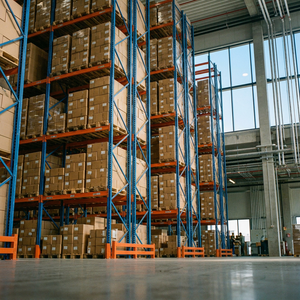
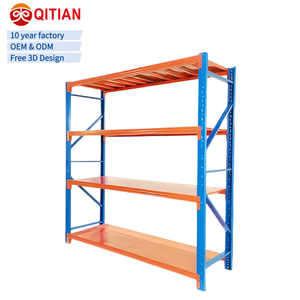
Multi Level Heavy Duty Shelf Multi Layer Shelf Garage Stacking Shelf Warehouse Storage Rack
- Load Capacity: 300 - 800 kg/tier
- Structure: Multi-Tier Mezzanine
- Finish: Epoxy Powder Coated

No matching pages. Try "pallet", "mezzanine" or "cantilever".
Explore our certified, precision-engineered warehouse storage solutions built to ISO 9001 standards with cold-rolled Q235B/Q355B high-tensile structural steel.
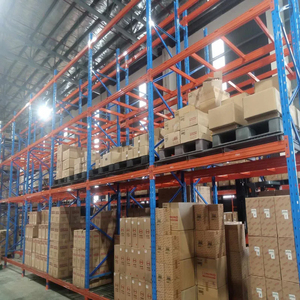
An in-depth technical analysis for warehouse managers, procurement officers, and structural engineers optimizing heavy-duty industrial space.
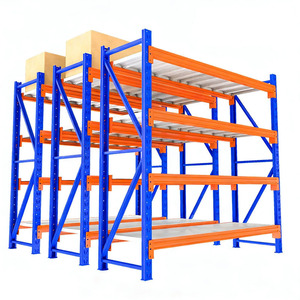
Longspan shelving systems serve as the critical backbone for medium-to-heavy non-palletized inventory, bridging the operational gap between light-duty clip shelving and structural heavy-duty pallet racking. Industrial-grade longspan systems manufactured by leading global factories rely on high-tensile cold-rolled steel (typically grades Q235B to Q355B or ASTM A1011 equivalent).
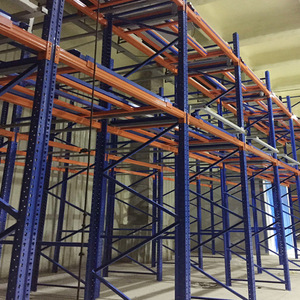
The load-bearing architecture consists of upright frames perforated with teardrop, diamond, or trapezoidal keyholes on a precise 50mm or 75mm pitch. This allows step-beams or box-beams to lock securely using multi-claw connectors equipped with automatic safety locks, preventing accidental beam displacement caused by operational forklift impacts or manual loading errors.
Under strict European EN 15512 and FEM 10.2.02 standards, maximum beam deflection under Uniformly Distributed Load (UDL) must not exceed L/200 for standard hand-loaded shelving, and L/300 for automated integrated systems. This ensures zero permanent plastic deformation over decades of continuous maximum payload usage.
Industrial storage facilities operate across vastly different environments—from climate-controlled pharmaceutical distribution hubs to high-humidity coastal warehouses and sub-zero cold storage facilities. Advanced factories employ a rigorous 7-stage surface pre-treatment process:
| Storage System Type | Load Capacity Range | Access Selectivity | Optimal SKU Density | Structural Profile Specification | Target Operational Use |
|---|---|---|---|---|---|
| Industrial Longspan Shelving | 200 – 1,000 kg / level | 100% Direct Manual Access | Medium – High | Step-Beam & 50x50mm Upright Profile | E-commerce order picking, automotive parts, carton storage |
| Heavy-Duty Pallet Racking | 1,000 – 4,500 kg / level | 100% Direct Forklift Access | Standard Density | Box-Beam 80-140mm & Omega Upright 90-120mm | Palletized logistics, heavy machinery, bulk manufacturing |
| Radio Shuttle Racking | 1,500 kg / pallet position | Lane-Based (FIFO / LIFO) | Ultra-High (+80% gain) | Cold-Formed High-Rigidity Guide Rail Channels | Cold storage, beverage distribution, high-volume seasonal SKUs |
| Automated AS/RS Systems | 500 – 2,000 kg / cell | 100% Automated Stacker Crane | Maximum Volumetric (Up to 40m) | Precision Toleranced Structural Tower Frames | Smart automated factories, high-speed regional hubs |
| Rack-Supported Mezzanines | 300 – 1,500 kg / m² | Multi-Level Manual Access | 200% - 300% Cubic Gain | Heavy C/Z Purlins & Tubular Steel Columns | High-density fulfillment centers, multi-tier manual archives |
Combining decades of precision cold-roll engineering, stringent quality controls, and custom CAD layout modeling for seamless warehouse integration.
Our manufacturing lines feature automated 18-stage cold-roll forming mills, robotic continuous seam welding, and laser CNC punching machines. Every rack profile undergoes Finite Element Analysis (FEA) testing to model stress distribution, buckling behavior, and dynamic load fatigue.
We rigorously comply with EN 15512, EN 15620, EN 15635, ISO 9001, and CE international standards. All load ratings are backed by empirical destructive testing and factory load-displacement testing procedures.
From site survey and building column grid analysis to floor slab strength evaluation and forklift aisle clearance planning, our experienced engineering team provides detailed 2D CAD drawings and 3D BIM models prior to production.
Contact our structural design team today for free CAD layout design, floor slab capacity calculations, and factory-direct wholesale pricing.
Contact UsHow automation, sustainable steel manufacturing, and micro-fulfillment hubs are shaping the future of industrial material storage.
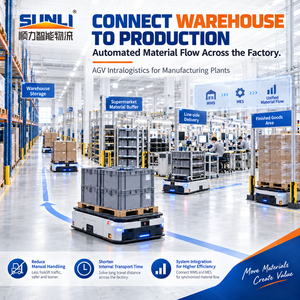
Modern longspan shelving systems are rapidly evolving from static storage units into dynamic interfaces designed for Autonomous Mobile Robots (AMRs) and Goods-to-Person (G2P) picking systems. Future longspan designs feature widened pick windows, barcode/RFID tracking integration on shelf lips, and flush-bottom shelf decking optimized for robotic underslung clearance.
Global logistics operators are aligning procurement with Scope 3 emissions reduction targets. Future procurement dictates a shift toward green steel manufactured in Electric Arc Furnaces (EAF) utilizing high scrap ratios and renewable power, combined with solvent-free, non-toxic powder coating processes that eliminate Volatile Organic Compounds (VOCs).
The incorporation of micro-electromechanical sensors (MEMS) into critical upright frames allows real-time monitoring of deflection strain, seismic vibration, and impact shock caused by material handling equipment. Instant alerts prevent structural collapse before micro-fractures propagate through load-bearing columns.
As fast-delivery e-commerce demands proximity to urban cores, industrial storage must adapt to high-rent, low-height facilities. High-density, fully modular boltless longspan systems that can be reconfigured without tools allow rapid deployment in micro-fulfillment centers with minimal downtime.
Get authoritative answers on load ratings, building code compliance, installation requirements, and corrosion protection.
Longspan shelving is engineered primarily for hand-loaded, non-palletized inventory, with typical load capacities ranging between 200 kg and 1,000 kg per shelf level. Pallet racking is designed for heavy palletized loads handled by forklifts, with level capacities from 1,000 kg up to 4,500 kg. Longspan systems utilize thinner, precision-formed profiles and step-beams with drop-in steel, wire mesh, or timber decking, whereas pallet racking utilizes open structural box beams to support wooden or plastic pallets directly.
To calculate the required shelf capacity, calculate the maximum weight of goods stored on a single level and ensure even distribution (Uniformly Distributed Load - UDL). Add a minimum safety margin of 20% to account for operational variance. Furthermore, frame capacity must be verified by calculating the cumulative load of all beam levels supported by an upright frame between anchor points on the concrete slab.
Industrial longspan shelving requires a level, non-cracked concrete floor slab with a minimum compressive strength of 20 to 25 MPa (C20/25 grade). For multi-tier or heavy longspan runs, slab thickness should be at least 150mm to accommodate expansion anchor bolts. Floor point loads must be checked against the building slab load limits to prevent punching shear failure.
Steel Panels: Ideal for heavy industrial components, liquid storage, and environments requiring easy cleaning and non-combustible material certification.
Wire Mesh Decking: Highly recommended for facilities requiring overhead sprinkler water penetration compliance (fire safety codes) and light transmission.
Particle Board / MDF: Cost-effective solution for dry, climate-controlled retail or archive storage, but not recommended for high humidity or wet environments.
According to EN 15635 standards, racking and longspan systems must undergo visual in-house inspections weekly or monthly by a trained safety manager, and a fully documented annual inspection by a certified structural racking inspector. Any uprights or beams displaying permanent deformation exceeding 3mm over a 1-meter span must be unloaded and replaced immediately.
Yes. Heavy-duty longspan uprights can serve as structural support columns for multi-tier mezzanine picking floors. Heavy C-section main floor beams lock onto modified longspan frames, allowing 2-tier or 3-tier walk-on catwalk floors, complete with staircases, handrails, pallet access gates, and integrated lighting channels.
For high-salinity coastal areas or chemical plants, we offer hot-dipped galvanized (HDG) finishes conforming to ISO 1461, providing 65–85 µm of protective zinc coating. Alternatively, marine-grade epoxy powder coatings with zinc-rich primers can be applied for superior chemical resistance.
Standard color and dimension longspan components are maintained in stock for rapid dispatch. Custom engineered orders (special profiles, heavy load profiles, custom RAL colors) typically require 2 to 4 weeks for factory fabrication, powder coating, and quality assurance testing prior to containerized ocean shipment.
Partner with top-trusted longspan shelving factories. Request structural load engineering calculations, custom 3D warehouse layouts, and factory-direct volume quotes today.