
No matching pages. Try "pallet", "mezzanine" or "cantilever".
No matching pages. Try "pallet", "mezzanine" or "cantilever".
Engineered to withstand rigorous operational cycles and stringent seismic safety benchmarks across South Korea's logistics corridors.
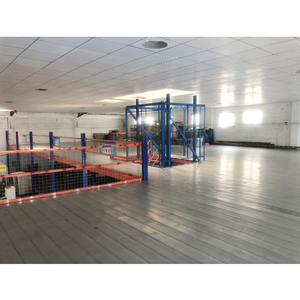
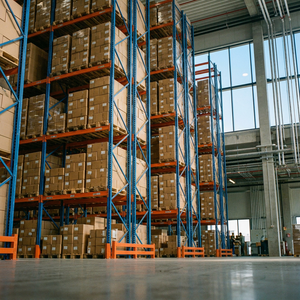
In high-throughput, high-velocity distribution centers across the Seoul Capital Area (SCA), warehouse operators face unprecedented floor-load constraints, intense turnover speed, and seismic compliance mandates. While light cold-formed racking is standard for consumer retail shelving, true heavy-duty intralogistics demands CE-certified structural pallet racks fabricated from certified structural steel channels (C-channels) and structural I-beams (wide-flange shapes). This whitepaper details why structural steel has become the baseline infrastructure choice for South Korean logistics developments.
Industrial structural racks feature structural channel uprights with minimum flange thicknesses of 5.0 mm to 8.0 mm, continuously welded or bolted with high-tensile Grade 8.8 / 10.9 structural bolts. This architecture exhibits ductile behavior during seismic events, preventing sudden buckling failures. In cold-store environments (-25°C to -30°C), our structural steel grades conform strictly to EN 10025-2 S355JR / J2 or equivalent Korean KS SS275 / SM355, eliminating brittle fractures that occur when low-spec commercial steel drops below its ductile-to-brittle transition temperature.
Certified High-Yield Structural Steel Base
Maximum Working Load Per Beam Level
Seismic Acceleration Resistance (KDS 41)
International Safety Handover Standard
From the industrial complexes of Gyeonggi-do to port-connected free-trade zones in Incheon and Busan, our structural pallet racking systems satisfy precise physical and regulatory frameworks.
The primary logistics corridor south of Seoul (Gyeongbu and Yeongdong expressways) hosts massive e-commerce fulfillment hubs for retail giants. Extreme parcel throughput requires structural selective and double-deep racking with reinforced impact guards, accommodating clear ceiling heights up to 24 meters without deflection.
Supplying Seoul's food delivery sector requires automated radio shuttle and drive-in structural racking operating between -20°C and -30°C. Fabricated using high-impact structural steel and hot-dip galvanized protective coatings, our systems eliminate thermal-cycling fatigue and corrosion from condensation.
Situated in Pyeongtaek, Hwaseong, and Cheonan, cleanroom-adjacent raw material and tooling warehouses utilize high-precision structural mezzanine platforms and heavy-duty coil/die racks. These systems maintain strict micro-vibration damping and high point-load distribution across concrete slabs.
Air-cargo transit hubs adjacent to Incheon International Airport (ICN) manage high SKU turnover with stringent international cargo dimensions. Structural wide-span selective racks optimize direct pallet access, allowing reach trucks and turret trucks to pick seamlessly within narrow aisles.
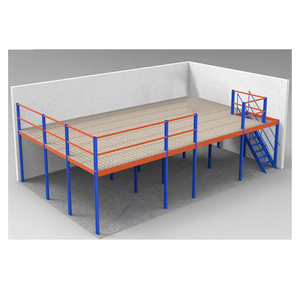
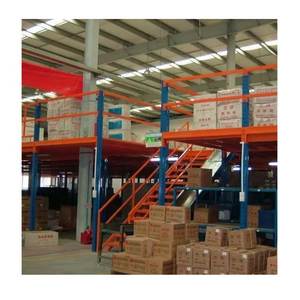
Within dense municipal districts like Seongdong-gu and Gasan Digital Complex, astronomical land valuations make horizontal expansion impossible. Modular industrial mezzanine rack systems convert vertical space into 2-to-3 tiered manual picking levels, integrating goods lifts and parcel chutes.
Heavy tooling fabricators and automotive suppliers require engineered coil racks and structural cantilever arms capable of sustaining uneven line-loads up to 6 tons per arm. Structural hot-rolled steel sections prevent permanent plastic deformation under dynamic drop loading.
Evaluating load carrying capacities, life cycle durability, and total cost of ownership (TCO) for logistics asset managers.
| Evaluation Parameter | CE Certified Structural Pallet Racks | Standard Roll-Formed Pallet Racks | Operational Impact in Korea |
|---|---|---|---|
| Steel Profile & Formation | Hot-rolled structural C-channels & WF Beams (5.0–10.0mm) | Cold-rolled sheet steel formed into profiles (1.5–2.5mm) | Structural resists catastrophic mast impact; roll-formed tears easily |
| Yield Strength ($f_y$) | 355 N/mm² (S355JR / KS SM355) | 235 N/mm² (S235JR / KS SS275) | 51% higher load margin before yielding under seismic excitation |
| Beam-to-Column Connection | Heavy steel connection plates with Grade 8.8/10.9 structural bolts | Slot-in clip connectors with safety pins | Bolted joints eliminate accidental beam dislodgement under upward shocks |
| Cold-Store Performance (-30°C) | Charpy V-Notch impact tested at -20°C / -30°C (S355J2) | Standard commercial grade, subject to low-temp embrittlement | Prevents sudden brittle frame shear inside Korean frozen logistics hubs |
| Seismic Qualification | Strict compliance with KDS 41 & Eurocode 8 (Ductility Class DCL/DCM) | Requires extensive secondary sway-bracing to achieve baseline compliance | Accelerates building permit and structural fire approval processes |
| Maintenance & TCO | Expected lifecycle 25+ years; individual components repairable | High repair frequency; upright tears mandate complete bay unload | Lowers warehouse insurance premiums and downtime costs |
South Korea’s intralogistics sector is undergoing a rapid technological transition driven by demographic shifts, ultra-fast delivery expectations (such as dawn delivery services), and municipal safety regulations. Three dominant trends define current racking procurement:
With warehouse land costs in Gyeonggi-do exceeding KRW 6–10 million per pyeong, operators are building upwards (18m–35m). These installations combine structural pallet racks with automated stacker cranes and radio shuttles, demanding millimeter-accurate deflection tolerances (EN 15620 Class 100/200).
Following seismic events in Gyeongju and Pohang, South Korea enforces the Korean Design Standard (KDS 41) on all industrial structures. Warehouse racking exceeding 6 meters in height is legally classified as non-structural building components requiring third-party PE seismic stamping and heavy-duty anchorage.
Following warehouse fire safety reforms implemented by the Ministry of Land, Infrastructure and Transport (MOLIT), storage components must meet strict non-combustibility criteria. Structural steel racks with electro-deposited epoxy or hot-dip galvanization ensure non-combustible compliance and fire sprinkler clear heights.
Expert engineering insights addressing common structural, regulatory, and logistics inquiries from Korean procurement teams.
Yes. CE certified structural racks manufactured to European Standards EN 15512 (Steel static storage systems – Adjustable pallet racking systems – Principles for structural design) and EN 1090-1 (Execution of steel structures) meet or exceed the performance parameters stipulated in the Korean Design Standard (KDS 41). When imported, our structural engineering calculation sheets, finite element analysis (FEA) reports, and mill test certificates (MTC 3.1) are readily reviewed and certified by registered South Korean Professional Structural Engineers (KPE) for local municipal building and fire department permits.
Our engineering design team models every rack system using 3D finite element simulation, calculating site-specific seismic response spectra based on KDS 41 17 00 (Seismic Design of Buildings). South Korea is categorized into Seismic Zones I and II. We configure upright section modulus, baseplate surface area, concrete chemical anchoring depths (M12 to M20 Hilti/Fischer anchors), and longitudinal vertical back-bracing systems to safely withstand ground accelerations up to $0.3g$ without connection shear or rack overturning.
For standard structural selective racking up to 8 meters, a reinforced concrete slab thickness of 200 mm to 250 mm with a minimum compressive strength of 24 MPa ($f_ck$) is required. For high-bay shuttle or VNA (Very Narrow Aisle) systems extending up to 18 meters, floor flatness must adhere to DIN 18202 Table 3 Line 4 or ASTM E1155 $F_F 50 / F_L 50$ criteria to prevent dynamic mast sway and uneven point load displacement on sub-base strata.
Standard mild steels experience a rapid loss of impact toughness below 0°C. For frozen warehouses (-20°C to -30°C) throughout Gwangju-si, Icheon, and Pyeongtaek, we strictly specify high-impact micro-alloyed steel grades such as EN 10025-2 S355J2 or KS SM355B. These steel grades are certified with Charpy V-notch impact energy absorption exceeding 27 Joules at -20°C, preventing catastrophic cold brittle fracture when struck by moving forklifts or dynamic pallet load drops.
Fabrication of structural racks is completed under strict ISO 9001 and ISO 3834 manufacturing controls. Sea freight transit times from our manufacturing facilities to Incheon Port (handling Greater Seoul projects) or Busan New Port (handling Southern Gyeongsang logistics corridors) typically require 5 to 10 days. Components are flat-packed in seaworthy steel bundles with moisture barriers, accompanied by detailed CAD erection drawings, numbered component tags, and installation manuals for rapid site offloading and erection.
In accordance with international safety standard EN 15635 (Application and maintenance of storage equipment) and South Korean Occupational Safety and Health Agency (KOSHA) standards, warehouses should conduct weekly visual inspections by trained in-house personnel, alongside a comprehensive annual structural audit by a qualified technical engineer. Any upright exhibiting lateral deflection greater than 3 mm over a 1000 mm span (or beam residual deflection exceeding $L/200$) must be unloaded and immediately repaired.
With decades of dedicated structural steel fabrication expertise, our factory operates fully automated roll-forming lines, automated CNC plasma punching lines, and robotic welding cells dedicated to high-density intralogistics systems.
From chemical analysis of raw hot-rolled coils to ultrasonic weld testing (NDT), automated shot blasting (Sa 2.5), and electrostatic polyester powder coating (80-120 μm thickness), our manufacturing meets ISO 9001 and CE EN 1090-1 execution criteria.
We do not deliver generic catalog components. Our structural engineering team assesses your pallet SKU distribution, forklift turning radiuses, building column grids, and ceiling sprinkler obstructions to generate optimized AutoCAD and BIM (Revit) layouts.
Our experienced installation engineers oversee system erection, floor anchoring, laser levelling, and load test commissioning. Every installation concludes with durable steel load safety rating notices installed at every bay entrance.
Consult with our structural engineering team for warehouse layout design, seismic compliance documentation, or rapid factory-direct pricing for your logistics facility.