
No matching pages. Try "pallet", "mezzanine" or "cantilever".
No matching pages. Try "pallet", "mezzanine" or "cantilever".
Direct supply from heavy-industry manufacturing plants: structural calculations, load-tested cold-rolled steel profiles, and turnkey fabrication tailored to Indian seismic and warehouse conditions.
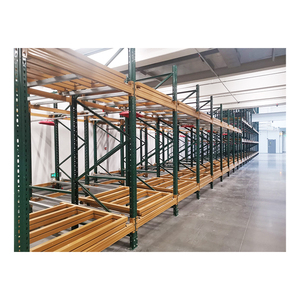
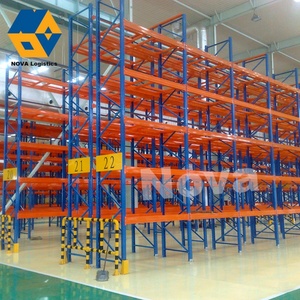
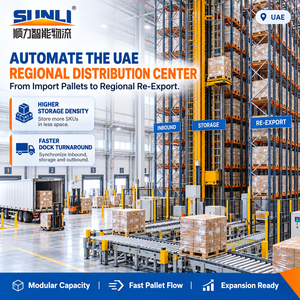
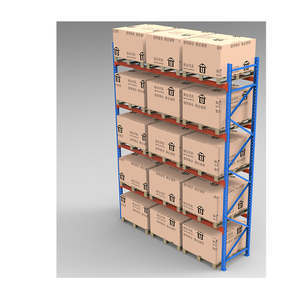
The implementation of India's Goods and Services Tax (GST) combined with the National Logistics Policy (NLP) has triggered an unprecedented consolidation in supply chain architecture. Indian logistics has rapidly evolved from small, fragmented, low-height (<5 meters) city-boundary "godowns" into multi-acre, centralized Grade-A mega distribution hubs with clear heights exceeding 11 to 14 meters.
Modern logistics developers (including IndoSpace, ESR, Embassy Industrial Parks, and Horizon) are constructing state-of-the-art facilities across primary clusters—Bhiwandi (Mumbai), Chakan-Talegaon (Pune), Farrukhnagar-Luhari (NCR), Sriperumbudur (Chennai), Nelamangala (Bengaluru), and Shamshabad (Hyderabad). These facilities mandate sophisticated distribution center racking solutions capable of exploiting immense vertical cubes while sustaining rigorous cyclical loading.
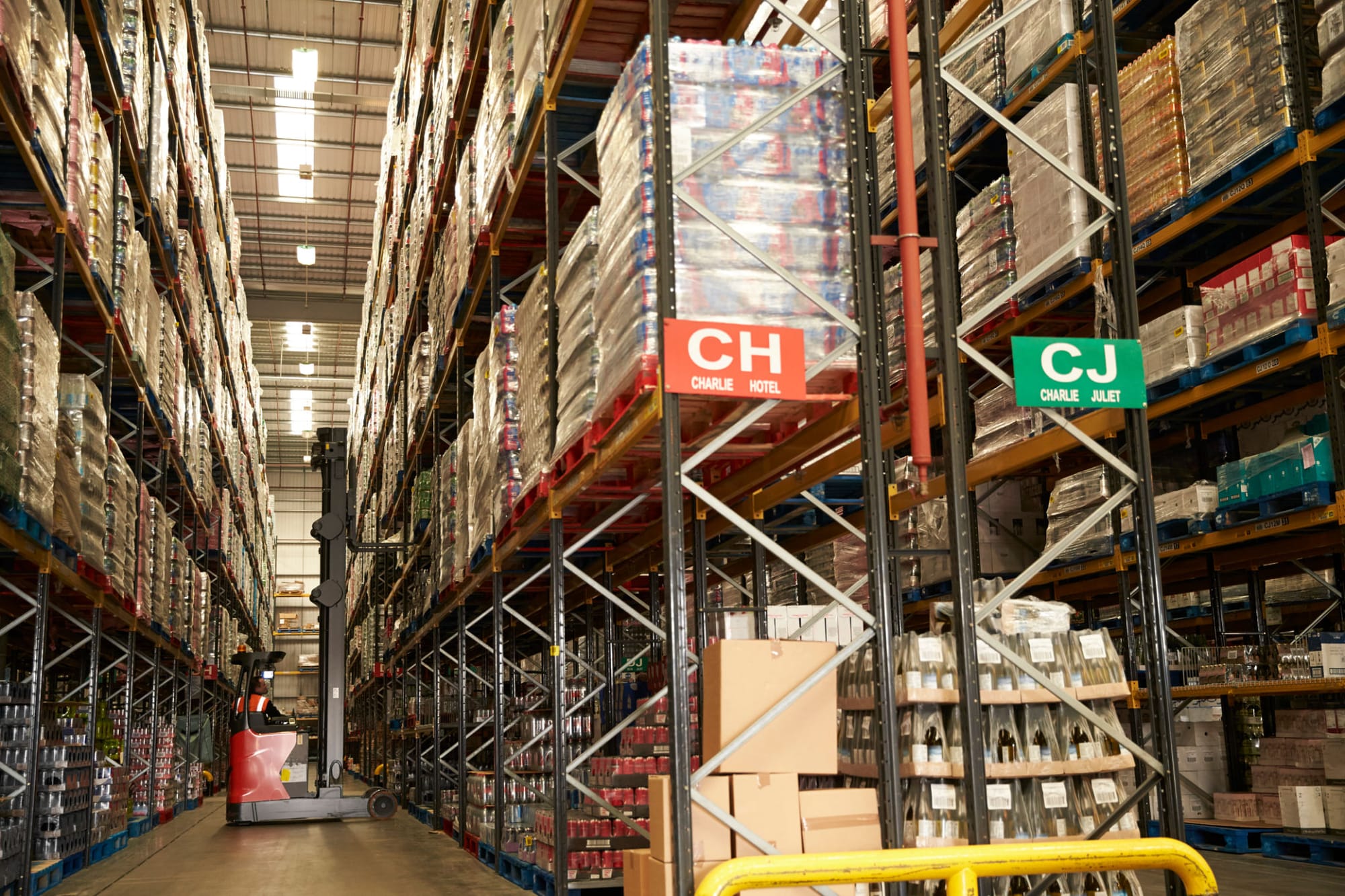
Distribution center racking is a safety-critical structural installation. We align international cold-formed thin-walled steel standards with the statutory requirements of the Bureau of Indian Standards (BIS).
| Engineering Parameter | Indian Standard Reference (BIS) | European / Global Norm (EN / FEM / RMI) | Our Factory Production Specification |
|---|---|---|---|
| Structural Steel Cold-Forming | IS 801:1975 & IS 800:2007 | EN 15512:2020 / AISI S100 | Q235B / Q355B / High Yield SS400 (Tensile test certs provided) |
| Seismic Zoning Analysis | IS 1893:2016 (Criteria for Earthquake Design) | EN 16681 (Pallet Racking Seismic Design) | Custom Baseplate + Chemical Anchor calculation for Zone II to Zone V |
| Beam Deflection Limit | IS 800 Cl. 5.6.1 Serviceability Limit | FEM 10.2.02 (L/200 Limit under Full UDL) | Strict L/200 Deflection with dual-welded interlocking connectors |
| Safety Locking System | Factory Safety Inspection Guidelines | EN 15635 Safety Interlock Compliance | Spring-steel mechanical safety pins rated > 5kN upward dislodgement |
| Corrosion Resistance / Coating | IS 101 Methods of Sampling & Test | ISO 12944 Atmospheric Corrosivity C2/C3 | Nano-Ceramic Wash + Pure Epoxy Powder Bake (70-90 μm thickness) |
How leading 3PL operators, automotive tier-1 suppliers, pharmaceutical giants, and quick-commerce dark stores deploy our systems inside India's specialized industrial belts.
Operating inside major urban centers like Delhi NCR, Mumbai MMR, and Bengaluru. Demands dense, multi-tier mezzanine picking platforms (Ground+2 or Ground+3) combined with bolt-free 5-layer shelving. Minimizes pickers' walk-times for rapid SKU consolidation and supports dynamic bin allocation for FMCG and apparel.
Centering in Pune-Chakan-Talegaon, Chennai-Oragadam, and Sanand corridors. Heavy-duty adjustable pallet racks and cantilever arms are engineered to hold stamping dies, engine cradles, casting jigs, and sheet metal raw coils with bay loading reaching up to 4,000 kg per beam level.
Dominant in Hyderabad (Genome Valley), Ahmedabad, and Baddi. High-density Push-Back and Drive-In racking solutions maximize expensive cold room cubic volume down to -25°C. Features low-temperature structural steels resistant to brittle fracturing and moisture-proof finishes.
Facilities handling changing inventory profiles for multiple enterprise clients. Configured with adjustable selective pallet racking using universal 75mm teardrop/diamond punching, allowing instantaneous beam repositioning without welding or structural cutting.
Serving national retail supermarket chains with hybrid racking configurations: heavy pallet reserve storage above with lower-level integrated pick faces and live roller carton-flow levels for fast replenishment.
Logistics corridors in Nhava Sheva (Navi Mumbai), Kochi, and Chennai harbor zones require specialized surface pre-treatment (zinc-phosphate conversion) and heavy-duty thermoset powder coatings to prevent electrolytic oxidation from coastal salt fog.
Sourcing directly from our automated roll-forming and fabrication facilities gives Indian logistics directors complete supply-chain traceability, strict metallurgical integrity, and predictable containerized shipping directly into Nhava Sheva, Mundra, or Chennai ports.
Direct technical answers addressing customs classification, BIS compliance, seismic design, floor tolerances, and total cost of ownership for Indian industrial projects.
Distribution center steel storage systems and mezzanine structures fall under Indian Customs HSN Code 73089090 (Structures and parts of structures of iron or steel). The customs duty structure generally comprises Basic Customs Duty (BCD), Social Welfare Surcharge (SWS), and Integrated Goods and Services Tax (IGST, typically 18%).
Because IGST paid at the port of entry (such as Nhava Sheva/JNPT, Mundra, or Chennai) serves as an Input Tax Credit (ITC) for registered businesses under the GST framework, corporate logistics operators can offset this against their forward GST liability. Our export department provides complete HS-compliant documentation, Bill of Lading, mill test certificates, and packing lists to ensure seamless clearance with Indian CHA (Customs House Agents).
India is divided into four distinct seismic hazard zones under IS 1893 (Part 1):2016. Major logistics hubs such as Delhi NCR (Gurugram, Farrukhnagar, Greater Noida) fall in Zone IV (Severe Seismic Intensity), while parts of Gujarat (Kutch) are in Zone V. Conversely, southern belts like Bengaluru and Chennai fall in Zone II or III.
For installations in Zone IV and V, our engineering team modifies standard rack geometry: we expand baseplate footprint thicknesses to 12mm–16mm, increase chemical anchor bolt embedment depths (using high-shear grade M12/M16 anchors), install reinforced back-to-back frame spacers, and incorporate horizontal and vertical spine bracing towers to absorb lateral cyclic shear without plastic deformation of the frame columns.
For high-bay installations exceeding 8 meters in clear height, the concrete slab must be engineered to withstand both heavy point loads and dynamic overturning moments caused by material handling equipment (reach trucks or VNA units). We require a minimum slab design of:
The choice between Selective and Push-Back configurations comes down to SKU variety versus cubic storage density:
Selective Pallet Racking provides 100% direct selectivity to every single pallet position. It is mandatory when an operation handles thousands of distinct SKUs with fast velocity (e.g., 3PL multi-client platforms, e-commerce order routing). However, it consumes significant floor space with operating aisles ranging from 3.0m to 3.5m for standard counterbalance or reach trucks.
Push-Back Racking utilizes nested rolling carts within inclined rail channels, operating on a Last-In, First-Out (LIFO) protocol 2 to 6 pallets deep. It eliminates individual access aisles, boosting pallet capacity by 40%–60% over selective racking. Push-back is optimal for fast-moving consumer goods (FMCG), cold chain facilities with high power costs, and bulk ingredients where multi-pallet batches share the same production date code.
Compliance with National Building Code (NBC) of India 2016 (Part 4: Fire and Life Safety) and global standards like NFPA 13 is essential for commercial licensing and insurance approvals (such as TAC/GIC underwriting). Our engineers integrate dedicated sprinkler pathways into the racking design:
We ensure a continuous, unobstructed longitudinal flue space (minimum 150mm between back-to-back racks) and transverse flue space (minimum 75mm between pallet loads). For racking systems with top storage levels exceeding 7.5 meters, or where solid decking prevents vertical water penetration, our team provides custom pre-punched structural brackets to mount in-rack sprinkler pipework directly behind load beams, protecting the water lines from forklift mast impacts.
Standard fabrication schedules for distribution center projects ranging from 2,000 to 10,000 pallet positions typically average 3 to 4 weeks from final approval of engineering approval drawings (GA drawings). Ocean transit from factory port to western ports (Nhava Sheva, Mundra) takes 14–18 days, and to eastern ports (Chennai, Visakhapatnam) takes 12–16 days.
All items are nested, wrapped with protective foam and heavy strapping, and packed into 40ft High Cube containers. This packing density reduces per-pallet freight overhead to nominal fractions, allowing rapid port unloading, straightforward customs clearance, and prompt flatbed transport directly to your installation site.
Over 85% of structural rack failures worldwide originate from low-level forklift mast or chassis collisions against the first 600mm of upright columns. For high-cycle Indian distribution facilities, we supply three levels of physical defense:
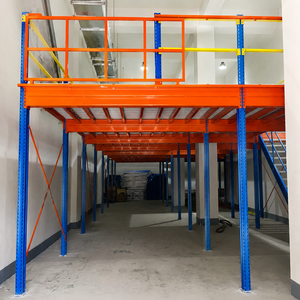
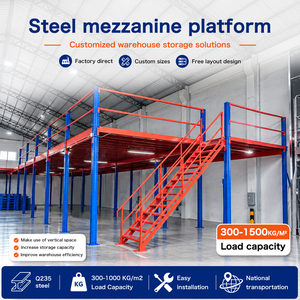
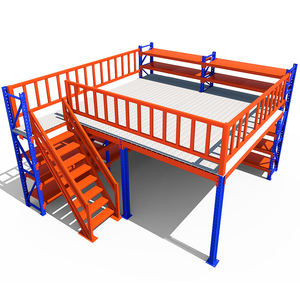
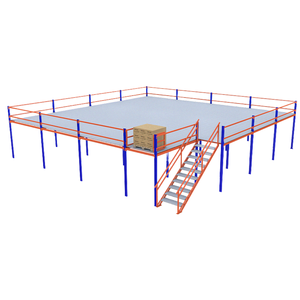
In high-rental industrial clusters like Bhiwandi (MMR) or Whitefield (Bengaluru), leasing additional ground area can be cost-prohibitive. Multi-tier rack-supported or structural steel mezzanines convert unused overhead vertical space into fully operational picking platforms, effectively doubling or tripling floor area without expanding the building's physical footprint.
These systems feature modular steel grating or chequered steel deck floors with live-load capacity options from 300 kg/m² to over 1,000 kg/m². Integrated features include wide egress staircases, self-closing safety pallet pivot gates, vertical lift shafts, and spiral chutes for moving goods between levels. The modular bolt-together system is considered plant and machinery rather than permanent civil construction, providing substantial tax depreciation advantages for Indian enterprise operations.
Send us your building CAD layouts, pallet dimensions, forklift specifications, and desired throughput velocities. Our engineering team will produce an optimized structural layout, comprehensive seismic calculations, and a transparent factory-direct quotation tailored to the Indian market.