
No matching pages. Try "pallet", "mezzanine" or "cantilever".
No matching pages. Try "pallet", "mezzanine" or "cantilever".
Engineered for intense material handling velocity, heavy load ratings, and compatibility with Ghana's expanding cold storage and bonded port distribution operations.
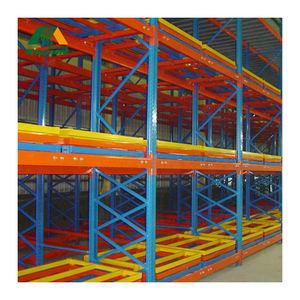
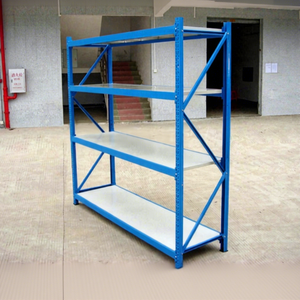
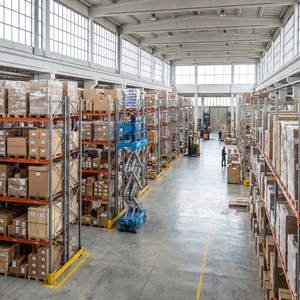
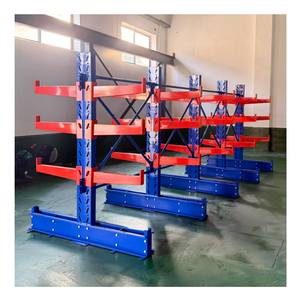
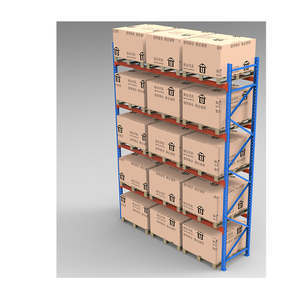
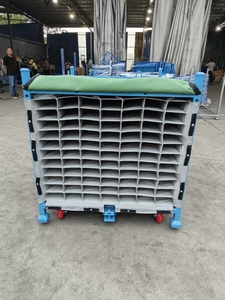
An authoritative engineering assessment of First-In, First-Out (FIFO) gravity-fed storage platforms designed for Ghana's accelerating industrial trade, coastal humidity, and supply chain corridor development.
Live pallet racking, or pallet flow racking, operates on an unpowered gravitational gradient, typically engineered at a precise 3.5% to 4.0% decline (approx. 2 degrees). Pallets are deposited into individual flow lanes at the elevated loading face (charge side) and glide gently on precision-machined cylindrical steel or high-impact polymer rollers toward the discharge face (pick side).
For warehousing facilities operating in Greater Accra and the Tema Industrial Free Zone, controlling kinetic energy across dynamic lanes exceeding 15 meters in depth is critical. Our heavy-duty live racking systems integrate centrifugal speed controller rollers positioned at calculated intervals. These magnetic or mechanical brake rollers actively resist acceleration, restricting terminal velocity to a steady 0.25 to 0.30 meters per second regardless of whether the pallet weighs 300 kg or 1,500 kg.
In deep-lane live racking configurations, cumulative hydrostatic backpressure can create hazardous conditions at the pick face. For example, in a 10-pallet deep lane carrying 1,200 kg units, the first pallet at the unload gate experiences over 10 tons of gravitational forward thrust, making safe forklift retrieval impossible and risking catastrophic pallet splintering.
We engineer every live pallet lane with a proprietary automatic load separator mechanism. When the lead pallet reaches the final stop, it depresses a floor-mounted actuator arm that mechanically trips a secondary brake lock upstream, isolating the second pallet until the lead unit is raised clear by the forklift operator. This ensures zero pressure accumulation at the picking face, safeguarding Ghanaian forklift drivers and fragile consumer goods.
West Africa's economic trajectory under the African Continental Free Trade Area (AfCFTA) requires rigorous quality control and batch tracking. Industries such as cocoa derivative export processing (Barry Callebaut, Cargill, Touton in Tema), beverage bottling, dairy packaging (FanMilk), and regional pharmaceutical distribution (Ernest Chemists, Kinapharma) cannot afford dead stock or expired batches.
Live pallet racking fundamentally enforces strict First-In, First-Out (FIFO) turnover without operator discretion. Since pallets can only be loaded from the charge aisle and unloaded from the pick aisle, picking aisles remain entirely separated from loading corridors, cutting internal warehouse forklift transit cross-traffic by up to 45% and eliminating human picking errors.
Benchmarking key performance metrics to guide structural capital expenditure for Ghanaian supply chain operators, distribution centers, and 3PL freight forwarders.
| Racking Architecture | Floor Space Utilization | Stock Rotation Logic | Forklift Travel Distance | Aisle Requirements | Ideal Application in Ghana |
|---|---|---|---|---|---|
| Live Pallet Racking (Gravity Flow) | Up to 85% (High) | 100% Strict FIFO | Minimal (Dedicated Aisles) | 2 Aisles per block (Charge & Pick) | Fast-moving FMCG, Cold Chains, Export Cocoa/Cashew |
| Push-Back Cart Racking | Up to 75% (High) | LIFO (Last-In, First-Out) | Moderate | Single operating access aisle | Bulk chemicals, general dry storage, hardware distribution |
| Drive-In / Drive-Through | Up to 80% (High) | LIFO / Pseudo-FIFO | High inside lanes (Risk of rack impact) | Single or dual access lanes | Cold storage, seasonal raw agricultural bulk |
| Selective Pallet Racking | 40% - 50% (Standard) | Any (100% Direct Access) | High (Long travel routes) | Aisle between every rack row (3.2m - 3.8m) | High SKU-count 3PL, e-commerce, spare parts hubs |
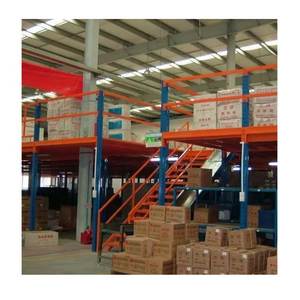
| Multi-Tier Mezzanine Racking | 300% Vertical Gain | Manual / Carton Flow | Localized per level | Walkway paths (1.0m - 1.5m) | Apparel, pharmaceuticals, automotive spare parts |
Custom structural designs calibrated to regional geography, industrial park micro-climates, and transport nodes within the West African trading network.
As the primary maritime gateway handling over 80% of Ghana's containerized cargo via the Meridian Port Services (MPS) Terminal 3, Tema suffers from skyrocketing industrial land values. Live pallet racking systems deployed here maximize cubic volume beneath standard 12-meter to 14-meter clear height pre-engineered steel buildings (PEBs).
Warehouses supporting off-dock container freight stations (CFS) and bonded storage utilize gravity flow systems to rapidly buffer palletized import cargo, minimizing turnaround times for container clearance and demurrage charges.
The urban consumption epicenter of Accra demands rapid-turn fulfillment along Spintex Road, North Industrial Area, and Pokuase. Supermarket chains, dairy processors, and beverage giants deploy 3-to-5 deep live pallet racking systems directly feeding loading bays.
By segregating replenishment loading from order picking, these facilities handle high vehicle dispatch velocities during narrow morning delivery windows into central business districts like Osu, Airport Residential, and Kaneshie.
The strategic emergence of the Boankra Integrated Logistics Port in the Ashanti Region transforms Kumasi into the primary consolidation center for transit cargo bound for landlocked Sahelian neighbors (Burkina Faso, Mali, and Niger). Heavy-duty live pallet racking enables high-density cross-docking of transit agricultural commodities, grains, and industrial supplies, maximizing static floor capacity while maintaining strict consignment segregation.
Supporting offshore exploration in the Western Region and inland gold extraction corridors across Tarkwa and Obuasi, logistics facilities around Takoradi require ruggedized storage systems. We supply reinforced pallet flow systems fitted with heavy-gauge steel rollers capable of handling heavy chemical reagents, machinery spares, and mining consumables with unit weights exceeding 1,800 kg per pallet position.
How economic growth, regional trade integration, and modern infrastructure are driving the evolution of commercial storage infrastructure across Ghana.
With Accra hosting the AfCFTA Permanent Secretariat, multinational corporations are shifting from fragmented, country-by-country storage toward centralized regional distribution hubs. Ghana offers reliable power infrastructure, stable port governance, and expanding road networks, making it the preferred consolidation springboard for the 400-million-consumer ECOWAS common market. Modern Class-A warehouses require high-density live pallet and dynamic racking to handle high-velocity transshipment loads.
Industrial land lease prices in primary nodes such as Kpone, Tema Free Zone enclave, and Spintex Road have escalated significantly over the past five years. Traditional horizontal warehouse expansion is no longer financially viable. Progressive logistics directors are converting from floor stacking and basic wide-aisle selective racking to multi-tier dynamic gravity systems, tripling pallet capacity inside existing building shells without acquiring additional high-cost land.
Ghana's agricultural processing initiatives—including the expansion of cashew processing, horticultural exports through Kotoka International Airport (KIA), and national meat/poultry cold reserves—are driving explosive investment in refrigerated and blast-freezer facilities. Operating sub-zero cold rooms entails extreme electrical and thermal envelope costs; live gravity racking provides the maximum possible pallet density per cubic meter, reducing refrigeration power costs per pallet by up to 35%.
Why standard interior-grade European or Chinese racking specifications fail in coastal West Africa without specialized surface metallurgy and structural design.
Warehouses within 15 km of the Gulf of Guinea (Tema, Takoradi, Central Accra) face relative humidity levels regularly exceeding 85% coupled with dense airborne maritime saline aerosols. Standard commercial paint finishes delaminate and oxidize within 24 to 36 months, causing structural beam deflection and safety failures.
Our upright columns and load beams undergo a rigorous 7-stage surface pre-treatment (including hot iron phosphating and nano-ceramic passivation) followed by electrostatic high-build epoxy-polyester architectural powder coating cured at 200°C (minimum film thickness: 80–110 μm). For cold storage and harsh coastal sites, we offer complete Hot-Dip Galvanizing according to ISO 1461 standards, delivering over 25 years of maintenance-free service.
Structural integrity depends on verifiable steel metallurgy. All our load-bearing components utilize certified structural steel grades: Q235B (Yield Strength ≥ 235 MPa) for standardized upright frames and ties, and Q355B high-tensile micro-alloyed steel (Yield Strength ≥ 355 MPa) for heavily loaded gravity roller bed spans and cantilever bases.
Each production batch includes 3.1 Mill Test Certificates verifying carbon equivalent values, yield/tensile strength, and elongation properties, ensuring predictable, non-brittle structural behavior under high dynamic warehouse handling impacts.
Southern Ghana, particularly the Accra-Ho coastal plain, lies within an active seismic zone associated with the Coastal Boundary Fault and the Akwapim Fault Zone. Industrial floor slabs also frequently sit on expansive clay soils (black cotton soils) prone to seasonal settlement.
Our engineering team performs custom 3D Finite Element Analysis (FEA) structural calculations compliant with EN 15512:2020 and FEM 10.2.02. We engineer oversized, heavy-duty floor baseplates (10mm to 16mm thick) with heavy-duty M12 to M16 chemical or mechanical undercut expansion anchors, dispersing concentrated point loads across concrete slabs rated at C25/C30 compressive strength.
Addressing practical regulatory, maritime clearing, installation, and engineering concerns for procurement teams across West Africa.
While both systems deliver exceptional volumetric storage density (up to 80%-85% floor coverage), Live Pallet Racking (Gravity Flow) operates on a strict First-In, First-Out (FIFO) dynamic, whereas Drive-In Racking functions on a Last-In, First-Out (LIFO) model. For FMCG distributors in Accra managing perishable foods, beverages, pharmaceuticals, and date-sensitive retail products, FIFO prevents inventory obsolescence. Furthermore, in live racking, forklifts never enter the storage lanes; loading and picking occur exclusively at the outer perimeter faces. This completely eliminates the frequent, catastrophic rack frame collisions common to drive-in systems where forklifts operate within tight internal rack corridors.
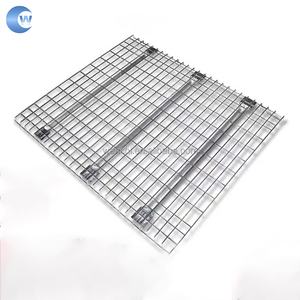
A primary operational challenge in Ghana is the frequent use of non-standardized or low-quality local timber pallets alongside standard European (1200 x 800 mm) and ISO Industrial (1200 x 1000 mm) pallets. Substandard or damaged bottom runners can sag between rollers or crack under dynamic point loads. To counter this, our gravity flow lanes can be specified with full-width, heavy-duty triple-track or continuous steel cylindrical rollers rather than narrow twin skate-wheel rails. We also integrate full-coverage wire mesh decking and under-pallet support slave trays for facilities that handle diverse, unstandardized pallet bases, ensuring smooth transit without track blockages.
Yes. Our engineering documentation, material specifications, and structural load calculations align fully with international building codes recognized by the Ghana Standards Authority (GSA) and the Ghana National Fire Service (GNFS). We design to European Racking Standards EN 15512 (structural design of adjustable pallet racking), EN 15620 (tolerances, deformations and clearances), and EN 15635 (steel static storage systems application and maintenance). For high-bay and mezzanine projects, we supply stamped structural engineer drawings, load capacity rating placards for every aisle, and NFPA 13-compliant wire mesh flue-space integration for overhead fire sprinkler penetration.
We provide full export-grade logistics orchestration. Racking uprights, beams, and dynamic roller tracks are bundled with heavy-duty structural steel banding, protective edge boards, and moisture-barrier shrink wrapping inside 40ft High Cube (40HC) ocean containers to prevent saltwater contamination during ocean transit. We supply complete commercial documentation packages: Form M / ICUMS (Integrated Customs Management System) compliant commercial invoices, packing lists with detailed container cubing, Certificates of Origin, and Mill Test Certificates to ensure swift clearance through MPS Terminal 3 at Tema Port without demurrage or inspection delays.
Absolutely. We provide two flexible project deployment models for our Ghanaian clients: (1) Turnkey Installation, where we mobilize our experienced racking installation specialists and equipment to complete the erection, laser-leveling, anchor bolting, and dynamic roller commissioning; or (2) Technical Site Supervision, where we deploy a senior structural project engineer to your facility in Accra, Tema, or Kumasi to train, supervise, and certify your local contractor team. Upon completion, our team conducts full static load testing, fits official bay load warning notices, and delivers an as-built safety sign-off dossier.
Because live pallet racking packs high static and dynamic tonnage into a concentrated footprint, concrete floor slab specifications are critical. For a standard 4-to-5 tier installation carrying 1,000 kg per pallet, we recommend a reinforced concrete slab with a minimum thickness of 180 mm to 220 mm, constructed with minimum C25/C30 grade concrete (compressive strength ≥ 25–30 MPa) and a floor surface flatness tolerance conforming to DIN 18202 Table 3 Group 3 or EN 15620. If your warehouse slab has unknown reinforcing details or joint locations, our engineering team can calculate customized oversized baseplates to reduce point ground pressure and prevent punch shear failure.
Our gravity flow roller beds are designed with modular drop-in architecture. The centrifugal speed controllers, spring-loaded roller axles, and load separation actuators can be inspected, unclipped, and swapped out in minutes without disassembling structural cross beams or upright columns. Every project delivered to Ghana includes a designated spare parts inventory kit—containing spare brake rollers, roller bearings, mechanical safety springs, beam safety locking pins, and upright column protectors—ensuring zero downtime for your round-the-clock logistics operations.
Standard engineering, precision roll-forming, automated robotic welding, and electrostatic coating typically take 15 to 25 working days from final approved CAD layout drawings, depending on project scale (from single containers to 50+ container turnkey facilities). Direct ocean freight transit from our manufacturing facility to Tema Port or Takoradi Port generally requires 30 to 40 days. In total, Ghanaian warehouse operators can expect delivery within 8 to 10 weeks from contract ratification, supported by transparent weekly milestone tracking and pre-shipment quality inspection reports.
Full-spectrum in-house manufacturing, advanced metallurgy testing, and dedicated engineering consultation for seamless warehouse transformations.
Our upright columns are produced on automated continuous CNC roll-forming mills equipped with in-line precision hydraulic punching dies. This guarantees consistent 50mm and 75mm hole pitch accuracy along the entire length of uprights up to 14 meters without seam distortion or internal material stress, ensuring rigid, square frame assembly on Ghanaian project sites.
Box-section load beams feature twin interlocking C-profiles welded seamlessly using multi-axis ABB and Panasonic robotic welding cells. Our 3-prong and 4-prong heavy cast-steel connector claws provide high torsional rigidity and dynamic moment resistance, completely preventing weld seam cracking under intense cyclic forklift placement.
We do not just sell steel components; we engineer complete spatial logistics solutions. Share your building architectural drawings, column grid positions, forklift turning radii, and pallet dimension profiles with our engineering division. We deliver full 2D AutoCAD and 3D BIM layout models, complete with pallet capacity schedules and simulated material flow workflows.