Industrial Cold Chain Engineering White Paper

OEM/ODM Cold Storage Racking Manufacturers & Supplier for the Houston Market

High-Density Thermal-Tolerant Storage Solutions Engineered for Port Houston Logistics Hubs, Gulf Coast Cold-Chains, and Deep-Freeze Warehouses Down to -30°C

Engineered Product Portfolio

High-Efficiency Cold Storage & Industrial Racking Systems

Custom OEM/ODM manufacturing strictly compliant with ANSI MH16.1 (RMI) standards, hot-dip galvanization specifications, and dynamic cold-room load tolerances for the Greater Houston maritime and warehousing sector.

-30°C
Deep Freeze Resilience
+65%
Cubic Storage Gain
100%
RMI / ANSI MH16.1 Compliance
-40%
Refrigeration Power Overhead
Texas Industrial Logistics Hubs

Optimized Cold Storage Configurations for Houston's Industrial Corridors

The Greater Houston metropolitan area represents the premier cold chain and logistics epicenter of the U.S. Gulf Coast. From port-centric maritime reefer corridors along the Houston Ship Channel to pharmaceutical biorepositories near the Texas Medical Center, our OEM/ODM custom racking engineering matches every strict localized requirement.

Port Houston & Bayport Terminal Reefers

Facilities surrounding Port Houston, Barbours Cut, and Bayport Container Terminals process heavy volumes of frozen proteins, citrus, and Gulf seafood. Racking in these environments faces high ambient exterior humidity (often exceeding 85% RH) paired with aggressive interior sub-zero temperatures.

  • High-durability Hot-Dip Galvanized (HDG) coating compliant with ASTM A123.
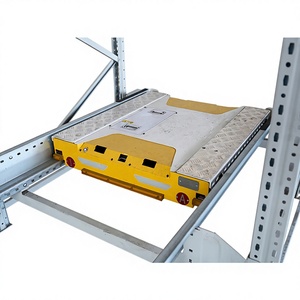
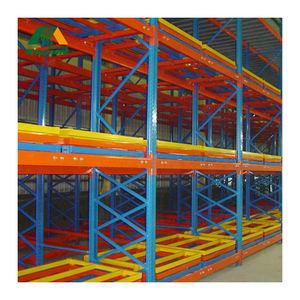
  • High-density Push-Back and Radio Shuttle systems reducing dock door exposure.
  • Thermal expansion slotted anchor plates mitigating slab cracking.

Texas Medical Center (TMC) Biorepositories

Serving the largest medical complex in the world, life-science warehouses throughout South Houston and Pearland require cleanroom-compatible cold storage at -20°C to -80°C for biological specimens, vaccine storage, and active pharmaceutical ingredients (APIs).

  • Electrostatically applied anti-microbial epoxy powder finishes.
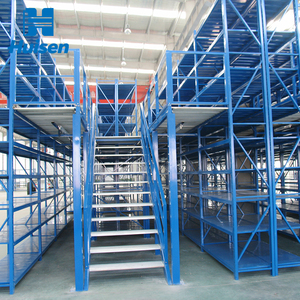
  • Multi-tier mezzanine platforms engineered for modular cold box integration.
  • Boltless adjustable shelving with perforated decks for uniform laminar airflow.

I-10 & Beltway 8 Mega-Distribution Centers

Major grocery conglomerates, 3PL distributors, and cold storage REITs along the I-10 East, US-290, and I-69 corridors require massive throughput and maximum cubic volume compression to offset high Texas ERCOT peak electricity rates.

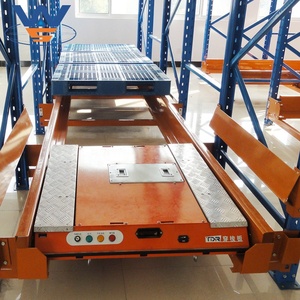
  • Automatic 4-Way Shuttle Racking yielding up to 90% warehouse cubic utilization.
  • Heavy-duty beam profiles accommodating 40" x 48" GMA and CHEP pallets.
  • Seamless WMS/WCS integration for automated high-bay racking systems (AS/RS).
Industry White Paper Analysis

Macro Trends Transforming Houston's Cold Storage Landscape

Strategic structural insights for facility owners, supply chain engineers, and procurement directors navigating supply chain reshoring, the Gulf trade surge, and volatile energy costs.

1. The Shift to High-Density "Air-Volume Compression"

In Southeast Texas, cooling costs constitute up to 60% of cold warehouse OPEX. Modern Houston cold facilities are departing from standard 12-foot selective rack aisles. By adopting Automatic 4-Way Shuttle Racking and Push-Back systems, facilities shrink cooling air volumes by 35-50% for the exact same pallet count, dramatically reducing refrigeration compressor runtimes under intense Texas summer heatwaves.

2. Sub-Zero Metallurgy & Embrittlement Prevention

Structural carbon steel experiences a Ductile-to-Brittle Transition Temperature (DBTT) under freezing conditions. Standard ASTM A36 steels risk brittle fracture under dynamic forklift impacts in -25°C blast freezers. Houston cold storage designs now specify micro-alloyed structural steels (e.g., Q355ND / ASTM A572 Grade 50) with mandatory Charpy V-notch impact validation at -20°F to guarantee impact toughness.

3. Coastal Condensation & Galvanic Protection

Houston's humid coastal climate creates constant "sweating" at refrigerated loading dock interfaces. When warm, moisture-laden air infiltrates cold chambers, rapid condensation induces accelerated oxidation on conventional powder coats. The industry trend has pivoted toward Duplex Protection: continuous pre-galvanized upright frames combined with heavy zinc-rich thermoset polymer electrostatic coatings.

Technical Specifier's Guide

Engineering Evaluation: Cold Storage Racking Typologies

Comparative architectural assessment designed for warehouse operations managers, industrial real estate developers, and cold chain logistics engineers.

Comprehensive Racking Architecture Evaluation Matrix - Temperature, Footprint, and Capital Investment
Racking Architecture Cubic Space Efficiency Cold Rating Range Pallet Selectivity Operational Flow Houston Application Fit
Automatic 4-Way Shuttle Racking Maximum (85-92%) -30°C to +45°C Automated Batch Access FIFO / LIFO Hybrid High-throughput 3PL, Cold Mega-Hubs (I-10 Corridor)
Heavy Duty Push-Back Racks High (70-78%) -30°C to Ambient Lane Dependent (~20%) LIFO Reefer Cold Rooms, Gulf Coast Seafood Storage
Heavy-Duty Mezzanine Platform High (Vertical Multi-Tier) -10°C to Ambient 100% Manual / Conveyor Continuous Picking Pharma Cleanrooms, E-Commerce Cold Packaging
Automated Radio Shuttle Car Very High (80-88%) -25°C to Ambient Deep-Lane Selective FIFO or LIFO Beverage Distribution, High-SKU Deep Freeze
Cold-Rolled Steel Coil Racks Heavy Dedicated Ambient / Dry 100% Crane / Forklift Direct Raw Material Staging Industrial Manufacturing, Pasadena Heavy Industrial
Boltless Industrial Steel Racks Standard Manual -20°C to Ambient 100% Hand-Loaded Carton / Item Pick Biotech Labs, Medical Sample Cold Cataloging
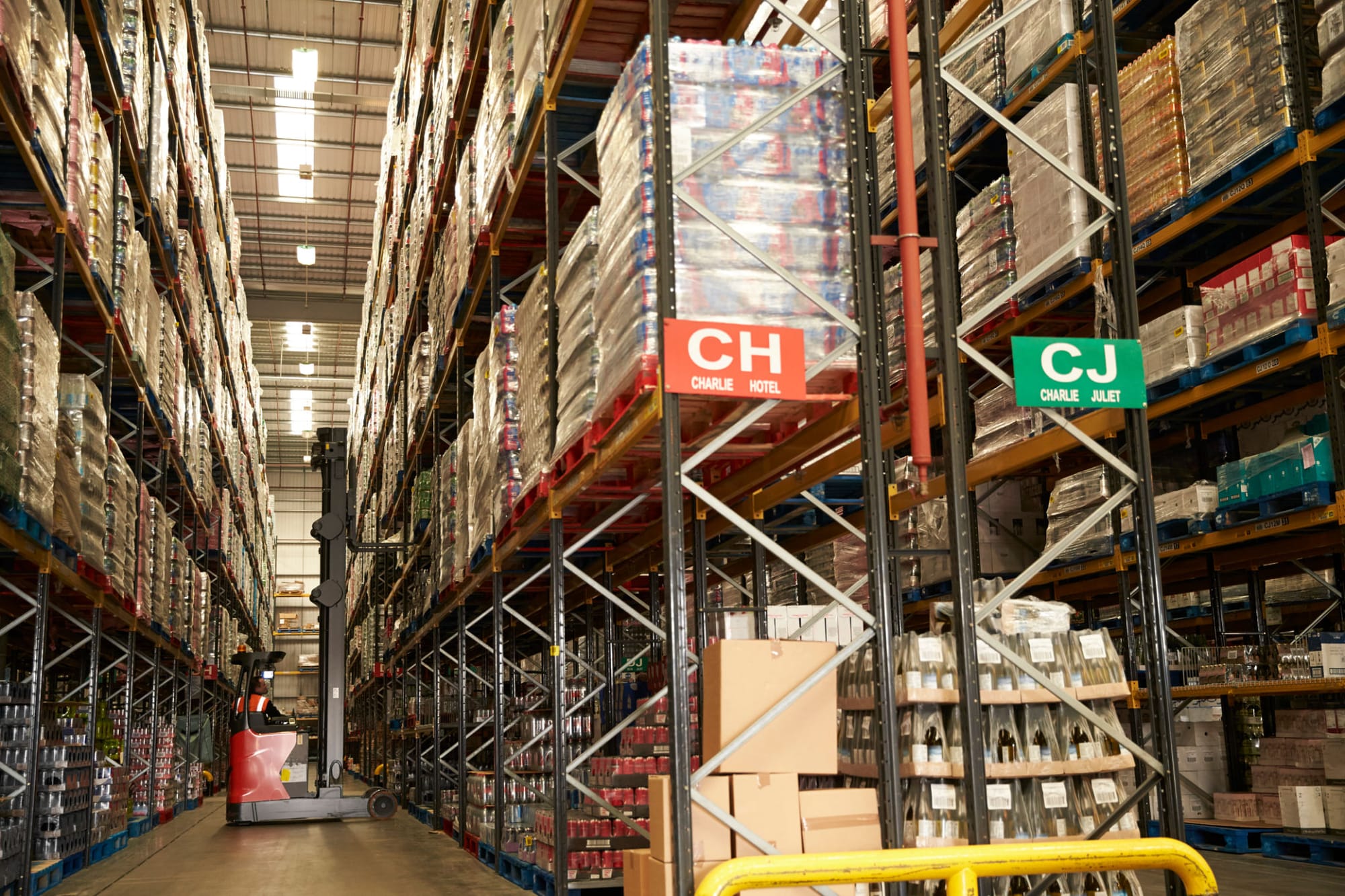
High-bay warehouse pallet racking system supplied by GENEX in the UAE and exported globally

End-to-End OEM/ODM Accountability

From custom beam roll-forming and robotic laser punching to finite element structural analysis (FEA), we engineer, supply, and support cold-tolerant systems worldwide.

The Manufacturer's Advantage

Direct-from-Source OEM/ODM Precision for Greater Houston Facilities

Working directly with an OEM/ODM primary manufacturer eliminates intermediary markups and guarantees that structural metallurgy, beam-to-column connector clearances, and low-temperature corrosion protections adhere strictly to project specifications.

Engineered Load Ratings & RMI / IBC Verification

Every frame, connector bracket, and cross-beam is calculated against strict live loads, seismic drift criteria, and pallet impact loads in compliance with ANSI MH16.1, EN 15512, and the Houston Commercial Building Code.

Bespoke Thermal-Break Foundation Engineering

Cold storage insulated slabs require specialized anchoring to avoid puncturing under-slab heating loops or destroying vapor barrier envelopes. We supply custom thermal-break footplates and non-expansion chemical anchoring plans.

Direct Intermodal Delivery to Port Houston

Fully containerized, seaworthy export packaging optimized for rapid discharge at Bayport and Barbours Cut terminals, drastically cutting inland freight lead times and drayage fees for Texas job sites.

Procurement Intelligence

Frequently Asked Questions: Cold Storage Racking in Houston, TX

Essential regulatory, structural, and thermodynamic considerations for procurement managers, logistics consultants, and project executives.

What specific standards govern cold storage pallet racking permits in the City of Houston and Harris County?
In the City of Houston and surrounding Harris County jurisdictions, commercial warehouse racking with a top storage shelf exceeding 8 feet is classified as a structural storage system under the International Building Code (IBC 2021/2024 as locally amended) and the Houston Fire Code. Permitting requires signed and sealed structural engineering calculation packets by a licensed State of Texas Professional Engineer (PE). Calculations must incorporate ANSI/RMI MH16.1 specifications, seismic design category classifications (typically SDC A/B for Houston), wind-load drift limits for rack-supported buildings, and integration with NFPA 13 cold-room ESFR (Early Suppression Fast Response) sprinkler clearances.
Why is hot-dip galvanization (HDG) preferred over standard powder coating for Houston cold warehouses?
Houston's subtropical marine climate frequently hits 90°F+ ambient temperatures with relative humidity exceeding 80-90%. When forklift traffic frequently moves between refrigerated dock rooms (34°F to 40°F) and sub-zero freezers (-10°F to -20°F), rapid temperature differentials induce severe surface condensation ("sweating"). Standard paint or economy powder coatings with microscopic pinholes permit moisture ingress, triggering rapid sub-film rust. Hot-Dip Galvanizing (ASTM A123) creates a metallurgical zinc-iron alloy bond that provides sacrificial cathodic protection, impervious to condensation and resistant to structural corrosion for over 25 years.
How does sub-zero cold room design affect rack anchoring on insulated concrete slabs?
Freezer floor slabs are engineered as insulated sandwich assemblies comprising a concrete topping slab, high-density extruded polystyrene (XPS) insulation boards, a sub-slab vapor barrier, and under-floor ventilation/glycol warming loops to prevent permafrost soil heave. Standard expansion anchors cannot penetrate beyond the structural wearing slab without breaching the vapor retarder. Our OEM/ODM systems employ oversized footprint baseplates designed with specific hole configurations for shorter, high-shear adhesive or screw anchors (e.g., Simpson Titen HD or Hilti HUS) validated under ACI 355.4 for cold-temperature concrete, preventing thermal bridging and foundation puncturing.
What ensures lithium-ion battery reliability in Automatic 4-Way and Radio Shuttles operating in sub-zero freezers?
Standard lithium-ion battery chemistry degrades rapidly below 0°C, suffering severe internal impedance rise, reduced discharge capacity, and damage during charging cycles. Our automated shuttles utilize specialized cold-rated Lithium Iron Phosphate (LiFePO4) or Lithium Titanate (LTO) battery packs integrated with internal thermal management heating elements. Electronic controllers, optical laser sensors, and brushless motors are sealed in IP65/IP67 enclosures equipped with internal desiccant breather valves and food-grade low-temperature lubricants (NLGI Grade 00 or 0) operating smoothly down to -30°C.
Can your factory supply custom OEM dimensions to match non-standard Houston building column grids?
Yes. As a direct OEM/ODM manufacturer, we do not rely on pre-fabricated catalogue limitations. Houston warehouses often exhibit varying column spacing (such as 50' x 52' or 54' x 60' bays). We custom-engineer upright frame depths, beam clear spans, and cantilever flue-space brackets down to millimeter tolerances. This precise customization maximizes pallet counts between structural building columns while strictly maintaining OSHA-mandated flue spaces and NFPA fire sprinkler access.
What are the lead times and logistics arrangements for sea-freight shipments directly to Port Houston?
Production lead times for custom-engineered cold storage racking typically range from 4 to 6 weeks, depending on system scale and finish requirements (HDG vs. powder-coated). Containerized maritime transit to Port Houston (Bayport or Barbours Cut terminals) typically takes 24 to 32 days via direct ocean freight services. We provide comprehensive export documentation, including certified mill test reports (MTR), finite element analysis calculations, bill of lading, packing lists, and coordinated customs clearance assistance with your preferred Houston customs broker.

Consult with Industrial Cold Chain Structural Engineers

Request a comprehensive cold storage racking feasibility review. Submit your architectural CAD drawings, pallet dimensions, unit weights, and target operating temperatures. Our engineering team will return a certified layout design, thermal airflow assessment, and factory-direct OEM pricing for your Houston facility.